
NIGERIAN PUBLIC WORKERS BEGIN THREE DAY NATIONWIDE WARNING STRIKE
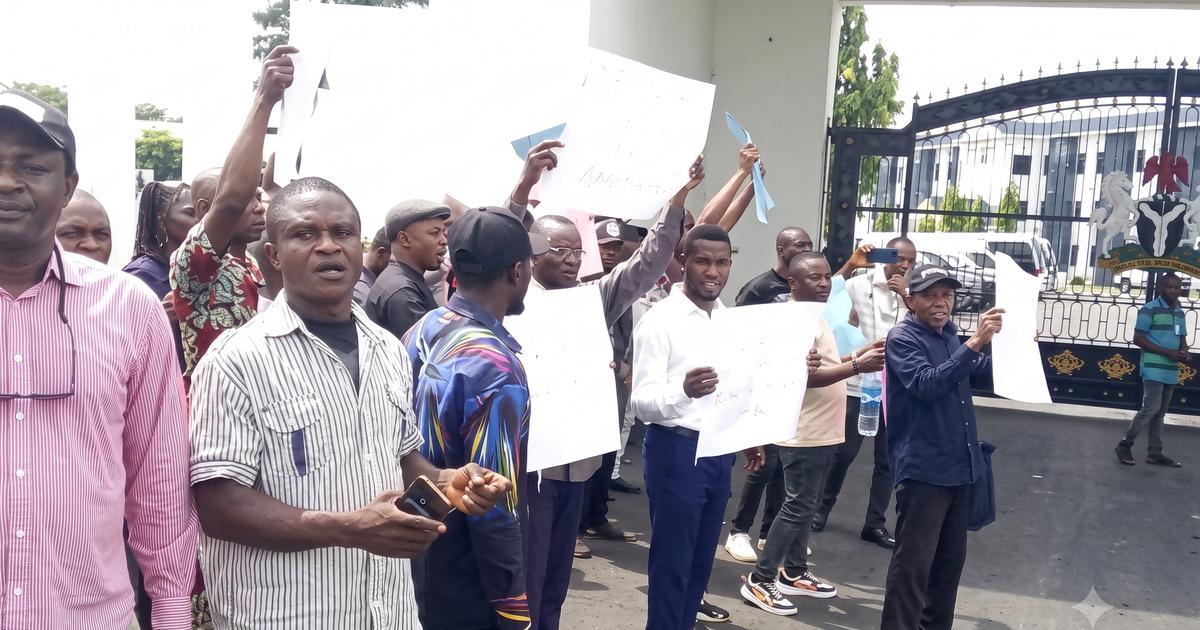
Public servants across Nigeria have begun a three day nationwide warning strike over rising living costs, fuel prices, wage demands and unresolved labor agreements. The action was called by the Joint National Public Service Negotiating Council and covers workers at federal, state and local government levels. The strike began on October 2 and is scheduled to continue through October 4. Among the workers’ major demands are a reduction in the price of petrol to ₦500 per litre, an immediate wage award and the commencement of negotiations for a new national minimum wage ahead of 2027. Reports from different parts of the country show mixed compliance, with some government offices closed or operating with reduced staff while others remained open.
Public servants across Nigeria have begun a three day nationwide warning strike as organized labor increases pressure on the Federal Government over fuel prices, wages and the rising cost of living.
The industrial action, organized by the Joint National Public Service Negotiating Council, began on Friday, October 2 and is scheduled to continue until Sunday, October 4.
The council directed public servants in federal, state and local government services, including workers in ministries, departments and agencies, to participate.
The action follows what union leaders describe as the government’s failure to adequately address demands presented to President Bola Tinubu in September.
WORKERS DEMAND LOWER PETROL PRICES
One of the council’s major demands is a reduction in the pump price of petrol to ₦500 per litre.
The unions say high fuel prices have significantly increased transportation costs and contributed to broader increases in the cost of food and other essential goods.
Fuel prices have remained a politically and economically sensitive issue since the removal of Nigeria’s petrol subsidy in 2023.
Public sector unions argue that the impact of higher transportation and living costs has substantially reduced workers’ purchasing power.
The demand for a ₦500 petrol price represents the unions’ position and has not been accepted by the Federal Government.
UNIONS ALSO WANT AN IMMEDIATE WAGE AWARD
The JNPSNC is also demanding an immediate wage award for public servants.
Union leaders say workers need additional financial support to offset the impact of inflation and rapidly rising household expenses.
They argue that current wages have not kept pace with changes in the cost of transportation, food, housing and other necessities.
The council has described a wage award as an emergency measure that could provide temporary relief while longer term salary negotiations continue.
NEW MINIMUM WAGE TALKS ALSO ON THE AGENDA
Another major demand involves preparations for Nigeria’s next national minimum wage.
The current national minimum wage is ₦70,000.
Public sector unions want the government to establish a tripartite negotiating committee early enough to begin discussions over a new wage structure expected to become due in 2027.
The unions say beginning negotiations in advance could prevent delays similar to those experienced during previous minimum wage reviews.
Employers, labor representatives and government officials would normally participate in the negotiations.
STRIKE FOLLOWS SEPTEMBER ULTIMATUM
The current industrial action did not begin without warning.
The JNPSNC sent a letter to President Tinubu on September 21 outlining its concerns and demands.
Union leaders subsequently warned that public servants would begin a warning strike if the issues were not addressed by the end of September.
The council had hoped the President’s October 1 Independence Day address would contain measures addressing their concerns.
When union leaders said the speech did not provide the relief they were seeking, the planned strike went ahead.
STRIKE COMPLIANCE IS MIXED
Despite the nationwide directive, the action has not resulted in a complete shutdown of Nigeria’s public service.
Reports from Abuja and several states show widely different levels of compliance.
At the Federal Secretariat in Abuja, some ministries and government offices remained open, although attendance was reported to be lower than usual.
Some workers said they had not received direct communication from their unions instructing them to stay away from work.
Other locations recorded significantly greater participation.
SOME STATES RECORD STRONGER COMPLIANCE
Reports indicate notable compliance in states including Ondo, Ogun, Oyo, Osun and Akwa Ibom.
In Ondo State, many offices at the Federal Secretariat in Akure were closed.
Some state government offices also recorded reduced activity.
Union officials in Ondo estimated compliance at approximately 50 percent during the early stage of the action.
Other areas recorded only partial participation.
SOME WORKERS SAY THEY WERE UNAWARE OF STRIKE
One factor affecting participation appears to have been communication.
Workers interviewed in some federal offices said they were unaware that the strike had formally begun.
Others said they had heard about a possible strike but had not received official instructions from local union representatives.
That has contributed to uneven compliance across the country.
The national union leadership has maintained that its directive applies to public servants across all three levels of government.
WARNING STRIKE IS LIMITED TO THREE DAYS
The current action is a warning strike rather than an indefinite shutdown.
Its purpose is to demonstrate workers’ dissatisfaction and increase pressure on government before unions consider stronger action.
Because the strike runs from Friday through Sunday, its full impact on government services may also be limited.
Saturday and Sunday are already non working days for many public offices.
This makes Friday the most significant working day affected during the three day action.
PUBLIC SERVICES MAY BE AFFECTED
The JNPSNC includes unions representing workers in several areas of public service.
Its affiliates include the Nigerian Civil Service Union, Medical and Health Workers Union, Association of Senior Civil Servants of Nigeria and National Association of Nigerian Nurses and Midwives.
Other public sector unions are also represented.
Depending on local compliance, the strike can affect administrative services, health related institutions and other government operations.
Essential services may operate under separate arrangements depending on individual unions and institutions.
ECONOMIC HARDSHIP AT CENTER OF DISPUTE
The broader dispute reflects continuing tension over Nigeria’s economic reforms.
The removal of the petrol subsidy, changes to the foreign exchange system and persistent inflation have placed significant pressure on household budgets.
The Tinubu administration has argued that some of its reforms are necessary to stabilize public finances and strengthen the economy over the longer term.
Labor unions have repeatedly argued that workers are carrying an excessive share of the immediate economic burden.
The current strike represents another phase of that disagreement.
FUEL COSTS AFFECT MORE THAN TRANSPORTATION
Labor leaders say petrol prices affect nearly every aspect of workers’ daily lives.
Higher fuel costs increase transportation expenses.
Businesses may also face higher distribution and operating costs.
Those expenses can eventually affect the prices of food, goods and services.
For public servants whose salaries may remain unchanged for extended periods, rising costs can reduce real income even when nominal wages remain the same.
GOVERNMENT RESPONSE WILL DETERMINE NEXT STEP
The JNPSNC has described the action as a warning.
What happens after October 4 will depend partly on whether negotiations resume and whether the government makes concessions on any of the council’s demands.
The unions could return to work while negotiations continue.
They could also announce further industrial action if they conclude that their concerns remain unresolved.
No indefinite national strike has been announced as part of the current three day action.
LABOR DISPUTES HAVE RECURRED IN RECENT YEARS
Nigeria has experienced several major labor disputes over wages and economic policy.
The Nigeria Labour Congress and Trade Union Congress have previously organized nationwide actions over fuel prices and minimum wage negotiations.
Public sector unions have also staged sector specific strikes over unpaid allowances, salary structures and working conditions.
These disputes often end with negotiations and agreements, although implementation can later become another source of disagreement.
MINIMUM WAGE IMPLEMENTATION REMAINS AN ISSUE
Although Nigeria introduced the ₦70,000 national minimum wage, implementation has varied across employers and states.
Some governments moved quickly to adopt new wage structures.
Others faced financial and administrative challenges.
Public servants have also raised concerns about salary adjustments above the minimum wage level.
The current negotiations therefore involve more than the statutory minimum alone.
UNION SAYS WORKERS ARE UNDER PRESSURE
The JNPSNC says Nigerian workers and their dependants are experiencing increasingly difficult economic conditions.
Union officials have described transportation, food and housing costs as particularly challenging.
Their position is that wages need to reflect those changes.
The Federal Government has introduced several social and economic programs intended to reduce hardship, but unions argue that additional measures are still required.
PETROL DEMAND COULD BE DIFFICULT TO RESOLVE
Reducing petrol prices to ₦500 per litre could become one of the most difficult parts of negotiations.
Petroleum prices are influenced by crude oil costs, refining, foreign exchange, transportation and market conditions.
Government intervention to lower prices could therefore carry financial consequences.
The unions have proposed measures including support for domestic refining and intervention in the cost of bringing fuel to market.
Whether the government accepts those proposals remains unclear.
CURRENT ACTION HAS NOT SHUT DOWN THE COUNTRY
Reports of a nationwide strike should not be interpreted as evidence that every Nigerian government office has closed.
The strike directive is nationwide.
Compliance is not uniform.
Some ministries and offices are operating.
Others are closed or functioning with fewer workers.
That distinction is important when assessing the real impact of the industrial action.
WHAT HAPPENS NEXT
The warning strike is expected to end on Sunday, October 4.
Attention will then shift to whether the Federal Government and public sector unions return to negotiations.
Workers are seeking lower petrol prices, an immediate wage award and preparations for another national minimum wage review.
Government will have to determine whether it can accommodate those demands within its economic and fiscal policies.
For now, the strike demonstrates that the relationship between organized public sector workers and the Federal Government remains under significant pressure.
Whether the three day action becomes the beginning of a wider labor confrontation will depend on what happens after the warning strike ends.