NIGERIAN TRADE UNION CONGRESS REAFFIRMS REJECTION OF ₦70,000 TRANSPORT ALLOWANCE
The Trade Union Congress of Nigeria has rejected the Federal Government’s ₦70,000 monthly transport intervention for workers, arguing that a six-month temporary payment is insufficient and demanding a permanent salary increase instead. The TUC has also called for immediate implementation of the outstanding CONHESS adjustment for JOHESU health workers, saying the government has failed to honor commitments reached during earlier negotiations.
The Trade Union Congress of Nigeria has rejected the Federal Government’s proposed ₦70,000 monthly transport intervention for workers, arguing that another short-term wage support measure will not adequately address the sustained decline in workers’ purchasing power and insisting instead on an immediate, permanent salary increase alongside implementation of outstanding agreements affecting health-sector employees.
The TUC made its position public on Wednesday, October 28, a day after the Federal Government and the Nigeria Labour Congress reached a separate agreement providing for a ₦70,000 monthly transport intervention across federal public-service levels for six months beginning in November 2026. The TUC said it had already communicated its opposition to temporary wage awards to the government and maintained that workers required a structural improvement in salaries rather than another limited intervention.
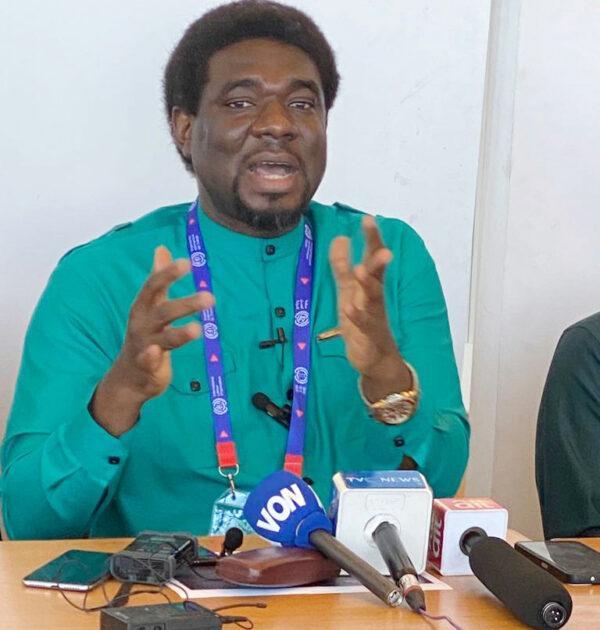
In a statement signed by TUC President Festus Osifo and Secretary-General Nuhu Toro, the congress argued that the government should increase workers’ salaries immediately without waiting for negotiations over a new national minimum wage to conclude. The union said the statutory minimum wage establishes the lowest legal wage that can be paid and does not prevent the government from increasing salaries above that level before a new minimum-wage framework is negotiated.
The TUC proposed that the lowest-paid federal employee could be moved to a monthly salary of ₦300,000, with corresponding consequential adjustments applied across other salary grades. It cited decisions by some state governments to pay minimum wages above ₦100,000 as evidence that public-sector salaries can be reviewed beyond the existing statutory floor when governments determine that economic conditions require it.
The union’s opposition focuses particularly on the temporary nature of the ₦70,000 intervention. Under the agreement reached between the Federal Government and NLC representatives on Tuesday, federal workers across all levels are expected to receive the payment monthly for six months from November 2026 as part of efforts to cushion the impact of transportation and living costs.
That agreement followed renewed labour pressure over workers’ welfare, minimum-wage implementation, fuel and transportation costs and several unresolved agreements. It also included payment of outstanding peculiar-allowance arrears in three monthly installments beginning in November and commitments relating to health-sector allowances.
The TUC, however, said previous experience with temporary wage awards gave workers little reason to consider such arrangements a dependable substitute for salary increases. It pointed to the wage award introduced in 2023 as part of the government’s response to the economic consequences of fuel-subsidy removal and argued that the earlier arrangement was never implemented comprehensively.
According to the congress, some workers received only part of the earlier payments, some experienced lengthy delays and others received nothing. The union also alleged that the majority of state workers and employees in the informal sector did not benefit from the previous intervention.
That experience, the TUC said, demonstrated why temporary financial assistance should not form the core of the government’s response to the current cost-of-living pressures. The congress maintained that regular salaries are more predictable, more sustainable and more easily incorporated into workers’ long-term household planning than payments that expire after a fixed number of months.
The union’s position comes at a time when Nigerian households continue to face substantial pressure from transportation, food, housing, electricity, health care and other essential expenses. Workers’ organizations have repeatedly argued that even where inflation slows, the overall price level remains significantly higher than in previous years and the purchasing power of wages remains under strain.
The TUC said workers should not be required to wait for another minimum-wage negotiation before receiving meaningful relief. It argued that nothing in Nigeria’s labour framework prevents an employer, including the Federal Government, from paying salaries above the national minimum.
The congress therefore wants an interim salary restructuring that would provide a more durable increase while broader negotiations continue. Its proposal to raise the lowest federal salary to ₦300,000 represents a significantly more ambitious demand than the temporary transport intervention already approved by the government in its discussions with the NLC.
The difference also highlights the fact that Nigeria’s organized labour movement is not speaking with a completely identical position on every component of the current negotiations. The NLC participated directly in the conciliation meeting that produced the ₦70,000 transport intervention, while the TUC has publicly rejected that approach and called for a permanent salary adjustment.
Both labour centers, however, have expressed broader concerns about the cost of living and workers’ ability to meet basic household expenses. They have also pressed the government to resolve outstanding salary, allowance and employment-related commitments.
Beyond the transport intervention, the TUC used Wednesday’s statement to renew pressure on the government over the Consolidated Health Salary Structure adjustment for members of the Joint Health Sector Unions, commonly known as JOHESU.
The congress accused the government of failing to implement an agreement that helped bring an earlier health-sector industrial dispute to an end. According to the TUC, JOHESU suspended its industrial action after negotiations involving labour leaders and senior government officials produced commitments to resolve outstanding issues surrounding the CONHESS adjustment.
The conciliatory process involved officials including Labour and Employment Minister Muhammad Maigari Dingyadi and health-sector representatives, while the TUC says its president participated directly in efforts to resolve the dispute.
The union said the final agreement provided for outstanding issues surrounding the health salary structure to be conclusively addressed. It now argues that seven months have passed without the agreed adjustment being implemented.
The TUC described that delay as a threat to confidence in collective bargaining and said agreements reached between government and workers must have practical consequences if labour negotiations are to remain credible.
It is demanding immediate implementation of the CONHESS adjustment, adequate budgetary provision to fund it, publication of a clear implementation timetable and resolution of any remaining issues in consultation with the unions concerned.
The health-sector dispute is particularly sensitive because Nigeria has experienced repeated strikes by doctors, nurses, laboratory scientists and other medical workers over salaries, working conditions and professional disputes. Industrial action in the sector can disrupt public hospitals and increase pressure on patients who depend on government facilities.
The government and NLC agreement reached on Tuesday addressed some health-sector matters. Under that arrangement, 19 months of outstanding allowances for health workers are to be settled within three months beginning in December 2026.
The same agreement provides for the National Salaries, Incomes and Wages Commission to complete a revised cost assessment relating to the proposed CONHESS adjustment within three weeks before a final decision is taken by the Presidential Committee on Salaries.
The TUC’s position indicates that it does not consider further review sufficient after what it describes as an already concluded commitment. The congress wants implementation rather than another cycle of consultation and assessment.
That disagreement could become an important issue in subsequent government-labour meetings because the distinction between arrears of allowances and the broader CONHESS adjustment is significant. Paying outstanding allowances does not necessarily resolve the separate question of permanently adjusting the health-sector salary structure.
The TUC also called for broader government action to reduce the cost of essential goods and services rather than relying exclusively on higher nominal payments to workers. It said federal, state and local authorities should introduce measurable interventions addressing the pressures faced by workers, pensioners and households across the economy.
Among its demands are timely payment of salaries and pensions, protection of existing jobs, stronger action against exploitative employment practices and policies aimed at expanding domestic production and creating stable employment.
The union argued that wage increases will provide limited relief if essential expenses continue rising sharply at the same time. It therefore wants compensation policy to be combined with measures that improve the wider economic environment and reduce the cost burden facing households.
The Federal Government’s ₦70,000 transport intervention was announced as part of a package intended to prevent labour tensions from escalating while more comprehensive negotiations continue. It is scheduled to apply for six months across federal public-service levels beginning in November.
The government also agreed to begin paying outstanding peculiar-allowance arrears effective from May 1, 2026, with those arrears to be cleared through three equal monthly installments.
Another unresolved issue is the timing of a new national minimum wage. The Federal Government and NLC did not agree on the effective date during Tuesday’s conciliation meeting, although they agreed that a Minimum Wage Negotiation Committee should be constituted immediately.
Tax relief for workers is also under consideration, while agriculture-sector hazard allowances remain subject to verification and administrative review.
The agreement calls on state and local governments to participate in the relief measures, although those tiers of government retain their own responsibilities for public employees and will have to determine how the interventions are implemented within their respective jurisdictions.
Government and NLC representatives are expected to meet again after one month to assess implementation of the resolutions, including whether the transport payments and outstanding allowance commitments have actually begun as scheduled.
The TUC, meanwhile, says it is awaiting the outcome of its own engagement with the Federal Government before determining what further action may be necessary.
The union has not announced an immediate nationwide strike over the ₦70,000 proposal. Its statement instead emphasizes continued engagement while warning that workers cannot indefinitely accept unfulfilled commitments or temporary measures that do not address their underlying income problems.
For government, the competing demands create a difficult fiscal calculation. A permanent salary increase across the federal workforce would impose substantially larger recurring costs than a six-month transport intervention, while the TUC’s proposed ₦300,000 floor would require significant consequential adjustments for higher salary levels.
At the same time, labour organizations argue that government spending constraints cannot be considered separately from workers’ living standards. Their position is that public employees have absorbed years of rising prices and economic reforms and require compensation that protects the real value of their earnings.
The debate therefore extends beyond whether ₦70,000 represents an adequate monthly transport payment. At its core is a disagreement over whether the current economic pressures should be addressed through temporary relief or permanent changes to the wage structure.
The NLC-government agreement has created a short-term framework beginning in November, but the TUC’s rejection makes clear that consensus within organized labour has not been achieved on the wider approach to worker compensation.
The next round of negotiations will need to address that divergence while also resolving the still outstanding national minimum-wage timetable and health-sector commitments.
For now, the TUC’s position remains that the ₦70,000 monthly intervention should not replace a permanent salary increase and that government must honor the agreements already reached with JOHESU. Whether those demands lead to a revised government offer, further negotiations or eventual industrial action will depend largely on how quickly the outstanding commitments are implemented and whether the next round of discussions produces a broader agreement on wages.