NLC REJECTS JUNE 2027 WAGE DELAY, WARNS OF NATIONWIDE ACTION AS TENSIONS RISE WITH FEDERAL GOVERNMENT
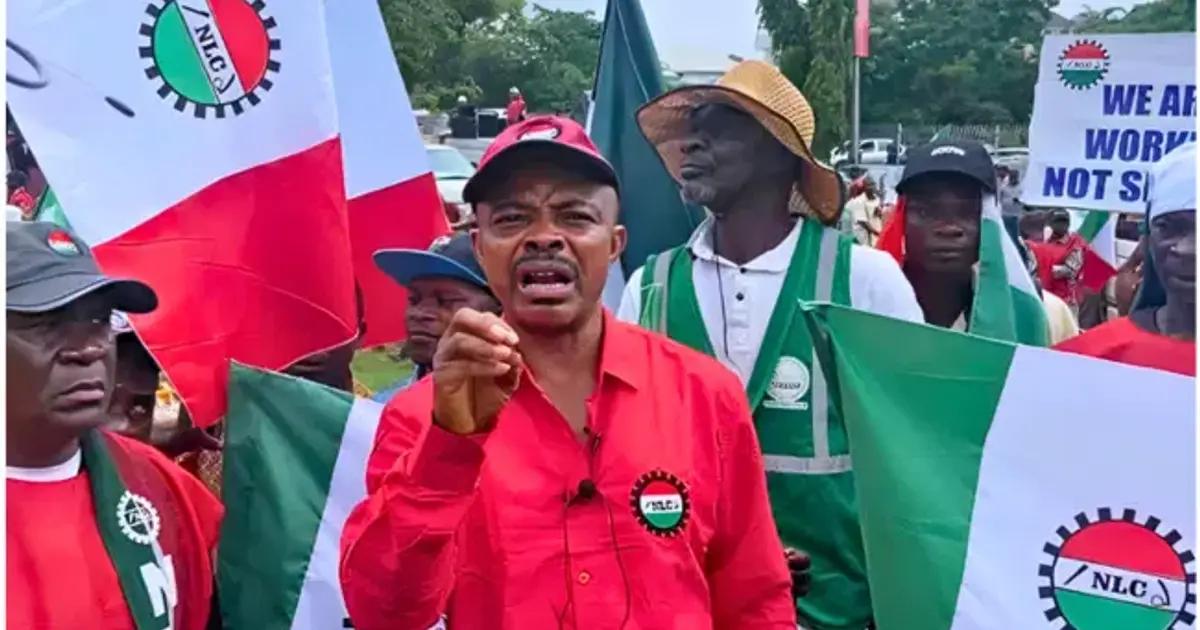
The Nigeria Labour Congress has rejected the Federal Government’s position that the national minimum wage is not due for review until June 1, 2027. The government says the current ₦70,000 wage remains within its three-year statutory cycle, while the NLC argues that negotiations must begin now so a replacement wage can be ready before the current arrangement expires. Labour has given the government a two-week ultimatum beginning October 9 to commence wage talks, reduce petrol prices and implement outstanding agreements, warning that failure could lead to further industrial action.
The Nigeria Labour Congress has sharply rejected the Federal Government’s position that a fresh national minimum wage review should wait until June 2027, insisting that negotiations must begin immediately and warning that failure to act could trigger another round of nationwide industrial action. The confrontation has deepened an already tense relationship between organized labor and President Bola Tinubu’s administration as workers face rising living costs, higher transport expenses and continued pressure on household incomes despite the ₦70,000 minimum wage introduced in 2024.
The dispute centers on when formal negotiations for the next national minimum wage should begin. The Federal Government says the existing wage became effective in 2024 under a three-year review cycle and therefore is not due for another statutory review until June 1, 2027. Labour Minister Muhammad Maigari Dingyadi has argued that beginning a formal review now would be premature, inconsistent with the legal framework and potentially disruptive to the country’s industrial relations system.
The NLC strongly disagrees with that interpretation. In a letter dated October 13 and addressed to the Labour Minister, NLC President Joe Ajaero argued that the fact that the current minimum wage expires in 2027 does not mean negotiations should wait until then. The union’s position is that talks must begin well in advance so government, labor and employers have enough time to negotiate, agree on a figure and complete the legislative and administrative process before the current wage cycle ends.
According to the NLC, negotiations should begin by October 17, 2026, rather than in June 2027. The congress says waiting until the formal review date would risk repeating the delays that have characterized previous wage negotiations, when workers remained on outdated salaries for months while government, private employers and labor representatives continued bargaining.
The disagreement comes after the NLC issued a two-week ultimatum to the Federal Government following a joint meeting of its National Executive Council and Central Working Committee in Abuja. The ultimatum, which began on October 9, demands the immediate commencement of wage negotiations, a reduction in the price of petrol and implementation of outstanding agreements affecting workers.
The union warned that if the government fails to respond within the deadline, its appropriate organs would decide on further action. Although the NLC has not yet formally declared a nationwide strike over the current dispute, its language has made clear that industrial action remains an option if negotiations do not begin and other demands are not addressed.
The wage dispute reflects a broader argument over whether the ₦70,000 minimum wage still provides meaningful protection for workers. When the wage was agreed in July 2024, the government presented it as a major increase from the previous ₦30,000 minimum. Organized labor accepted the figure after months of negotiations, protests and an indefinite strike that temporarily disrupted electricity supply, aviation and other services across the country.
Two years later, however, the NLC argues that inflation, transport costs, food prices and continued pressure on the naira have significantly reduced the purchasing power of the ₦70,000 wage. Labour leaders say the economic assumptions under which the wage was negotiated have changed sufficiently to justify starting the next round of talks immediately.
The NLC has also connected its wage demands directly to petrol prices. The union wants the Federal Government to reduce the price of Premium Motor Spirit to the level that prevailed when the current minimum wage was signed into law in 2024. Labour argues that increases in fuel prices have pushed up transportation costs and contributed to higher prices for food and other essential goods, eroding the practical value of workers’ salaries.
That demand places the wage dispute within the wider economic consequences of the Tinubu administration’s removal of petrol subsidies and market-based pricing reforms. The government has maintained that the old subsidy system was financially unsustainable and that reforms were necessary to stabilize public finances and encourage investment in the downstream petroleum sector. Labour has repeatedly responded that workers and low-income households have borne a disproportionate share of the adjustment.
The current disagreement is therefore not only about the technical date for minimum wage review. It is also about the broader question of how quickly wages should respond when the cost of living changes significantly before the formal end of a statutory wage cycle.
The Labour Ministry’s position is that the law provides a three-year framework and that prematurely reopening the wage would weaken predictability. Dingyadi said the current ₦70,000 minimum wage is due for review on June 1, 2027 and argued that formal renegotiation before that point would be inconsistent with the established timetable.
The NLC, however, says the government is confusing the date on which a new wage should take effect with the date on which negotiations should begin. Labour argues that a serious national wage process involves multiple stages, including nominations to a tripartite committee, negotiations among government, workers and employers, technical calculations, agreement on a figure, legislation and eventual implementation.
In the union’s view, waiting until June 2027 to start those steps would almost guarantee that a replacement wage would not be ready when the current one expires. The NLC says early negotiations are therefore necessary to avoid another prolonged period in which workers continue receiving an outdated wage while the government and labor movement remain locked in talks.
The history of Nigeria’s minimum wage negotiations gives the NLC some basis for concern about delays. The 2024 negotiations became highly contentious and required repeated meetings between labor leaders and the Federal Government. The NLC and Trade Union Congress initially demanded a substantially higher wage than the government was prepared to offer, arguing that workers had been devastated by inflation and the removal of petrol subsidies.
The disagreement eventually led to an indefinite strike in June 2024. During that action, labor unions shut down the national electricity grid and disrupted airline operations, demonstrating their ability to exert significant economic pressure. The strike was later suspended to allow negotiations to continue, and government and labor ultimately agreed on a ₦70,000 national minimum wage in July.
That history now shapes the current confrontation. Labour leaders appear determined to avoid waiting until the final months of the three-year cycle before beginning negotiations, while the government is equally determined to defend the formal review timetable.
The NLC’s recent demands go beyond wages. The congress has also called for broader economic relief measures, arguing that workers face pressure from food prices, transportation costs, housing, healthcare and education. Several affiliated labor groups have made similar complaints, saying salary increases have not kept pace with the cost of basic necessities.
Earlier this year, NLC leaders openly said the ₦70,000 minimum wage was no longer enough to meet the needs of workers. At May Day events, the congress demanded a significant upward review and argued that inflation had already eroded much of the increase secured in 2024.
The union has also previously floated figures considerably higher than the current minimum wage. In May, NLC protesters demanded a wage of ₦154,000, presenting that amount as a more realistic reflection of present living costs. That figure has not yet become a formal tripartite agreement and should not be treated as the final wage demand for the next negotiation cycle, but it illustrates the scale of the gap between the current wage and labor’s assessment of workers’ needs.
Government officials, however, must also consider the fiscal consequences of a major wage increase. Nigeria’s public sector wage bill is substantial, and any national minimum wage agreement often creates pressure for consequential salary adjustments across higher grade levels. State governments and local governments must also implement the wage, creating additional budgetary implications beyond the federal payroll.
During the 2024 negotiations, several governors expressed concerns about their ability to sustain a very large wage increase without additional revenue. The final ₦70,000 agreement was therefore shaped not only by the demands of workers but also by the capacity of federal, state and private employers to pay.
That issue is likely to return during the next negotiations. Labour may argue that workers need a substantially higher wage to restore lost purchasing power, while government and employers are likely to focus on affordability, productivity, revenue and inflationary consequences.
The NLC’s current ultimatum also places political pressure on the Tinubu administration as the country moves toward the 2027 general election. Wage disputes can have consequences beyond the labor movement because millions of workers and their families are affected directly by changes in salaries, transport costs and food prices.
The government will therefore have to decide whether to maintain a strict interpretation of the June 2027 review date or open preliminary negotiations earlier in an effort to reduce tension. Even if a formal statutory review is not completed before next year, preliminary engagement could provide a path toward compromise.
For the NLC, the immediate objective appears to be the establishment of a tripartite negotiating structure. The congress wants nominations submitted and a committee inaugurated so that serious talks can begin. Labour leaders have argued that early engagement would allow sufficient time for economic data, cost-of-living figures and employer capacity to be considered before a new wage is finalized.
The government has not indicated that it intends to ignore workers’ concerns completely. Dingyadi acknowledged issues raised by the NLC concerning welfare, outstanding agreements and the broader state of the economy. His disagreement is primarily with the timing of a formal wage review.
That difference could provide room for negotiation if both sides agree to distinguish preparatory talks from the legal commencement of the formal review process. Whether either side is willing to accept such a compromise remains unclear.
The petrol price demand may prove harder to resolve. Fuel pricing is now closely tied to domestic refining, international petroleum prices, exchange rates and competition among marketers. The government may therefore resist labor pressure to restore prices to earlier levels through direct intervention.
The NLC, however, argues that fuel cannot be separated from wages because transportation costs feed directly into household expenditure and the price of goods. Labour leaders say any wage agreement becomes quickly meaningless if the cost of commuting to work and buying basic food continues rising.
The union’s two-week deadline means the dispute could escalate quickly if there is no meaningful engagement. Previous NLC actions have included protests, warning strikes and nationwide shutdowns, and the congress retains the capacity to mobilize workers in transport, electricity, petroleum, education and public administration.
A nationwide strike would have serious economic consequences, particularly if unions in critical infrastructure sectors participate. The 2024 strike demonstrated how quickly labor action can affect electricity and air travel. Government officials therefore have strong incentives to prevent the current disagreement from reaching that stage.
At the same time, the NLC also faces pressure to show members that ultimatums will produce results. Repeated threats without concrete outcomes can weaken union leverage, meaning labor leaders may feel compelled to escalate if the government refuses to open negotiations.
The present dispute should therefore be understood as a confrontation over both timing and economic credibility. The government says the law provides a clear three-year wage cycle and that the next review is due in June 2027. The NLC says the process must begin months earlier if workers are to avoid another delayed settlement.
Neither position automatically determines the final wage. Even if negotiations begin immediately, government, labor and employers would still have to agree on a figure and determine how it would be implemented. If talks are delayed until 2027, the substantive negotiation would still have to address the same questions about inflation, affordability and living costs.
The strongest immediate risk is therefore not the wage figure itself but a breakdown in communication. If labor interprets the government’s June 2027 position as a refusal to negotiate at all, industrial action becomes more likely. If government sees the NLC’s ultimatum as an attempt to force an unlawful early review, the two sides could remain locked in procedural arguments while economic pressure on workers continues.
The coming days will show whether the Labour Ministry and NLC can reopen direct discussions before the ultimatum expires. Any meeting that produces a timetable for negotiations could reduce the immediate risk of a strike, while continued disagreement over when the process should start would leave nationwide action firmly on the table.
For now, no nationwide strike has been formally declared over the current wage dispute, but the warning from organized labor is explicit. The NLC has given the Federal Government a limited window to begin talks, address petrol prices and resolve outstanding labor commitments, while government continues to insist that the formal minimum wage review belongs in June 2027.
The next phase will depend on whether both sides can separate the legal review date from the practical need to prepare a new wage agreement in advance. That distinction may determine whether Nigeria enters another prolonged round of negotiations or avoids the kind of nationwide disruption seen during the 2024 minimum wage crisis.
With workers facing continued cost-of-living pressure and the government defending fiscal and legal constraints, the dispute is unlikely to disappear simply because the review date remains months away. The immediate challenge is to establish a negotiating process capable of preventing another wage crisis from becoming a national shutdown while still addressing the economic pressures that have made the ₦70,000 minimum wage increasingly contentious.