
NOLLYWOOD BIDS FINAL FAREWELL TO OLU JACOBS TODAY
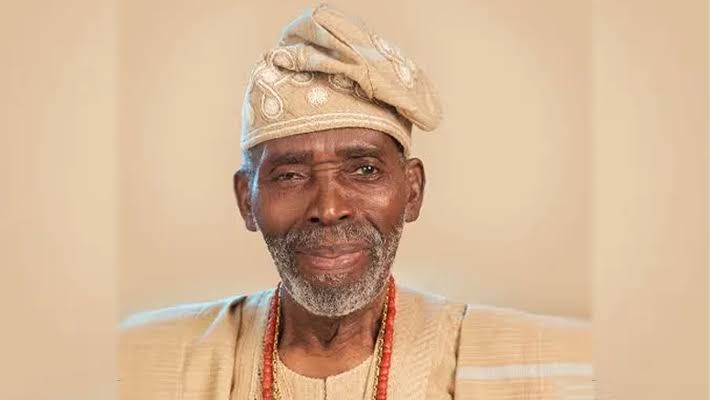
Nigeria’s film industry is preparing to say its final public farewell to veteran actor Olu Jacobs, whose funeral service is scheduled for today, October 2, at This Present House in Lekki, Lagos. The service follows Wednesday’s emotional Night of Tributes at Glover Memorial Hall, where family members, actors, filmmakers and admirers reflected on Jacobs’ extraordinary career and the influence he had on generations of Nigerian performers. Richard Mofe-Damijo, Sola Sobowale, Funke Akindele, Jide Kosoko and several other prominent figures attended the tribute event. Jacobs died on September 16, 2026, at the age of 84 after a career spanning more than five decades across theater, television and film.
Nollywood is preparing for a final farewell to one of its most respected figures as the funeral service for veteran actor Olu Jacobs takes place in Lagos today.
The service is scheduled to begin at 10 a.m. at This Present House, Freedom Way, Lekki Phase 1.
Family, friends, actors, filmmakers and other members of Nigeria’s creative community are expected to gather for the ceremony before a private burial.
Guests have been asked to wear shades of green.
The funeral brings to a close several days of remembrance for Jacobs, who died on September 16 at the age of 84.
His passing ended a career that stretched across British theater and television, Nigerian film and decades of work developing younger performers.
NIGHT OF TRIBUTES BROUGHT NOLLYWOOD TOGETHER
Before today’s funeral, colleagues gathered Wednesday at Glover Memorial Hall in Lagos Island for a Night of Tributes celebrating Jacobs’ life.
The event began at 4 p.m., with guests dressed in shades of blue.
It featured speeches, musical performances and personal recollections from actors who worked with Jacobs during different periods of his career.
Among those present were Richard Mofe-Damijo, Sola Sobowale, Funke Akindele, Jide Kosoko, Adebayo Salami, Hilda Dokubo, Segun Arinze, Rita Dominic, Emeka Ike and Femi Adebayo.
Minister of Arts, Culture, Tourism and the Creative Economy Hannatu Musawa also attended.
Jacobs’ widow, veteran actress Joke Silva, was present alongside members of their family.
RMD REMEMBERS A MENTOR
Richard Mofe-Damijo, widely known as RMD, remembered Jacobs as a father figure and mentor whose influence extended far beyond the roles he played.
RMD recalled advice from Jacobs that emphasized treating every role and every line seriously, regardless of its size.
The lesson reflected a philosophy that younger actors repeatedly associated with Jacobs.
He was known for treating acting as a disciplined profession rather than simply a route to fame.
For many performers, that attitude helped shape their understanding of the craft.
SOLA SOBOWALE CREDITS JACOBS WITH HELPING SHAPE HER CAREER
Sola Sobowale became emotional while remembering Jacobs.
She credited him as one of the people who helped train and shape her as an actor.
Sobowale’s tribute reflected a recurring theme throughout the evening.
Many of those speaking did not remember Jacobs only as a successful screen performer.
They remembered him as someone who invested time in younger actors and helped establish professional standards in an industry that was still developing.
That mentorship has become one of the central parts of his legacy.
A CAREER THAT BEGAN LONG BEFORE MODERN NOLLYWOOD
Olu Jacobs’ career began decades before the Nigerian film industry became internationally known as Nollywood.
Born Oludotun Baiyewu Jacobs on July 11, 1942, he developed an interest in acting at a young age.
He later moved to Britain, where he trained at the Royal Academy of Dramatic Art in London.
That training gave him a foundation in classical theater before he began working professionally.
Jacobs performed in stage productions and appeared in British television programs during the earlier years of his career.
He also worked with major theatrical institutions and developed experience in an entertainment industry that was considerably more established than Nigeria’s film sector at the time.
INTERNATIONAL FILM AND TELEVISION EXPERIENCE
Jacobs appeared in several international productions before becoming a major figure in Nigerian cinema.
His credits included appearances in films such as The Dogs of War, Baby: Secret of the Lost Legend and Pirates.
His years abroad gave him professional experience across theater, television and film.
When he returned to Nigeria, that experience became particularly valuable.
Nigeria’s home video industry was beginning to grow rapidly, and Jacobs became one of the actors who brought formal training and professional discipline into the emerging sector.
BECOMING ONE OF NOLLYWOOD’S MOST RECOGNIZABLE FACES
Jacobs eventually became one of the most recognizable actors in Nigerian cinema.
His voice, physical presence and measured delivery made him particularly suited to roles involving authority.
He frequently portrayed kings, chiefs, fathers, political figures and wealthy patriarchs.
Those performances became familiar to audiences across Nigeria and other African countries.
During the expansion of Nollywood in the 1990s and 2000s, Nigerian films traveled widely across Africa and into diaspora communities.
Jacobs became part of that cultural export.
For many viewers outside Nigeria, he was one of the faces associated with the rise of African home video cinema.
MORE THAN FIVE DECADES IN THE PROFESSION
Few Nigerian actors maintained careers as long as Jacobs did.
His work extended for more than five decades.
That longevity allowed him to participate in several distinct phases of Nigeria’s entertainment industry.
He worked before the home video boom.
He became a leading figure during Nollywood’s rapid expansion.
And he remained respected as the industry moved toward larger cinema productions, streaming platforms and international collaborations.
That ability to remain relevant across changing generations contributed to his status as an elder statesman of Nigerian film.
THE PARTNERSHIP WITH JOKE SILVA
Jacobs’ professional legacy is closely connected with his wife, Joke Silva.
The two became one of Nigeria’s most prominent acting couples.
Their relationship extended beyond marriage and individual acting careers.
Together they founded the Lufodo Group and the Lufodo Academy of Performing Arts.
Through those organizations, they contributed to training young performers and strengthening professional education within Nigeria’s creative sector.
This work expanded Jacobs’ influence beyond the films and television programs in which he appeared.
BUILDING THE NEXT GENERATION
The Lufodo Academy represented an important part of Jacobs and Silva’s belief in formal training.
Nigeria’s film industry grew quickly, but formal acting schools and structured professional development were not always widely available.
Jacobs consistently emphasized preparation and discipline.
Through teaching and mentorship, he helped younger actors understand performance as a craft requiring study and continuous improvement.
The Night of Tributes demonstrated how deeply that work affected other performers.
Many speakers described personal experiences rather than simply listing his awards.
HIS FAMILY REMEMBERED THE PRIVATE MAN
Jacobs’ sons also used the tribute ceremony to describe the man they knew away from cameras.
Soji Jacobs recalled how fiercely his father protected the family’s privacy despite his public profile.
For audiences, Olu Jacobs was a famous actor.
For his children, he was also a father who tried to keep family life separate from celebrity.
Those recollections offered a different image from the commanding screen characters for which he was best known.
NATIONAL AND INDUSTRY HONORS
Jacobs received numerous awards during his career.
In 2007, he won the Africa Movie Academy Award for Best Actor in a Leading Role.
He later received the Industry Merit Award at the Africa Magic Viewers’ Choice Awards.
He also received lifetime achievement recognition for his contribution to African film.
In 2011, the Nigerian government awarded him the national honor of Member of the Order of the Federal Republic, commonly known as MFR.
The award recognized a career whose importance extended beyond entertainment.
Jacobs had become part of Nigeria’s cultural identity.
HIS INFLUENCE EXTENDED ACROSS AFRICA
The impact of Jacobs’ work was not limited to Nigeria.
Nollywood became one of Africa’s most widely consumed cultural products during the period in which Jacobs was at the height of his career.
Nigerian movies circulated throughout Ghana, Sierra Leone, Liberia, Kenya, South Africa and many other countries.
They were also watched extensively by African communities in Europe and North America.
Jacobs therefore became recognizable to audiences who had never visited Nigeria.
His performances contributed to the growth of a shared African popular culture driven increasingly by stories produced on the continent.
HIS COMMANDING VOICE BECAME PART OF HIS IDENTITY
One of Jacobs’ most recognizable qualities was his voice.
Deep, controlled and authoritative, it made him instantly recognizable even before viewers saw his face.
Directors frequently used that presence in roles requiring gravitas.
But colleagues have emphasized that his performances were not simply about physical authority.
Jacobs was known for preparation, timing and understanding character motivation.
Those skills came from decades of theater training and professional experience.
NOLLYWOOD GREW AROUND HIS GENERATION
The Nigerian film industry Jacobs helped build is dramatically different today from the one he entered.
Modern Nollywood productions now appear on major global streaming platforms.
Nigerian actors participate in international projects.
Cinema releases can attract audiences across multiple countries.
Large production companies increasingly use equipment and standards comparable with other major film industries.
But much of that progress rests on foundations established by earlier generations.
Jacobs belonged to that generation.
His work helped demonstrate that acting could become a respected lifelong profession in Nigeria.
THE INDUSTRY ALSO REMEMBERS HIS PROFESSIONALISM
Professionalism was repeatedly mentioned during Wednesday’s tributes.
Actors remembered Jacobs as punctual, disciplined and prepared.
Those qualities may appear ordinary in established industries.
But during Nollywood’s earlier years, productions frequently operated under severe financial and logistical limitations.
Actors sometimes worked long hours on extremely tight schedules.
Maintaining professional standards in such conditions could be difficult.
Jacobs became known as someone who expected seriousness regardless of production size.
A FINAL FAREWELL IN LEKKI
Today’s ceremony at This Present House represents the public conclusion of the funeral program announced by Jacobs’ family.
The church is located on Freedom Way in Lekki Phase 1.
Family members asked attendees to wear shades of green.
Following the service, Jacobs is expected to be buried privately.
The decision to keep the burial private reflects the distinction the family has maintained between public celebration of his career and private family moments.
HIS DEATH ENDS AN ERA
The death of Olu Jacobs represents more than the loss of a successful actor.
It marks the passing of one of the figures who connected several eras of African performance.
He trained within the British theatrical tradition.
He appeared in international productions.
He returned home and participated in the rise of Nigerian television and film.
He later became a mentor to performers who would themselves become Nollywood stars.
That journey gave his career an unusual depth.
HIS WORK WILL REMAIN ON SCREEN
Film creates a particular kind of legacy.
Audiences who never met Jacobs can continue watching his work long after his death.
Future generations can encounter the same performances that introduced him to viewers decades earlier.
That gives actors a form of cultural permanence.
Jacobs’ characters will continue appearing on television, streaming platforms and archives.
But colleagues say his most important contribution may exist outside the screen.
It can also be seen in the actors he trained, encouraged and influenced.
NIGERIA SAYS GOODBYE
Wednesday’s tribute ceremony was filled with memories.
Today’s funeral carries a different meaning.
It is the moment in which the entertainment community and the Jacobs family formally say goodbye.
For Nollywood, his passing closes another chapter in the story of the industry’s founding generation.
For his family, it is the loss of a husband, father and grandfather whose private identity existed beyond public recognition.
And for audiences across Africa, it is the farewell to a performer whose voice and presence became part of the continent’s cinematic memory.
Olu Jacobs leaves behind more than a collection of films.
He leaves behind professional standards, institutions, students, colleagues and generations of viewers who grew up watching his work.
Today, Nollywood says its final farewell to the Lion of Lufodo.