

NORTH KOREA CONFIRMS INTERMEDIATE RANGE STRATEGIC MISSILE TEST
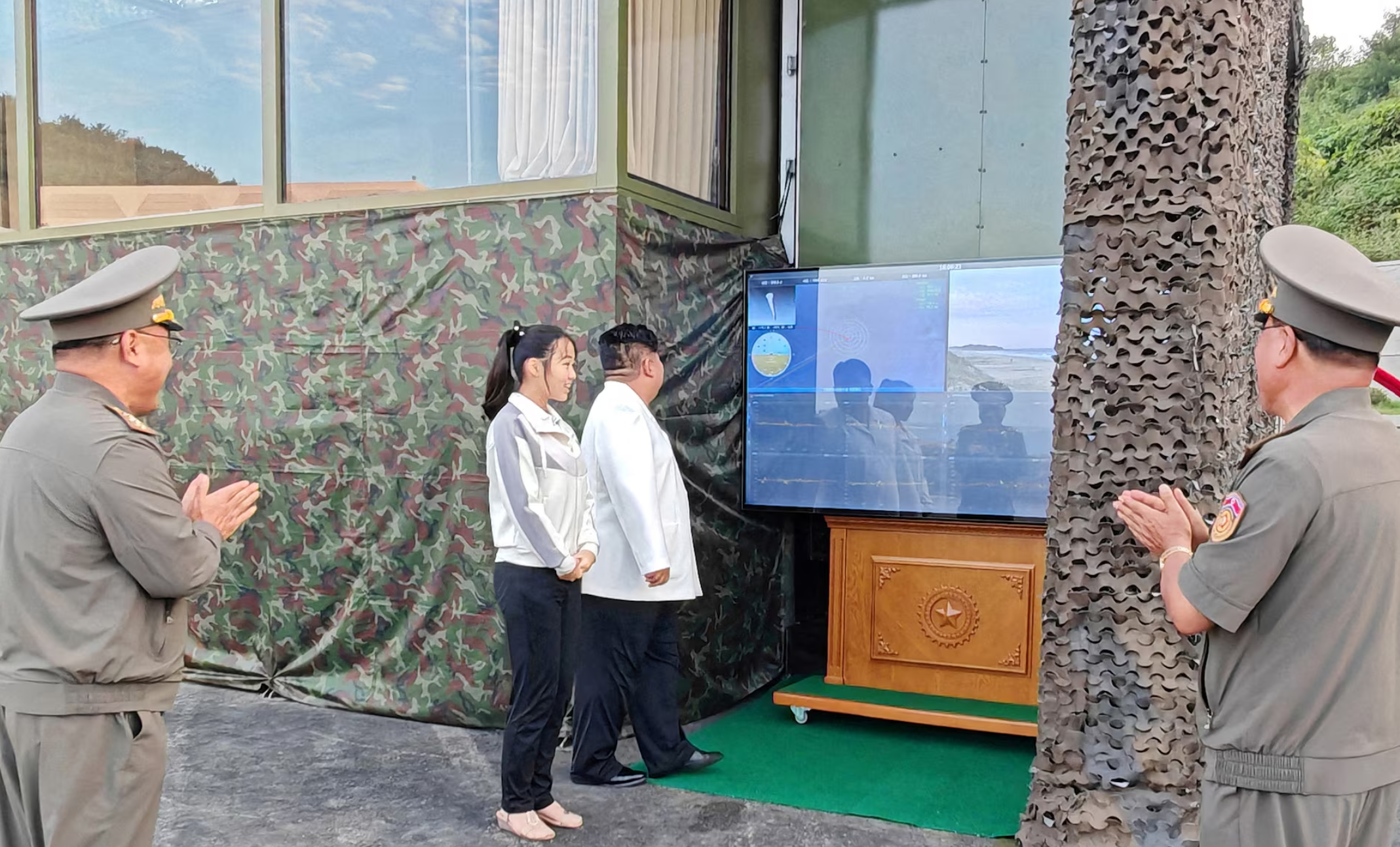
North Korea has officially confirmed that it conducted a drill involving an intermediate range strategic missile, providing new details about a ballistic missile launch detected earlier by South Korea and Japan. Kim Yo Jong, the influential sister of North Korean leader Kim Jong Un, said the exercise involved what Pyongyang described as a strategic weapon fired toward the sea off North Korea’s east coast. South Korea’s military said the missile traveled more than 700 kilometers after being launched from the Wonsan area. Japan separately estimated the missile flew about 680 kilometers and reached an altitude of around 90 kilometers before landing outside its exclusive economic zone. North Korea says the drill was intended to test operational readiness and strategic deterrence capabilities.
North Korea has confirmed that it conducted an intermediate range strategic missile drill, offering new details about a launch detected earlier by South Korea and Japan.
Kim Yo Jong, a senior official in North Korea’s ruling Workers’ Party and sister of leader Kim Jong Un, said the exercise involved what Pyongyang described as a strategic weapon.
The missile was fired toward the sea off North Korea’s east coast.
North Korean state media later said Kim Jong Un personally oversaw the drill.
MISSILE TRAVELED HUNDREDS OF KILOMETERS
South Korea’s military said the missile was launched from the Wonsan area and traveled more than 700 kilometers.
Japan’s Defense Ministry separately estimated that the missile covered about 680 kilometers.
Tokyo said the missile reached an altitude of approximately 90 kilometers before falling into the Sea of Japan outside Japan’s exclusive economic zone.
Japanese authorities said there were no immediate reports of damage to aircraft or ships.
PYONGYANG CALLS IT A STRATEGIC WEAPON DRILL
North Korea described the launch as an exercise involving an intermediate range strategic missile.
Pyongyang said the purpose was to test troop readiness and the operational effectiveness of the weapon system.
The term strategic weapon is often used by North Korea when referring to systems it considers important to its nuclear deterrence.
However, outside governments and independent analysts continue to assess the precise technical capabilities of individual weapons separately from North Korea’s own descriptions.
KIM JONG UN OVERSAW TEST
North Korean state media said Kim Jong Un supervised the drill.
The government said the exercise involved a unit assigned what it described as a special strategic mission.
Pyongyang also said the test was intended to evaluate the reliability and effectiveness of the weapon system.
North Korea has continued developing ballistic missiles of different ranges despite international sanctions and United Nations Security Council resolutions restricting its missile program.
KIM YO JONG CLAIMS MISSILE USED UNUSUAL FLIGHT PATH
Kim Yo Jong said the missile followed what she described as a wave like trajectory.
She claimed the weapon can alter its flight path at relatively low altitude, making interception more difficult.
Those claims come from North Korea and have not been independently confirmed in full.
South Korea and Japan continue to analyze the launch data.
NORTH KOREA ALSO CLAIMS AI ENHANCEMENT
Pyongyang has said the weapon incorporates artificial intelligence related technology to improve flight control and maneuverability.
Independent governments have not publicly confirmed the full extent of those capabilities.
Military analysts typically rely on radar data, satellite imagery and other intelligence to assess missile performance.
SOUTH KOREA AND JAPAN MONITORED LAUNCH
South Korea’s Joint Chiefs of Staff detected the missile shortly after launch and shared information with the United States and Japan.
Japan activated its national monitoring and crisis management systems.
Tokyo said the missile landed outside its exclusive economic zone.
Both countries condemned the launch and said it violated United Nations Security Council resolutions.
TEST COMES AMID HEIGHTENED KOREAN PENINSULA TENSIONS
The launch comes during another period of heightened tension between North and South Korea.
Relations have deteriorated significantly in recent years.
North Korea has abandoned its previous policy goal of eventual reunification with the South and has increasingly described South Korea as a hostile state.
Seoul has strengthened military cooperation with the United States and Japan.
DMZ LANDMINE DISPUTE ADDS TO TENSION
The test also follows a new dispute over an explosion in the Demilitarized Zone.
South Korea has accused North Korea of responsibility for a landmine explosion that injured South Korean soldiers in September.
North Korea has rejected that accusation.
Kim Yo Jong described Seoul’s claim as unfounded and rejected demands for an apology.
The disagreement has added to wider military tension along the border.
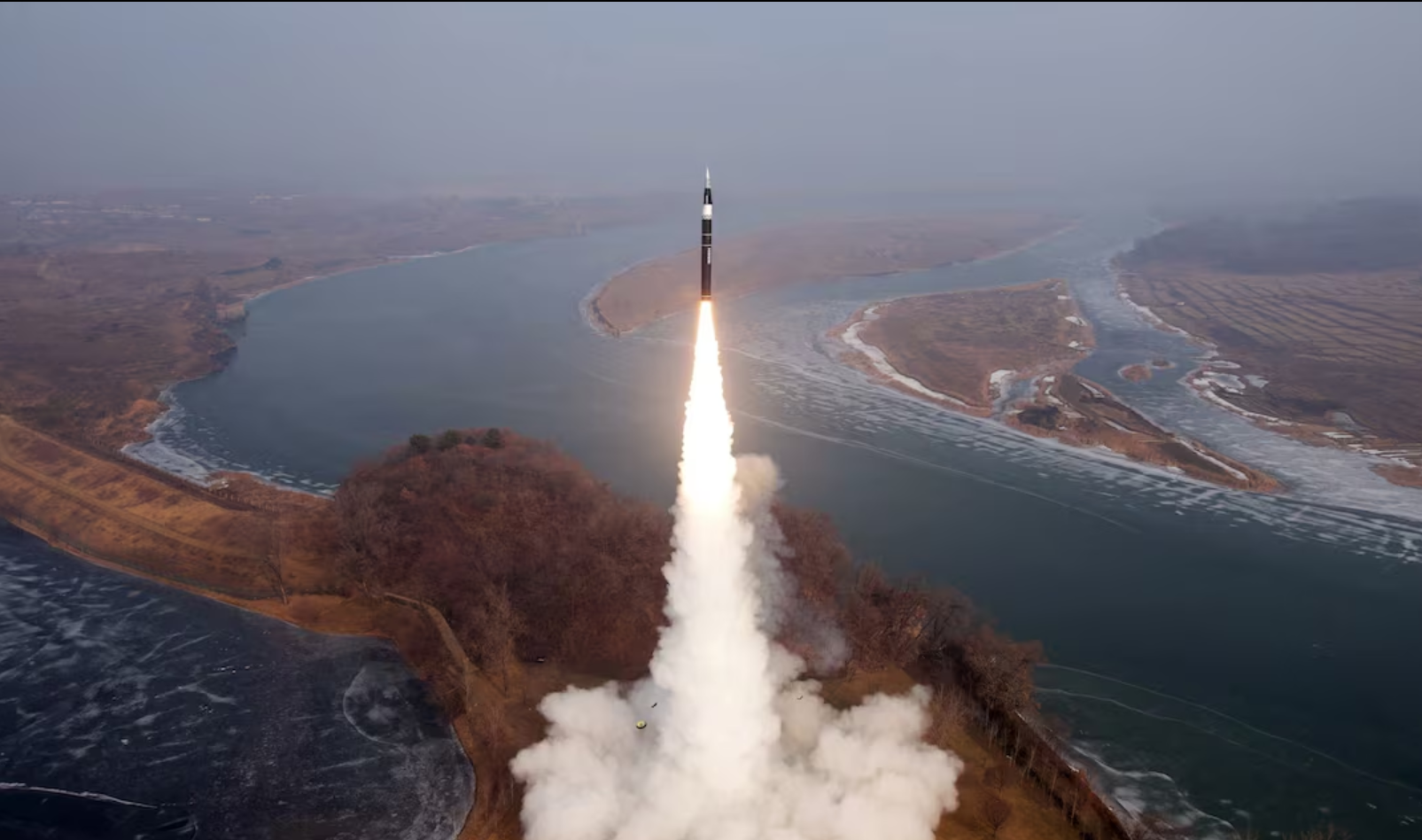
NORTH KOREA HAS CONDUCTED MULTIPLE MISSILE TESTS THIS YEAR
Saturday’s launch is among more than 10 missile tests carried out by North Korea in 2026.
Pyongyang has repeatedly tested short range, intermediate range and other missile systems.
Some launches have followed military exercises involving the United States and South Korea.
North Korea frequently says those exercises justify strengthening its own military capabilities.
Washington, Seoul and Tokyo say their drills are defensive.
INTERMEDIATE RANGE MISSILES HAVE REGIONAL SIGNIFICANCE
Intermediate range ballistic missiles can potentially threaten targets beyond the Korean Peninsula.
Depending on range and trajectory, such systems could reach parts of Japan and other locations in the wider region.
North Korea has also been developing hypersonic glide vehicles and maneuvering warheads intended to make missile defense more difficult.
Independent assessments of those capabilities vary.
JAPAN SAYS LAUNCH THREATENS REGIONAL SECURITY
Japan’s government condemned the missile launch.
Its Defense Ministry said repeated ballistic missile activity by North Korea threatens the peace and security of Japan, the region and the international community.
Japan also said it had lodged a formal protest.
Tokyo continues to coordinate closely with Washington and Seoul on missile tracking.
UNITED STATES AND ALLIES MONITOR DEVELOPMENTS
The United States maintains tens of thousands of troops in South Korea and Japan.
North Korean missile launches are closely monitored because of their potential implications for U.S. forces and regional allies.
Washington has repeatedly called on Pyongyang to return to diplomacy while maintaining sanctions and military deterrence.
North Korea has shown little interest in renewed negotiations under current conditions.
NORTH KOREA SAYS NUCLEAR DETERRENCE IS ESSENTIAL
Kim Jong Un has repeatedly said North Korea must strengthen its nuclear and missile capabilities.
Pyongyang says the programs are necessary to deter what it describes as hostile policies by the United States and its allies.
The United States, South Korea and Japan say North Korea’s missile and nuclear development increases regional instability.
TEST DOES NOT ESTABLISH FULL COMBAT CAPABILITY
A successful launch does not by itself prove that every advertised capability of the weapon is operational.
Military systems typically require repeated testing, deployment, training and integration into command structures.
Independent analysts will therefore continue examining flight data and imagery before drawing conclusions about the missile’s full performance.
WHAT IS CONFIRMED
North Korea has confirmed conducting an intermediate range strategic missile drill.
South Korea detected a ballistic missile traveling more than 700 kilometers.
Japan estimated the missile traveled about 680 kilometers and reached roughly 90 kilometers in altitude.
The missile landed outside Japan’s exclusive economic zone.
No damage was reported.
WHAT REMAINS BASED ON NORTH KOREAN CLAIMS
Claims about the missile’s wave like trajectory, artificial intelligence capabilities and ability to defeat interception come from North Korean officials.
Those claims have not been independently verified in full.
Outside militaries are continuing to assess the launch.
WHAT HAPPENS NEXT
South Korea, Japan and the United States are expected to continue analyzing the missile’s flight characteristics.
Regional governments will also monitor whether North Korea carries out additional launches.
The latest confirmation shows that Pyongyang is continuing to develop and exercise intermediate range strategic weapons as tensions remain high across the Korean Peninsula.