NPP THREATENS DISQUALIFICATION AS IT ORDERS PARLIAMENTARY HOPEFULS TO STOP CAMPAIGNING
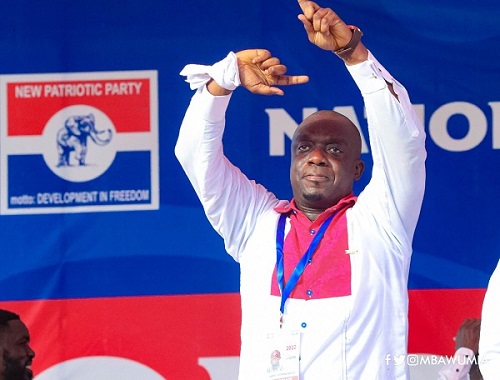
The NPP has ordered all prospective parliamentary aspirants, their agents and supporters to immediately suspend campaign activities until the party formally announces its parliamentary primary timetable. The directive prohibits posters, rallies, constituency tours, inducements, meetings designed to solicit delegate support and paid media or social media promotion. Members who violate the order could face disciplinary action that may affect their eligibility to contest.
Ghana’s opposition New Patriotic Party has ordered prospective parliamentary candidates across the country to immediately halt campaign activities, warning that members who defy the directive could face disciplinary action severe enough to affect their eligibility to contest the party’s upcoming parliamentary primaries.
The directive, issued on Sunday, October 11, and signed by NPP General Secretary Justin Kodua Frimpong, follows what the party described as numerous complaints that prospective parliamentary aspirants had already begun campaigning in constituencies even though the party had not formally opened the parliamentary selection process or announced the timetable and guidelines governing the contests. The leadership said those activities breach the party’s regulations and Code of Conduct, risk creating an uneven playing field among prospective candidates and could undermine internal unity and discipline ahead of what is expected to be an important phase of the NPP’s reorganization.
The order applies not only to individuals considering parliamentary bids but also to their agents and supporters. The NPP instructed them to stop mounting posters, billboards, banners and other branded campaign materials, organizing rallies, undertaking constituency tours or holding meetings with polling station executives for the purpose of soliciting support. The party has also prohibited the distribution of items or other inducements to delegates and party members, as well as paid advertisements in traditional media and on social media platforms promoting prospective candidates.
Party officers have also been drawn directly into the directive. Officials at polling station, electoral area, constituency, regional and national levels, together with members of the party’s tertiary students wing, TESCON, have been instructed not to use their positions or social media platforms to promote prospective parliamentary candidates or facilitate premature campaign activities. The decision is intended to prevent party structures from being used to provide an advantage to particular individuals before the formal race begins.
The warning carries a potentially serious consequence for aspirants who ignore it. The NPP said members who fail to comply could be subjected to the party’s disciplinary procedures and that such action may ultimately affect their eligibility to contest when nominations formally open. Constituency and regional executives have consequently been instructed to enforce the directive within their respective jurisdictions while the national leadership prepares the timetable and guidelines for the parliamentary selection process.
The party did not publicly identify the aspiring candidates or constituencies that triggered the complaints, leaving unclear how widespread the early campaigning had become before the intervention. It also did not announce a date for parliamentary primaries or indicate how long the suspension of campaigning will remain in force. For now, prospective candidates are expected to wait until the party formally opens the process before restarting activities designed to secure delegate support.
The intervention comes as the NPP continues a broader internal reorganization following changes to its national leadership. Former General Secretary John Boadu was elected national chairman at the party’s National Delegates Conference in Kumasi on October 3, defeating former Energy Minister Boakye Agyarko and former national chairman Paul Afoko. The parliamentary selection process will represent another significant stage in the rebuilding of the party’s structures as it positions itself for future national elections.
Internal parliamentary contests have historically been among the most competitive exercises within Ghana’s major political parties because they determine who carries the party’s ticket in individual constituencies and can reshape local power structures long before a general election campaign begins. The contests can become particularly intense in constituencies considered strongholds, where winning a party primary may place a candidate in a strong position ahead of the national vote.
That competition also creates incentives for potential aspirants to begin cultivating delegates well before nominations formally open. Constituency visits, financial assistance to local party structures, community events, branded materials and private meetings with delegates can become important tools for prospective candidates attempting to build support early. The NPP’s latest directive suggests its leadership wants to prevent such activity from developing into an unofficial campaign period in which some candidates establish substantial advantages before others are permitted to enter the race.
The party specifically identified inducements as one of the prohibited activities, an issue that has repeatedly attracted attention during internal political contests in Ghana. Money, gifts and other forms of support can become contentious when candidates compete for the backing of delegates, particularly where rivals accuse one another of attempting to influence the process through financial or material incentives. By including those activities in the suspension order, the NPP leadership is signaling that restrictions on premature campaigning extend beyond visible posters and rallies to the more direct methods prospective candidates may use to court party members.
The inclusion of paid social media promotion also reflects the changing nature of internal party campaigning. Aspirants increasingly use Facebook, X, TikTok and other digital platforms to build name recognition, circulate endorsements and promote constituency activities months before formal campaign periods begin. The NPP has now made clear that such promotion falls within the activities it considers premature, and party officials themselves have been warned against using their accounts to amplify individual parliamentary hopefuls.
The decision places responsibility on local executives to enforce a national directive that could become difficult to police in practice. While posters, rallies and paid advertisements can be relatively easy to identify, informal meetings, private delegate outreach and political activity presented as community engagement can be harder to distinguish from campaigning. The party has not yet publicly explained how alleged violations will be investigated or what evidence would be required before disciplinary sanctions are imposed.
That distinction could become important if prospective aspirants challenge accusations that they continued campaigning after the directive. Without an announced timetable for the primaries, some members may also continue routine constituency activities that could be interpreted differently by rivals. The party’s ability to enforce the order consistently across constituencies will therefore be central to whether the measure succeeds in creating the level playing field the leadership says it wants.
The directive also arrives at a sensitive point for a party attempting to manage internal competition without allowing it to deepen factional divisions. Parliamentary primaries often produce disputes over candidate qualification, delegate lists, endorsements by party executives and allegations of favoritism. By freezing campaigns before publishing the rules, the NPP leadership appears to be seeking greater control over the opening phase of the contest and to establish a common starting point for prospective candidates.
For aspiring MPs, however, the immediate effect is straightforward. Campaign posters are expected to come down, rallies and constituency tours designed to solicit support must stop, paid promotional activity must be suspended and supporters have been told to comply with the same restrictions imposed on candidates themselves. Party executives have also been placed on notice that their positions cannot be used to promote individual aspirants while the freeze remains in effect.
The NPP has said the official timetable and guidelines governing the parliamentary process will be announced in due course, meaning the next major development will be the release of dates for nominations, vetting, campaigning and voting. Those guidelines are also expected to clarify the qualifications prospective candidates must meet and the disciplinary framework that will apply once the competition officially begins.
Until then, the party’s warning effectively puts the emerging parliamentary contest on hold while leaving open questions over enforcement and whether aspirants who had already begun organizing will fully comply. The leadership has framed the intervention as necessary to protect fairness, unity and discipline, but the strength of that policy will ultimately depend on whether the rules are applied consistently to all prospective candidates regardless of their influence or support within the party.
The coming weeks will therefore test both the authority of the new party leadership and the willingness of parliamentary hopefuls to wait for the formal process. The NPP has not disclosed the individuals whose activities generated the complaints, and no aspirant has yet been publicly sanctioned under the directive. What is clear is that the leadership has now drawn a line around premature campaigning and has attached a potentially decisive consequence to crossing it: the possibility that an aspirant could jeopardize the very candidacy he or she is attempting to promote.