OBASANJO TO TINUBU: DEBT IS WORSE THAN LEPROSY AND COULD DESTROY GENERATIONS
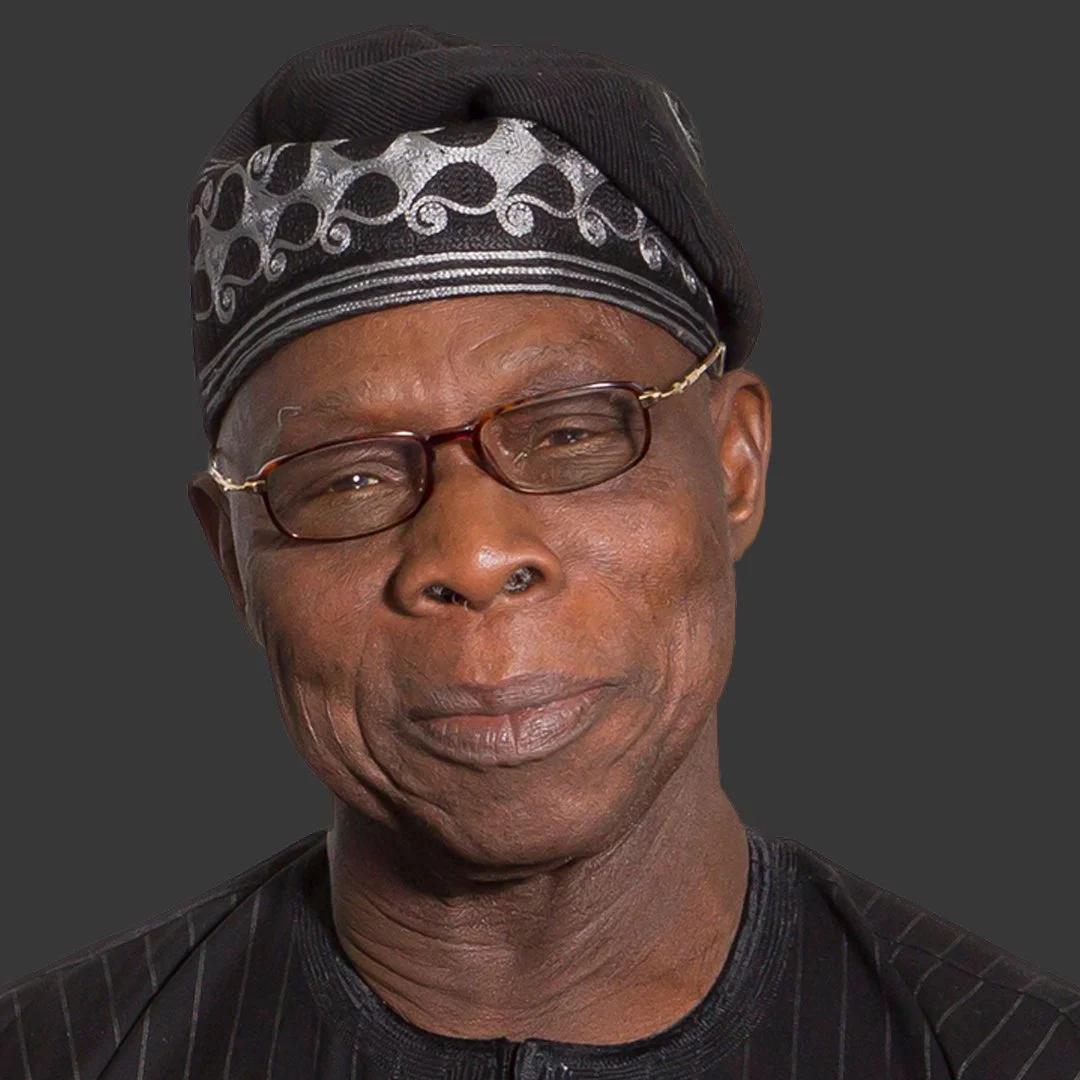
Former President Olusegun Obasanjo has sharply criticised President Bola Tinubu’s borrowing policy, declaring at the Ajíbóṣìn Symposium in Abeokuta that excessive debt can burden generations and directly rejecting Tinubu’s earlier statement that borrowing is “not leprosy.” The criticism follows Tinubu’s request for legislative approval of $20.517 billion and €1.045 billion in new external borrowing for infrastructure and development programmes. Nigeria’s total public debt stood at ₦166.79 trillion as of June 30, 2026, up ₦7.44 trillion from March.
Former President Olusegun Obasanjo has launched a sharp public criticism of President Bola Tinubu’s borrowing policy, warning that Nigeria’s growing reliance on debt risks placing a long-term economic burden on generations that had no role in creating it. Speaking on Friday at the third Ajíbóṣìn Symposium in Abeokuta, Ogun State, Obasanjo rejected Tinubu’s earlier argument that government borrowing should not automatically be treated as harmful if the country retains the capacity to repay, declaring instead that excessive debt could inflict damage far beyond the tenure of any single administration.
Obasanjo’s intervention came only days after Tinubu asked the National Assembly to approve a fresh external borrowing plan worth $20.517 billion and €1.045 billion under the Federal Government’s 2026–2027 Supplementary External Borrowing Plan. The proposed facilities are intended to finance projects and programmes across infrastructure, agriculture, healthcare, education, water supply, security, employment generation and financial-management reforms, according to the President’s letter to lawmakers. The administration argues that additional financing is necessary to close infrastructure gaps and accelerate development, but Obasanjo’s criticism places renewed scrutiny on whether Nigeria is borrowing at a pace that can be sustained without imposing heavy repayment costs on future budgets.
The former president directly challenged Tinubu’s previous statement that “borrowing is not leprosy,” a remark the President made in April while defending the government’s debt strategy. Tinubu had argued that borrowing itself was not inherently problematic so long as the government worked hard enough to repay what it borrowed. Obasanjo dismissed that position at the Abeokuta forum, arguing that debt could be more destructive than a disease affecting an individual because public borrowing can pass costs from one generation to another.
His argument was rooted in a broader concern about intergenerational responsibility. When a government borrows, the immediate administration may spend the money, but repayment often extends far beyond the political cycle in which the debt was incurred. Interest and principal payments can remain on public accounts for years or decades, reducing the amount of future revenue available for education, healthcare, infrastructure and other government programmes. Obasanjo’s warning therefore goes beyond the question of whether Nigeria can access additional loans and focuses instead on whether the economic benefits generated by those loans will be sufficient to justify the long-term repayment burden.
The criticism is especially significant because Obasanjo’s presidency remains closely associated with one of the largest debt-relief exercises in Nigeria’s history. During his administration between 1999 and 2007, Nigeria negotiated substantial relief from the Paris Club of creditor nations, eliminating roughly $30 billion in external obligations through a combination of cancellation and repayment. That experience has shaped Obasanjo’s long-standing position that debt should be approached cautiously and that governments should avoid allowing borrowing to grow faster than the productive capacity of the economy.
Tinubu’s administration takes a different view. The government argues that borrowing can be economically justified when funds are directed toward infrastructure and development projects capable of expanding the economy, increasing government revenue and creating long-term productive assets. Under that argument, the central question is not whether debt exists but whether it is used effectively and whether the economy grows strongly enough to service it without creating unsustainable pressure.
The latest borrowing request illustrates that approach. Tinubu’s letter to the National Assembly identified a broad range of sectors expected to benefit from the proposed financing, including transport and other infrastructure, agriculture, healthcare, education, water supply, security, job creation and financial-management reforms. The government says these areas require investment that cannot be financed solely from existing revenues, particularly as Nigeria continues to deal with significant infrastructure deficits and development needs.
The proposed external facilities are substantial. The dollar component alone amounts to more than $20.5 billion, while the euro component exceeds €1 billion. When combined, the facilities are worth more than $21 billion at current exchange rates, although the exact naira value would depend on the exchange rate at the time the funds are drawn and repaid. The request is being considered by the National Assembly, which has constitutional responsibility for approving major external borrowing plans.
Obasanjo’s criticism comes against the backdrop of a rapidly expanding public-debt stock. According to the Debt Management Office, Nigeria’s total public debt reached ₦166.79 trillion by June 30, 2026, rising from ₦159.35 trillion at the end of the first quarter. The figure represented an increase of about ₦7.44 trillion in only three months and roughly ₦14.39 trillion compared with the same period a year earlier.
Of the ₦166.79 trillion total, domestic debt accounted for approximately ₦91.59 trillion, while external debt stood at about ₦75.20 trillion. The Federal Government was responsible for the overwhelming majority of the total debt stock, with states and the Federal Capital Territory accounting for the remainder. In dollar terms, Nigeria’s total public debt was approximately $120.93 billion at the end of June.
Those figures do not automatically prove that Nigeria’s debt is unsustainable, but they show why the debate has become increasingly intense. Debt sustainability depends on several factors, including the size of the economy, government revenue, interest rates, exchange rates, maturity structures and how borrowed money is used. A country can carry a large absolute debt if it has sufficient revenue and economic capacity, while a smaller debt burden can become difficult to manage if revenue collection is weak.
Nigeria’s particular challenge has historically been weak public revenue relative to the size of the economy. Although the country is Africa’s most populous nation and one of its largest economies, government revenue as a percentage of gross domestic product has remained low compared with many peer countries. That means debt-service obligations can consume a large proportion of actual government income even when the overall debt-to-GDP ratio appears moderate by international standards.
This distinction is central to the debate between the administration and its critics. Government officials frequently point to Nigeria’s debt-to-GDP ratio as evidence that borrowing remains manageable, while critics focus on the proportion of revenue required to service debt and the amount of new borrowing needed to finance existing expenditure. Both measures provide useful information, but they answer different questions.
Tinubu’s government has attempted to improve the revenue side of the equation through tax reforms, subsidy removal, exchange-rate adjustments and efforts to increase oil and non-oil receipts. Officials argue that these reforms are beginning to strengthen the government’s fiscal position and should make it easier to support productive borrowing. They have also maintained that infrastructure investment is essential if Nigeria is to achieve faster growth and increase future revenue.
The administration’s argument is that failing to invest can itself create long-term costs. Poor roads, unreliable electricity, insufficient healthcare facilities, weak water systems and inadequate infrastructure can limit productivity and discourage investment. If borrowing is used to correct those problems and the resulting projects produce economic returns greater than the cost of financing, debt can contribute to development rather than undermine it.
Obasanjo’s warning focuses on the opposite risk: borrowing that does not generate sufficient returns. If loans are poorly managed, wasted, diverted or spent on projects that do not improve productivity, future governments inherit the repayment obligations without inheriting equivalent economic benefits. In that scenario, debt can crowd out other spending and leave younger Nigerians paying for decisions made decades earlier.
The former president also linked his concerns to the long-term decline in the value of the naira. Reflecting on the period when he established his farm decades ago, Obasanjo questioned how Nigeria moved from an era in which the naira was substantially stronger than the U.S. dollar to a period in which the exchange rate has weakened dramatically. His broader point was that Nigeria’s economic management over several decades has failed to produce the level of prosperity and stability that its natural resources and population should theoretically support.
Currency depreciation matters directly to external borrowing because loans denominated in dollars or euros become more expensive in naira terms when the domestic currency weakens. Even if the foreign-currency amount owed does not change, the government may need significantly more naira revenue to purchase the foreign exchange required for repayment. This makes exchange-rate risk one of the most important considerations in any large external borrowing plan.
The government may still determine that foreign borrowing is preferable in certain cases because external loans can carry lower interest rates and longer repayment periods than some domestic debt instruments. Multilateral and bilateral financing can also include concessional terms that are cheaper than commercial borrowing. However, those benefits must be weighed against currency risk and the possibility that a weaker naira could increase future repayment costs.
Nigeria has already experienced the consequences of that dynamic. As the naira depreciated sharply following foreign-exchange reforms, the naira value of existing external obligations increased even where the original dollar amount remained unchanged. This contributed to the significant rise in the reported public-debt stock in domestic currency.
Obasanjo’s criticism also extended beyond borrowing to Nigeria’s relationship with international financial institutions. He questioned the extent to which the country should rely on policy prescriptions associated with institutions such as the World Bank and International Monetary Fund, arguing that such institutions were created before Nigeria became independent and may not always reflect the country’s specific economic circumstances.
That position reflects a long-running debate in developing economies over the role of international institutions in fiscal and economic policymaking. The World Bank and IMF provide financing, technical assistance and policy advice to governments, but critics often argue that recommended reforms can be too standardised or insufficiently sensitive to domestic political and social conditions. Supporters counter that the institutions provide valuable expertise and financing and that many of the reforms they advocate address genuine structural weaknesses.
Nigeria’s recent economic reform programme has included measures broadly supported by international institutions, including removal of the petrol subsidy, greater flexibility in the foreign-exchange market and tax reform. The government argues that these policies are necessary to correct long-standing distortions and place the economy on a more sustainable footing, while critics have focused on their immediate impact on living costs and purchasing power.
Obasanjo’s intervention adds another layer to that debate by questioning whether Nigeria is becoming too comfortable with the idea that borrowing can fill the gaps created by weak domestic revenue and development needs. His position suggests that governments should place greater emphasis on productivity, fiscal discipline and domestic economic capacity rather than relying repeatedly on external financing.
The Tinubu administration has repeatedly rejected the idea that borrowing automatically represents fiscal failure. Officials have argued that major economies around the world use debt to finance development and that the relevant issue is whether borrowed funds are directed toward projects that generate economic value. They have also pointed to ongoing infrastructure programmes as evidence that new financing is tied to specific investment priorities rather than being accumulated without purpose.
That defence will be tested by the details of the 2026–2027 borrowing plan. Lawmakers will need to examine the individual projects, lenders, interest rates, repayment periods and expected economic benefits before deciding whether to approve the facilities. The fact that the President has requested approval does not mean the full amount will necessarily be borrowed immediately or under a single facility. Large borrowing plans often comprise multiple loans negotiated with different institutions and drawn over time.
Transparency will therefore be critical. Nigerians will want to know exactly which projects are being financed, how much each project will cost, what lenders are involved and what terms the government is accepting. Without that information, it becomes difficult for citizens and independent analysts to determine whether the loans are economically justified.
The same issue applies to project implementation. A loan approved for infrastructure can only be considered productive if the infrastructure is actually delivered efficiently and provides the expected economic benefits. Cost overruns, abandoned projects and weak procurement can turn theoretically productive borrowing into a fiscal liability.
This is one reason debt debates in Nigeria often become arguments about governance rather than economics alone. Borrowing can be financially rational in principle but still become harmful if institutions do not ensure that money is spent transparently and effectively.
Obasanjo’s experience with the Paris Club gives his criticism additional political weight. Nigeria’s debt-relief negotiations during his presidency were celebrated at the time as freeing the country from a major external burden and giving future governments greater fiscal flexibility. The former president has frequently referred to that episode when warning against allowing the country to accumulate another debt stock that becomes difficult to manage.
The circumstances today are different from those that produced the Paris Club crisis, but the historical comparison remains politically powerful. Nigeria spent years servicing large external obligations before eventually negotiating relief, and many older policymakers remember the extent to which debt constrained government finances during that period.
Tinubu’s administration argues that today’s borrowing is structured differently and is tied more directly to development priorities. Nigeria also has a much larger economy than it did during earlier debt crises, and its debt portfolio is distributed across domestic and external instruments rather than being concentrated solely in traditional bilateral obligations.
Nevertheless, the pace of debt accumulation has become increasingly difficult to ignore. The rise from ₦159.35 trillion in March to ₦166.79 trillion in June demonstrates how quickly the headline figure can move, particularly when exchange-rate changes and new borrowing occur simultaneously.
The external component of the latest borrowing plan is likely to attract particular scrutiny because of the size of the facilities and the currency risk involved. The Senate Committee on Local and Foreign Debts is expected to review the request, and the House of Representatives has also received the President’s letter.
Lawmakers face the challenge of balancing Nigeria’s need for infrastructure against concerns over debt service. Rejecting all borrowing could delay development projects, but approving large facilities without sufficient scrutiny could increase future fiscal pressure.
The debate also has political implications ahead of the 2027 election cycle. Economic policy, inflation, exchange rates and the cost of living have become central issues in Nigerian politics, and public borrowing is increasingly being discussed as part of a broader argument over the administration’s economic record.
Obasanjo’s intervention is therefore unlikely to remain a purely technical debt discussion. As a former president and one of Nigeria’s most prominent elder statesmen, his comments will inevitably be interpreted through the lens of national politics even though the substance of his warning concerns long-term fiscal management.
The government is likely to continue arguing that infrastructure development cannot wait until Nigeria generates enough revenue to finance every project from current income. Roads, power systems, hospitals, schools, water networks and security infrastructure often require large upfront investments that governments around the world finance partly through debt.
The real question is whether those projects generate enough economic value to justify the financing. If a new road significantly reduces transport costs and supports trade, or a power project increases industrial productivity, the economic return may exceed the cost of borrowing. If projects are poorly selected or badly executed, the same debt can become a burden.
Obasanjo’s warning can therefore be understood as a demand for a much higher standard of justification. His argument is not simply that all debt is automatically illegitimate, but that borrowing becomes dangerous when governments treat it as an easy substitute for disciplined economic management.
The former president also questioned the quality of leadership and economic decision-making in Nigeria more broadly. He asked what the country’s leaders understand about the challenges facing the nation and whether they possess the capacity to translate that knowledge into effective policy.
That criticism reflects frustration with Nigeria’s long-term development trajectory. Despite enormous oil wealth and decades of public spending, the country continues to face inadequate electricity, weak infrastructure, high poverty, unemployment and pressure on public services.
For critics like Obasanjo, the fact that Nigeria still needs to borrow heavily for basic infrastructure after decades of oil production raises questions about how previous revenues were managed. For the current administration, however, inherited infrastructure gaps are precisely why new investment is necessary.
Both perspectives highlight the same underlying problem: Nigeria requires enormous capital to meet the needs of a population that now exceeds 200 million, but government revenue remains insufficient to finance all those needs without borrowing.
The challenge is therefore not whether Nigeria should ever borrow, but how much it can safely borrow, what it should borrow for and how effectively borrowed funds are used.
Debt service will remain central to that calculation. As more loans are added to the portfolio, future budgets must allocate larger amounts to interest and principal repayment unless government revenue grows fast enough to offset the increase.
This is the generational concern Obasanjo emphasised. A government may enjoy the political benefit of announcing and constructing projects today, while administrations years later continue paying for them. If the projects remain productive, that can be justified. If they fail to deliver economic returns, future taxpayers bear the cost without receiving equivalent benefits.
Nigeria’s young population makes the argument particularly important. Millions of Nigerians who are children today will enter the workforce during the repayment periods of loans currently being negotiated. They will inherit both whatever infrastructure is built and whatever debt remains outstanding.
That is why borrowing decisions are ultimately questions about both present needs and future obligations.
Tinubu’s administration will likely continue to defend the current borrowing plan as part of a broader development strategy. The President has made infrastructure expansion a central part of his economic programme and has repeatedly argued that difficult reforms are intended to build a stronger long-term economy even where they create short-term hardship.
Obasanjo’s intervention challenges that narrative by asking whether new borrowing is itself creating another long-term vulnerability. His warning suggests that growth financed through excessive debt can become self-defeating if future revenues are increasingly consumed by repayments.
The latest debate therefore places two competing fiscal philosophies in direct view. Tinubu’s position is that borrowing can be a legitimate tool if government has the capacity to repay and uses the money productively. Obasanjo’s position is that debt can become destructive across generations and should be treated with far greater caution.
Neither position can be evaluated solely through rhetoric. The answer will depend on the terms of the loans, the performance of the projects they finance, Nigeria’s future economic growth and the government’s ability to increase revenue without placing excessive pressure on households and businesses.
That makes parliamentary scrutiny particularly important. Lawmakers should be examining not only the headline amount but also the economic return expected from each facility and the risks attached to foreign-currency borrowing.
Independent monitoring after approval will be equally important. Nigerians need to be able to trace borrowed money from legislative approval to project implementation and eventually to measurable economic outcomes.
Without that accountability, public confidence in borrowing will remain weak regardless of the government’s assurances.
The wider debt debate is also likely to intensify as the country prepares its next budget. Interest payments, debt service and new financing requirements will compete with demands for higher spending on security, education, healthcare and infrastructure.
Every naira committed to debt service is a naira that cannot be spent elsewhere unless government revenue rises. That trade-off is unavoidable, which is why debt sustainability is ultimately a question about the quality of fiscal choices.
Obasanjo’s remarks at the Ajíbóṣìn Symposium have therefore brought a long-running economic argument back into sharp political focus. His warning that debt can damage generations directly challenges Tinubu’s attempt to normalise borrowing as a standard instrument of development policy.
For the administration, the burden will now be to demonstrate that the more than $20 billion and €1 billion it wants lawmakers to approve will create assets and economic opportunities capable of justifying the future repayment obligations.
For Obasanjo and other critics, the concern is that Nigeria has repeatedly accumulated obligations without producing enough long-term transformation to make those obligations harmless.
The debate will continue in the National Assembly, where legislators must decide whether the 2026–2027 Supplementary External Borrowing Plan provides sufficient economic value to justify the additional exposure. Their decision will affect not only current infrastructure projects but the structure of Nigeria’s public finances for years after the present administration leaves office.
What makes the argument so consequential is that both sides are talking about the future. Tinubu says borrowing today can build infrastructure and opportunities for tomorrow, while Obasanjo warns that the same debt can leave tomorrow’s Nigerians paying for decisions they never made.
Nigeria’s challenge is ensuring that the first outcome, rather than the second, is what ultimately materialises.