OLUREMI TINUBU HONOURED AS ‘JAGABAN MATAN ZAMFARA’ DURING APC WOMEN’S RALLY VISIT
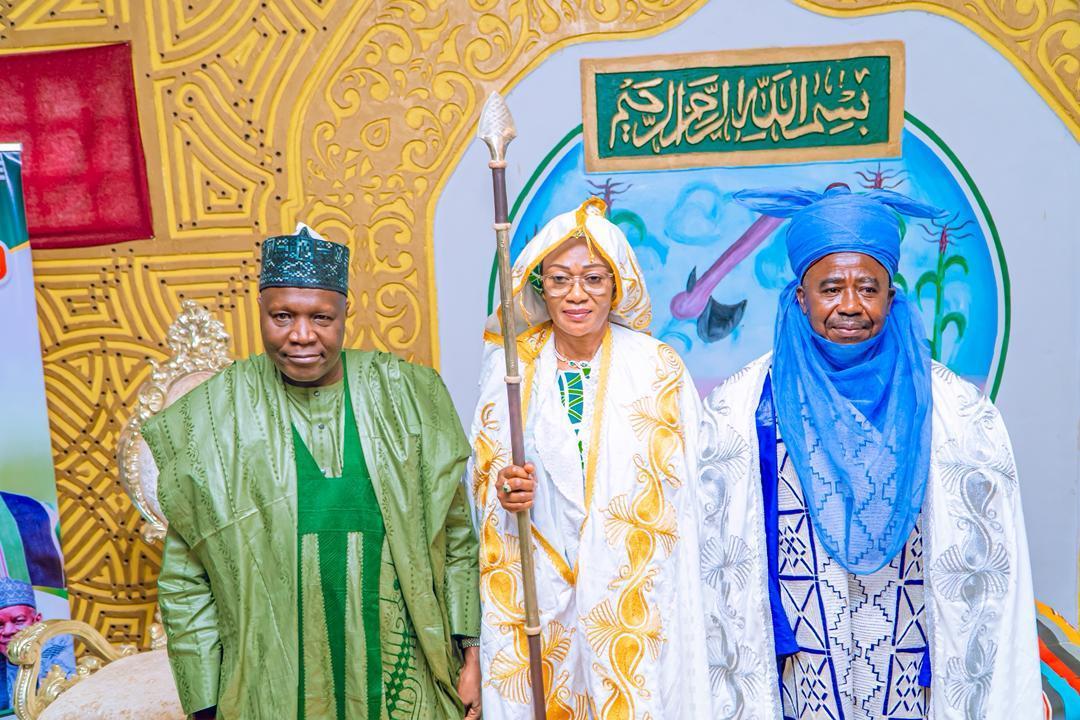
Nigeria’s First Lady, Senator Oluremi Tinubu, has been conferred with the traditional title of Jagaban Matan Zamfara, meaning broadly “Leader of the Women of Zamfara,” by the Zamfara State Council of Emirs. The honor was presented during her November 13 visit to Gusau, where she met traditional rulers before attending the APC North-West Women’s Mega Rally and Empowerment Programmed. The Emir of Anka and chairman of the state traditional council said the recognition reflected her work in women’s empowerment, girl-child education and humanitarian support. Tinubu described the honor as a call to greater service and pledged continued support for women, children and vulnerable groups.
GUSAU, NIGERIA — Nigeria’s First Lady, Senator Oluremi Tinubu, has been conferred with the traditional title of “Jagaban Matan Zamfara” by the Zamfara State Council of Emirs during a visit to Gusau that combined traditional engagements, women’s empowerment activities and political mobilization ahead of Nigeria’s 2027 general elections. The title was bestowed on Friday, November 13, during a courtesy meeting with traditional rulers at the Grand Chamber of the Zamfara State Government House, where the First Lady had stopped as part of her wider programmed in the state before attending the All Progressives Congress North-West Women’s Mega Rally and Empowerment Programmed.
The conferment was confirmed in a statement by Busola Kukoyi, Special Assistant on Media to the First Lady, who said the title was presented by members of the Zamfara State Council of Emirs during Tinubu’s meeting with the traditional institution. The title is commonly rendered as “Leader of the Women of Zamfara,” reflecting a traditional recognition associated with leadership and service to women in the state. Some reports from the visit referred to the title as “Jagaban Matan Arewa,” but the First Lady’s media office and several reports directly covering the conferment identified the title as “Jagaban Matan Zamfara.” The distinction is important because the two formulations carry different geographical meanings, with Zamfara referring specifically to the state and Arewa referring more broadly to northern Nigeria.
The Chairman of the Zamfara State Council of Chiefs and Emir of Anka, Alhaji Attahiru Ahmad, said the honor recognized Tinubu’s work in areas including women’s empowerment, girl-child education, humanitarian support and assistance to vulnerable communities. The traditional council also linked the recognition to programmed undertaken through the Renewed Hope Initiative, the First Lady’s social intervention platform, which has supported women, children, students and families through food distribution, economic assistance and other welfare programmed. Tinubu thanked the traditional rulers for the recognition and described the title as a call to greater service, pledging to continue supporting women, children and vulnerable groups.
The ceremony brought together traditional rulers representing communities across Zamfara, alongside political office holders, women leaders and other dignitaries attending the First Lady’s visit. The meeting with the emirs was one of several engagements surrounding the North-West women’s rally, an event organized by the ruling All Progressives Congress as part of a broader push to strengthen grassroots mobilization before the 2027 elections. Tinubu later addressed women leaders and party supporters from across the seven North-West states and called for unity within the party as President Bola Tinubu seeks a second term.
Addressing the rally in Gusau, the First Lady urged women and other political stakeholders to intensify community-level engagement and support the continuation of the administration’s programmed. She called particularly on women to participate actively in politics and argued that women remain central to both electoral mobilization and community development. The political nature of the gathering was explicit, with senior APC figures using the rally to appeal for support for the president’s re-election, even as the First Lady also emphasized the empowerment and humanitarian elements of her visit.
Tinubu also used the occasion to acknowledge the insecurity that has affected Zamfara and the wider North-West for years. The region has endured persistent banditry, kidnappings, attacks on rural communities and displacement, with women and children often among those most severely affected. She expressed sympathy to families who had lost relatives to violence and said the Federal Government remained committed to improving security and economic opportunities in the region. Her remarks reflected the political importance of insecurity in Zamfara, where public confidence in government is closely tied to whether authorities can reduce attacks and restore normal economic activity in communities that have experienced repeated violence.
The rally also featured the distribution of empowerment materials to women and young people. Organizers said the support was intended to improve livelihoods and encourage greater economic participation among beneficiaries. Similar women-focused engagements have been organized by the APC and First Lady’s office in other parts of the country, blending social intervention programmed with high-profile political gatherings as campaigning intensifies ahead of 2027.
Tinubu defended the empowerment activities from suggestions that they were simply election-season gestures, saying her programmed had been running long before the current phase of political mobilization. Through the Renewed Hope Initiative, her office has promoted programmed in agriculture, education, health, social investment and economic empowerment since the beginning of the administration. Supporters of the programmed describe the interventions as part of a broader effort to reach households struggling with inflation, poverty and unemployment, while critics of political empowerment programmed in Nigeria often question whether such initiatives can be clearly separated from electoral mobilization when conducted alongside party rallies.
Governor Dauda Lawal welcomed the First Lady to Zamfara and praised her interventions through the Renewed Hope Initiative, including food outreach programmed. He described investment in women as important to household stability, economic development and sustainable peace, and publicly expressed support for President Tinubu’s second-term bid. The rally therefore carried both governmental and partisan dimensions, with official development messages appearing alongside explicit appeals for electoral support.
The involvement of Zamfara’s traditional rulers added another layer to the visit. Traditional institutions retain significant social and cultural influence across northern Nigeria, even though emirs and chiefs do not exercise the formal political powers associated with elected government. Their roles can include community mediation, cultural leadership, dispute resolution and engagement with government officials, making meetings with traditional councils a routine part of high-level political visits.
Traditional titles are also frequently conferred on politicians, public officials, business leaders and other prominent figures during visits to emirates and traditional councils. Such titles are typically presented as expressions of honor, recognition or cultural acceptance rather than constitutional office. In a political context, however, they can carry symbolic importance because they associate public figures with established traditional institutions that command respect among local populations.
The Zamfara title came only days after President Tinubu’s son, Seyi Tinubu, received the title of Dan Zaki Gwandu from the Emir of Gwandu, Alhaji Muhammadu Iliyasu Bashar, in Kebbi State. That honor, translated as “Son of the Lion of Gwandu,” also attracted attention because of its timing during a period of growing political activity ahead of the 2027 elections. Traditional rulers have maintained that such honors are cultural recognitions rather than partisan endorsements, although the frequency with which political figures receive titles continues to generate public discussion about the relationship between traditional institutions and contemporary politics.
Oluremi Tinubu herself has a long political history predating her current role as First Lady. She represented Lagos Central Senatorial District in the National Assembly for three terms and became one of the country’s more prominent female legislators before her husband assumed the presidency in 2023. Since becoming First Lady, she has positioned women’s economic support, education, health and assistance to vulnerable groups as central themes of her public role.
Her Zamfara visit was also significant personally because she said it marked the completion of visits to every state in Nigeria and the Federal Capital Territory. Tinubu described the occasion as especially meaningful and said she had long wanted to visit Zamfara. She indicated that she planned to return and told the gathering that President Tinubu also intended to visit the state, framing the trip as the beginning of deeper engagement rather than a one-off political appearance.
The First Lady’s political message at the rally was direct. She asked Nigerians, particularly women, to use their votes to support the continuation of President Tinubu’s administration in 2027 and argued that the government had made progress that should be consolidated. Those claims remain part of the ruling party’s political case for re-election and are expected to face scrutiny from opposition parties as campaigning intensifies, particularly over inflation, security, employment and the cost of living.
Other senior figures at the rally reinforced the same electoral message. The wife of the Vice President, Nana Kashim Shettima, encouraged women to play a larger role in mobilizing support across the region, while party officials urged leaders to strengthen structures at ward, community and local government levels. The Minister of State for Defense, Bello Matawalle, also called for unity among party supporters, reflecting the strategic importance the APC places on the North-West, one of Nigeria’s largest voting regions.
The broader political importance of women was repeatedly emphasized throughout the event. Nigerian parties have historically relied heavily on women for grassroots mobilization while women remain underrepresented in elected office and senior political leadership. Rallies such as the Gusau gathering seek to translate women’s organizational strength into electoral support, but they also reopen wider questions about whether political parties are doing enough to increase women’s representation beyond campaign mobilization.
The title conferred on Tinubu therefore carried significance beyond the ceremonial act itself. By describing her as a leader of Zamfara women, the traditional council linked the First Lady’s public identity to the welfare and advancement of women in a state where insecurity, poverty and displacement have placed considerable pressure on families. Tinubu’s response, describing the honor as a call to greater service, placed an expectation on her office to continue delivering programmed capable of producing visible improvements for women in the state.
At the same time, the event took place within a clearly political environment, making it important to separate the traditional honor from claims about electoral support. The Zamfara State Council of Emirs conferred the title, while APC officials separately used the visit and rally to mobilize for President Tinubu’s re-election. There was no indication in the official announcement that the title itself constituted a formal endorsement by every traditional ruler for any candidate in the 2027 election.
That distinction is likely to matter as political activities intensify across Nigeria and public officials make more frequent visits to traditional institutions. Traditional rulers are expected to maintain roles that extend across political divisions, even when elected officials and party leaders seek their blessings or appear with them at public events. Ceremonial honors can therefore carry strong cultural symbolism without necessarily amounting to a political declaration.
For the First Lady, the Zamfara visit combined several themes that have increasingly defined her public engagements: women’s empowerment, humanitarian outreach, traditional recognition and political mobilization. The conferment of the Jagaban Matan Zamfara title added a cultural dimension to the trip while the APC rally placed the visit firmly within the emerging 2027 electoral season.
The practical significance of the honor will ultimately depend less on the ceremony itself than on whether the programmed associated with the First Lady’s office continue reaching communities facing economic and security pressures. Zamfara remains one of the states most affected by banditry and rural insecurity, and women and children remain especially vulnerable to displacement, lost livelihoods and disrupted education. Against that backdrop, the traditional council’s recognition of Tinubu as a leader of women will be measured alongside the social interventions and government policies that follow.
As Nigeria moves deeper into the 2027 political cycle, the Gusau visit illustrates how traditional institutions, social programmed and party politics increasingly intersect during high-profile engagements. Tinubu leaves Zamfara with a new traditional title and renewed commitments to women and vulnerable families, while the APC leaves the rally with another platform for mobilizing one of the country’s most politically consequential regions. The coming months will show how those commitments are translated into sustained engagement beyond the symbolism of the conferment ceremony.