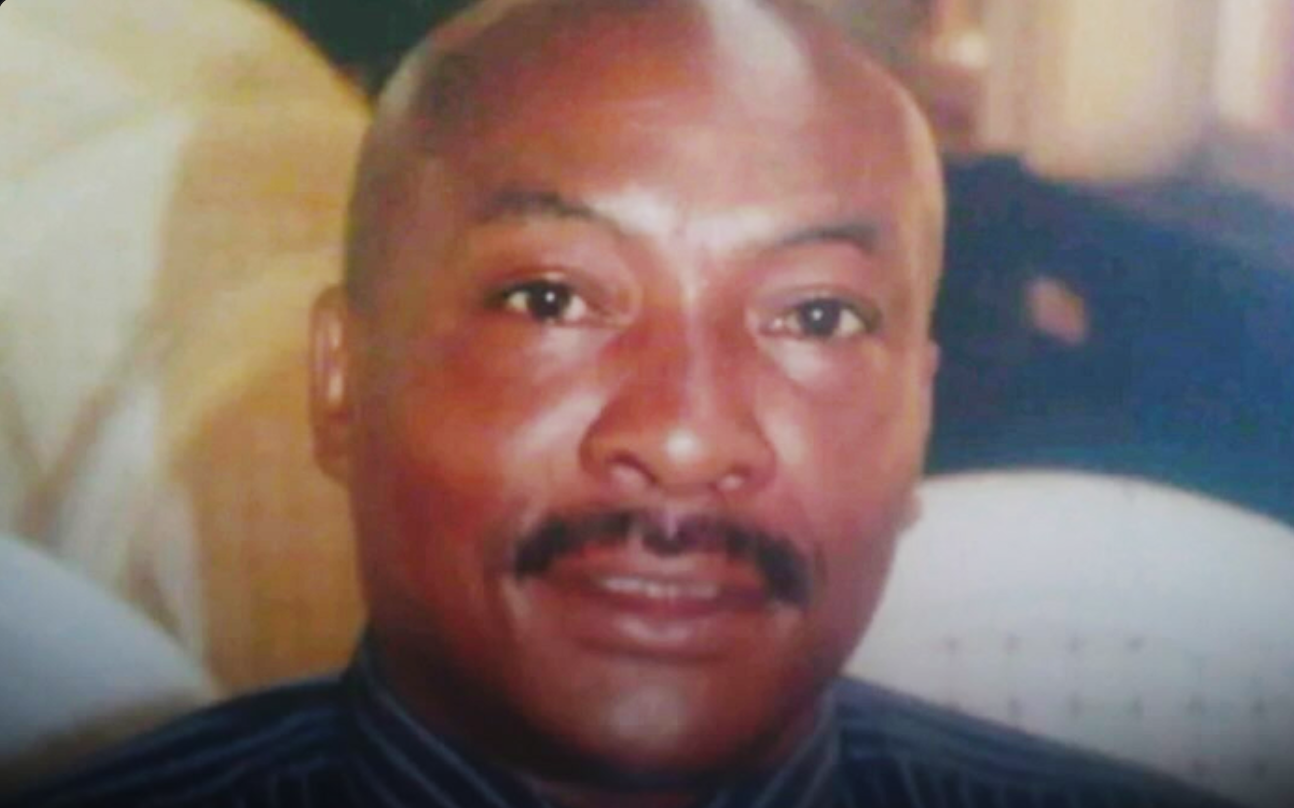
PASTOR KINGSLEY OKONKWO DEFENDS TATTOOS, SAYS CHRISTIANS SHOULD NOT TURN PERSONAL CONVICTIONS INTO BIBLICAL LAW

Pastor Kingsley Okonkwo has renewed debate over tattoos in Nigerian Christianity, arguing that believers should not condemn body art based on cultural assumptions or personal preferences and accusing some Christians of inconsistency for criticizing tattooed pastors while embracing tattooed worship musicians and athletes. Okonkwo maintains that modern tattoos are not inherently sinful and says personal consecration should not automatically be imposed on every believer. However, Leviticus 19:28 does explicitly refer to body markings or tattoos in several English Bible translations, although biblical scholars and Christian traditions disagree over whether the passage was limited to ancient mourning and religious practices or remains directly applicable to modern tattoos.
LAGOS, NIGERIA — Nigerian pastor and relationship coach Kingsley Okonkwo has renewed debate over tattoos in Christianity after arguing that believers should not condemn body art simply because of cultural assumptions, personal preferences or the kinds of people commonly associated with it. Speaking in a recent interview on the WithChude podcast, Okonkwo said Christians should distinguish between personal conviction and clear biblical doctrine, insisting that something should not automatically be labeled sinful merely because certain people or groups use it. His comments follow months of controversy surrounding his own decision to get a tattoo marking John 3:16 in Roman numerals, an action that drew strong criticism from some Nigerian Christians and prompted a wider argument over biblical interpretation, church tradition and the boundaries of personal freedom.
Okonkwo argued that the moral character of an object or practice cannot simply be determined by the identity of people associated with it. “Just because some bad people use tattoos does not mean tattoo is bad,” he said, using the example of mafia figures and pastors both wearing suits to illustrate his point. His argument was that Christians routinely accept clothing, music, hairstyles and other forms of cultural expression used by people across very different moral and social backgrounds, yet sometimes single out tattoos for condemnation. In his view, judging tattoos by association rather than by a consistent scriptural standard reflects cultural conditioning more than careful theology.
The pastor challenged critics to identify a biblical basis for treating modern tattoos as inherently sinful and said Christians should be clear about whether they are defending scripture or merely defending their own preferences. “It’s either it’s a sin or it’s not,” he said. “You have to choose which one it is. And it has to be backed by Scripture, not just your personal preference.” The formulation reflects a position he has expressed repeatedly since his tattoo first became public in early 2026, when he argued in interviews and social media posts that church members frequently confuse personal consecration, denominational rules and cultural habits with doctrines that should bind all Christians.
One important point of clarification is that the Bible does contain a passage commonly cited in discussions about tattoos. Leviticus 19:28 prohibits cutting the body for the dead and, in several English translations, warns against placing tattoo marks on the body. Christians and biblical scholars, however, disagree sharply over how that verse should be understood and whether it applies directly to modern tattooing. Some interpret it as a continuing prohibition against tattoos, while others understand it primarily in the context of ancient Near Eastern mourning rites, pagan religious markings or identity practices under the Mosaic law. That disagreement means Okonkwo’s broader claim that modern tattoos are not automatically sinful reflects one theological interpretation rather than an uncontested biblical conclusion.
The United States Conference of Catholic Bishops’ biblical notes on Leviticus 19:28, for example, state that the prohibition probably refers to ancient practices involving the branding or marking of slaves and religious devotees, reinforcing the argument that historical context matters when interpreting the passage. Other Christian traditions take a stricter view and maintain that the wording should still inform how believers treat permanent markings on the body. The debate has existed for decades and is not unique to Nigeria, but Okonkwo’s prominence as a pastor and his willingness to challenge conservative expectations have given the discussion unusual visibility within Nigerian Christianity.
Okonkwo said the reaction to his tattoo convinced him that Nigerian Christianity had not developed as much as he previously believed. “It just showed me that Nigeria has not grown, you know, mentally and spiritually as I assumed,” he said. His criticism was directed at what he described as a tendency to equate outward appearance with spiritual condition, a pattern he believes has historically led churches to impose restrictions on clothing, hairstyles and personal presentation that later became less controversial without any corresponding change in scripture.
He pointed to previous periods in Nigerian church culture when jeans, wigs and earrings were treated with suspicion or prohibited entirely in some congregations. “There was a time in this country if a Christian couldn’t wear jeans,” he said, continuing by recalling periods when wigs and earrings were also rejected by some churches. His argument was that practices once presented as evidence of holiness were later abandoned or relaxed, suggesting that cultural standards can be mistaken for permanent religious doctrine when church communities fail to distinguish between the two.
That tension between personal holiness and universal doctrine has long been present within Nigerian Pentecostal and evangelical Christianity. Certain denominations maintain detailed standards governing dress, jewelry, hairstyles, cosmetics and other forms of personal presentation, while others adopt a more permissive approach centered on individual conscience. The differences can be significant even among churches that broadly share the same evangelical theology, with practices regarded as unacceptable in one congregation considered entirely ordinary in another.
Okonkwo has previously explained his own framework for navigating those disagreements by separating Christian decision-making into categories that include personal preference, personal consecration, church policy and biblical doctrine. Under that framework, a believer may personally choose not to get a tattoo, wear certain clothes or participate in a particular activity without concluding that every other Christian is committing sin by making a different choice. He has argued that the problem begins when personal restrictions are presented as binding biblical commandments for everyone else.
The controversy became especially intense after Okonkwo revealed his own tattoo around his 50th birthday earlier this year. The tattoo features John 3:16 represented as “III” in Roman numerals, referencing one of Christianity’s best-known verses on God’s love and salvation through Jesus Christ. Okonkwo described the design as an expression of faith and later argued that the widespread publicity surrounding the tattoo had helped circulate the Gospel message because the meaning of John 3:16 was discussed across Nigerian media and social platforms.
Critics responded by citing Leviticus 19:28 and questioning whether a pastor should deliberately adopt a practice they regarded as inconsistent with biblical teaching. Others raised questions about pastoral responsibility, arguing that ministers should consider how their choices influence younger Christians even when those choices are not explicitly prohibited. Supporters, by contrast, defended Okonkwo’s decision as a matter of Christian liberty and argued that the New Testament does not establish tattooing as a moral test for believers.
Okonkwo returned to that argument in the WithChude discussion by accusing some Christians of inconsistency in the way they respond to tattoos. He said believers often criticize pastors or church leaders who associate with tattooed people while simultaneously listening to worship music performed by tattooed Christian artists or supporting athletes who have visible tattoos. He cited Elevation Worship and internationally known footballers as examples of people Christians may admire without treating their body art as evidence of spiritual failure.
“Some of the songs you are singing from Elevation Worship and all, some of those guys have tattoos,” Okonkwo said. “So we’re just hypocritical. We’re not sure what we want to do.” His broader point was that tattoos are frequently tolerated when they belong to admired foreign musicians, athletes or celebrities but treated as a major spiritual problem when adopted by a Nigerian pastor. That perceived double standard has become one of the central themes of his response to the controversy.
The example highlights the increasingly globalized nature of Nigerian Christianity. Churches across the country regularly sing music produced by American, Australian and other international worship ministries, many of whose members adopt styles of dress and personal expression that would have been considered unusual in conservative Nigerian congregations several decades ago. Social media has accelerated that cultural exchange, making younger Christians more familiar with tattoos, piercings and fashion choices that were once strongly associated with rebellion or non-Christian lifestyles.
That shift has created generational tension inside some churches. Older believers may interpret tattoos through cultural memories in which permanent body markings were associated with criminality, secret societies or non-Christian spiritual practices, while younger Christians are more likely to encounter tattoos as mainstream fashion, art or personal expression. Neither perception alone determines the theological question, but the cultural difference helps explain why the debate can become emotionally charged even among people who share the same faith.
Okonkwo’s critics have argued that Christianity requires believers to consider not only whether an action is technically prohibited but also whether it is wise, edifying or likely to create confusion. New Testament passages on Christian freedom frequently emphasize consideration for the conscience of others, and some pastors therefore argue that ministers should voluntarily avoid practices that could become stumbling blocks even when those practices are not explicitly condemned. Okonkwo’s position places greater emphasis on the danger of allowing other people’s preferences to become permanent restrictions on Christian liberty.
His comments also touch on a longstanding theological distinction between the Old Testament law given to ancient Israel and the obligations Christians believe remain applicable under the New Testament. Most Christian traditions do not require believers to observe every ceremonial, dietary or ritual provision contained in Leviticus, but they differ on how particular commands should be classified and applied. That is why the existence of Leviticus 19:28 does not by itself end the tattoo debate: the central question becomes what the command meant in its historical setting and whether the underlying principle remains binding for Christians today.
Scholars have noted that Leviticus 19:28 connects body cutting with practices surrounding the dead, leading some interpreters to conclude that the command was primarily directed against pagan mourning rituals. Others argue that the second part of the verse concerning body markings is sufficiently distinct to establish a broader prohibition. The Hebrew terminology itself has been the subject of debate, and translations vary in how explicitly they use the modern word “tattoo.” As a result, serious Christian disagreement exists without requiring either side to claim that the relevant biblical text does not exist.
Okonkwo’s own position appears to emphasize intention, conscience and the broader message of the Gospel rather than the presence of ink on the skin. He has previously said that character cannot reasonably be judged by whether a person has a tattoo because both morally admirable and morally objectionable people can have them. His comparison with suits follows the same logic: the fact that criminals wear suits does not make suits criminal, just as the existence of tattooed gang members does not automatically make tattooing morally wrong.
He has also rejected the idea that external markers should become shortcuts for judging spiritual maturity. Nigerian Christianity has historically seen repeated debates over trousers for women, jewelry, makeup, hair extensions, beards, dreadlocks and secular fashion. Some practices once condemned across wide sections of the church later became common even among pastors and worship leaders. Okonkwo argues that those shifts demonstrate the danger of presenting culturally conditioned preferences as eternal biblical rules.
At the same time, many conservative Christians would reject the suggestion that all such restrictions were merely cultural mistakes. Some denominations continue to defend modesty codes and appearance standards as legitimate applications of biblical principles even when the exact items are not named in scripture. Their argument is that Christian ethics involve interpretation and application rather than requiring an explicit verse for every modern practice. Under that approach, a church can conclude that tattoos are unwise or inappropriate without claiming that every tattooed person is morally corrupt.
The debate surrounding Okonkwo therefore involves more than tattoos. It raises broader questions about who has authority to define acceptable Christian behavior, how scripture should be interpreted across cultures and generations, and where churches should draw the line between corporate standards and individual conscience. Those questions have become more pressing as African churches interact with global Christian movements whose cultural norms can differ significantly from those historically associated with Nigerian Pentecostalism.
Okonkwo’s comments about “setting the next generation free” place him firmly on one side of that argument. He said meaningful change often requires someone to challenge inherited restrictions even when doing so attracts criticism. “Somebody has to set the next generation free,” he said. “Somebody has to do it. And that person will take the heat sometimes.” The remark reflects his view that some religious prohibitions survive not because they are clearly required by scripture but because believers fear the backlash that comes with questioning established church culture.
That language is likely to remain controversial because critics may interpret it as dismissing sincere convictions held by Christians who believe tattoos are inconsistent with holiness. Supporters, however, are likely to see the same statement as an argument against legalism, a term often used in Christian circles for attempts to impose human rules as conditions of spiritual acceptance. The disagreement illustrates why the tattoo controversy has endured long after Okonkwo first revealed the design on his arm.
The pastor’s public profile has also amplified the debate. Okonkwo is the founder and lead pastor of David Christian Centre and is widely known in Nigeria for teachings on marriage, relationships and family life. His audience extends well beyond his congregation through social media, conferences and online broadcasts, meaning his personal choices are closely watched by believers who may either see him as a model or question the influence of his teachings.
The latest interview does not resolve the theological dispute, and it is unlikely to do so. What it does clarify is Okonkwo’s underlying argument: he believes Christians should demand a clear biblical basis before declaring a practice sinful for every believer and should be cautious about transforming personal convictions into universal rules. His critics maintain that biblical interpretation involves principles as well as explicit prohibitions and that Leviticus 19:28 cannot simply be dismissed from the discussion.
For Nigerian churches, the controversy reflects a wider transition already underway as younger believers encounter global culture more directly and question some of the behavioral rules inherited from previous generations. Tattoos are only one visible example of that negotiation. Questions surrounding fashion, entertainment, gender expectations, social media, politics and popular culture are forcing churches to decide which boundaries are foundational Christian teachings and which are traditions shaped by particular eras and communities.
Okonkwo’s remarks are therefore likely to continue generating both support and criticism because they challenge not only one position on body art but a broader method of deciding what Christians may or may not do. The biblical text itself leaves room for disagreement over application, while different churches will continue to arrive at different conclusions based on their theology, historical traditions and understanding of Christian freedom. What remains clear is that the debate cannot accurately be reduced to the claim that scripture never mentions body markings at all, nor can the existence of one Old Testament verse by itself settle every question about modern tattooing.
As the discussion continues, the central divide is likely to remain between Christians who view tattoos as inconsistent with biblical holiness and those who consider them a matter of conscience, culture and personal expression. Okonkwo has made clear where he stands and appears prepared to absorb the criticism that comes with challenging a deeply rooted religious norm. His latest comments have once again pushed Nigerian Christians into a wider conversation about scripture, tradition and the limits of personal conviction, a debate that extends far beyond the tattoo on one pastor’s arm.