PETER OBI CONDEMNS REPORTED ATTACK ON KWANKWASO’S CONVOY IN KANO, DEMANDS ARREST OF PERPETRATORS
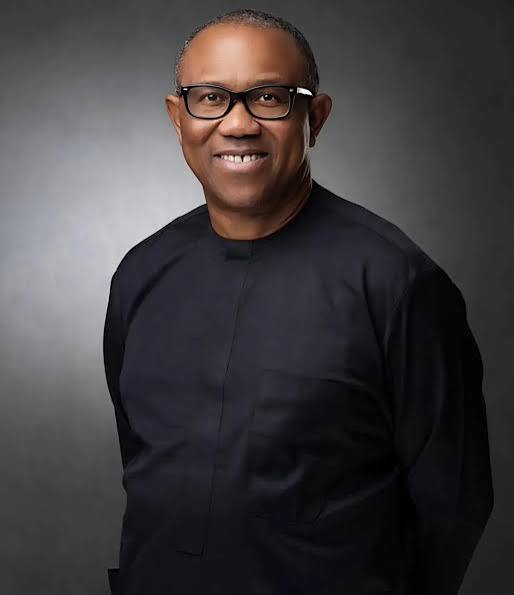
Peter Obi has condemned the reported attack on the convoy of his running mate, Rabiu Musa Kwankwaso, during an NDC campaign visit to Bichi in Kano State and has demanded an immediate police investigation and arrests. Obi said reports indicated that several people were injured and about seven vehicles were vandalized.
ABUJA, NIGERIA — Nigeria Democratic Congress presidential candidate Peter Obi has condemned the reported attack on the convoy of his running mate, Senator Rabiu Musa Kwankwaso, in Bichi Local Government Area of Kano State, calling for an immediate police investigation and the prosecution of anyone found responsible for organizing, carrying out or sponsoring the violence. Obi said he was deeply saddened by reports that members of Kwankwaso’s entourage were injured and that several vehicles were vandalized during Sunday’s campaign visit, warning that political competition must not be allowed to descend into intimidation, street violence or attacks on candidates and their supporters as Nigeria moves deeper into the campaign for the January 2027 presidential election.
The incident was first reported by officials of the NDC campaign in Kano, who said Kwankwaso and the party’s governorship candidate in the state, Aminu Abdussalam Gwarzo, had been touring a series of local government areas before arriving in Bichi. According to Ibrahim Garba Shu’aibu, spokesperson for Gwarzo’s campaign, the team had earlier visited Tofa, Rimin Gado, Kabo, Gwarzo, Shanono and Bagwai without major disruption before receiving information that the road toward Bichi had been blocked by people opposed to the rally. He said the convoy nevertheless proceeded into the area, where there were signs of stone-throwing, and later came under attack near the Bichi Local Government Secretariat as the campaign team moved through the town.
Shu’aibu alleged that youths carrying weapons emerged and attacked vehicles in the convoy, injuring members of the campaign team and smashing windscreens. He said he personally saw about seven damaged vehicles and described the incident as an attempt to intimidate the NDC as it expands its campaign activities across Kano. Other reports from the campaign said the violence occurred as the delegation was leaving Bichi after completing its political engagement, rather than during the main gathering itself, and that the rally had gone ahead despite the tension surrounding the convoy’s arrival.
The identities of the alleged attackers have not been independently established, and no evidence reviewed by VNTV at the time of publication conclusively identifies a political party or individual as having organized the incident. That distinction is important because the attack is already becoming part of an increasingly hostile political narrative in which competing parties accuse one another of using thugs, intimidation and state influence to disrupt campaign activities. The Kano State Police Command had not issued a formal public statement confirming the NDC’s full account or announcing arrests as of the latest reports, leaving significant questions about the exact sequence of events, the number of injured people and the identity or political affiliation of those involved.
The Kano State Government has also directly challenged the NDC’s version of events. State Commissioner for Information Sanusi Bature Dawakin Tofa dismissed the reported attack as a fabrication intended to generate sympathy for Kwankwaso and the opposition campaign, arguing that supporters had not produced sufficient photographs or videos to substantiate the allegation. Ibrahim Adam, a special adviser to Governor Abba Kabir Yusuf on new media, made a similar argument, accusing the Kwankwasiyya movement of attempting to exploit an invented incident for political advantage. Those claims amount to a political denial rather than an independent finding, however, and in the absence of a police investigation or verifiable evidence establishing what occurred, neither the NDC’s attribution nor the state government’s rejection can yet be treated as the final account.
Obi responded to the reported violence on Monday with some of his strongest language yet on political intimidation during the current campaign, saying disagreements over parties and candidates must never be turned into physical attacks. He described Kwankwaso as his brother and running mate and said reports that supporters had been injured and vehicles vandalized were deeply troubling. He warned that if incidents of this nature are normalized, Nigeria risks allowing violence to become embedded in its political culture at precisely the moment when campaigns should be focused on competing ideas, policy proposals and the ability of candidates to persuade voters.
“Democracy is not warfare,” Obi said, arguing that every Nigerian has a constitutional right to participate in political activity without fear of assault, intimidation or destruction of property. He said political disagreements should be resolved through dialogue, peaceful campaigning and elections rather than through force, and insisted that no individual should be protected from accountability because of political office, influence or connections. He called on the Nigeria Police Force and other relevant security agencies to investigate the Bichi incident immediately, identify those responsible and pursue anyone found to have financed or organized an attack.
Obi also expressed solidarity with Kwankwaso, the NDC leadership in Kano and those said to have been injured, while reiterating that the party’s campaign would continue to promote what he described as peaceful engagement and change through the ballot. He said no political ambition justified the loss of Nigerian lives and framed the incident as part of a broader question about whether political actors are prepared to respect the democratic rights of opponents even in areas regarded as strongholds of rival parties.
That question has become increasingly urgent because the Bichi incident follows a series of violent confrontations and attacks connected to political events across Nigeria since formal campaigning began. Only days earlier, suspected thugs attacked an NDC town hall meeting in Oregun, Lagos, where party supporters had gathered ahead of Obi’s arrival. Police confirmed that two men sustained serious injuries during the confrontation and said their roles in the violence were under investigation, while the NDC accused APC-linked elements of involvement. The APC rejected that accusation and separately condemned the disruption, calling for those responsible to be arrested.
The Lagos incident was significant because it came amid a wider pattern of politically linked violence affecting more than one party. The House of Representatives recently established an ad hoc committee to examine attacks on rallies, town halls and campaign activities nationwide after lawmakers cited incidents involving the NDC, APC, PDP and other political groups. Those incidents include attacks on APC supporters in Katsina and Nasarawa, violence involving NDC supporters in Enugu, Delta and Cross River, an assault on a convoy linked to the African Democratic Congress in Sokoto, and the killing of one person during a political procession in Asaba.
That broader context matters because it prevents the Bichi incident from being understood purely as a dispute between the NDC and its local political opponents. Nigeria has a long history of political thuggery in which armed or organized groups are sometimes recruited to intimidate supporters, disrupt meetings, destroy campaign materials or provoke clashes that can later be blamed on opponents. In some cases, police investigations have produced arrests; in others, the identity of organizers has remained contested or unresolved, reinforcing public suspicion that powerful political actors can escape accountability.
The danger becomes greater as the 2027 election approaches because the presidential campaign is already highly competitive and several major figures are contesting for power under new political alignments. Obi, who finished third in the 2023 presidential election, is now running under the Nigeria Democratic Congress with Kwankwaso as his vice-presidential candidate. Kwankwaso brings significant political influence in Kano and the wider North-West, where his Kwankwasiyya movement has built a distinctive grassroots structure over many years.
That makes Kano strategically important to the NDC campaign. Kwankwaso served two terms as governor of the state and later represented Kano Central in the Senate, while his red-cap political movement remains one of the most recognizable political networks in northern Nigeria. His presence on Obi’s ticket gives the NDC a major northern figure with an established base in a state that carries one of the largest voting populations in the country.
The Bichi visit was part of an effort to consolidate that base ahead of the presidential election and simultaneously support Aminu Abdussalam Gwarzo’s governorship campaign. The team’s decision to move through multiple local government areas in a single campaign stretch demonstrates the importance the party places on face-to-face mobilization across Kano, particularly outside the metropolitan center. That kind of movement also creates security challenges because large convoys passing through politically competitive communities can attract both supporters and hostile groups, increasing the risk of confrontation.
Campaign officials have said the team was warned about possible obstruction before entering Bichi but proceeded with the visit. Shu’aibu said Kwankwaso encouraged the delegation not to retreat and that the political engagement itself was completed before the reported attack occurred. That account, if confirmed, would raise questions about whether security agencies had prior intelligence of potential violence and whether enough officers were deployed to keep rival groups separated.
At the same time, the Kano government’s denial highlights another recurring problem in politically sensitive incidents: opposing actors often provide completely different versions of events before investigators have established basic facts. The state commissioner’s assertion that the attack was fabricated because photographic or video evidence was not immediately available does not itself prove that no attack occurred, just as campaign claims about attackers and motives do not establish who was responsible. A credible police investigation would therefore need to examine damaged vehicles, medical records, witness accounts, security footage, phone recordings and any available evidence from the location rather than rely on partisan statements.
The controversy comes against a wider debate over the responsibilities of the Nigeria Police Force during campaigns. Political parties have repeatedly accused security agencies of responding unevenly to attacks depending on which party controls a state or which candidate is involved. Police authorities have generally rejected allegations of political bias and insist that commands are expected to protect all lawful political activity regardless of affiliation. The credibility of that position depends heavily on whether investigations into attacks result in transparent arrests and prosecutions rather than statements that disappear from public attention after initial outrage subsides.
The House of Representatives inquiry into political violence reflects growing concern that isolated incidents could develop into a broader pattern before voting begins. Lawmakers have warned that attacks on campaign gatherings can discourage citizens from attending political events, reduce freedom of association and create conditions in which parties begin relying increasingly on private security or retaliatory groups. Once that cycle begins, relatively small clashes can escalate quickly because supporters come to political events expecting confrontation rather than debate.
Nigeria’s Constitution protects freedom of peaceful assembly and association, while the Electoral Act prohibits conduct intended to intimidate voters, campaigners or political opponents. Violence, threats and the use of armed groups at political gatherings can therefore amount to criminal conduct even when no death occurs. The law also provides mechanisms through which electoral offences can be investigated and prosecuted, although enforcement has historically been inconsistent.
Civil-society organizations have increasingly warned that weak accountability for electoral violence encourages repetition. Where those who attack campaigns are arrested quickly but sponsors remain unidentified, political networks can simply recruit new groups. Where no arrests are made at all, competing parties may conclude that they need their own informal protection structures, further increasing the risk of violence.
That is why Obi’s demand that investigators look beyond the people physically involved and identify possible sponsors is politically significant. However, sponsorship must be established through evidence, not assumption. At this stage, no reliable evidence publicly reviewed by VNTV identifies an individual or party as having financed the reported Bichi attack, and any accusation of sponsorship should remain an allegation unless investigators establish a direct link.
Kwankwaso himself has continued to project defiance in Kano. Video from his Bichi visit shows him urging supporters to remain prepared and not to retreat in the face of political resistance. Such language is likely to be interpreted differently by supporters and opponents, particularly in an already tense environment, making it important for candidates across parties to avoid rhetoric that could be read as encouraging confrontation.
The most effective response would be consistent enforcement rather than competing claims of victimhood. If vehicles were attacked and people were injured, investigators should document the damage, identify suspects and bring charges where evidence supports prosecution. If evidence demonstrates that claims were exaggerated or fabricated, that too should be established publicly. The credibility of the investigation depends on producing facts rather than allowing the incident to remain trapped between two partisan narratives.
The incident also places renewed attention on Kwankwaso’s role as Obi’s running mate. Their alliance brought together two politicians who competed separately in the 2023 presidential election but now present themselves as a joint opposition ticket. Obi’s strength has traditionally been associated with urban voters, younger Nigerians and the South-East, while Kwankwaso has a powerful northern political identity rooted especially in Kano. Their campaign is therefore attempting to combine different regional constituencies into a national coalition capable of challenging the ruling APC.
For the NDC, attacks or disruptions involving either candidate are likely to become a central campaign issue because the party has already complained repeatedly about restrictions and violence at its political events. For the APC and other rivals, those claims are likely to be challenged whenever evidence of direct sponsorship is absent. That makes independent investigations especially important because every unresolved incident risks being absorbed into campaign propaganda rather than producing accountability.
The Bichi controversy comes just days after lawmakers and civil-society organizations raised concerns about the rising number of political attacks nationwide. Premium Times documented multiple incidents since campaign activities began, involving not only the NDC but also the APC, PDP, ADC and AAC. Some attacks have involved stones and vandalism, while others have included firearms, machetes or fatalities. The pattern suggests that political violence cannot credibly be treated as a problem belonging to one side alone.
That wider reality reinforces Obi’s statement that political competition should not be treated as warfare. The principle applies equally to opposition and ruling-party supporters and requires law-enforcement agencies to protect campaigns in states controlled by political rivals. Candidates must be able to travel, open campaign offices, organize meetings and speak to supporters without needing permission from informal political enforcers.
The risk for Nigeria is that repeated attacks could gradually normalize a climate in which candidates calculate which communities are too dangerous to visit. That would undermine the ability of voters to hear directly from competing campaigns and could effectively allow violent groups to determine where political activity is permitted.
The coming response from Kano police will therefore be closely watched. Investigators need to establish whether the convoy was attacked as alleged, how many people were injured, how many vehicles were damaged, what weapons were used and whether the violence was spontaneous or organized. They must also determine whether any prior threat reports were received and whether security personnel accompanying the campaign responded appropriately.
Until those findings emerge, the most defensible conclusion is that there is a serious reported incident supported by statements from NDC campaign officials and multiple news organizations, but important aspects remain disputed by Kano State officials and have not yet been settled by police. Treating that uncertainty honestly does not diminish the seriousness of the allegation; it protects the reporting from becoming part of the political confrontation itself.
For Obi, the incident has become an opportunity to reinforce his campaign’s public argument for nonviolence and rule of law. His demand for arrests places pressure on security agencies to produce results while also challenging political actors to distance themselves from thuggery irrespective of who benefits from it. Whether the police investigation supports the NDC’s account or substantially changes it will determine how strong that argument remains in the specific case of Bichi.
For Kwankwaso, the controversy is especially sensitive because Kano is his political home and the center of the movement that has sustained his national relevance for years. An attack on his campaign convoy there, if independently confirmed, would highlight the intensity of competition inside a state where political loyalties remain deeply contested.
For the Kano State Government, its decision to dismiss the story as fabricated creates its own burden. If later evidence substantiates the convoy damage and injuries, the government will face questions about why it rejected the claim so quickly. If investigators find no evidence supporting the attack, the NDC will face equally serious questions about the accuracy of its account.
That is why the police investigation matters more than the competing political statements now dominating the story. Nigeria has entered a campaign period in which every confrontation can immediately become evidence for rival narratives about repression, intimidation and electoral fairness. Independent law enforcement is the mechanism designed to prevent those narratives from replacing facts.
The stakes extend beyond Bichi. Nigeria’s 2027 election will be judged not only by what happens on polling day but by whether candidates and supporters can campaign freely in the months leading up to the vote. A technically credible election cannot be considered fully democratic if parties are prevented by violence from reaching voters, just as claims of victimization cannot be allowed to go untested when facts remain contested.
Obi’s declaration that “democracy is not warfare” therefore speaks to a wider challenge facing the country rather than only one convoy in Kano. Nigeria’s political system has experienced peaceful transfers, competitive elections and growing voter participation, but it continues to struggle with thuggery and intimidation that can turn ordinary campaign events into security operations.
The immediate responsibility now lies with the Kano State Police Command and other relevant agencies to establish what happened in Bichi and make the findings public. If individuals attacked the convoy, they should be identified and prosecuted according to law, regardless of party affiliation or political connections. If evidence points to organizers or sponsors, that evidence should be followed wherever it leads.
Until then, accusations about who planned the incident should remain allegations rather than conclusions. What is already clear is that another politically charged confrontation has emerged at a time when Nigeria is experiencing growing concern about violence surrounding campaign activities, and the way authorities handle it will contribute to public confidence in whether all candidates can compete on equal and secure terms.
For Obi and Kwankwaso, the response is that their campaign will continue and that political change should be pursued through persuasion, ideas and the ballot. For the Kano government, the response is that the reported attack is being exaggerated or fabricated. Between those two positions lies the unresolved question that only an independent investigation can answer.
Nigeria’s challenge ahead of 2027 is to ensure that such questions are answered by evidence and law rather than by whichever political side speaks loudest. With the presidential campaign entering an increasingly intense phase, the Bichi controversy is another warning that preventing political violence will require more than condemnation after incidents occur; it will require intelligence, neutral policing, rapid investigations and consequences strong enough to make political actors understand that organized intimidation carries a real cost.