POLAND TREATS KRAKOW MASS SHOOTING AS TERRORISM AFTER SIX KILLED IN HISTORIC MARKET SQUARE
Polish prosecutors are treating Saturday’s mass shooting in Krakow’s Main Market Square as a terrorist act after a 24-year-old gunman killed six people and injured at least 15 others before being wounded in a shootout with police. Authorities say the suspect held far-right and ultranationalist views, although investigators have not yet established ideology as the definitive motive. Police later discovered the suspect’s parents and sister shot dead at the family home and recovered multiple firearms as the investigation widened. Poland has declared two days of national mourning.
Polish prosecutors have formally opened a terrorism investigation into the mass shooting that killed six people and wounded at least 15 others in Krakow’s historic Main Market Square, escalating the legal and security response to one of the deadliest public shootings in modern Polish history. Authorities say a 24-year-old Polish man drove into the square on Saturday afternoon and opened fire on people in one of the country’s most recognisable public spaces before engaging police in a gun battle just minutes after the first emergency calls were received. The suspect was shot and wounded by officers and remains in critical condition, while investigators are now examining possible extremist motives, his weapons history, his online activity and the disturbing discovery of three members of his immediate family found dead at his home.
Krakow District Prosecutor’s Office spokesman Tomasz Waszczuk told ABC News on Sunday that prosecutors intended to treat the attack as a terrorist act, marking a significant development in an investigation that began as a mass-killing case but is now being examined through the lens of extremist violence. Polish authorities have said the suspected attacker held radical ultranationalist and far-right views, although prosecutors are still working to determine whether those beliefs directly motivated the shooting or whether other personal factors also contributed. Officials have been careful to distinguish between evidence of extremist sympathies and a final determination of motive, which will require a wider examination of the suspect’s communications, digital devices, associations and actions before the attack.
The shooting began shortly after 3 p.m. on Saturday, November 7, when the armed man drove a vehicle into Krakow’s Main Market Square and began firing at people in several locations. Poland’s government said the first emergency call was recorded at 3:00 p.m. and 15 seconds, with nearly 40 calls reaching the emergency response centre as people fled across the square, sought shelter in shops and restaurants and tried to help the wounded. Municipal officers reached the area in less than two minutes and the first police patrol arrived within about three minutes, at which point officers exchanged gunfire with the attacker and stopped him from continuing the assault.
Six people died in the attack, including four women and two men. Polish authorities have identified several of the victims as Polish citizens and confirmed that one of those killed was a 32-year-old British man. Officials were still completing identification and consular procedures for some foreign victims on Sunday, while injured people included citizens of several European countries. The attack has therefore taken on an international dimension, with foreign governments monitoring the condition of their nationals and European leaders sending condolences to Poland.
The casualty figures shifted slightly during the first hours after the shooting as hospitals and authorities reconciled information from multiple emergency scenes. ABC News reported six people dead and 15 injured, while the Polish government later said 16 people were wounded including the suspected shooter. The most accurate way to present the current figures is therefore six people killed, 15 other people injured and the gunman also wounded, bringing the total number of wounded people to 16 when the attacker is included. Two police officers were among those seriously injured during the confrontation, and authorities said one remained in especially serious condition.
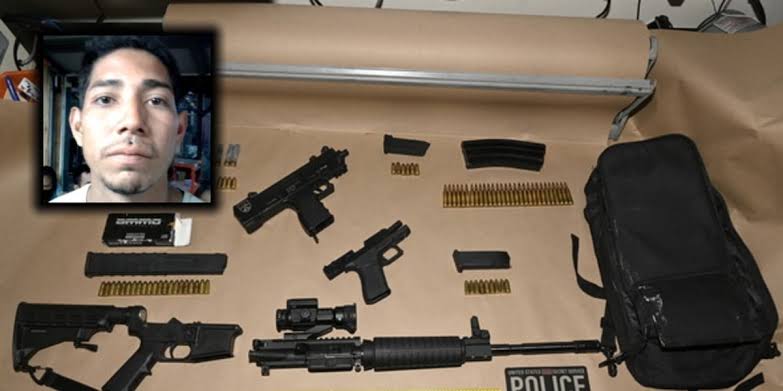
The suspected attacker used an AR-15-style rifle and was wearing military-style clothing during the shooting, according to investigators. Authorities said he legally possessed firearms and had the appropriate licence, a detail that is now likely to become a central part of the national debate over how someone with extremist views was able to accumulate and retain access to multiple weapons. Police recovered weapons and ammunition from the attack scene and later discovered additional firearms during searches connected to the investigation.
The investigation took an even darker turn when police searching the suspect’s family home in Ostrowiec Świętokrzyski, roughly 150 kilometres from Krakow, found the bodies of his mother, father and sister. Polish authorities said all three had suffered gunshot wounds and believe the family deaths are connected to the Krakow attack, although the precise sequence of events and who fired the fatal shots remain part of the investigation. Eleven firearms were ultimately linked to the suspect and his father across the locations searched, according to reporting based on police and prosecution information.
That discovery means prosecutors are no longer examining only what happened in the market square. They are reconstructing a wider chain of events that may have begun before the attacker reached Krakow, including what happened inside the family home, whether the suspect planned the public shooting in advance and whether the deaths of his relatives formed part of the same sequence. Investigators will also examine whether anyone else knew what he intended to do or assisted him in preparing the attack, although officials currently believe he acted alone in the shooting itself.
The possible extremist dimension has become particularly important because authorities say investigators uncovered evidence that the suspect held radical far-right and ultranationalist views. Polish and European security agencies have for years monitored the threat posed by individuals who become radicalised through extremist online communities, conspiracy movements or violent political subcultures without necessarily belonging to an organised terrorist group. Lone-actor violence presents a difficult challenge because a person can move from extremist rhetoric to actual violence without the communication networks or organisational structures that traditional counterterrorism surveillance is designed to detect.
Treating the Krakow shooting as a terrorist act does not mean prosecutors have completed their assessment of motive. Terrorism investigations can examine whether violence was intended to intimidate the public, advance an ideological objective or destabilise society, but prosecutors will still need to establish the suspect’s intentions through evidence. His writings, internet searches, messages, social-media activity and any material recovered from his home are likely to become crucial in determining whether the shooting was ideologically driven.
The fact that the gunman appears to have legally possessed firearms will also draw scrutiny. Poland has comparatively restrictive gun laws and a far lower rate of mass shootings than the United States and several other countries, making Saturday’s attack particularly shocking to a population accustomed to seeing such incidents as unusual. Authorities are expected to examine when the suspect obtained his licence, what background checks were performed, whether any warning signs were reported and whether his extremist views were known to police or other agencies before the attack.
Prime Minister Donald Tusk described the killings as a national tragedy and called for unity rather than political exploitation. He praised the officers who confronted the attacker, emergency medical workers who rushed into the square and civilians who helped victims despite the continuing danger. The government said the rapid police response prevented the death toll from rising further, noting that the gunman was confronted approximately three minutes after the first emergency report was received.
The speed of that response has been highlighted repeatedly by Polish officials because the attack occurred in an extremely crowded and symbolically important location. Krakow’s Main Market Square is one of Europe’s largest medieval public squares and normally attracts large numbers of residents and international tourists throughout the day. A gunman armed with a semi-automatic rifle could potentially have caused substantially more casualties had police taken longer to engage him.
Witnesses described scenes of panic as gunfire erupted around the square. People ran into cafés, restaurants and shops, while others hid behind buildings or moved away through narrow streets surrounding the Old Town. Police rapidly sealed the area and emergency services established treatment points for victims before transporting the seriously wounded to several hospitals across Krakow.
The regional government said all those taken to hospitals and operated on through Saturday night survived into Sunday morning, although several remained seriously injured. Medical teams at six Krakow hospitals were caring for those wounded, and officials said they would continue monitoring the most critical cases.
Poland declared November 8 and 9 days of national mourning. Flags were lowered, entertainment and sporting events were cancelled or postponed and public institutions across the country were asked to observe the victims. Security measures were also strengthened in Warsaw and other major cities, particularly around crowded public spaces and ahead of Poland’s Independence Day commemorations on November 11.
Authorities have been especially concerned about Independence Day because large public gatherings are expected nationwide. Regional officials have instructed local governments to review security plans for rallies, ceremonies and other events and to work closely with police on protection against vehicle attacks and armed threats. Those measures reflect both the immediate trauma caused by Krakow and the uncertainty surrounding whether the shooting could inspire copycat attacks.
The traditional hourly trumpet call from the tower of St. Mary’s Basilica in Krakow was suspended as part of the mourning, an extraordinary symbolic gesture in a city where the hejnał has been sounded for centuries. Reporting described the suspension as the first such interruption since the Second World War, underlining the scale of the shock felt across the city.
Mass shootings of this scale are rare in Poland, which has comparatively low levels of gun violence and strict firearms regulation. That rarity has intensified the national sense of disbelief, particularly because the attack took place not in an isolated location but in the heart of a major European tourist city surrounded by restaurants, shops, historic buildings and families going about an ordinary Saturday afternoon.
The shooting has also intensified broader European concerns about lone-actor extremism. Security agencies across the continent have increasingly warned that individuals can radicalise through online ecosystems that combine political extremism, conspiracy theories, violent imagery and personal grievances. Those individuals may never formally join an extremist organisation, making them more difficult to identify through traditional intelligence methods.
Polish authorities are now trying to determine whether that pattern applies in Krakow. The description of the suspect’s views as far-right and ultranationalist comes from investigators who have examined early evidence, but officials have not yet released a manifesto or other material clearly establishing an ideological purpose behind the attack. Until such evidence is made public, the terrorism classification should be understood as the legal and investigative framework being used by prosecutors rather than proof that every aspect of motive has already been resolved.
The deaths of the suspect’s relatives may also prove crucial to understanding his state of mind and planning. If investigators establish that the three family members were killed before the public attack, prosecutors will need to determine whether those killings were part of a deliberate sequence leading toward the mass shooting or arose from a separate confrontation. Ballistic testing can help determine whether the same weapons were used at the family home and in Krakow, while digital records may show how long the violence had been planned.
Police will also examine the suspect’s travel from Ostrowiec Świętokrzyski to Krakow, including vehicle movements, fuel stops, surveillance footage and communications along the route. Those details can reveal whether he travelled directly to the square, whether he visited other locations beforehand and whether the market square was chosen as a symbolic target.
The choice of Krakow’s Main Market Square could become significant if prosecutors establish an ideological motive. The square represents Polish history, tourism, commerce and public life, making it one of the country’s most visible civic spaces. An attack there would naturally attract international attention and maximise fear far beyond the immediate casualties.
However, authorities have not yet said publicly that the location was chosen for symbolic reasons. That question remains part of the investigation, and responsible reporting should avoid attributing motives that prosecutors have not confirmed.
The suspect’s condition could also affect the pace of the criminal process. He was wounded during the confrontation with police and underwent surgery, leaving him unable to be immediately questioned in full. Prosecutors will need medical clearance before conducting formal interrogations, and his ability to provide coherent testimony may influence how quickly investigators can establish a direct account of his motives.
Even if he remains unable to speak, investigators have substantial physical and digital evidence available. Weapons, ammunition, computers, mobile phones, internet accounts, surveillance footage and witness testimony can all help reconstruct his actions independently of any confession.
The officers who confronted him are likely to provide some of the most important eyewitness evidence. Police said the suspect continued firing when officers arrived, leading to an exchange of gunfire in which two officers were seriously wounded. Their intervention is being credited with preventing further deaths because it forced the attacker into confrontation before he could continue moving through the square.
The wounded officers have received widespread public support, and government officials have promised assistance to their families. Prime Minister Tusk said the country owed them respect for moving directly toward the gunfire while civilians were trying to escape.
The international victims have also drawn diplomatic attention. One of the dead was confirmed as a British citizen, while people from Austria, Germany, Portugal, Russia and Britain were among those injured according to Reuters. Consular officials have been working with Polish authorities and hospitals to support affected nationals and their families.
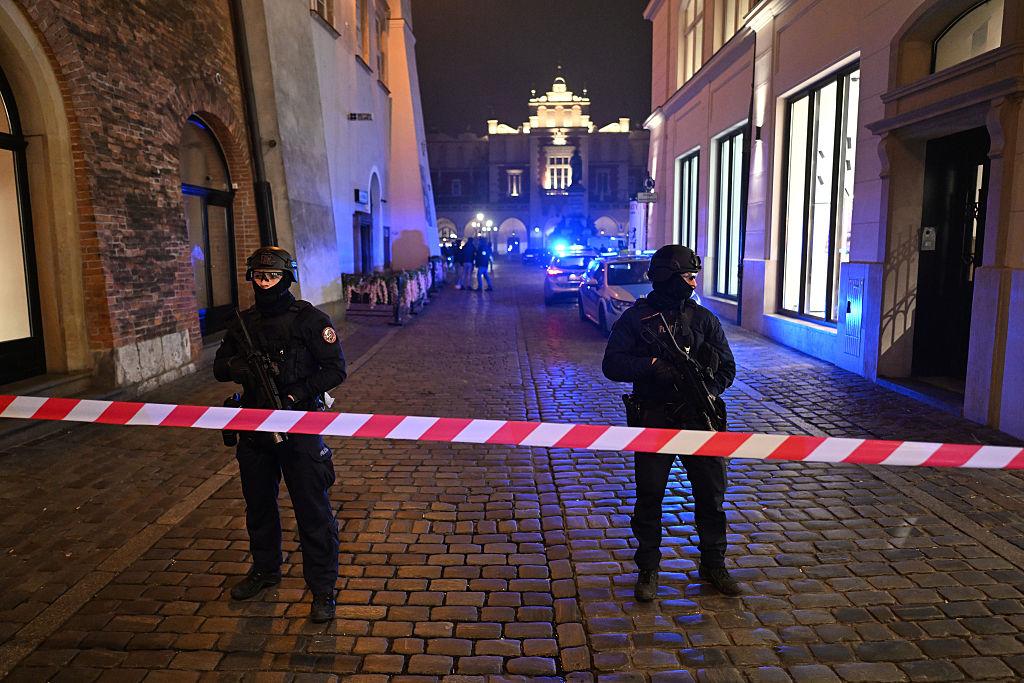
For Krakow, a city whose economy and international identity are deeply connected to tourism, the shooting has shattered the normal image of the Main Market Square as a safe gathering place filled with visitors, street performers and cafés. Photographs taken after the attack showed armed police guarding empty cobblestone streets normally crowded late into the evening, with emergency vehicles and police tape surrounding parts of the Old Town.
The incident is likely to lead to a review of security at major public spaces, particularly locations that allow vehicles to approach pedestrian areas. Authorities have already instructed officials planning Independence Day events to consider protection against vehicles entering crowds, suggesting that the way the suspect accessed the square has become part of the wider security assessment.
Attention may also turn to the availability of semi-automatic rifles under Poland’s licensing system. Investigators say the suspected shooter was a legal firearms owner, and both he and his father had access to weapons. The discovery of 11 firearms connected to the family will inevitably raise questions about whether existing licensing procedures are capable of identifying ideological or behavioural warning signs once a licence has already been granted.
Those questions will likely continue long after the immediate investigation concludes. Poland has not experienced mass shootings with the frequency seen in some other countries, meaning its legal framework has not been shaped by repeated events of this scale. Saturday’s attack could therefore trigger new debate over firearm monitoring, extremist screening and information-sharing between law-enforcement agencies.
At the same time, officials have urged the public to avoid speculation and disinformation. High-profile terrorist investigations frequently generate false claims about attackers’ identities, religion, ethnicity or political affiliations before authorities establish the facts. Polish officials have specifically asked residents to rely on verified government and police communications while the investigation remains active.
That caution is especially important because the attack has already entered political debate. Far-right violence, migration, gun regulation and national security are highly contested issues across Europe, and unverified information can quickly be used to support predetermined political narratives before investigators have finished their work.
What investigators have established so far is serious enough without speculation. A 24-year-old Polish gunman drove into Krakow’s historic centre, opened fire on civilians, killed six people, injured 15 others and exchanged gunfire with police before being wounded and captured. Three of his close relatives were later found shot dead at the family home, multiple legally held weapons were recovered and authorities say evidence points toward radical ultranationalist and far-right views. Prosecutors have therefore opened their case under a terrorism framework while continuing to determine precisely what drove the attack.
For the families of those killed, the legal classification will do little to lessen the immediate grief. Six people left home on Saturday and never returned, while many others remain in hospital recovering from serious injuries. The international composition of the victims means families in several countries are now connected to a tragedy that unfolded within minutes in the centre of Krakow.
For Poland, the consequences will extend beyond mourning. The attack has forced the country to confront the possibility that a form of mass extremist violence considered unusual in Polish society can occur rapidly and with devastating effect even under comparatively strict gun laws.
The terrorism investigation will now have to answer the questions that remain unresolved: why the suspect chose the market square, whether the family deaths occurred as part of the same plan, how far in advance the shooting was prepared, what role extremist ideology played and whether any warning signs were missed.
Until prosecutors complete that work, authorities are resisting easy conclusions. They have identified evidence of radical far-right and ultranationalist beliefs, but they have not yet declared ideology to be the sole or final motive.
What is no longer in doubt is the scale of the tragedy. Six people are dead, at least 15 others were wounded, two police officers were seriously injured and one of Poland’s most famous public spaces became the scene of a mass shooting that prosecutors now intend to investigate as an act of terrorism.