POLICE ARREST NDC DELEGATES IN BIMBILLA OVER ALLEGED BALLOT PHOTOGRAPHY
Police arrested an unspecified number of NDC delegates at the Bimbilla constituency election center after they allegedly photographed their ballot papers during voting on October 24. The arrests caused agitation as officers moved to stop the practice. Sixty aspirants are competing for 17 constituency executive positions, with 1,764 delegates expected to vote. The Bimbilla election forms part of the NDC’s nationwide constituency polls being held across all 276 constituencies on October 24 and 25.
Police have arrested a number of delegates at the Bimbilla constituency election center after they allegedly photographed their ballot papers while participating in the National Democratic Congress’ constituency elections, creating a brief period of agitation as security officers moved to stop the practice and preserve order at the voting venue. The incident occurred on Saturday as delegates gathered to elect new constituency executives for the governing party, with 60 aspirants contesting 17 positions and 1,764 delegates expected to take part in the exercise. Authorities have not publicly disclosed the exact number of people arrested, their identities, whether they were formally charged or whether they were subsequently released.
The confrontation began after police officers stationed at the venue observed some delegates allegedly using mobile phones to photograph their completed ballots. Officers intervened and detained those involved, prompting agitation among some people at the center as security personnel attempted to restore calm and prevent further photographs from being taken. Available reports do not indicate that the broader voting exercise was abandoned, and the incident appears to have been handled as a security and electoral-conduct matter while the constituency poll continued.
The significance of ballot photography goes beyond the simple use of a mobile phone inside a polling area. Secret-ballot systems are designed to allow voters to make choices without being required to prove how they voted to another person, candidate, campaign organizer or political patron. When a voter photographs a completed ballot, that image can potentially be used to demonstrate compliance with instructions from another party, which can undermine the principle of secrecy and create room for vote buying, coercion or post-vote verification even where there is no direct evidence that any of those practices occurred in a particular case.
That concern is particularly relevant in internal political-party elections, where delegates may be closely connected to candidates, constituency executives and local campaign networks. In such environments, photographs of completed ballots can become controversial because they can be interpreted as evidence that a delegate voted for a particular aspirant. The Bimbilla arrests therefore reflect a broader concern about maintaining confidence in the integrity of the exercise rather than a claim that every delegate who allegedly photographed a ballot was involved in bribery or coercion.
Neither police nor the NDC had, at the time of the initial reports, publicly announced evidence that the arrested delegates were taking photographs in exchange for money or under instructions from individual candidates. The verified allegation is that they photographed their ballots and were detained after officers intervened. Any stronger claim about motive would require additional evidence from police, party officials or the individuals concerned.
The Bimbilla contest is one of many constituency-level elections being conducted across the country as the NDC reorganizes its local structures ahead of future internal and national political contests. The party scheduled constituency elections for October 24 and 25 across all 276 constituencies, with delegates choosing officers who will play important organizational roles at the local level. These positions typically influence grassroots mobilization, membership coordination, party communications and the implementation of national party decisions within constituencies.
In Bimbilla, the size of the field has made the election especially competitive. Sixty aspirants are seeking 17 executive positions, while 1,764 delegates were expected to cast ballots. The high number of contestants means many positions are being fought by multiple candidates, increasing the importance of clear procedures, transparent counting and strict enforcement of rules intended to protect the credibility of the outcome.
The arrests also come at a time when the governing party is trying to conduct a large nationwide internal election exercise without major disruptions. Internal party elections can generate intense rivalry because constituency executives often become influential figures in candidate selection, grassroots campaigning and future party appointments. Maintaining order at voting centers is therefore an important part of preventing local disagreements from escalating into broader conflicts.
Police deployment at party-election venues is generally intended to support public order rather than determine the outcome of the political contest. Officers are expected to prevent violence, respond to disturbances and enforce applicable rules without favoring individual candidates. In Bimbilla, the police intervention was specifically linked to alleged ballot photography, and reports indicate that officers acted when delegates attempted to record images of their completed ballots.
The incident triggered visible frustration because some delegates objected to the arrests or the manner of the intervention. Reports described agitation at the center as police moved to stop further photographs, but there was no immediate confirmation of serious violence or injuries. That distinction is important because initial descriptions of tension at election centers can sometimes create the impression of a larger breakdown in security than the evidence supports.
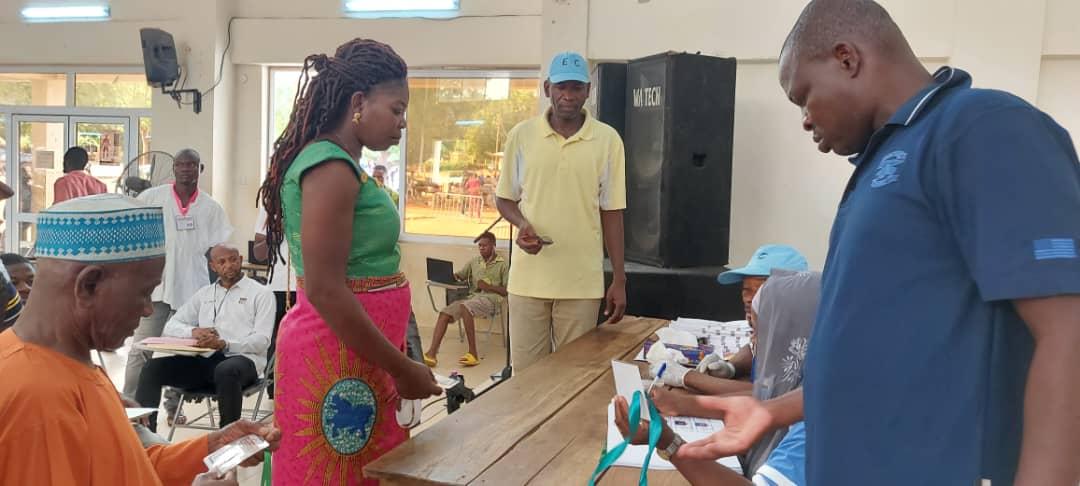
The Bimbilla incident was not the only ballot-photography controversy reported during the NDC’s constituency elections. In Wa Central, three people were also picked up by police for allegedly photographing their ballot papers while voting at the Wa Technical Institute. That separate incident suggests that election officials and security personnel were confronting the same issue at more than one center during the nationwide exercise.
At Wa Central, security was tightened following the arrests, while voting continued. The constituency had 1,968 eligible voters after adjustments to the original register and 77 aspirants competing for 17 executive positions. The similarity between the two incidents highlights the practical challenge political parties face in controlling mobile-phone use around secret ballots, particularly where delegates may instinctively photograph documents or deliberately record their votes for later proof.
The debate over ballot photography is not unique to Ghana. Electoral systems in many countries restrict photography inside voting booths because secrecy is considered an important safeguard against intimidation and vote trading. If a person can prove exactly how they voted, another individual can potentially reward or punish them based on that proof. Removing the ability to demonstrate a vote helps protect the independence of the voter.
In an internal party election, the legal framework may differ from a national election conducted by the Electoral Commission, but the underlying principle remains important. Political parties generally seek to ensure that delegates are free to vote without pressure and that candidates cannot demand visual evidence of support. The credibility of internal elections can affect the legitimacy of party executives and, ultimately, broader confidence in the party’s internal democratic processes.
The NDC’s 2026 constituency elections are particularly significant because the party is governing nationally. Internal contests within a ruling party can attract greater public interest because elected constituency officials may become influential in government-party relations, local development advocacy and future political appointments. Disputes that might otherwise remain internal can therefore quickly become national news.
For Bimbilla, the immediate priority after the arrests was maintaining calm and allowing the election to proceed. Sixty candidates were competing for limited positions, meaning delays or confusion could increase tensions among supporters. Police intervention at such a center must therefore balance enforcement with the need to avoid unnecessarily escalating disputes.
The fact that the number of arrested delegates has not been disclosed should also be treated carefully. Some reports use phrases such as “some delegates” or “several delegates,” but no authoritative source has published an exact figure. VNTV should therefore avoid assigning a specific number unless police or party officials provide one later.
Similarly, there is no confirmed report that the arrested delegates have been charged with a criminal offense. Police detention or temporary arrest during an election disturbance does not automatically mean prosecution will follow. Authorities may question individuals, confiscate evidence where legally permitted or release them after warnings depending on the applicable rules and circumstances.
The NDC has also not publicly announced disciplinary proceedings against the Bimbilla delegates in the initial reporting. If the party concludes that photographing ballots violated its internal electoral rules, separate disciplinary action could theoretically be considered regardless of whether police pursue criminal charges. No such action had been confirmed at the time of reporting.
The episode underscores the importance of clear instructions before voting begins. Delegates should be informed in advance whether mobile phones are permitted inside voting areas, whether photography is prohibited and what sanctions may apply. Clear communication can reduce disputes between security officers and voters at the moment ballots are being cast.
It also places responsibility on candidates and campaign teams. If any aspirant or campaign representative encourages delegates to photograph ballots as proof of support, that practice would undermine the principle of secret voting and could create serious questions about the fairness of the contest. There is currently no verified evidence publicly linking any Bimbilla candidate to such instructions, and no candidate should be accused without supporting evidence.
The broader nationwide exercise will be watched for similar incidents as voting continues through October 25. With elections taking place across 276 constituencies, isolated disputes are possible, but the overall credibility of the process will depend on whether the party, electoral officials and security agencies can resolve disagreements without violence and ensure that results reflect freely cast ballots.
Internal elections are often less visible than presidential or parliamentary polls, but they play an important role in how political parties function. Constituency executives organize local branches, help mobilize supporters, coordinate political activity and can influence how party policy is communicated at community level. Their selection can therefore shape the strength and cohesion of the party long before the next general election.
In Bimbilla, the voting process carries additional local significance because constituency politics can be intensely competitive and closely connected to wider regional political dynamics. The involvement of 60 aspirants demonstrates the level of interest in the available executive positions and the potential for disputes if participants believe procedures are being applied inconsistently.
For that reason, transparency after the incident will matter. Police should clarify how many delegates were detained, why they were arrested, whether they remain in custody and whether any charges will be considered. Party officials should also explain the specific rule governing ballot photography and whether the same standard is being enforced uniformly across all constituency election centers.
Such clarification would help prevent the incident from becoming the subject of partisan speculation. In the absence of official detail, competing political actors may interpret the arrests differently, with some portraying them as necessary protection of ballot secrecy and others questioning whether the police response was excessive. A clear factual account from authorities would reduce the space for unsupported claims.
What is established so far is that police intervened after delegates allegedly photographed their ballot papers, some delegates were arrested, and the intervention caused agitation at the Bimbilla voting center. The exact number detained and their legal status remain undisclosed, while the constituency election formed part of the NDC’s nationwide internal polls involving all 276 constituencies.
The incident will therefore be judged not only by the arrests themselves but also by how the party and security services handle the aftermath. If the voting process continues transparently and the rules are applied consistently, the disruption may remain a limited electoral-management issue. If questions about selective enforcement, intimidation or candidate involvement emerge, the controversy could become more significant.
For now, the Bimbilla case serves as a reminder that the secrecy of the ballot remains an important principle even within internal political-party elections. Delegates are expected to choose candidates without being required to provide visual proof of their vote, while security officers and election officials must enforce that principle in a manner that preserves order and confidence in the process. As the NDC continues its nationwide constituency elections, the handling of Bimbilla and similar incidents will form part of the wider assessment of whether the governing party’s internal elections were conducted peacefully, transparently and with consistent standards across the country.