
POLICE TREAT DEATHS OF THREE TAMALE CHILDREN FOUND IN VEHICLE BOOT AS MURDER INVESTIGATION
Police are treating the deaths of three children found inside the boot of a vehicle at Koblimahagu Zoo in Tamale as a murder investigation after preliminary autopsy findings indicated that they did not die naturally. A Ghana Immigration Service officer who owns the vehicle has been arrested to assist investigators, while a special homicide and forensic team deployed by the IGP continues the inquiry.
Police in Ghana’s Northern Region are treating the deaths of three young children found inside the locked boot of a vehicle at Koblimahagu Zoo in Tamale as a murder investigation after preliminary autopsy findings indicated that the children did not die from natural causes, deepening a case that has shocked the community and prompted the Inspector-General of Police to deploy a specialized investigative team.
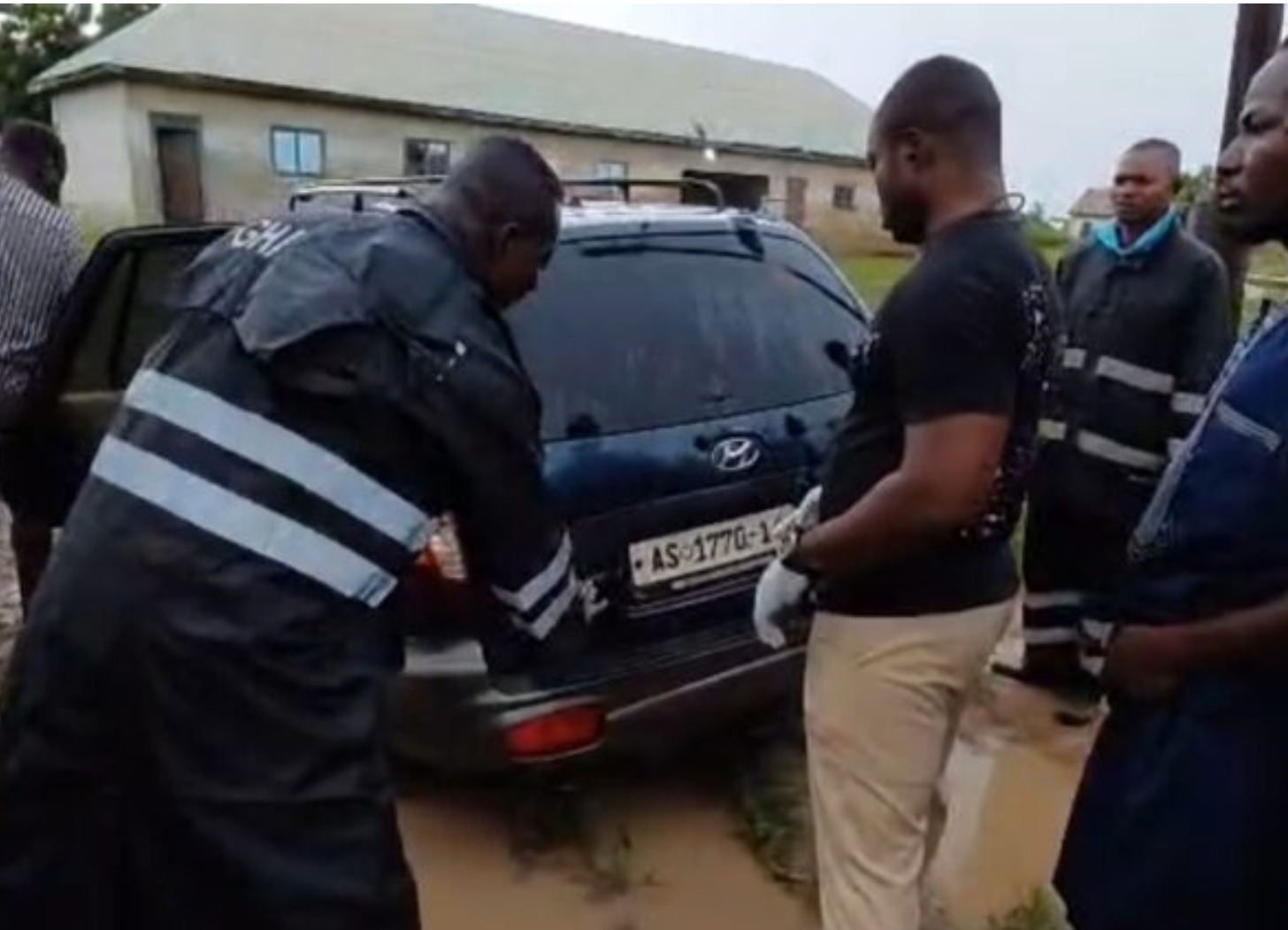
The children have been identified as Dauda Abdul Aziz, aged three, Saani Alsharaf, aged five, and Dauda Fadilan, aged seven. Police say the children had left home on Sunday, October 4, to attend Islamic classes but failed to return, triggering a search by relatives and members of the community. Their bodies were discovered at about 5:00 a.m. the following day inside the boot of a black Hyundai Tucson on a road leading to the Koblimahagu Zoo area in the Tamale Metropolis.
The discovery immediately raised questions about how the children entered the vehicle, how long they had been inside it, whether they were alive when they were placed there and whether anyone else had access to the vehicle before their bodies were found. Investigators have not publicly answered those questions, and police have warned against speculation while forensic examination, witness interviews and toxicology work continue.
The vehicle was reportedly stuck in mud when police arrived at the scene. A preliminary inspection found the driver’s door and the rear passenger door behind the driver’s seat open, while the other doors, including the boot containing the bodies, were locked. That detail has become one of the central elements of the investigation because detectives will need to establish how the boot was accessed, whether it was locked before or after the children entered it and whether the condition of the vehicle had changed before officers reached the scene.
Police say the vehicle belongs to an officer of the Ghana Immigration Service. The owner told investigators that the Hyundai Tucson had been stuck in the mud for approximately five days before the bodies were discovered. He was subsequently arrested and transported to Accra to assist with the investigation. Police have not publicly accused him of killing the children, and his arrest should not be interpreted as proof of criminal responsibility while investigators continue establishing the sequence of events.
The Inspector-General of Police has deployed a special team of homicide investigators, crime scene experts and intelligence officers to Tamale to support the Northern Regional Police Command. The decision reflects the seriousness of the case and the need for specialized forensic work to determine not only how the children died but also how their bodies came to be inside the vehicle.
The vehicle itself has been secured for forensic examination. Investigators are expected to examine the interior and exterior for fingerprints, biological material, fibers and other physical evidence that could help establish who had contact with the vehicle and whether the children entered it themselves or were placed inside by another person. Police have not disclosed whether any useful forensic evidence has already been recovered.
Investigators have also begun speaking with family members and residents of the community as they reconstruct the movements of the children before their disappearance. On Tuesday evening, police and Ghana Immigration Service officials met relatives and community members, with statements taken from people who may be able to provide information about the children’s movements, the location of the vehicle or activity around the area before the bodies were found.
The children’s biological parents have also been invited to the Northern Regional Police Command as part of the continuing investigation. Their involvement does not imply suspicion. In cases involving missing children, investigators routinely seek detailed information about the last confirmed sighting, clothing, schedules, relationships and any unusual circumstances that might help establish a timeline.
The case took a more serious turn after preliminary autopsy findings reportedly indicated that the three children had not died naturally. Police are now treating the matter as a suspected homicide while awaiting additional toxicological examination expected to provide more information about the possible cause and circumstances of death.
The need for toxicology means investigators are still trying to determine whether chemicals, medication, fumes, poisoning or another substance may have played a role. Toxicological testing can also help exclude possible explanations, including accidental exposure to substances inside a vehicle. Until those results are available, the precise cause of death remains unresolved.
That distinction is important because the discovery of children inside a closed vehicle can initially raise the possibility of accidental suffocation or heat-related death. The preliminary post-mortem findings, however, have pushed investigators toward a criminal inquiry, although police have not yet publicly disclosed the injuries or other medical findings that led to that assessment.
The original timeline also remains under close examination. Police say the children left home at about 8:00 a.m. on Sunday, October 4, for Islamic classes and did not return. A missing-person report was made the following day after efforts by residents to locate them failed. Their bodies were later discovered inside the vehicle early on Monday morning.
Investigators will now need to establish where the children were between the time they left home and the moment they were found. That will likely involve checking whether they reached the Islamic school, identifying who last saw them alive and determining whether anyone saw them near the vehicle or along the road leading to the Koblimahagu Zoo area.
The status of the vehicle before the disappearance is equally important. Its owner says it had been stuck in the mud for five days, which would place it at the location before the children went missing. Detectives will need to verify that account through witness statements, physical evidence and any available records or images showing when the vehicle became immobilized.
If the vehicle had indeed been sitting there for several days, police will also need to determine whether it was accessible to members of the public during that period and whether anyone else had keys or could open the boot. The fact that some doors were open while the boot was locked will likely receive particular scrutiny.
The location itself may provide further evidence. Investigators are expected to establish how heavily traveled the road is, whether nearby homes or businesses have security cameras, who regularly uses the area and whether residents noticed the vehicle before the discovery. Even small details about when doors were seen open, when people approached the vehicle or whether unusual activity was observed could help narrow the timeline.
The deployment of crime scene specialists suggests police are treating the vehicle and surrounding area as potentially important evidence rather than viewing the deaths simply as an accidental incident. That approach is especially important because any disturbance of the scene before investigators arrived could affect the ability to reconstruct events.
Community members had already been searching for the children before the bodies were discovered, which means police will need to establish who first found the vehicle, who opened or attempted to open it and whether anything was touched or moved. Investigators generally seek to document those details carefully so that later forensic findings can be interpreted accurately.
The case has caused deep shock in Tamale, particularly because all three victims were very young and disappeared while reportedly heading to religious instruction. Community concern has grown as more details emerge, but police have repeatedly urged residents to remain calm and avoid conclusions that could interfere with the investigation.
That caution is especially important now that the case is being treated as a possible murder. Public speculation can quickly focus suspicion on individuals before evidence has been tested, potentially leading to harassment, misinformation or pressure on witnesses. Police have not announced a final suspect, motive or confirmed sequence explaining how the children died.
The Ghana Immigration Service officer who owns the vehicle remains central to the inquiry because of the location of the bodies, but police have only said that he is assisting investigations. No court has established criminal responsibility, and investigators may examine several possibilities before deciding whether charges are appropriate.
The involvement of the Ghana Immigration Service also adds an institutional dimension to the case. Regional immigration authorities have engaged investigators, while the owner’s account of the vehicle being stuck for several days is being examined alongside other evidence. There is currently no indication that the Ghana Immigration Service as an institution was involved in the deaths.
Police are also expected to compare forensic findings with statements obtained from the owner, family members, residents and anyone who may have seen the children shortly before they disappeared. Inconsistencies in timelines can become important in homicide investigations, but authorities have not publicly disclosed any such contradiction at this stage.
The autopsy and toxicology results are likely to be among the most consequential pieces of evidence. If investigators can establish the mechanism and approximate time of death, that information could help determine whether the children died inside the vehicle or somewhere else before being placed there.
It could also help police test witness accounts against medical evidence. A reliable time-of-death estimate could narrow the window investigators need to reconstruct and help determine where the children were during the period between leaving home and being found.
Forensic examination of the vehicle could similarly provide clues about whether all three children entered through the same point, whether the boot was opened from outside and whether other individuals had recently been inside the car. Investigators may also examine whether environmental conditions inside the boot could have contributed to the deaths, even as the criminal inquiry continues.
Police have not publicly disclosed whether mobile phones, surveillance footage or digital records form part of the investigation. Such material could become relevant if investigators need to establish the movements of individuals connected to the vehicle or confirm when people were present in the Koblimahagu area.
The authorities also have not announced whether anyone beyond the vehicle owner has been detained. That absence of information is important because social media discussion can sometimes move faster than an official investigation, with unverified claims about suspects or motives spreading before police have gathered sufficient evidence.
The Northern Regional Police Command has emphasized that further updates will be issued as the investigation progresses. That suggests police are still working through the early stages of evidence gathering rather than preparing an immediate prosecution.
The case has also placed attention on the handling of the children’s remains. Their families had initially sought the release of the bodies for burial in accordance with Islamic customs, but police required post-mortem examinations because of the unexplained circumstances of the deaths. Authorities indicated that the state would bear costs associated with the necessary forensic procedures.
That decision reflects the tension that can arise between religious burial practices and the evidentiary requirements of a criminal investigation. In suspected homicide cases, preserving medical evidence can be essential to establishing the cause of death and determining whether criminal charges can be supported.
The families now face the additional trauma of waiting for investigators to complete procedures before they can obtain full answers about what happened. Police have not publicly provided a timetable for toxicology results, and such examinations can take time depending on the substances being tested and the complexity of the analysis.
The central questions in the case therefore remain unresolved. Investigators have confirmed where the children were found, identified the owner of the vehicle and established that the deaths are not being treated as natural. They have not yet publicly established exactly how the children died, who was responsible, whether they entered the vehicle voluntarily or were placed there, or why the boot was locked when their bodies were discovered.
Those unanswered questions are why the IGP’s specialized team has been deployed. Homicide investigators can coordinate witness interviews and case strategy, crime scene experts can examine physical evidence and intelligence officers can help reconstruct movements and relationships that may not be immediately visible from the scene itself.
For the Koblimahagu community, the investigation is likely to remain the focus until police can provide a clearer account of the events between the children leaving for Islamic classes and the discovery of their bodies. Residents who may have seen the children, the vehicle or unusual activity in the area could become important to that process, and police are expected to continue gathering information from the public.
The case also underscores why authorities have urged calm. The facts already established are disturbing, but the most important elements needed to determine criminal responsibility remain under investigation. The discovery of the bodies inside a locked vehicle and the preliminary autopsy findings justify a homicide inquiry, but they do not by themselves establish who caused the deaths.
For now, police are concentrating on forensic examination, toxicology, witness statements and verification of the vehicle owner’s account. The arrest of the owner allows investigators to question him and preserve access to a person directly connected to the vehicle, but any decision on charges will depend on evidence linking an individual to the circumstances that caused the children’s deaths.
The investigation has now moved well beyond the initial discovery at Koblimahagu Zoo. What began as a search for three missing children has become a murder inquiry involving regional investigators, a specialized team deployed by the IGP, forensic examination of the vehicle, post-mortem analysis and interviews with family and community members.
Until those processes are completed, the most responsible conclusion remains the one police themselves have emphasized: the deaths are being treated as suspicious, the investigation is active, and the circumstances surrounding the deaths of Dauda Abdul Aziz, Saani Alsharaf and Dauda Fadilan have not yet been fully established. The next major development is likely to come from toxicology and forensic findings or from evidence capable of showing how the three children came to be inside the vehicle and who, if anyone, placed them there.