POWERFUL MAGNITUDE 7 EARTHQUAKE STRIKES RUSSIA’S KAMCHATKA PENINSULA, NO TSUNAMI THREAT DECLARED
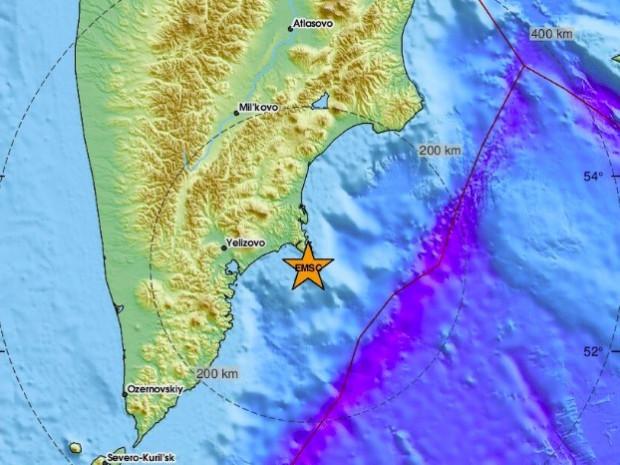
A powerful magnitude 7.0 earthquake struck Russia’s Kamchatka Peninsula early Friday, October 16, at an estimated depth of about 130 to 148 kilometers. NOAA’s Pacific Tsunami Warning Center said there was no tsunami warning, advisory, watch or threat. EMSC later listed the quake around magnitude 6.9, reflecting normal revisions in early seismic estimates. There were no immediate reports of major casualties or widespread damage, while authorities continue monitoring the region for aftershocks and possible localized effects.
A powerful earthquake with a preliminary magnitude of 7.0 struck Russia’s Kamchatka Peninsula early Friday, shaking one of the world’s most seismically active regions but prompting no tsunami warning and no immediate reports of major casualties or widespread destruction. The earthquake originated deep beneath the peninsula, at a depth estimated by different monitoring agencies at roughly 130 to 148 kilometers, a factor that generally reduces the intensity of surface shaking compared with a similarly powerful shallow earthquake.
The Pacific Tsunami Warning Center recorded the quake at magnitude 7.0, with an origin time of approximately 03:35 UTC on October 16 and coordinates near 51.9 degrees north and 157.4 degrees east. The center placed the earthquake near the east coast of Kamchatka at a depth of about 148 kilometers, or 92 miles, and issued an information statement saying available data showed no tsunami threat.
The European-Mediterranean Seismological Centre also initially measured the event at magnitude 7.0 before subsequent analysis placed it around magnitude 6.9. EMSC estimated the earthquake at roughly 130 to 140 kilometers below the surface and located it southwest of Vilyuchinsk and south-southwest of Petropavlovsk-Kamchatsky, the regional capital and largest population center on the peninsula.
Differences of one or two tenths in earthquake magnitude and several kilometers in depth are common during the first hours after a major seismic event. Seismological agencies frequently revise estimates as additional monitoring stations submit data and specialists refine calculations of the earthquake’s origin, depth and energy release. The core assessment remains consistent across the main monitoring agencies: a strong, deep earthquake occurred beneath the Kamchatka region, but it did not generate conditions requiring a tsunami alert.
The Pacific Tsunami Warning Center said no action was required and indicated that its information statement would be the only bulletin issued unless new data materially changed the situation. Separate notices for Hawaii, American Samoa, Guam and the United States and Canadian Pacific coasts similarly said there was no tsunami warning, watch, advisory or threat associated with the earthquake.
The absence of a tsunami warning is particularly significant because Kamchatka has a long history of earthquakes capable of generating destructive waves across the Pacific. The peninsula lies along the Pacific Ring of Fire, where several tectonic plates meet and where some of the world’s largest earthquakes have occurred.
The region sits near a major subduction zone where the Pacific Plate is forced beneath the North American and Okhotsk tectonic systems. That process accumulates enormous amounts of stress over time, which is periodically released through earthquakes ranging from moderate tremors to massive megathrust events.
Friday’s earthquake was comparatively deep. Deep earthquakes can still be felt across wide areas because seismic waves travel efficiently through the Earth, but they often produce less concentrated surface destruction near the epicenter than shallow earthquakes of the same magnitude. They are also less likely to generate large tsunamis because tsunamis generally require significant vertical movement of the seafloor.
There were no immediate official reports of deaths or significant structural damage in the first hours after the event. Authorities and emergency agencies in the Kamchatka region were expected to continue checking buildings and infrastructure, particularly around populated areas including Petropavlovsk-Kamchatsky, Vilyuchinsk and communities farther south.
Petropavlovsk-Kamchatsky is home to more than 160,000 people and regularly experiences seismic activity. Buildings in the region are generally constructed with earthquake exposure in mind, although the scale and age of local structures vary considerably.
The latest earthquake follows a much larger seismic disaster in the same region in July 2025, when a magnitude 8.8 earthquake struck offshore Kamchatka and generated tsunami warnings across much of the Pacific. That event was one of the strongest earthquakes recorded globally in decades and produced tsunami waves in Russia while prompting evacuations in Japan, Hawaii and other Pacific territories.
The July 2025 earthquake was much shallower than Friday’s event, occurring at a depth of around 19 kilometers. It caused building damage in Kamchatka, generated waves several meters high in parts of Russia’s Far East and triggered a massive international tsunami response extending across the Pacific basin.
Friday’s event did not produce the same conditions. Its substantially greater depth meant far less displacement was expected at the seafloor, which helps explain why monitoring agencies quickly concluded that a damaging tsunami was not likely.
The Pacific Tsunami Warning Center based its assessment on the earthquake’s magnitude, depth, location and available seismic data. Its bulletin said there was no tsunami threat from the earthquake and advised that no protective action was required.
That message was repeated for the west coast of the United States, Alaska, British Columbia, Hawaii and Pacific island territories. No evacuation orders were issued, and tsunami sirens were not activated in connection with the event.
Residents of Kamchatka are accustomed to earthquakes, but strong tremors often generate immediate concern because of the peninsula’s history. Kamchatka contains numerous active volcanoes and sits within one of the most geologically dynamic regions on Earth.
The peninsula is sparsely populated compared with western Russia, but several towns, ports, military facilities and industrial sites are located along its eastern and southern coasts. Petropavlovsk-Kamchatsky serves as the administrative, economic and transportation center of the region.
Earthquakes in Kamchatka are monitored by Russian seismic networks as well as international agencies including the U.S. Geological Survey, EMSC and the Pacific Tsunami Warning Center. Those systems provide rapid estimates within minutes, allowing authorities to determine whether coastal populations may face a tsunami risk.
Initial estimates can change significantly during the first hour after an earthquake. Automatic seismic systems analyze data as soon as waves reach monitoring stations, but later calculations incorporate a much larger network and are reviewed by seismologists.
That process explains why some agencies initially listed Friday’s earthquake at magnitude 7.0 while later data placed it at 6.9. Such a revision does not mean the earthquake weakened after occurring. Magnitude is a measurement of energy already released and is recalculated as scientists receive more information.
Depth estimates also varied. NOAA recorded approximately 148 kilometers, while other monitoring systems placed the quake closer to 130 or 143 kilometers. All of those estimates classify the earthquake as relatively deep.
At that depth, the rupture took place well beneath the Earth’s surface rather than directly beneath coastal communities. That typically spreads seismic energy over a wider region while reducing the extreme ground acceleration that often produces catastrophic building collapse during shallow earthquakes.
However, magnitude 7 earthquakes remain powerful events regardless of depth. They can be felt across hundreds of kilometers and may cause localized damage depending on local geology, construction standards and distance from the epicenter.
Authorities were therefore expected to inspect infrastructure even in the absence of early reports of serious damage. Roads, bridges, utility networks, ports and older buildings can sometimes develop cracks or structural problems that are not immediately visible.
Kamchatka’s isolation can also complicate damage assessments. Many settlements are separated by long distances, mountainous terrain and limited transport connections, meaning information from smaller communities can take time to reach regional officials.
The earthquake occurred after a series of smaller seismic events recorded around the peninsula in recent days. Kamchatka experiences frequent tremors, although there is currently no confirmed evidence that the smaller earthquakes directly caused Friday’s magnitude 7 event.
Earthquake sequences are complex, and scientists generally avoid describing one event as a foreshock unless a larger earthquake subsequently occurs. Smaller earthquakes can sometimes precede major ones, but most do not.
Aftershocks may follow Friday’s quake. Large earthquakes often alter stress along surrounding faults, producing additional tremors over the following hours or days. Most aftershocks are weaker than the initial event, although occasionally significant secondary earthquakes can occur.
Emergency authorities typically advise residents in earthquake-prone areas to remain alert after a strong tremor because weakened structures can become more vulnerable during aftershocks.
Kamchatka’s tectonic environment has produced some of the largest earthquakes in recorded history. A magnitude 9 earthquake struck the region in 1952, generating a major Pacific tsunami. The peninsula has experienced many other earthquakes above magnitude 7 since then.
The 2025 magnitude 8.8 earthquake reinforced awareness of that history after triggering alerts across the Pacific. Tsunami waves reached multiple coastlines, although damage outside Russia was considerably less severe than initially feared.
That recent event also resulted in heightened monitoring of Kamchatka’s seismic activity. Scientists continue studying the aftershock sequence and changes in stress along the subduction zone following the massive 2025 rupture.
It is too early to determine whether Friday’s earthquake is directly related to the continuing adjustment following that event. Establishing a relationship would require detailed analysis of the earthquake’s location, fault mechanism and surrounding seismic patterns.
The primary public safety conclusion, however, is already clear. Despite its magnitude, the earthquake did not trigger a tsunami threat, and there were no immediate reports of catastrophic damage.
For residents of the Kamchatka Peninsula, authorities are expected to continue monitoring for aftershocks and checking critical infrastructure as additional seismic data becomes available. Any revised assessment of the quake’s magnitude or depth is likely to involve relatively small technical adjustments rather than a major change in the overall understanding of the event.
The absence of a tsunami warning also means there is currently no indication of a wider threat to Japan, Alaska, Hawaii or other Pacific coastlines. Monitoring centers said their assessments were based on all available data and that no further tsunami statements would be necessary unless conditions changed.
The event nevertheless serves as another reminder of Kamchatka’s position within one of the planet’s most active earthquake zones. A magnitude 7 tremor would be an extraordinary event in many parts of the world, but in Russia’s Far East it occurs within a geological system capable of producing substantially larger earthquakes.
The next stage will involve more precise seismological analysis and local inspections. Russian authorities will assess whether any buildings, roads or utilities were damaged, while international monitoring agencies will continue refining the earthquake’s parameters.
As of the latest verified information, there is no confirmed tsunami threat, no reported mass casualty event and no evidence of the widespread destruction associated with the far larger Kamchatka earthquake of July 2025. The earthquake remains a major seismic event, but its considerable depth appears to have limited the immediate hazard posed to coastal communities and the wider Pacific region.