PUBLIC BASIC SCHOOLS REOPEN NATIONWIDE AFTER TEACHERS SUSPEND STRIKE
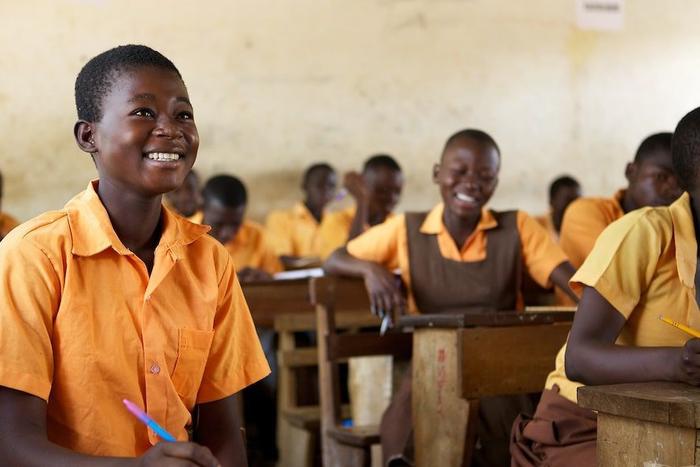
Public basic schools across Ghana have resumed after GNAT, NAGRAT and other pre tertiary teacher unions suspended their nationwide strike following negotiations with the government. About 51,000 promoted teachers are expected to receive promotion related payments by October 16, with remaining cases due by the end of October. Other agreed commitments include digital support payments in November, Continuous Professional Development payments in December and further action on the Deprived Area Allowance in January 2027.
Public basic schools across Ghana have resumed normal academic activities after teacher unions suspended their nationwide industrial action following an agreement with the government on promotion arrears, salary adjustments and outstanding allowances, bringing pupils back to classrooms after about two weeks of disruption.
Teachers were expected to return to work on Monday, October 12, after the Ghana National Association of Teachers, the National Association of Graduate Teachers and other participating pre tertiary teacher unions suspended the strike on Friday, October 9. The decision followed negotiations involving the Fair Wages and Salaries Commission, the Ministry of Labour, Jobs and Employment, the Ministry of Education and the Council of State.
The industrial action began on September 25 after the unions accused the government of failing to resolve long standing concerns involving the placement of promoted teachers on the correct salary grades, unpaid promotion arrears, allowances and other conditions of service. The strike disrupted teaching and learning in public schools across the country and left many pupils at home while negotiations continued between union leaders and government representatives.
Under the agreement reached before the suspension, the government committed to addressing the promotion related payments of about 51,000 teachers by October 16. Teachers whose cases are not resolved in the first batch are expected to have their outstanding placement and salary adjustments completed by the end of October.
The Fair Wages and Salaries Commission said the arrangement covers teachers who had received promotions but had not yet been placed on the appropriate salary scales or had not received the financial benefits associated with their new grades. Validation of the affected teachers data has been taking place through the Controller and Accountant Generals Department ahead of the scheduled payments.
Education Minister Haruna Iddrisu had earlier said the government was committed to ensuring that promoted teachers received the salary adjustments due to them before the end of October. The validation exercise was intended to confirm individual records and allow supplementary payments to be processed for those whose cases could be resolved ahead of the normal salary cycle.
The October 16 deadline has therefore become one of the first major tests of the agreement that brought teachers back to the classroom. Union leaders agreed to suspend the strike rather than declare all their grievances resolved, making implementation of the commitments central to whether industrial peace can be maintained in the education sector.
GNAT General Secretary Thomas Musah has made clear that negotiations with the government are continuing despite the resumption of work. The unions have said that suspending the industrial action does not mean every outstanding issue has been concluded and that they will continue pressing for implementation of the commitments covering salaries, allowances and conditions of service.
The agreement extends beyond promotion arrears. The government is also expected to establish modalities for the payment of the Deprived Area Allowance, an issue that has remained important for teachers serving in rural and difficult locations where staffing shortages and challenging living conditions can make recruitment and retention more difficult.
According to the Fair Wages and Salaries Commission, the modalities for the Deprived Area Allowance are expected to be announced in January 2027. The allowance is intended to provide additional compensation for teachers working in locations considered difficult to serve, although negotiations over qualification criteria and implementation have been a recurring source of disagreement between teacher unions and government agencies.
The agreement also covers the complementary digital instruction support allowance, with payment expected in November 2026. Negotiations on the Continuous Professional Development Allowance have also been concluded, with payment scheduled for December.
Those commitments create a series of deadlines stretching from October through the end of the year and into January, meaning the return to classrooms does not bring the broader labor dispute to a complete end. Teachers and their unions will be watching whether the government meets the agreed dates and whether outstanding cases are processed without further delays.
The Ministry of Education welcomed the suspension of the strike and described the return to work as an important step toward restoring stability in public education. The Ministry said continued dialogue between government agencies and teacher unions would be necessary to resolve outstanding grievances while protecting teaching and learning from further disruption.
The strike affected public basic and other pre tertiary schools at a time when pupils were expected to be settling into the academic year. In several communities, classrooms remained largely empty as teachers stayed away from work, raising concerns among parents about lost instructional time and the effect of the disruption on children preparing for examinations or attempting to meet curriculum targets.
Reports from some communities showed pupils spending school hours at home, in markets, on farms or playing outside as the industrial action continued. The disruption placed additional pressure on parents and guardians who had to make alternative arrangements for children who would ordinarily have been in school.
The National Council of Parent Teacher Associations welcomed the decision to suspend the strike and urged parents to ensure that their children returned to school immediately. The group also called on school authorities and local parent teacher associations to work together to recover the instructional hours lost during the industrial action.
Recovering those contact hours could become an important issue for school management in the coming weeks. Teachers may need to adjust lesson plans and academic schedules to ensure that pupils cover material delayed during the strike without creating excessive pressure on learners or staff.
The impact of the strike also went beyond classrooms. Businesses linked to school activities, including transport operators, food vendors, bookshops, uniform sellers and suppliers connected to school feeding programs, faced disruption as pupil attendance fell. The return to classes is expected to restore some of that activity as normal school routines resume.
The dispute reflects a wider challenge surrounding conditions of service within Ghana's public education system. Teacher unions have repeatedly argued that delays in promotions, salary adjustments and allowances undermine morale and make it more difficult to retain experienced educators, especially in underserved communities.
Promotion related disputes have been particularly sensitive because some teachers receive formal advancement but wait for months before their salaries are adjusted to reflect their new grade. Where those delays accumulate, the government may later owe substantial arrears, creating pressure both on affected teachers and on the public payroll system responsible for processing the adjustments.
Government officials have acknowledged that the backlog involving promoted teachers required urgent action. The current validation exercise is intended to clean up outstanding records and ensure that teachers who have legitimately moved to new grades are placed correctly on the salary structure.
The unions have also pushed for clearer implementation procedures in future agreements. GNAT has argued that negotiated conditions of service can remain unresolved for long periods when there is no precise mechanism establishing when benefits should begin, how teachers qualify and which government agency is responsible for executing payments.
That concern has become particularly relevant following the suspension of the latest strike. While the government and unions have agreed on several payment dates, the durability of the settlement will depend on whether the administrative systems responsible for delivering the money meet those deadlines.
NAGRAT has similarly emphasized that teachers expect outstanding arrears to be paid and has urged government agencies to ensure that commitments made during negotiations are honored. Union leaders have expressed hope that disagreements will not again reach the point where teachers feel compelled to withdraw their services.
The resumption also comes as Ghana continues to confront broader challenges in basic education, including shortages of classrooms, uneven teacher deployment and differences in learning outcomes between communities. Government data show that millions of children depend on public basic schools, meaning nationwide industrial action can affect a substantial proportion of Ghanaian families within a short period.
Ghana's public basic education system includes kindergarten, primary and junior high schools and serves more than six million learners. Maintaining regular teaching therefore remains critical not only for individual schools but for the wider national education system.
Infrastructure remains another major concern. The 2025 Auditor Generals report found that thousands of public basic schools across several regions lacked adequate permanent classroom infrastructure, leaving many pupils studying in temporary structures or under difficult conditions. Those challenges exist alongside the labor concerns raised by teachers, creating pressure on the government to improve both the working environment for educators and the learning environment for pupils.
Teacher deployment is also uneven across the country, with some urban schools having stronger staffing levels while rural and deprived communities struggle to attract and retain qualified teachers. The proposed Deprived Area Allowance is partly intended to address that problem by offering additional incentives to educators willing to work in locations that are difficult to staff.
The latest settlement will therefore be judged not only by whether teachers receive outstanding money but also by whether the agreements help address some of the structural problems that repeatedly create tension between government and education workers.
For parents and pupils, the immediate priority is the restoration of regular classroom activity. Schools are expected to resume their academic programs while administrators assess how much teaching time was lost and whether changes to schedules will be required.
The Education Ministry has urged teachers, parents, learners and other stakeholders to support the return to normal academic activities and said it remains committed to working with the unions and the Fair Wages and Salaries Commission to address unresolved concerns.
The Council of State also played a role in the negotiations that led to the suspension of the strike, intervening alongside government agencies as pressure increased for the parties to find a settlement. Its involvement helped create the conditions for the unions to return to work while talks continued.
The settlement does not eliminate the possibility of future industrial action. Because the unions have described the strike as suspended rather than permanently ended, failure to meet the agreed payment deadlines could revive tensions and potentially lead to renewed action.
October 16 will therefore be an important date in determining whether the agreement holds. About 51,000 promoted teachers are expected to benefit from the first major payment and adjustment process, while outstanding cases are expected to be resolved by the end of the month.
The government will then face additional deadlines involving the digital instruction support allowance in November, the Continuous Professional Development Allowance in December and the proposed implementation arrangements for the Deprived Area Allowance in January.
Those commitments give both sides a measurable framework against which implementation can be assessed. Teachers have returned to work, but their unions have made clear that they expect the government to demonstrate that the negotiated terms will move beyond promises and result in actual payments and improved conditions.
For now, the reopening of public basic schools provides relief to families after two weeks of uncertainty and restores teaching and learning across the country. The immediate disruption has ended, but the underlying labor issues have not disappeared, and the coming weeks will show whether the timetable agreed by government and the unions can prevent another breakdown in negotiations.
The longer term significance of the settlement will depend on whether payments are completed on schedule and whether both sides can establish a more reliable process for resolving teacher welfare concerns before they escalate into nationwide strikes. With millions of pupils dependent on the public education system, maintaining that stability will remain important not only for teachers and government but also for families whose children bear the direct consequences whenever classrooms close.