
QUESTIONS RAISED OVER ₦10.648 BILLION NASENI PAYMENTS TO CGC FOR ABUJA CAMPUS PROJECT
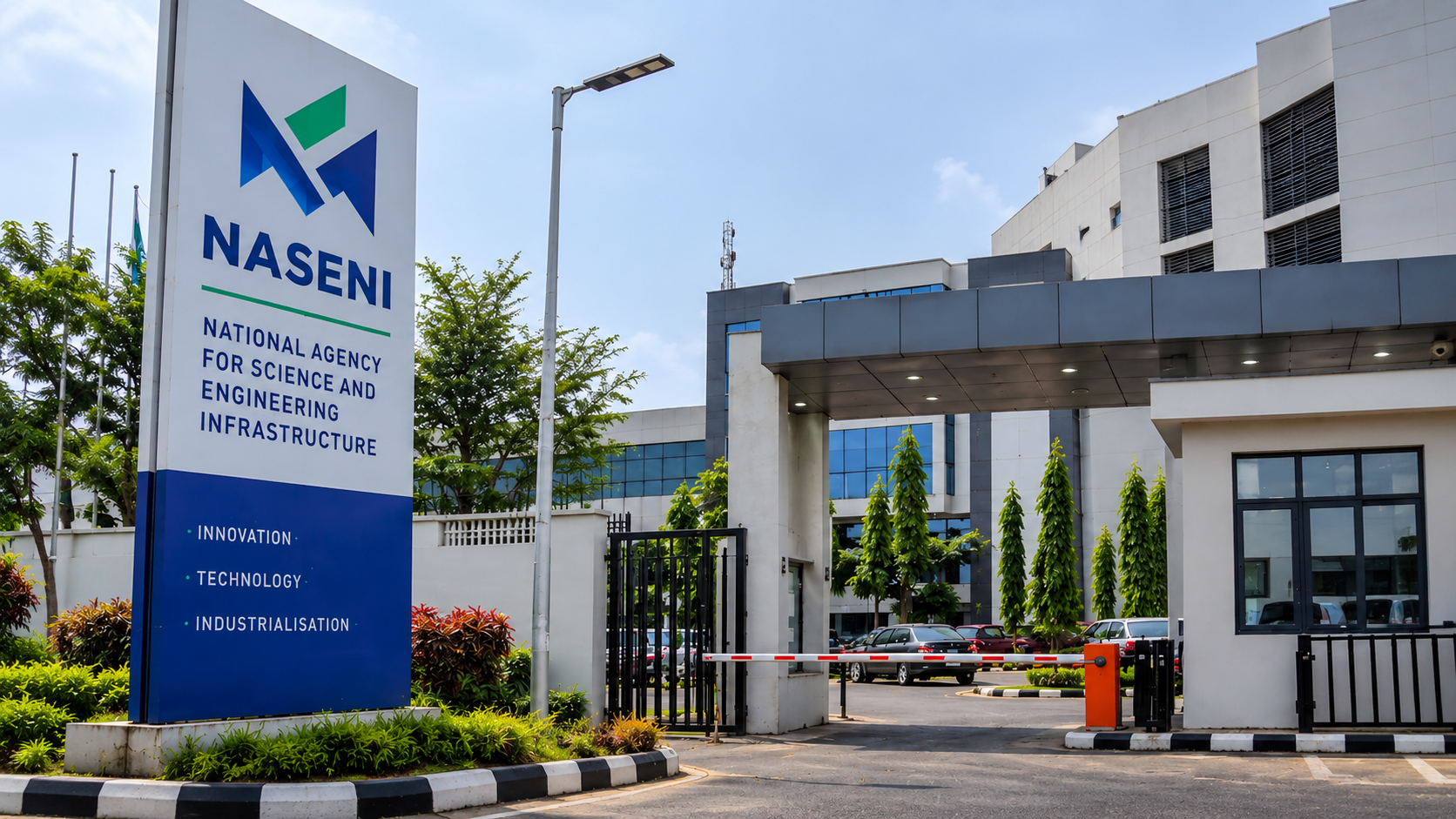
Fresh investigative reporting has raised questions over ₦10.648 billion paid by NASENI to CGC Nigeria Limited in two transactions during Christmas week in 2025. Government payment records cited by SaharaReporters describe both transactions as relating to a 30 percent mobilization fee for the construction of NASENI's Abuja campus.
Fresh questions are being raised over more than ₦10.648 billion paid by the National Agency for Science and Engineering Infrastructure to CGC Nigeria Limited in two transactions during the final week of December 2025 for the construction of NASENI's Abuja campus.
Government payment records obtained and published by SaharaReporters show that the agency made payments of ₦5.648 billion and ₦5 billion to CGC Nigeria Limited on December 25 and December 27, 2025, respectively.
Together, the two transactions amounted to ₦10,648,555,777.94.
The records describe both transactions as payments connected to a 30 percent mobilization fee for the construction project.
The first transaction, dated Christmas Day, December 25, was for ₦5,648,555,777.94.
According to the payment record, it was described as the balance payment for the 30 percent mobilization fee for the construction of the NASENI campus in Abuja.
Two days later, on December 27, another ₦5 billion was paid to the same company.
That transaction was described as a part payment for the 30 percent mobilization fee for the same project.
The sequencing has prompted questions because the records appear to describe a balance payment being made before another transaction subsequently described as a part payment of the same mobilization fee.
Neither the existence of the payments nor their descriptions alone establishes wrongdoing.
However, the size, timing and descriptions of the transactions have generated calls for greater clarity over the contractual arrangements governing the project.
QUESTIONS OVER PROCUREMENT REQUIREMENTS
SaharaReporters raised questions about whether the 30 percent mobilization arrangement complied with Nigeria's public procurement framework, citing Section 35 of the Public Procurement Act 2007.
The original Act provided that a mobilization fee of no more than 15 percent could be paid to a supplier or contractor, subject to specified guarantees.
However, subsequent changes to Nigeria's procurement framework complicate the legal question.
The Bureau of Public Procurement said in July 2026 that amendments introduced through the Finance Acts increased the permitted mobilization fee from 15 percent to 30 percent.
Determining whether the payments complied with the law would therefore require establishing precisely which statutory provisions applied when the contract was awarded and the payments were authorized, as well as examining the underlying contract, guarantees and performance documentation.
Those documents have not been fully disclosed in the reporting reviewed by VNTV.
₦10.6 BILLION PAID WITHIN 48 HOURS
Beyond the percentage itself, the descriptions and timing of the two payments have attracted scrutiny.
The first transaction was recorded on December 25, 2025, during the final week of the financial year.
It was described as the balance of the mobilization fee.
The second transaction followed 48 hours later and was described as a part payment of the same 30 percent mobilization fee.
That sequence leaves an important question for NASENI to clarify.
If the December 25 transaction represented the balance of the mobilization fee, why was another transaction described as part payment of that same fee made two days later?
The payment descriptions alone do not provide an explanation.
NASENI CONTACTED FOR RESPONSE
SaharaReporters said it contacted NASENI Deputy Director of Information Chima Akwaja for clarification.
According to the publication, Akwaja said the questions had been forwarded to the agency's Director of Information, New Media and Protocol and that a response would be provided.
At the time SaharaReporters published its investigation, the outlet said it had not received a substantive response from NASENI.
The agency should therefore be given an opportunity to explain the contractual basis for the payments, the applicable procurement provisions and the documentation supporting the disbursements.
CGC Nigeria Limited should similarly have an opportunity to respond to questions concerning the contract.
CAMPUS PROJECT UNDER CONSTRUCTION
The payments relate to the construction of NASENI's campus in Abuja.
CGC Nigeria Limited is an engineering and construction company operating in Nigeria across infrastructure sectors including roads, water projects and other major construction works.
NASENI is headed by Executive Vice Chairman and Chief Executive Officer Khalil Suleiman Halilu, who assumed office in September 2023.
The agency has continued to undertake infrastructure and technology projects as part of its mandate to promote science, engineering and industrial development in Nigeria.
NASENI has also publicly advertised procurement opportunities for capital projects, including invitations for qualified companies to participate in tender processes.
The central issue surrounding the latest reporting is therefore not whether NASENI undertakes major infrastructure projects, but the specific contractual and procurement documentation supporting the Abuja campus payments.
FRESH INVESTIGATION INTO OLDER TRANSACTIONS
The transactions themselves are not new.
They occurred in December 2025.
What is new is the publication of the payment records and the questions now being raised about the transactions.
The story should therefore be understood as a fresh public finance and accountability investigation rather than a report that NASENI made the ₦10.648 billion payments this week.
The records establish that the payments were made and show how they were officially described.
They do not, by themselves, establish corruption or criminal wrongdoing.
Further clarification from NASENI, CGC Nigeria Limited and relevant procurement authorities would be necessary to determine whether all applicable procurement rules, contractual conditions and financial controls were followed.
Until those answers and supporting documents are available, the ₦10.648 billion in Christmas week payments remain a matter requiring greater public explanation rather than proof of misconduct.