
RAMAPHOSA ORDERS NATIONWIDE ACTION AFTER SERIES OF WOMEN'S KILLINGS IN SOUTH AFRICA
President Cyril Ramaphosa has ordered a nationwide emergency response to gender based violence and femicide following a series of killings of women in Ekurhuleni, Gauteng. South Africa's Cabinet says the number of women killed in the area has risen to 13, while four suspects have been arrested in connection with three of the murders. The government is now ordering nationwide safety audits, reviews of unresolved cases and faster processing of forensic evidence.
President Cyril Ramaphosa has ordered sweeping nationwide measures to tackle gender based violence and femicide after a series of killings of women in Ekurhuleni intensified concern over South Africa's continuing crisis of violence against women.
The South African government initially confirmed nine deaths in Ekurhuleni before the number increased. Associated Press reported at least 11 women had been killed since July, while a subsequent Cabinet statement said the number had risen to 13.
Four suspects have been arrested in connection with three of the killings and remain in custody after being denied bail, according to the government.
Authorities have also deployed a specialized multidisciplinary investigative team bringing together detectives, crime intelligence officers, forensic specialists, investigative psychologists and digital investigators.
The investigation has been elevated to the national level under the coordination of the Deputy National Commissioner for Detective Services.
Despite concerns that the discoveries could indicate the presence of a serial killer or killers, authorities say investigators have not established that the deaths were committed by a single perpetrator.
All possibilities remain under investigation.
Ramaphosa said the killings had exposed the urgency of addressing both individual criminal cases and the wider conditions that leave women vulnerable to violence.
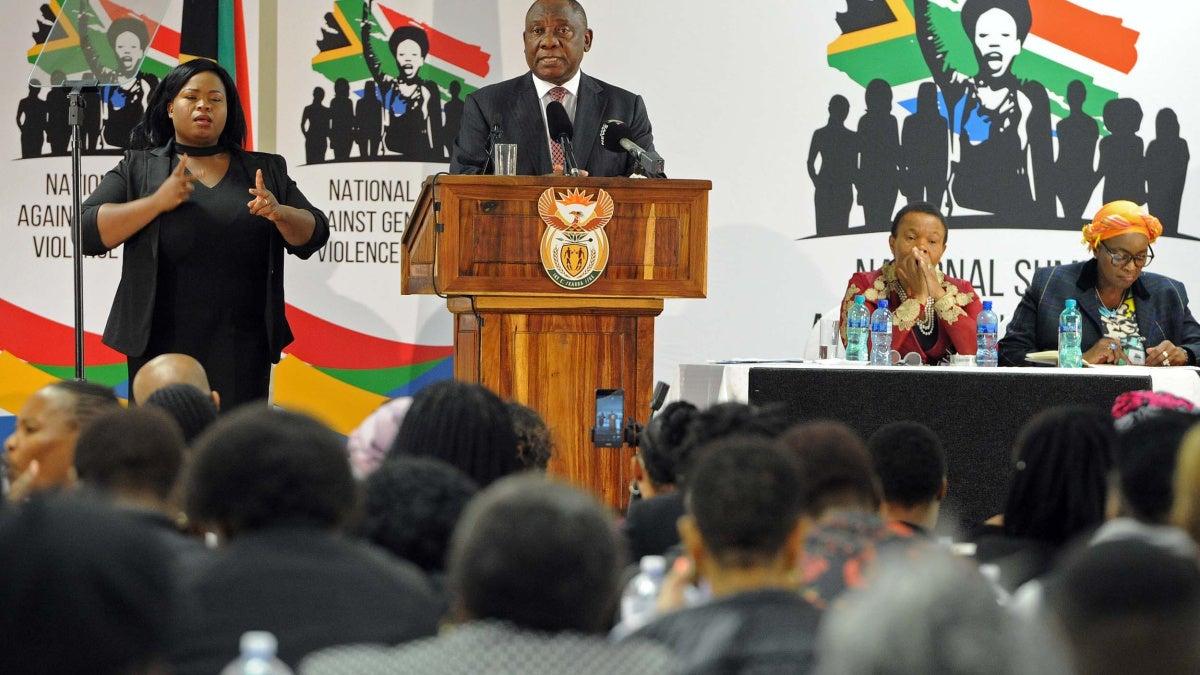
“This cannot be accepted as a normal part of life in South Africa,” the President said during a televised national address.
He acknowledged that previous interventions had failed to bring the crisis under sufficient control, saying the country had to confront the reality that existing measures had not been enough.
60 DAY SAFETY AUDIT ACROSS SOUTH AFRICA
One of Ramaphosa's most significant directives requires every municipality in South Africa to immediately begin a women's safety audit.
Within 60 days, municipalities must identify public spaces and infrastructure that could expose women to increased danger.
The review will examine broken streetlights, abandoned buildings, overgrown public areas, unsafe transport routes and facilities, poorly secured parks and other environmental conditions that could make communities unsafe.
Municipalities will work alongside provincial governments and police to identify the highest risk locations.
The government is also requiring action after those problems are identified.
Within 90 days of completing the audits, authorities must either address the most urgent hazards or place them within funded implementation plans containing clear deadlines.
The results will be published so communities can see which dangers have been identified, what has been corrected and what remains unresolved.
UNRESOLVED MURDER AND RAPE CASES TO BE REVIEWED
Ramaphosa has also ordered a nationwide case recovery operation involving the Minister of Police, the Minister of Justice and Constitutional Development, the South African Police Service and, while respecting prosecutorial independence, the National Prosecuting Authority.
The review will focus on unresolved murders, attempted murders, rapes and serious sexual offenses involving women and children.
Within 60 days, authorities must establish the number and age of unresolved cases, identify cases waiting for forensic evidence and determine where suspects have been identified but not arrested.
Officials must also identify cases where investigative or prosecutorial action has been unreasonably delayed.
Within 90 days, individual recovery plans must be established for priority cases and investigations that have stalled.
Those plans must identify what action remains outstanding, which official is responsible and the deadline for moving each case forward.
FORENSIC BACKLOGS ALSO TARGETED
Another major element of the intervention focuses on forensic evidence.
Ramaphosa has ordered police and forensic authorities to produce a funded plan within 60 days to reduce forensic backlogs and establish clear turnaround standards for priority gender based violence and femicide cases.
The plan must identify the size and age of existing backlogs, shortages of personnel and equipment and the resources required to address them.
Priority forensic samples involving the rape or murder of women and children are to be ring fenced for urgent processing.
Progress is expected to be reported publicly every quarter.
The measure is significant because delays in DNA testing and other forensic work can slow investigations and prosecutions, potentially leaving suspects unidentified or cases unresolved for extended periods.
SPECIAL TEAM INVESTIGATING EKURHULENI KILLINGS
The killings in Ekurhuleni are receiving attention from the highest levels of South Africa's government and law enforcement agencies.
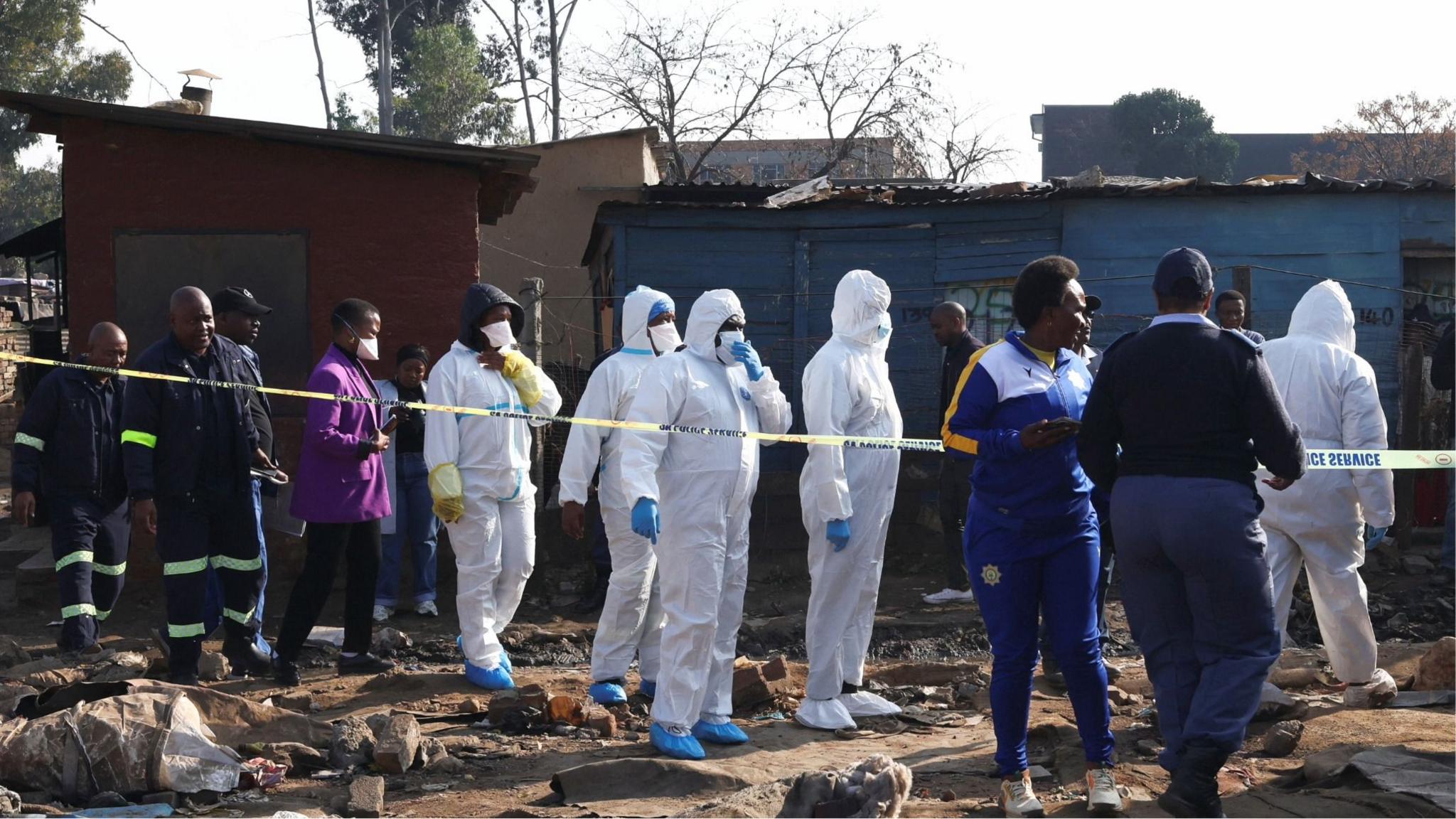
Investigators have collected DNA, blood samples, clothing, cellphones and cellphone records in some of the cases.
The Council for Scientific and Industrial Research is also assisting with digital forensic work.
Ramaphosa said arrests had already been made in several cases.
A suspect was arrested in connection with the killing of Ntombifuthi Nxumalo. Two suspects were arrested and appeared in court over the killing of Jabulile Ntimba, while another suspect is in custody in connection with the murder of Busisiwe Mahlangu.
Police have also identified persons of interest in other investigations.
However, authorities have cautioned against assuming that all the killings are connected.
The President said police have not found evidence establishing that the deaths were caused by a single perpetrator and that investigators are continuing to examine all possibilities.
Police visibility has meanwhile been increased in Ekurhuleni.
A MUCH WIDER NATIONAL CRISIS
The Ekurhuleni killings have attracted particular attention, but violence against women remains a much broader problem across South Africa.
Official crime statistics recorded 5,427 homicides across the country between April and July.
South Africa also has one of the world's highest femicide rates, according to UN Women.
Research cited by Associated Press found that more than 35 percent of adult South African women surveyed had experienced physical or sexual violence at some point.
The government classified gender based violence and femicide as a national disaster in 2025, allowing greater coordination and reprioritization of resources.
Authorities have since allocated additional resources to Family Violence, Child Protection and Sexual Offences Units, while expanding Sexual Offences Courts, shelters and survivor support services.
Thuthuzela Care Centres also provide medical, forensic, counseling and legal assistance to survivors.
But Ramaphosa acknowledged that the existence of government programs means little when those systems fail women at the moment they need protection.
RAMAPHOSA PUTS RESPONSIBILITY ON MEN
The President also directed part of his address specifically toward South African men.
He argued that women have spent years changing their behavior because of the threat of violence, including avoiding certain areas, changing their routes home and limiting when they go outside.
Ramaphosa said society had effectively placed the burden of male violence on women.
He called on men to play a leading role in confronting violence against women rather than expecting women to continually adapt their lives to avoid becoming victims.
The President said South Africa must move beyond responding only after women have been killed.
The government's new strategy therefore combines criminal investigations with attempts to make public spaces safer, accelerate forensic processing and revive unresolved cases.
WHAT HAPPENS NEXT
The first major deadline is 60 days.
By then, municipalities should have identified dangerous public spaces, authorities should have completed an audit of unresolved priority cases and police should have presented a funded plan for tackling forensic backlogs.
Within 90 days of the relevant reviews, authorities are expected to have recovery plans for stalled cases and funded plans or completed interventions for urgent environmental safety hazards.
The government has promised that progress on several of these measures will be made public.
Meanwhile, the specialized investigation into the Ekurhuleni killings continues.
The four arrests already announced represent progress in three cases, but authorities still face the task of determining what happened in the remaining killings and whether any of the cases are connected.
For families seeking answers and communities frightened by the deaths, the effectiveness of Ramaphosa's new measures will ultimately be judged not by the announcement but by whether investigations move forward, dangerous areas become safer and perpetrators are successfully brought before the courts.