
BLACK MAN WHO SPENT 30 YEARS ON DEATH ROW DENIED NEW TRIAL AFTER LAWYERS UNCOVER DEFENSE ATTORNEY'S KKK TIES
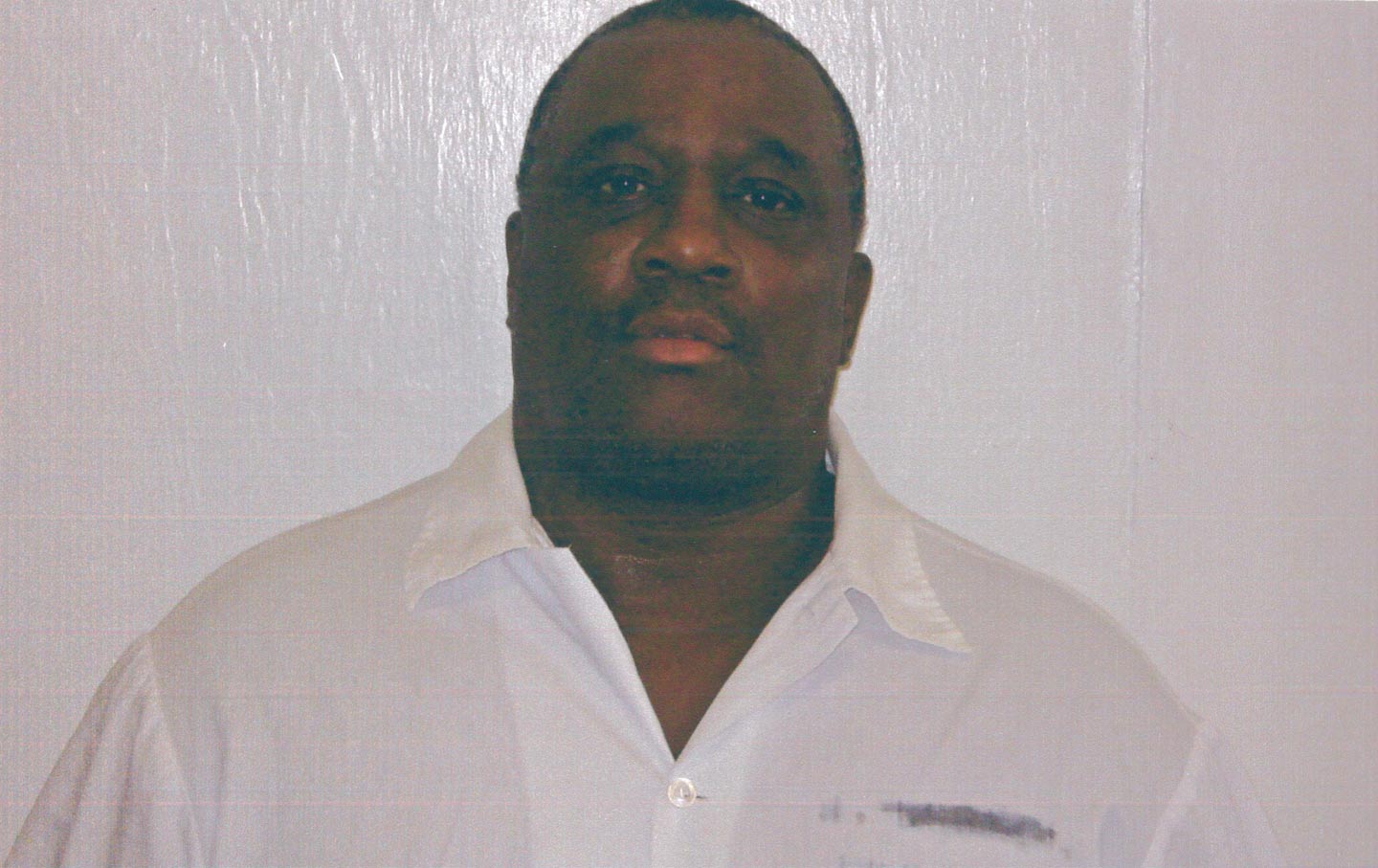
Robin “Rocky” Myers, who spent more than 30 years on Alabama's death row for the 1991 murder of Ludie Mae Tucker, has been denied a new trial after his lawyers uncovered extensive historical ties between his original court appointed lawyer and the Ku Klux Klan. No forensic evidence tied Myers to the crime scene, a key witness later recanted, and Governor Kay Ivey commuted his death sentence in 2025 because of doubts about his guilt. The latest petition was denied on procedural grounds rather than after a court weighed the new Klan evidence.
Robin “Rocky” Myers, an Alabama man who spent more than three decades under a death sentence for a murder he maintains he did not commit, has been denied a new trial despite newly presented evidence concerning his original defense attorney's extensive ties to the Ku Klux Klan.
Morgan County Circuit Court Judge Charles Elliott denied Myers' latest petition on August 28, 2026.
The decision did not determine whether the newly uncovered evidence concerning Myers' former lawyer proved that his 1994 trial was unfair.
Instead, the judge ruled that Alabama's procedural rules prevent Myers from raising the ineffective assistance claim in a successive post conviction petition.
Myers remains imprisoned under a sentence of life without parole.
THE 1991 MURDER OF LUDIE MAE TUCKER
The case dates back to October 1991, when Myers' 69 year old neighbor Ludie Mae Tucker was fatally stabbed inside her home in Decatur, Alabama.
Authorities alleged that a man entered Tucker's home after saying he needed to use the telephone.
Tucker was stabbed in the chest and died after being taken to hospital.
Myers lived across the street from Tucker and knew her.
He has consistently denied entering her home or killing her.
No murder weapon was ever recovered.
No DNA, fingerprints or other forensic evidence placed Myers inside Tucker's home.
Tucker was able to provide information about her attacker before she died, but she did not identify Myers, despite knowing him as a neighbor. citeturn620101search0turn654624view2
ANOTHER MAN WAS INITIALLY SUSPECTED
The early investigation originally focused on another man, Anthony “Cool Breeze” Ballentine.
Witnesses initially told investigators that Ballentine had brought a videocassette recorder stolen from Tucker's house to a local drug house and exchanged it for crack cocaine.
Another witness reportedly said Ballentine had been seen wearing a white shirt stained with blood near Tucker's home.
Ballentine was arrested.
The investigation later changed direction after a reward was announced and additional information emerged.
Witnesses who had initially implicated Ballentine changed their accounts and instead identified Myers as the man connected to the stolen VCR.
Myers acknowledged possessing the VCR but maintained that he found it abandoned in an alley near his home and later traded it for drugs.
The VCR became an important part of the prosecution's circumstantial case, although no fingerprints or other forensic evidence on it linked Myers to Tucker's murder. citeturn712289search0turn620101search13
KEY WITNESS LATER SAID HIS TESTIMONY WAS FALSE
One of the most significant developments came years after Myers' conviction.
Witness Marzell Ewing had testified against Myers, but in 2004 he signed a declaration saying his testimony had not been truthful.
According to accounts of the case, Ewing said he had been pressured and that he did not actually see who brought the VCR to the drug house.
Myers' attorneys have argued that the recantation seriously undermines the prosecution's case because there was no physical evidence connecting Myers to Tucker's home.
Other testimony was also inconsistent.
Witnesses said Myers had been wearing dark clothing on the night of the murder, while Tucker reportedly described her attacker as wearing lighter clothing. citeturn712289search0turn620101search13
JURY RECOMMENDED LIFE BUT JUDGE IMPOSED DEATH
Myers was convicted of capital murder in 1994.
However, the jury did not recommend that he be executed.
Jurors recommended life imprisonment without parole.
Under Alabama law at the time, a trial judge could override the jury's recommendation.
The judge did exactly that and sentenced Myers to death.
Alabama abolished judicial override in capital cases in 2017, but the reform was not made retroactive for prisoners such as Myers. citeturn654624view2
FORMER JUROR LATER QUESTIONED THE CONVICTION
Concerns about the case eventually extended to people who had participated in the original trial.
Former juror Mae Puckett publicly supported clemency and said she believed Myers was innocent.
She said the prosecution had never established that Myers was inside Tucker's home.
Puckett was one of 11 white jurors on the nearly all white jury that convicted Myers.
Accounts of the case have also raised concerns about racial language used during the proceedings and deliberations. citeturn654624view2turn712289search9
MYERS HAS AN INTELLECTUAL DISABILITY
Another long running issue concerns Myers' intellectual functioning.
Advocacy groups and lawyers representing him have said Myers was diagnosed with an intellectual disability as a child and has significant difficulty reading.
His lawyers argued that those limitations affected both his interactions with police and his ability to protect his legal rights during later appeals.
One of Myers' post conviction attorneys also stopped representing him without properly informing him, according to accounts of the case.
As a result, important federal appeal deadlines expired before Myers realised what had happened.
Courts subsequently declined to reopen some of those proceedings. citeturn712289search36turn712289search5
GOVERNOR STOPS HIS EXECUTION
The possibility of Myers' execution became immediate again in early 2025.
The Alabama Supreme Court had authorised the state to proceed toward setting an execution date, potentially using nitrogen gas.
But on February 28, 2025, Alabama Governor Kay Ivey took the highly unusual step of granting Myers clemency.
She commuted his death sentence to life imprisonment without parole.
Ivey is a supporter of capital punishment, but said the evidence in Myers' case left her with serious uncertainty.
She stated that she was not convinced Myers was innocent, but was also not sufficiently convinced of his guilt to permit his execution.
The governor specifically cited the absence of evidence directly placing Myers at the crime scene and the failure of eyewitnesses to identify him as Tucker's attacker.
It was only the second individual death penalty clemency granted in Alabama during the modern death penalty era and the first in the state since 1999. citeturn654624view2turn359669news44
LAWYERS DISCOVER DEFENSE ATTORNEY'S KLAN HISTORY
After clemency saved Myers from execution, his current lawyers began pursuing another goal.
They wanted the murder conviction itself overturned.
Their investigation uncovered extensive historical material involving John Edmond Mays, the court appointed attorney who represented Myers at his capital trial.
According to court filings and archival reporting cited by Myers' lawyers, Mays had appeared at at least nine Ku Klux Klan rallies between 1977 and 1981 across several southern states.
The filing says he was described as an “Imperial Klonsel” or legal counsel associated with the United Klans of America.
Mays also represented Robert Shelton, the United Klans of America's Imperial Wizard, and defended the organisation in litigation.
One historical newspaper account cited in the filing reported that Mays used a racial slur while addressing a Klan rally in Virginia in 1977.
Another account from a 1981 rally reported that he warned white attendees about what he described as an approaching race war.
Myers' attorneys argue that the history presents an extraordinary conflict because Mays was later appointed by the state to defend a Black man facing execution. citeturn620101search0turn620101search10
MAYS ALSO DEFENDED THE UNITED KLANS OF AMERICA
Mays' involvement went beyond giving speeches, according to the material presented by Myers' legal team.
He represented the United Klans of America in litigation arising from the 1981 lynching of Michael Donald, a 19 year old Black man in Mobile, Alabama.
Donald was abducted, beaten and killed by Klansmen.
In subsequent civil litigation, Donald's mother successfully sued the United Klans of America, resulting in a multimillion dollar judgment that effectively destroyed the organisation financially.
Mays argued in court that the organisation itself should not be legally responsible for Donald's murder.
Several years later, he was appointed to represent Myers. citeturn620101search2turn620101search7
MAYS DENIES HE FAILED MYERS
Mays has not accepted the suggestion that his previous representation of Klan members prevented him from defending Myers properly.
Through another attorney, he told CNN that he accepted Myers' case because he opposed the death penalty and believed he could provide effective representation.
A lawyer and friend of Mays also argued that representing Klan members does not itself prove that Mays was racist and said Mays had represented Black clients during his career.
Even that lawyer reportedly said Myers deserved another trial, although he disagreed that Mays' Klan representation was the reason. citeturn620101search7turn620101search9
NEW PETITION FILED
Myers' current attorneys filed a Rule 32 petition in August 2025 seeking to have his conviction overturned.
They argued that the newly uncovered material showed Myers had been denied conflict free and constitutionally adequate legal representation.
They also renewed arguments surrounding his innocence and the weakness of the prosecution's evidence.
The Morgan County District Attorney's Office opposed the petition.
Prosecutors argued that Myers' claims were filed too late and had either been raised previously or were prohibited under Alabama rules governing successive post conviction petitions.
They also argued that the historical material concerning Mays was publicly available and could have been discovered earlier. citeturn359669search4turn620101search13
JUDGE REFUSES TO GRANT NEW TRIAL
On August 28, Judge Charles Elliott denied Myers' petition.
The ruling rested largely on procedural law.
Elliott wrote that Alabama's Rule 32 framework creates a clear limitation on raising ineffective assistance claims in successive petitions.
Under the rule cited by the court, relief generally cannot be granted on a claim of ineffective assistance of trial or appellate counsel when it is raised in a successive petition, except in limited circumstances involving an out of time appeal.
That means the judge did not conduct a trial or evidentiary hearing to decide whether Mays' Klan history actually compromised Myers' defense.
Myers' lawyer J. Mitchell McGuire criticised the outcome, saying no court has ever heard evidence and ruled on the central allegation concerning Mays' role with the United Klans of America.
Myers' legal team says it intends to appeal. citeturn620101search0
MYERS SAYS HE WANTS FREEDOM
Clemency removed the threat of execution, but it did not make Myers eligible for release.
His sentence remains life without parole.
Speaking from St. Clair Correctional Facility, Myers recently described spending more than three decades confined and said his goal was simple.
He wants to be free.
His lawyers are now expected to continue challenging the conviction through Alabama's appellate courts.
Until a court overturns his conviction, grants a new trial or some other form of relief is issued, Myers remains legally convicted of Tucker's murder despite the substantial questions that have accumulated around the case.
VNTV