

RUBIO OPENS NATO TOUR IN ICELAND AS THE ARCTIC DEAL ON GREENLAND STILL HANGS OVER THE ROOM
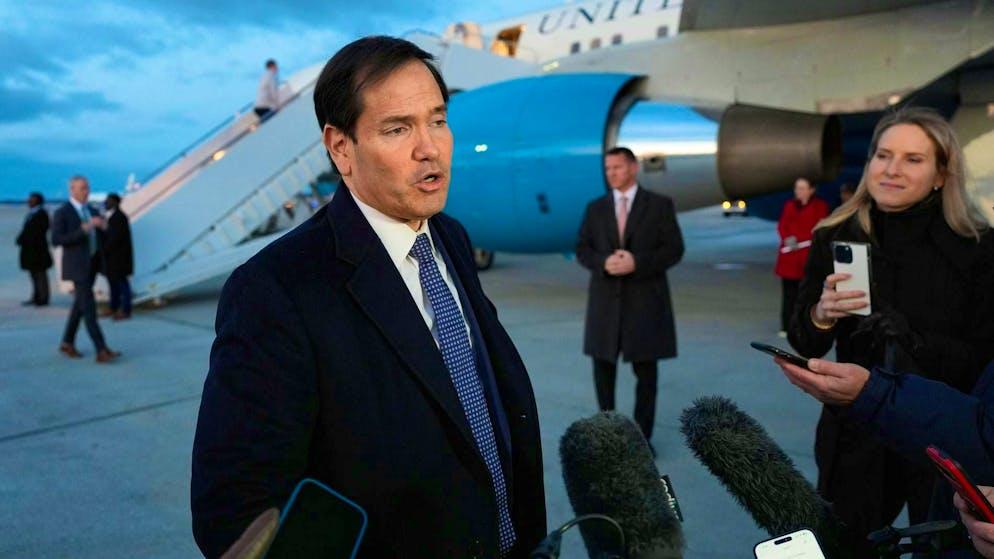
Marco Rubio landed in Iceland on 5 October at the start of a three country NATO trip. The State Department said he will discuss economic and security cooperation in Reykjavík, lead the sixth US Greece Strategic Dialogue in Athens, and meet Portuguese officials in Lisbon on defence, economy and technology. Iceland has no standing army. The visit is the first by a US secretary of state since Antony Blinken in 2021, and it follows a 22 September security pact on Greenland.
US Secretary of State Marco Rubio opened a four day NATO tour in Iceland on Monday, with Arctic security on the table and the Greenland argument still in the background.
The State Department said Rubio would travel to Reykjavík, Athens and Lisbon from 5 to 8 October 2026. In Iceland he meets officials on economic and security collaboration. In Greece he leads the United States delegation to the sixth US Greece Strategic Dialogue, covering defense, regional security and energy. In Lisbon he meets Portuguese officials on defense, the economy and technology.
He called Iceland a good friend of the United States before departure, and said the stop came out of talks with Icelandic leaders at the NATO summit earlier this year and with the foreign minister. Iceland’s foreign minister, Thorgerdur Katrin Gunnarsdottir, had announced the visit on 1 October and named defense, Arctic security and trade as the main issues. AFP reported that he arrived late on Monday. It is the first visit by a US secretary of state since Antony Blinken in 2021.
Iceland has had no standing army since independence in 1944. Its security rests on NATO membership and agreements with the United States, including the base at Keflavík. The island sits on the North Atlantic gap between Greenland and Europe. That geography is why a country without an army is the first stop on a tour about defense. Former US officials told RFE/RL that Reykjavík is likely to welcome more cooperation and to insist on its independence at the same time. One former ambassador said Russian military activity along the Arctic coast, and Chinese interest in ports and research, are the reasons Washington wants the infrastructure hardened. Eric Green, a former deputy chief of mission in Reykjavík, said Icelandic officials would also want reassurance that Washington is finished with claims on Greenland.
That reassurance is the awkward part of the visit. On 22 September, at the United Nations General Assembly in New York, the United States, Denmark and Greenland signed a security pact. President Donald Trump described it as giving Washington permanent control of the island’s security. AFP reported that the deal appeared to close his earlier threats to buy or annex Greenland, and that Washington plans two new military bases there. The threats had soured relations with European allies. Rubio’s Iceland stop is the first high level Arctic visit since that paper was signed. It is not a renegotiation of the pact. It is a test of whether allies treat the pact as the end of the argument.
Icelanders have their own recent vote in the file. On 29 August they rejected the reopening of European Union accession talks by 52.8 percent to 47.2 percent, on a turnout of 82.5 percent. The government that receives Rubio is not moving toward Brussels. It is also not in a position to provide its own fighter cover. The conversation in Reykjavík is about how much American presence an independent NATO member will accept in exchange for the security it does not field itself.
The Athens leg is a different map. The strategic dialogue runs on 6 and 7 October. Greece has been selling itself as a gas hub for southeastern Europe after the shocks to supply from the wars in Ukraine and Iran. Defense industry ties and the Eastern Mediterranean are the other standing items. That stop is already coloured by a letter. On 1 October, Congressman Gregory Meeks wrote to Rubio asking about a Wall Street Journal report that US ambassador Kimberly Guilfoyle had told a dinner Washington could bring about political change in allied countries. The State Department has not published a reply. The dialogue will proceed with that letter in the record.
Lisbon is the short close. Portugal remains a logistics point for US operations in the Atlantic, and the State Department has limited the public agenda to defense, economic ties and technology. No public speech had been posted from Reykjavík by the time of this report. The itinerary is the statement. Three NATO allies, one Arctic, one energy hub, one Atlantic port, in the month after a Greenland security pact that European capitals are still reading line by line.