RUSSIA HITS UKRAINE WITH 16 BALLISTIC MISSILES AND MORE THAN 200 DRONES AS THREE DIE AND 550,000 HOUSEHOLDS LOSE POWER
Russia’s overnight missile and drone barrage against Ukraine has now killed at least three people and left at least 550,000 households without electricity. One person was killed in Kyiv and two others died in Kryvyi Rih. President Volodymyr Zelenskyy said Russia fired 16 ballistic missiles towards Kyiv and the surrounding region and more than 200 drones across Ukraine. More than 10 energy facilities were damaged across multiple regions, forcing authorities to introduce rolling power cuts as repair crews work to restore electricity. The figures are updated details from the same overnight attack previously reported, not evidence of a separate new strike. Reuters
At least three people have been killed and more than half a million Ukrainian households left without electricity after Russia launched one of its broadest missile and drone attacks on Ukraine in recent months, striking energy infrastructure, residential areas and other facilities across multiple regions overnight into Monday, October 19. Ukrainian President Volodymyr Zelenskyy said Russia fired 16 ballistic missiles towards Kyiv and the surrounding region while deploying more than 200 drones against locations stretching from eastern and southern Ukraine to western regions close to the country’s borders with European Union and NATO states. More than 10 energy infrastructure facilities were damaged, according to Ukrainian authorities, forcing emergency repair crews into action and triggering rolling electricity cuts as the country moves deeper into the colder months.
The latest figures represent a substantial update to earlier reporting on the same overnight assault rather than a separate Russian attack. Initial reports focused on explosions in Kyiv, damage to infrastructure and the early casualty picture, but information released during Monday established a broader scale of destruction. Ukrainian authorities now say at least one person was killed in Kyiv and two others died in Kryvyi Rih, while dozens of people were injured across several regions. Officials also confirmed that the disruption to the electricity system was considerably larger than initially understood, with at least 550,000 households losing power after strikes on energy facilities across the country.
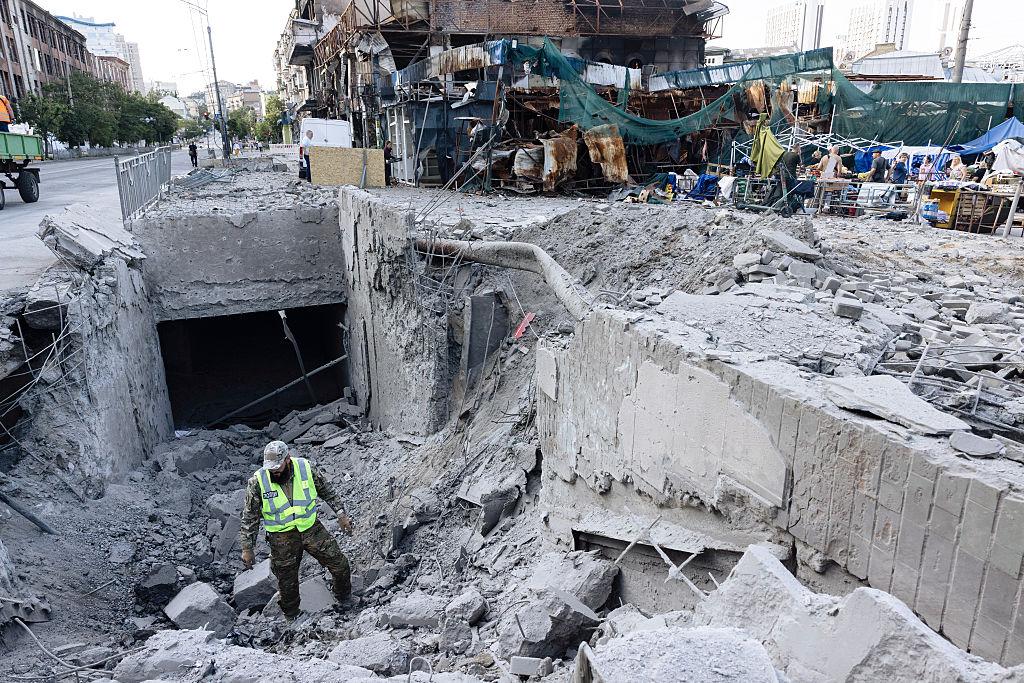
Zelenskyy said the ballistic missile component of the attack was concentrated on Kyiv and Kyiv Oblast, describing several waves of missiles launched during the night. The Ukrainian leader said energy installations and other infrastructure were among the principal targets, but civilian facilities were also damaged, including residential buildings, a medical clinic, a school and a metro station. Images from Kyiv showed smoke rising near transport infrastructure and emergency personnel examining damaged areas after the overnight bombardment.
Ukraine’s Air Force said the wider attack also involved a large number of unmanned aerial vehicles, including versions of the Shahed-type attack drones that Russia has increasingly used in large numbers. Zelenskyy said more than 200 drones were launched towards regions including Kharkiv, Dnipro, Odesa, Rivne and Volyn, while energy facilities were reported damaged in Vinnytsia, Volyn, Kirovohrad, Kyiv, Mykolaiv, Zhytomyr, Khmelnytskyi, Kharkiv, Ternopil, Odesa and Rivne regions. The geographical spread meant air-raid warnings and emergency responses stretched across much of the country rather than being concentrated exclusively around the capital.
Ukrainian air defences intercepted a significant number of incoming targets, but ballistic missiles remain particularly difficult to stop because of their speed and trajectory. Reuters reported that Ukrainian forces said 247 airborne targets, including drones and cruise missiles, were intercepted during the wider barrage. The available Ukrainian Air Force accounting did not indicate that the ballistic missiles directed towards Kyiv had been successfully intercepted in large numbers, reinforcing Kyiv’s continuing calls for additional Patriot and other advanced air-defense systems capable of countering high-speed missiles.
The human cost became clearer as rescue teams continued working through the morning. In Kyiv, authorities reported the death of a woman during the missile barrage, while emergency workers searched damaged locations and assisted people affected by fires, shattered windows and debris. Two additional deaths were reported in Kryvyi Rih, President Zelenskyy’s home city in central Ukraine, bringing the confirmed nationwide toll from the updated attack to at least three.
The final casualty count may change as local authorities continue assessing damaged buildings and receiving reports from different regions. Large combined missile and drone attacks often produce initial figures that are revised as rescue teams reach affected communities, and Ukrainian officials have cautioned that Monday’s numbers remain preliminary. The verified development is that the death toll has risen from the initial reporting and now stands at no fewer than three.
The most extensive national impact, however, was on Ukraine’s energy network. Deputy Energy Minister Artem Nekrasov said at least 10 energy facilities had been hit, while Zelenskyy said more than 10 infrastructure sites were damaged during the night. The attacks disrupted electricity for at least 550,000 households, requiring grid operators to introduce scheduled or rolling power cuts while technicians attempted to stabilise the system.
Ukraine has spent years repairing and reinforcing its electricity grid after repeated Russian attacks on power stations, substations and transmission infrastructure. The system has survived successive waves of bombardment partly because engineers have repaired damaged installations rapidly, redistributed electricity through alternative routes and installed physical protection around some facilities. However, repeated strikes can gradually weaken the network because replacement equipment is expensive, specialised components may take months to obtain and repaired sites can be targeted again.
Monday’s attack comes as temperatures fall and household dependence on electricity and heating increases. That timing raises the humanitarian consequences of energy damage because prolonged outages during colder weather can affect heating, water supplies, public transport, hospitals, schools, communications networks and businesses simultaneously. Ukrainian officials have accused Russia of deliberately using attacks on the power grid to make civilian life more difficult during winter, while Moscow has said its strikes are aimed at infrastructure supporting Ukraine’s military capabilities and has repeatedly denied deliberately targeting civilians.
The Russian government had not issued a detailed account addressing every location Ukraine said was struck in Monday’s barrage at the time of the latest reporting. Russian authorities routinely describe attacks on Ukrainian energy and industrial facilities as strikes against military-related infrastructure, while Kyiv argues that the scale and location of damage repeatedly demonstrate severe consequences for civilians. Those competing claims have remained a central feature of reporting throughout the war.
The attack also intensified a separate dispute between Zelenskyy and Ukraine’s international partners over advance intelligence about Russian missile launches. Zelenskyy said Ukraine did not receive the early warning it had previously received from partners before the ballistic missiles were launched towards Kyiv. He said the attack came in several waves and complained that there had again been no sufficient advance notification that could have given Ukrainian authorities additional time to prepare.
The issue is particularly sensitive because Ukraine relies heavily on Western satellite, surveillance and intelligence capabilities to detect preparations for certain Russian missile launches. Early warning cannot stop a missile by itself, but even a limited amount of additional time can allow air-defense systems to prepare, civilian alerts to be activated earlier and people to move into shelters.
U.S. Secretary of State Marco Rubio has disputed suggestions that Washington deliberately ended intelligence cooperation with Ukraine, while Ukrainian officials have said there were recent interruptions and inconsistencies in the information they received. The disagreement is occurring amid broader tensions between Kyiv and Washington over Russian sanctions, energy exports, military assistance and the terms under which the United States is pursuing negotiations aimed at ending the war.
The intelligence dispute should nevertheless remain separate from the confirmed facts surrounding Monday’s attack. Russia launched the missiles and drones, Ukrainian cities and energy infrastructure were hit, and hundreds of thousands of homes lost electricity. Questions about whether Kyiv received adequate advance warning concern Ukraine’s ability to prepare for the attack rather than responsibility for launching it.
The latest barrage also took place shortly after Ukraine carried out a major drone operation against targets inside Russia, including energy infrastructure around St Petersburg. Moscow and Kyiv have increasingly targeted each other’s energy sectors, creating concern that the war is entering another period of intensified long-range attacks against facilities important to fuel production and electricity supply.
Ukraine argues that strikes on Russian refineries and oil infrastructure are legitimate attempts to reduce revenue and logistical capacity supporting Russia’s war effort. Moscow condemns those operations as attacks on civilian or economic infrastructure and has repeatedly responded with large-scale strikes inside Ukraine. The United States has urged restraint around energy targets because of concerns about global fuel markets, an issue that has created additional friction with Zelenskyy’s government.
Monday’s strikes demonstrate that the energy conflict remains active despite previous discussions about reducing attacks on power and fuel infrastructure. Zelenskyy has repeatedly argued that Ukraine cannot be expected to suspend attacks on Russian energy assets while Russia continues to strike Ukrainian power plants and substations. Washington has sought to use energy arrangements as part of a wider diplomatic process, but neither side has established a durable and independently verified ceasefire covering such targets.
For ordinary Ukrainians, the practical consequence is another period of power rationing. Electricity operators have introduced rolling cuts designed to prevent damaged sections of the grid from becoming overloaded. Such restrictions can vary by region and may last several hours depending on available generating capacity and the speed of repairs.
The 550,000-household figure provides a clearer measure of the attack’s scale than the initial reports of individual explosions. A household may contain several people, meaning the number of residents directly affected by electricity disruption could be considerably higher than half a million. Some communities may also experience water or heating problems if pumps and local heating systems depend on electrical power.
Emergency generators have become increasingly common at Ukrainian hospitals, businesses and public facilities after years of wartime outages. Local authorities have also established resilience centres where people can charge phones, access heat or obtain basic services during extended cuts. Those preparations reduce the impact of strikes but cannot completely replace a functioning national grid.
Kyiv’s metro system has again played a dual role during the attack, serving both as public transport infrastructure and as an air-raid shelter. Underground stations have sheltered large numbers of residents throughout the war because they provide considerably more protection than ordinary buildings during missile and drone strikes. Monday’s attack also damaged metro-related infrastructure, illustrating the pressure placed on systems that civilians depend upon for both movement and protection.
The destruction of civilian buildings alongside energy infrastructure has also renewed concern about the effectiveness of shelters. Ukrainian officials have acknowledged shortages of secure shelter space in some urban areas, particularly where older buildings lack suitable underground facilities. Residents who cannot reach metro stations or dedicated shelters often spend air raids in corridors, basements or internal rooms away from windows.
The growing use of ballistic missiles intensifies that problem because warning times can be short. Drone attacks may unfold over several hours as slow-moving aircraft cross the country, while ballistic missiles can travel towards their targets far more quickly. This places greater pressure on automated warning systems and high-end air defense.
Ukraine has repeatedly asked partners for more Patriot interceptors and other systems capable of defending major cities and strategic infrastructure. Zelenskyy has argued that protecting the electricity grid is increasingly difficult because Russia can combine ballistic missiles, cruise missiles and large numbers of relatively inexpensive drones in the same attack, forcing defenders to make rapid decisions about which threats to engage.
Russia has also adapted its drone tactics over the course of the war. Ukrainian officials say newer attack drones can fly faster, at different altitudes and along more complex routes than earlier versions. Large barrages may include decoy drones designed to force Ukraine to expend ammunition or reveal the locations of air-defense units.
This creates an economic imbalance because sophisticated interceptors can cost far more than the drones they are used to destroy. Ukraine has therefore developed cheaper interceptor drones, mobile machine-gun teams and electronic warfare systems to counter slower targets while reserving its most advanced missiles for more dangerous threats.
Ballistic missiles remain harder to replace with cheaper defensive options. Systems capable of intercepting them are limited in number, and the ammunition required is expensive and dependent heavily on Western supply. That makes every large ballistic attack both a military and logistical challenge for Kyiv.
The October 19 barrage arrives as Ukraine’s relationship with Washington has become increasingly strained. Zelenskyy has criticised decisions by the Trump administration concerning Russia-related sanctions and energy trade, while Trump has argued that he is attempting to create conditions for negotiations. American officials have also continued direct discussions with both Ukrainian and Russian representatives.
Diplomatic contacts have not prevented military escalation. Zelenskyy spoke with U.S. envoys Steve Witkoff and Jared Kushner shortly before the latest attack as the two sides discussed the outcome of meetings in Florida and possible future peace initiatives. Monday’s barrage demonstrates the gap that remains between ongoing diplomacy and battlefield reality.
Kyiv maintains that it has responded positively to ceasefire proposals put forward by international partners and argues that Russia’s continued missile attacks show Moscow is not prepared to de-escalate. Russia has accused Ukraine and its Western supporters of obstructing peace and says its military operations will continue until its security objectives are achieved.
Those claims remain part of a broader diplomatic confrontation that has not produced a comprehensive ceasefire. What Monday’s attack establishes more concretely is that large-scale long-range operations continue even as American mediators attempt to keep negotiations active.
European governments will also be watching the strikes closely because several of the regions targeted lie in western Ukraine, geographically closer to Poland and other NATO members. Russian and Ukrainian drones have previously crossed or approached neighbouring airspace, occasionally prompting NATO countries to scramble aircraft or issue security alerts.
The attack on regions such as Volyn and Rivne therefore carries implications beyond the immediate damage inside Ukraine. Air-defense forces in neighbouring countries monitor large missile and drone operations because navigation errors, electronic warfare or damaged aircraft can potentially send weapons beyond Ukrainian territory.
The energy implications are also regional. Ukraine’s electricity network remains interconnected with European systems, and the country has relied on electricity imports during periods when domestic generating capacity was heavily damaged. European assistance can help stabilise supply but cannot replace Ukraine’s entire national power system if destruction becomes widespread.
This is why repairs after Monday’s strikes are likely to continue around the clock. Energy workers have become an important part of Ukraine’s wartime response, repeatedly entering damaged facilities after attacks to restore power while facing the risk that the same locations could be struck again.
The government has not released detailed technical information about every facility damaged, partly because revealing exact vulnerabilities could assist future Russian targeting. Public updates therefore often provide the number of facilities affected without identifying all of them.
Authorities have nevertheless confirmed that more than 10 energy installations suffered damage in the overnight barrage. The affected regions span much of the country, indicating that Russia attempted to stretch Ukrainian repair and air-defense resources across a wide geographical area.
The damage will not necessarily result in prolonged nationwide blackouts. Ukraine’s grid operators have become experienced at rerouting electricity, isolating damaged equipment and imposing temporary cuts that allow the broader network to continue functioning. The length of outages will depend on which components were destroyed and how quickly replacement equipment can be installed.
For households already dealing with repeated cuts, however, even temporary disruption creates practical difficulties. Refrigeration, heating, mobile-phone charging, elevators and home medical equipment can all be affected. Businesses may lose production time, while schools and public institutions have to adjust schedules around available electricity.
The humanitarian significance becomes greater when outages coincide with damaged residential buildings. Families whose homes have been struck may simultaneously lose shelter, electricity and basic services, increasing demand on emergency accommodation and municipal support.
Monday’s death toll of three remains comparatively lower than in some previous mass attacks, but casualty numbers alone do not capture the strategic impact of a strike designed to damage infrastructure across a large part of the country. The combination of deaths, injuries, damaged energy facilities and hundreds of thousands of power outages makes the assault one of the more significant recent Russian attacks on Ukraine’s energy system.
The number of weapons used also illustrates the scale. Sixteen ballistic missiles aimed at Kyiv and its surrounding region constitute a particularly concentrated missile attack, while more than 200 drones forced air defenses to respond simultaneously in multiple directions.
Ukraine’s interception figures indicate that a substantial proportion of airborne threats were destroyed, but enough weapons reached their targets to cause major disruption. This reflects a central problem in air defense: even an interception rate that appears numerically strong can still leave several missiles or drones capable of inflicting severe damage.
Zelenskyy used the attack to renew calls for additional international support, particularly air-defense ammunition. His government argues that every delay in deliveries leaves civilian infrastructure more exposed, while Western governments must balance their own military stockpiles and production limitations against Ukraine’s continuing requirements.
The attack is likely to become another subject in Kyiv’s discussions with Washington and European partners. Ukraine wants additional interceptors and intelligence support, while also seeking stronger economic pressure on Russia. American officials are simultaneously attempting to maintain diplomatic channels with Moscow, creating a difficult balance between supporting Ukraine militarily and pursuing negotiations.
For VNTV readers following the previous overnight-strike report, the central update is therefore straightforward but substantial. This is the same Russian missile and drone operation previously reported, but authorities now have a much clearer picture of its consequences. The confirmed death toll has risen to at least three, with one person killed in Kyiv and two in Kryvyi Rih. Zelenskyy says 16 ballistic missiles were launched towards Kyiv and Kyiv Oblast, while more than 200 drones were sent across the country.
The damage to Ukraine’s electricity system has also become clearer. More than 10 energy facilities were hit and at least 550,000 households lost power, prompting rolling blackouts while repair teams work to restore supply. These figures transform what initially appeared to be another heavy overnight bombardment into a major nationwide energy emergency affecting hundreds of thousands of homes.
Additional casualty figures, infrastructure assessments and restoration estimates may continue to change as authorities complete inspections. The latest verified reporting does not support treating later updates as evidence of another separate attack unless Ukrainian authorities confirm additional strikes.
For now, the October 19 barrage stands as the event being updated. It killed at least three people, damaged critical energy infrastructure across numerous regions and temporarily plunged more than half a million Ukrainian households into darkness while the country’s air-defense and electricity systems again faced the combined pressure of ballistic missiles and mass drone warfare.