RUSSIAN PROSECUTORS SEEK TO DROP MURDER CHARGES AGAINST THREE SISTERS WHO KILLED THEIR FATHER AFTER YEARS OF ABUSE
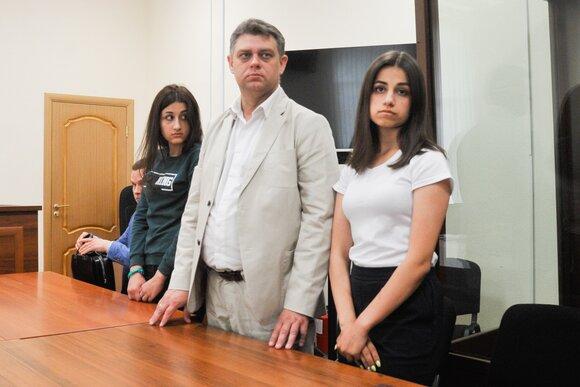
Russian state prosecutors have urged Moscow's Basmanny District Court to terminate murder proceedings against Krestina, Angelina and Maria Khachaturyan, three sisters who killed their father, Mikhail Khachaturyan, in July 2018 after enduring years of sexual, physical and psychological abuse. Prosecutors concluded that the sisters acted in necessary self-defense and criticized investigators for repeatedly extending the criminal proceedings. The development follows a 2025 judicial finding establishing that their father committed serious offenses against his daughters. Although the Investigative Committee continues to oppose dismissing the case, defense lawyers expect a final decision before the end of 2026, potentially bringing more than eight years of legal uncertainty to an end. The case has also intensified demands for stronger domestic violence protections in Russia.
Russian state prosecutors have called for the termination of criminal proceedings against Krestina, Angelina and Maria Khachaturyan, three sisters accused of murdering their father in Moscow in July 2018, after concluding that their actions constituted necessary self-defense following years of sexual, physical and psychological abuse. The development represents a significant breakthrough in a criminal case that has continued for more than eight years, generated nationwide demonstrations and exposed serious concerns about Russia's legal protections for victims of domestic violence.
During proceedings at Moscow's Basmanny District Court on November 18, 2026, prosecutors argued that the sisters should no longer face criminal prosecution and that restrictions imposed on them during the investigation should be lifted. The prosecution also criticized Russia's Investigative Committee for repeatedly extending the investigation without reaching a definitive conclusion, arguing that the prolonged proceedings violated legal requirements concerning reasonable investigative timeframes.
The latest position, reported by Russian state news agency RIA Novosti and several independent news organizations, could bring an end to years of uncertainty for the sisters, who were teenagers when their 57-year-old father, Mikhail Khachaturyan, was found dead in their Moscow apartment on July 27, 2018. Krestina was 19 at the time, Angelina was 18 and Maria, the youngest of the three, was just 17.
Despite the prosecution's recommendation, the investigator responsible for the case has maintained that there are insufficient grounds to terminate the criminal proceedings. The disagreement means that the sisters have not yet received a definitive resolution of the charges against them, although their legal representatives have expressed optimism that a final decision could be reached before the end of 2026.
The case has acquired particular significance because a separate judicial proceeding concluded in 2025 that Mikhail Khachaturyan had committed serious offenses against his daughters, including sexual violence and the deliberate infliction of grievous bodily harm. The findings provided important legal support for the sisters' longstanding contention that they had endured sustained abuse and lived under the constant threat of violence before their father's death.
For years, the sisters' lawyers have argued that the circumstances surrounding the killing cannot be assessed independently of the environment in which the young women had been forced to live. They maintain that repeated threats, sexual violence, intimidation and physical assaults created a continuing danger from which the sisters believed they had little realistic opportunity to escape.
Women's rights lawyer Mari Davtyan, who has been involved in their defense, said the prosecution's latest position recognizes an important principle concerning the application of self-defense in cases involving prolonged domestic abuse. According to Davtyan, a continuing threat of violence can provide grounds for necessary self-defense even when an individual is not being physically assaulted at the precise moment of the defensive action.
That interpretation lies at the center of the legal dispute that has surrounded the case since 2018. Investigators initially treated the death as a deliberate killing involving coordination among the sisters, while their defense argued that their conduct must be examined within the context of years of abuse, psychological trauma and fear for their lives.
Accounts provided by the sisters during the investigation described a household in which their father exercised extensive control over their daily activities, personal relationships and freedom of movement. They alleged that ordinary domestic responsibilities were accompanied by intimidation and punishment, while attempts to resist his authority could result in threats or further violence.
Angelina told investigators that her father began sexually abusing her during a family holiday in Israel in 2014, when she was still a minor. She said the abuse continued after the family returned to Russia, describing a disturbing pattern in which her father attempted to justify his conduct by invoking his authority over his daughters.
“He’d regularly tell us that sex outside marriage is a sin,” Angelina recalled in an account of the abuse provided to investigators. “But because we’re his blood and his daughters, he can do with us as he wishes, and we should submit ourselves to it.”
Maria similarly described a household in which the sisters were expected to attend to their father's demands, including preparing his meals, cleaning the apartment and performing other domestic responsibilities. Their accounts indicated that those obligations were imposed within an environment characterized by fear rather than ordinary family cooperation.
The sisters also reported receiving repeated threats against their physical safety. Communications examined in connection with the investigation included messages attributed to their father in which he threatened severe violence, providing additional context for their claims that they had lived under persistent intimidation.
Their legal representatives have argued that the combination of physical abuse, sexual violence and psychological control significantly restricted the sisters' ability to seek assistance. They maintained that the young women feared retaliation if they reported their father's conduct and did not believe that approaching authorities would necessarily provide effective protection.
The family's circumstances became increasingly serious following the departure of the sisters' mother from the household in 2015. According to accounts subsequently examined by investigators and journalists, Mikhail Khachaturyan exercised considerable control over the daughters who remained with him, leaving them in an increasingly isolated domestic environment.
On July 27, 2018, another violent confrontation occurred after their father became angry about the condition of the family apartment. The sisters told investigators that he subjected them to physical punishment involving pepper spray, during which Krestina reportedly lost consciousness. Later that day, the confrontation escalated into the fatal incident that resulted in their father's death.
The sisters acknowledged their involvement in the killing after being taken into custody. However, their legal representatives maintained that acknowledging responsibility for the physical act did not necessarily establish criminal liability for premeditated murder, particularly given the possibility that the circumstances satisfied the legal requirements for necessary self-defense.
Investigators initially pursued murder charges carrying the possibility of lengthy imprisonment. The prosecution of three teenage girls who alleged that they had been repeatedly abused by their father attracted considerable public attention, with many Russians questioning whether the criminal justice system was adequately considering the circumstances that preceded the killing.
The sisters were initially placed in pretrial detention but were released approximately two months after their arrest under restrictive judicial conditions. Those conditions severely limited aspects of their daily lives, including their ability to communicate with one another, creating an additional burden for individuals whose shared experiences had become central to their legal defense.
For much of the following eight years, the restrictions prevented the sisters from maintaining ordinary contact despite the absence of a final conviction against them. Their lawyers repeatedly challenged the continuation of those measures, arguing that the length of the investigation and the circumstances of the case no longer justified such extensive limitations on their personal freedom.
Hearings conducted at the Basmanny District Court on November 17 and 18 addressed complaints submitted by Maria's legal representative, Yaroslav Pakulin, concerning the conduct of the investigation and the continued application of preventive measures. The court found that aspects of the investigator's handling of the matter were unlawful, providing the defense with a further legal victory.
Russian newspaper Kommersant reported that the court required reconsideration of decisions restricting communication between the sisters and subsequently lifted a preventive measure affecting Maria. Those developments indicate that the judicial authorities have begun addressing some of the restrictions imposed during the investigation, although the precise status of every condition affecting all three sisters remains subject to the relevant legal decisions.
The prosecution's intervention was especially important because the disagreement concerning the sisters' criminal responsibility has persisted despite years of additional investigations, psychiatric assessments and judicial proceedings. The case has repeatedly moved between investigators, prosecutors and courts, producing several decisions that appeared to create opportunities for resolution without ultimately ending the criminal proceedings.
In January 2020, prosecutors had already questioned the decision to pursue murder charges, recommending that investigators reconsider whether the sisters' actions constituted necessary self-defense. Investigators did not immediately accept that interpretation, and the case continued through additional procedural stages.
By March 2021, Russian authorities had formally recognized the sisters as victims in a criminal investigation concerning their father's alleged conduct. That recognition created an unusual legal situation in which they were simultaneously accused of a serious criminal offense and acknowledged as victims of offenses allegedly committed by the person they had killed.
The separate investigation into Mikhail Khachaturyan's conduct eventually produced a posthumous judicial proceeding examining allegations of sexual abuse, serious bodily harm and the circulation of pornographic material involving his daughters. Although his death prevented the imposition of a criminal sentence, the proceedings provided an opportunity for judicial examination of evidence concerning the sisters' experiences.
On April 21, 2025, Moscow's Butyrsky District Court established that Khachaturyan had committed serious offenses against his daughters. The decision represented a major development for the defense because the allegations that had formed the basis of the sisters' self-defense arguments were no longer confined to their personal testimony or the submissions made by their lawyers.
The judicial findings were subsequently considered by the Moscow City Court in November 2025. The appellate proceedings maintained the substantive findings concerning Khachaturyan's conduct while clarifying the legal terminology applicable to a deceased defendant. Under the relevant procedural distinction, the court established that he had committed the offenses without treating the matter in precisely the same manner as a conventional criminal conviction against a living person.
That clarification did not eliminate the significance of the findings for the sisters' case. Establishing that their father had committed serious offenses provided additional legal grounds for reconsidering the circumstances under which the fatal confrontation occurred and whether their conduct satisfied the requirements for necessary self-defense.
In January 2026, Russia's Investigative Committee resumed its examination of the case against the sisters following the judicial findings concerning their father. The renewed investigation was intended to address outstanding questions about their conduct, the circumstances of the killing and the applicability of self-defense under Russian criminal law.
However, the investigation continued for much of 2026 without producing a final determination. Defense lawyers argued that the repeated delays were increasingly difficult to justify given the extensive evidence already gathered and the judicial conclusions reached concerning the father's abusive conduct.
The November intervention by state prosecutors reflected similar concerns about the duration of the proceedings. Prosecutors questioned the continuing investigative extensions and maintained that the sisters should no longer remain subject to criminal prosecution or restrictions where their conduct was determined to fall within the legal framework of necessary self-defense.
The case has highlighted the difficulty of applying traditional self-defense principles to circumstances involving prolonged domestic abuse. Criminal investigations ordinarily examine whether an individual faced an unlawful threat and whether their response met the conditions established by the applicable law. Cases involving sustained abuse can complicate that assessment because the danger experienced by a victim may extend beyond an isolated physical confrontation.
Individuals living in abusive households may experience repeated threats, restrictions on movement, financial dependency and psychological intimidation. Those circumstances can affect their understanding of when danger is present and whether they possess realistic opportunities to obtain protection or leave the abusive environment.
The sisters' defense has emphasized that those factors must be considered when assessing their actions in July 2018. Their lawyers argue that the sustained pattern of violence, rather than a single incident viewed in isolation, provides essential context for determining whether they believed their safety and lives remained under threat.
Russian criminal law recognizes necessary self-defense under Article 37 of the Criminal Code. The application of that provision depends on the circumstances of the threatened harm, the nature of the unlawful conduct and other relevant considerations. The prosecution's latest position indicates that it considers the facts of the Khachaturyan case sufficient to justify terminating the criminal proceedings on those grounds.
Nevertheless, a history of domestic abuse does not automatically establish a legal defense in every case involving the death of an abusive individual. Courts and investigators must examine the specific evidence, the nature of the danger and the circumstances surrounding the conduct for which criminal responsibility is being considered. The significance of the prosecutors' recommendation lies in their assessment of the particular facts involving these three sisters.
Psychiatric and medical assessments conducted during the investigation have also played an important role in the defense. According to the sisters' lawyers, specialists identified psychological consequences associated with their prolonged exposure to abuse, including symptoms of post-traumatic stress disorder and other trauma-related difficulties.
Such findings can assist legal authorities in understanding how sustained violence may affect an individual's perception of danger and ability to respond to threatening circumstances. They do not independently determine whether criminal liability exists, but they can provide relevant evidence when considered alongside witness testimony, communications, medical records and other material gathered during an investigation.
The Khachaturyan case became a prominent symbol of the wider campaign for stronger domestic violence protections in Russia. Women's rights organizations, lawyers, activists and ordinary citizens organized demonstrations and public awareness campaigns calling for the sisters' release and demanding legislative reforms intended to protect victims of abuse.
Supporters argued that the case demonstrated the consequences of failing to intervene when individuals experience repeated violence within their homes. They maintained that the criminal justice system should examine why vulnerable young people remained exposed to serious abuse for years before a fatal confrontation brought their circumstances to the attention of authorities.
The case also divided Russian public opinion. While many people regarded the sisters as survivors who had acted to protect themselves, others argued that the deliberate taking of a life required criminal accountability regardless of the allegations surrounding the victim's previous conduct. Those competing perspectives contributed to a broader national debate about the meaning of self-defense, the responsibilities of government institutions and the boundaries between private family matters and criminal law.
Russia's approach to domestic violence had already attracted considerable criticism before the sisters were arrested. In February 2017, legislative amendments signed by President Vladimir Putin reduced the criminal penalties applicable to certain first-time incidents of battery involving family members, treating qualifying offenses as administrative violations rather than criminal offenses.
The amendments did not legalize all forms of domestic violence, and serious assaults, sexual offenses and other qualifying criminal conduct remained punishable under existing legislation. Nevertheless, human rights organizations argued that the changes weakened opportunities for early intervention in abusive relationships, particularly where repeated violence had not yet resulted in injuries meeting more serious criminal thresholds.
Human Rights Watch warned in a comprehensive 2018 investigation that survivors of domestic violence in Russia encountered substantial difficulties obtaining assistance from law enforcement institutions. The organization documented concerns involving inadequate police responses, difficulties pursuing criminal proceedings, limited access to protective accommodation and insufficient mechanisms for preventing further abuse.
The findings also highlighted the absence, at the time, of a comprehensive national legislative framework specifically addressing domestic violence. Although individual acts of assault and other offenses could be prosecuted under general criminal provisions, advocates argued that those provisions did not always adequately address patterns of coercion and repeated abuse within intimate or family relationships.
In July 2019, the European Court of Human Rights delivered a significant judgment in the case of Volodina v. Russia, concluding that Russian authorities had failed to adequately protect a woman from repeated domestic violence and had discriminated against her in the enjoyment of her rights. The ruling identified shortcomings in the country's response to domestic abuse and contributed to international scrutiny of its existing legal protections.
The Khachaturyan sisters' case emerged within that broader institutional environment, although the findings in other domestic violence proceedings should not be treated as proof of specific failures by individual officials involved in their circumstances. Establishing whether earlier intervention could have prevented their father's abuse or the fatal confrontation would require examination of the evidence concerning what authorities knew and what opportunities existed to provide protection.
The sisters' prolonged separation under pretrial restrictions has also generated concerns beyond the immediate criminal allegations. Preventive measures are generally intended to protect investigations, prevent interference with evidence and ensure compliance with judicial proceedings. However, their continued application over lengthy periods can impose substantial personal consequences on individuals who have not been convicted of an offense.
For people whose shared experiences involve serious childhood trauma, restrictions preventing communication with close relatives may carry additional emotional consequences. The defense has repeatedly emphasized that the sisters should not be subjected indefinitely to conditions originally imposed during the early stages of an investigation that has continued for more than eight years.
The prosecution's recommendation therefore addresses two interconnected issues: whether criminal proceedings should continue and whether the restrictions associated with those proceedings remain legally justified. Resolving both matters could allow the sisters to resume aspects of their personal lives that have been substantially affected since their arrests in 2018.
For Krestina, Angelina and Maria, the years spent facing criminal prosecution have encompassed much of the transition from adolescence into adulthood. Their case has remained publicly visible throughout that period, with repeated court hearings, media coverage and public debate surrounding their experiences and potential criminal responsibility.
The impact of those circumstances cannot be measured exclusively through the length of their original pretrial detention. Criminal proceedings can affect educational opportunities, employment, relationships and the ability to make long-term personal plans, particularly when the possibility of substantial imprisonment remains unresolved.
The case also illustrates the difference between recognition as a victim of abuse and the termination of separate criminal proceedings. The judicial findings concerning Mikhail Khachaturyan established serious wrongdoing against his daughters, but those findings did not automatically resolve the charges concerning his death. Additional legal assessment was required to determine the implications of the abuse for their criminal responsibility.
That distinction explains why the latest prosecutorial recommendation represents a meaningful development without yet constituting a final dismissal. The Investigative Committee's continuing opposition demonstrates that disagreement remains among the institutions responsible for determining the future of the case.
Should the proceedings ultimately be terminated on the grounds of necessary self-defense, the decision could become an important reference point in discussions concerning the treatment of domestic violence survivors within Russia's criminal justice system. Its legal significance would depend on the reasoning contained in the final decision and the extent to which that reasoning could be applied to other cases involving prolonged abuse.
Domestic violence organizations have argued that individual criminal decisions must also be accompanied by broader preventive measures if vulnerable people are to receive effective protection before violence escalates. Those measures can include accessible reporting mechanisms, timely police intervention, emergency accommodation, legal assistance and protective arrangements designed to reduce the risk of further harm.
For survivors of abuse, the availability of meaningful protection can determine whether they believe they have realistic alternatives to remaining in dangerous circumstances. The Khachaturyan case has drawn particular attention to that question because the sisters maintained that their father's authority, threats and alleged influence left them fearful of seeking help.
The prosecution's latest assessment does not establish that violence is an acceptable general response to domestic abuse. Rather, it concerns whether the specific circumstances confronting these individuals satisfied the legal requirements for necessary self-defense. That distinction remains essential as the case continues to generate public discussion about the relationship between personal safety and criminal accountability.
As of Saturday, November 28, 2026, the sisters' legal representatives were still awaiting a definitive decision terminating the murder proceedings. Although prosecutors have explicitly supported ending the case and judicial authorities have intervened concerning certain investigative restrictions, no final dismissal covering all three sisters had been independently confirmed.
The remaining proceedings will determine whether the prosecution's position results in the formal closure of a case that has become one of Russia's most widely discussed domestic violence controversies. Defense lawyers have indicated that a resolution could be reached before the end of the year, potentially allowing the sisters to move beyond the criminal charges that have overshadowed their lives since adolescence.
More than eight years after their father's death, Krestina, Angelina and Maria Khachaturyan are closer to obtaining the legal outcome their representatives have pursued since the beginning of the investigation. The judicial findings concerning their father's abuse and the prosecutors' recognition of necessary self-defense have substantially changed the circumstances surrounding the case, although the final decision remains outstanding. For the sisters, the immediate question is whether those developments will finally result in the termination of criminal proceedings; for Russia's wider domestic violence movement, the case remains a powerful illustration of the consequences that can follow when sustained abuse is not effectively prevented or addressed.