
SADIO MANÉ LAUNCHES $20 MILLION MANGO AGRO INDUSTRIAL PROJECT IN SENEGAL
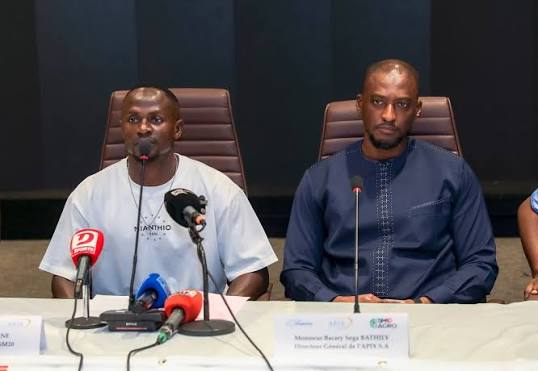
Senegalese football star Sadio Mané has launched SM10 Agro, an approximately $20 million mango production and processing project in Bambali. The development is expected to cover 500 hectares, include around 78,000 mango trees and create more than 1,000 direct jobs.
Senegalese football star Sadio Mané has launched a major agro industrial project worth approximately $20 million in his hometown of Bambali, an investment designed to transform locally produced mangoes, reduce agricultural losses and create more than 1,000 direct jobs.
The project, known as SM10 Agro, represents an investment of 11.7 billion CFA francs and marks a significant expansion of Mané's development initiatives in the southern Senegalese community where he was born.
Mané laid the foundation stone for the project in Bambali on September 19.
The development will combine mango production, processing, packaging, training and exports as part of an effort to retain more of the economic value generated by agriculture within Senegal.
500 HECTARES AND 78,000 MANGO TREES
Plans for SM10 Agro include approximately 500 hectares of agricultural land containing around 78,000 mango trees.
The development is expected to have an annual production capacity of approximately 8,500 to 10,500 tonnes.
Around 10 hectares will be dedicated to the industrial section of the project.
The complex will include facilities for sorting and packaging mangoes as well as four processing operations.
Products are expected to include mango pulp, dried mango and mango butter, with some production intended for export markets.
MORE THAN 1,000 JOBS PLANNED
The project is expected to create more than 1,000 direct jobs during its initial operations.
Additional employment could also emerge through transportation, agricultural supplies, distribution and other businesses connected to the development.
A training centre will form part of the complex, with particular attention given to developing opportunities for young people and women.
Accommodation for workers is also included in the plans.
TACKLING MAJOR POST HARVEST LOSSES
One of the central objectives of the project is reducing the amount of mango production lost before it reaches consumers.
Mané said the Sédhiou region currently loses an estimated 30 to 40 percent of its mango harvest because of inadequate storage and processing capacity.
Creating processing facilities close to mango producing communities could allow farmers to sell fruit that might otherwise spoil while generating higher value products from local harvests.
Instead of relying primarily on the sale of raw agricultural produce, SM10 Agro intends to process mangoes into products that can be sold domestically and internationally.
MANÉ WANTS MORE VALUE TO REMAIN IN SENEGAL
Mané has presented the investment as part of a broader effort to ensure that the economic benefits generated from local resources reach communities in Senegal.
The footballer said he wants the wealth generated from Senegal's land to remain within the country while creating employment and developing local skills.
His approach represents a shift from purely social investment towards productive businesses designed to generate employment and economic activity over the longer term.
FROM FOOTBALL SUCCESS TO LOCAL INVESTMENT
Mané has previously invested extensively in Bambali.
His projects in the community have included education, healthcare and sporting infrastructure.
SM10 Agro, however, is significantly different in scale and commercial ambition.
The project is intended to create an integrated agricultural value chain combining farming, processing, training and exports.
Senegalese authorities are supporting the investment through the country's investment promotion framework.
CONSTRUCTION EXPECTED TO TAKE 18 MONTHS
Development of the agro industrial complex is expected to take approximately 18 months.
Once operational, the project could provide a new commercial market for mango farmers across Bambali and the wider Sédhiou region.
Its success will ultimately depend on construction being completed, production targets being achieved and the processing operation securing sustainable domestic and export markets.
For Mané, however, the foundation stone marks the beginning of one of his largest investments in his hometown.
After years of financing social infrastructure in Bambali, the Senegalese football star is now attempting to build an agricultural business capable of creating jobs, developing skills and keeping more of the value generated by local farming within Senegal.