SARKODIE PACKS BABA YARA STADIUM AS RAPPERHOLIC26 LIGHTS UP KUMASI
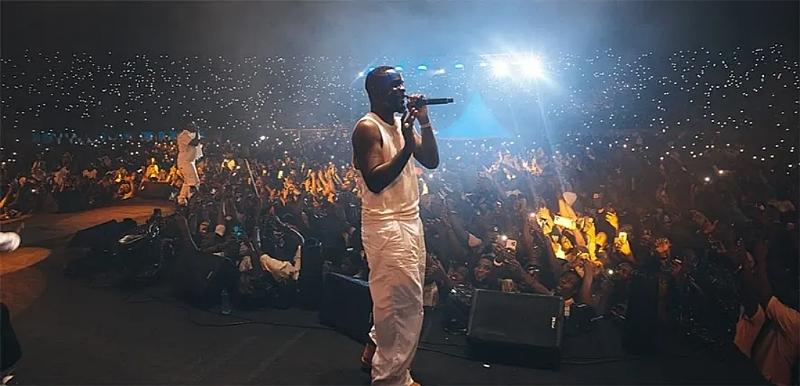
Sarkodie drew a massive capacity crowd to Kumasi’s Baba Yara Sports Stadium for Rapperholic26 on October 24, marking the second consecutive year his flagship concert has been staged in the Ashanti Regional capital. The all-night event featured performances from artists including KiDi, Kuami Eugene, Lasmid, Sista Afia and Mr Drew, while other reports listed Kweku Smoke, Wendy Shay, King Promise, Oseikrom Sikanii and OliveTheBoy among the performers. Sarkodie incorporated Asante cultural imagery into his entrance and paid tribute to the late Daddy Lumba before closing the show around 6:30 a.m.
Ghanaian rap heavyweight Sarkodie delivered another major night for the country’s live entertainment industry after thousands of fans packed the Baba Yara Sports Stadium in Kumasi for Rapperholic26, turning the Ashanti Regional capital into the center of Ghana’s entertainment conversation through Saturday night and into Sunday morning. The October 24 concert marked Sarkodie’s second consecutive Rapperholic edition in Kumasi following the success of his 2025 Homecoming event, with the latest show drawing a capacity crowd, a long list of Ghanaian performers and sustained social-media attention as fans shared videos from inside the stadium throughout the night.
AdomOnline reported that the Baba Yara Sports Stadium was filled to capacity as fans gathered for the concert, while other local entertainment outlets described thousands of patrons traveling from different parts of the country to attend. Ahead of the event, Sarkodie had officially announced that the VIP ticket category was sold out, providing an early indication of strong demand. Although some reports have claimed attendance exceeded 80,000, no independently verified official attendance count has been released, and VNTV is therefore treating the event as a capacity crowd rather than attaching an unconfirmed numerical total to the turnout.
Rapperholic26 began on Saturday evening and continued into the early hours of Sunday, with Sarkodie eventually bringing the event to a close at around 6:30 a.m. according to AtinkaOnline. The long-running show featured a mixture of rap, Afrobeats, highlife and contemporary Ghanaian pop performances and once again demonstrated the ability of the Rapperholic brand to sustain a large stadium audience well beyond the traditional Accra entertainment circuit.
Sarkodie’s entrance became one of the most discussed moments of the night. AtinkaOnline reported that the production combined elements of Asante culture with modern hip-hop presentation, including a projection of Asantehene Otumfuo Osei Tutu II on the main backdrop while traditional music known as Nwom Kron played before Sarkodie appeared on stage. The sequence positioned the concert not simply as a conventional rap performance but as a deliberate celebration of the rapper’s relationship with Kumasi and his Ashanti roots.
Once on stage, Sarkodie moved between live-band arrangements and performances supported by longtime collaborator DJ Mensa, delivering songs from across a career that now spans well over a decade. Fans responded with mass sing-alongs, mobile-phone lights and sustained chants throughout the performance, producing the kind of stadium atmosphere that has increasingly become associated with the Kumasi editions of Rapperholic.
The concert also drew a wide range of guest performers. AdomOnline confirmed appearances by KiDi, Sista Afia, Lasmid, Mr Drew and Kuami Eugene, while AtinkaOnline reported additional performances by Kweku Smoke, Wendy Shay, Oseikrom Sikanii, DopeNation, King Promise, Kwadwo Black and OliveTheBoy. The broad lineup allowed the event to move across several generations and genres of contemporary Ghanaian music rather than functioning solely as a Sarkodie headline set.
Lasmid was among the performers singled out in early reports for a strong reception from the audience, while Sista Afia and Mr Drew also generated considerable crowd response. Kuami Eugene added a highlife and Afrobeats dimension to the night, while the inclusion of younger acts reinforced Rapperholic’s long-standing role as a platform where established stars and newer artists can appear before a large mainstream audience.
Sarkodie also used part of his performance to pay tribute to the late Ghanaian highlife legend Daddy Lumba. AtinkaOnline reported that the rapper dedicated a segment of the concert to Lumba and played several of his songs, drawing an emotional reaction from sections of the audience. The tribute reflected the continuing influence of Daddy Lumba’s catalogue on Ghanaian popular music and added a commemorative dimension to a concert otherwise dominated by high-energy performances.
The cultural presentation around Sarkodie’s entrance and the Daddy Lumba tribute were significant because they reinforced a broader theme that has increasingly shaped Rapperholic in Kumasi: positioning the concert as both a major contemporary entertainment event and a celebration of Ghanaian musical and cultural identity. Sarkodie has frequently incorporated references to his Ashanti background into his work, and his decision to hold Rapperholic in Kumasi for a second consecutive year appears to have strengthened that connection with audiences in the region.
The rapper first moved his flagship concert to Kumasi in September 2025 with Rapperholic: The Homecoming, the first edition of the brand staged in the Ashanti Regional capital after years in which Rapperholic was closely associated with Accra’s December entertainment calendar. That first Baba Yara concert drew thousands despite heavy rainfall and featured performers including Shatta Wale, Obrafour, Efya, Kofi Kinaata, Medikal and Kweku Smoke.
The response to the 2025 edition appears to have convinced organizers that Kumasi could sustain Rapperholic as more than a one-off homecoming show. Sarkodie announced his return for October 24, 2026, telling supporters that the city would once again become the center of the event. By the week of the concert, his arrival in Kumasi had already generated major attention, with videos showing convoys and groups of fans welcoming him into the city.
That buildup contributed to intense ticket interest. The VIP category was publicly declared sold out before the concert, while other ticket classes continued to be promoted. For that reason, claims that the entire event had officially sold out should be treated carefully unless organizers subsequently release complete ticketing figures. What is clearly supported by available reporting, however, is that the venue was extremely crowded and described by major local media as filled to capacity.
Baba Yara Sports Stadium ordinarily has a seating capacity of more than 40,000 for sporting events, according to the Ghana Football Association. Concert configurations can differ because the playing surface may also be used for standing patrons, VIP sections, staging and other event infrastructure. That makes conventional football capacity an imperfect measure of concert attendance and is another reason numerical crowd estimates circulating online should be treated cautiously until organizers or venue authorities publish an audited figure.
AtinkaOnline reported an attendance figure exceeding 80,000, but no corresponding official count from the National Sports Authority, event organizers or an independent ticketing audit was available at the time of publication. VNTV therefore does not present that figure as established fact. Images and videos from the venue nevertheless show extensive occupation of both stadium seating and field-level areas, supporting descriptions of a massive turnout.
Two fans reportedly collapsed during Sarkodie’s entrance and received assistance from Ghana Prisons Service personnel at the venue. There was no immediate report of fatalities or a wider medical emergency connected to the concert. The incident nevertheless highlights the importance of crowd-management and emergency response arrangements at stadium-scale entertainment events, particularly where dense standing crowds gather close to stages.
Large music concerts create different safety demands from football matches because patrons can be concentrated in field-level standing areas rather than remaining within assigned seats. Effective access control, emergency lanes, medical teams, hydration points and crowd monitoring therefore become essential, particularly during moments such as artist entrances when large sections of the audience may surge toward the stage.
Available reporting did not indicate a major security breakdown at Rapperholic26, and the show continued throughout the night. That is significant given the scale of attendance and the number of artists and personalities moving through the venue.
Among the public figures spotted at the event were television personality Nana Ama McBrown and digital personality Ama Burland. Their presence added to the celebrity visibility surrounding the night and contributed to the stream of entertainment content emerging from Baba Yara across social platforms.
Social media became an extension of the concert itself. Clips of Sarkodie’s entrance, the crowd, guest performances and his final moments on stage circulated widely through Sunday, helping Rapperholic26 dominate Ghanaian entertainment discussions beyond those physically present at the stadium. Fan accounts, entertainment bloggers, broadcasters and attendees posted continuous updates, effectively turning sections of the concert into a nationwide digital event.
The scale of that online attention illustrates how Ghana’s major live events increasingly function across two audiences: the people who buy tickets and attend physically, and the much larger digital audience consuming short clips, livestream excerpts and photographs in real time. For artists, that second audience can extend the commercial and cultural impact of a concert far beyond the venue.
Rapperholic has benefited from that evolution. What began as an annual event tied primarily to Sarkodie’s own fan base has grown into one of the more recognizable branded concert properties in Ghanaian entertainment. Its name originated from Sarkodie’s 2012 album Rapperholic, but over time the concert has developed its own identity and become a platform for major collaborations, surprise appearances and retrospective moments from the rapper’s catalogue.
The decision to stage consecutive editions in Kumasi has also challenged the long-standing concentration of Ghana’s largest entertainment events in Accra. Promoters have traditionally favored the capital because of its concentration of venues, sponsors, media houses, corporate audiences and nightlife activity. Rapperholic’s turnout in Kumasi demonstrates that large-scale entertainment demand exists outside Accra when artists and organizers are able to mobilize audiences around the right brand.
That has potential implications for the wider creative economy. Major concerts can generate demand for hotels, restaurants, transportation, food vendors, security companies, production crews, fashion, photography and other services. A large stadium event therefore produces economic activity extending beyond ticket sales, especially when fans travel from outside the host city.
Kumasi has increasingly positioned itself as a major entertainment market, with strong local music scenes in rap, drill, Afrobeats and highlife. The rise of the Asakaa movement helped bring renewed international attention to the city’s younger artists, while established performers have continued to draw strong audiences across the Ashanti Region.
Sarkodie’s own connection with Kumasi makes the location particularly meaningful. Although his professional career developed largely through Ghana’s national music industry, his identity and artistic references frequently connect him with the Ashanti cultural space. Last year’s Homecoming title explicitly emphasized that relationship, while the 2026 concert built on it through traditional imagery and presentation.
The performance involving the projection of Otumfuo Osei Tutu II is one example of that symbolism. The Asantehene occupies an important cultural position in the Ashanti Kingdom, and incorporating his image into the stage presentation provided a direct visual link between a contemporary hip-hop spectacle and the region’s traditional identity.
That cultural framing also differentiates the Kumasi edition from a generic touring concert. Organizers have attempted to build an event that feels specifically connected to the host city rather than merely relocating an Accra production to a different stadium.
The Daddy Lumba tribute extended that idea into Ghanaian music history. Daddy Lumba, who died in 2025, remains one of the country’s most influential highlife musicians, with a catalogue spanning decades and audiences across generations. Sarkodie has previously expressed admiration for older Ghanaian artists, and dedicating a portion of a stadium concert to Lumba connected younger Rapperholic patrons with an earlier era of Ghanaian popular music.
The night also demonstrated Sarkodie’s continuing ability to command a large audience at a stage of his career when many artists experience declining live demand. He has remained prominent across several generations of Ghanaian hip-hop, evolving from the early years of his career through collaborations, international awards and increasingly large-scale productions.
His catalogue allows Rapperholic to operate partly as a retrospective concert, with songs from different periods of his career providing recognizable moments for longtime fans while collaborations and new releases keep the show connected to younger listeners.
The 2026 concert comes as Sarkodie continues expanding the Rapperholic brand internationally. He has announced a Rapperholic UK event at London’s O2 for March 6, 2027, an important step because the arena is one of the most recognizable live entertainment venues in Europe. The planned show will test how effectively the brand can translate the scale and loyalty demonstrated in Ghana into a major international arena setting.
Sarkodie has also recently expanded his touring footprint with performances in Australia, including announced Melbourne and Sydney dates in October. Those international appearances fit into a broader pattern in which leading Ghanaian artists increasingly seek to convert domestic prominence into global touring businesses rather than relying primarily on streaming, endorsements and local appearances.
The success of large domestic shows is important to that strategy because international promoters often look at an artist’s proven ability to sell tickets and sustain audiences. A capacity crowd at Baba Yara therefore carries commercial significance beyond a single night of entertainment.
The event also reinforces the value of established concert brands. Rather than promoting a completely new event every year, Sarkodie can build on the recognition of Rapperholic, allowing fans to understand what type of experience the name represents. Strong event brands can create annual anticipation, attract sponsorship and make expansion into new cities or countries easier.
For Ghana’s entertainment sector, the challenge is turning such headline events into a stronger year-round live-performance infrastructure. Large concerts can demonstrate demand, but sustainable growth also requires suitable venues, professional ticketing systems, reliable crowd management, technical production capacity and transparent attendance data.
Attendance transparency is particularly important when promoters and media organizations use crowd size as evidence of success. Claims of 50,000, 80,000 or even larger audiences regularly circulate after major African concerts, but they can be difficult to verify where ticketing systems, complimentary admissions and field capacity are not publicly documented. Using descriptions such as “capacity crowd” when supported by venue reporting is more reliable than repeating numbers that cannot be independently confirmed.
That distinction does not reduce the significance of Rapperholic26. The available visual evidence and multiple news reports clearly show that the Baba Yara Stadium hosted an exceptionally large audience. The point is simply that the scale should be reported accurately rather than exaggerated through unverified figures.
The same applies to the description “sold out.” VIP tickets were confirmed sold out before the show, while AdomOnline later described the stadium itself as filled to capacity. Those facts support describing the concert as packed, but unless organizers release final ticketing data, VNTV should avoid claiming that every ticket category was officially sold out.
By the time the concert ended around dawn, Sarkodie reportedly knelt on stage to thank Kumasi and the audience for their support. The gesture became one of the closing images of the night, with fans continuing to share clips after sunrise.
For supporters, the moment reflected the relationship Sarkodie has attempted to cultivate with the city over the two Kumasi editions. What began in 2025 as a symbolic homecoming has now developed into a repeated stadium event, suggesting Kumasi may remain an important part of the Rapperholic calendar.
The future of the Kumasi edition has not yet been formally announced, but the scale of Saturday’s turnout gives organizers a strong commercial reason to consider returning. It also raises the possibility that Rapperholic could evolve into a multi-city or international concert series rather than remain tied to one annual Ghanaian location.
The strongest immediate conclusion from Rapperholic26 is therefore not an unverified attendance number but the visible strength of the brand. Thousands packed Baba Yara, a broad lineup of Ghanaian artists appeared on stage, the concert continued until morning and the event dominated entertainment discussion across local media and social platforms.
For Sarkodie, the night provided another demonstration of his longevity and live-performance appeal. For Kumasi, it reinforced the city’s ability to host one of Ghana’s biggest contemporary music events. And for the wider industry, it provided further evidence that large audiences can be mobilized outside Accra when an established artist, recognizable concert brand and strong regional connection come together.
Rapperholic26 ultimately ended not simply as another stop on Sarkodie’s performance schedule but as a second consecutive successful attempt to make Baba Yara Stadium a home for his flagship concert. With the stands and field packed, Ghanaian artists rotating across the stage and thousands of phones illuminating the venue into the early morning, Kumasi once again became the center of the Rapperholic experience.