SENEGAL VOWS CRACKDOWN ON HUMAN SMUGGLERS AFTER LOMPOUL BOAT DISASTER KILLS 39
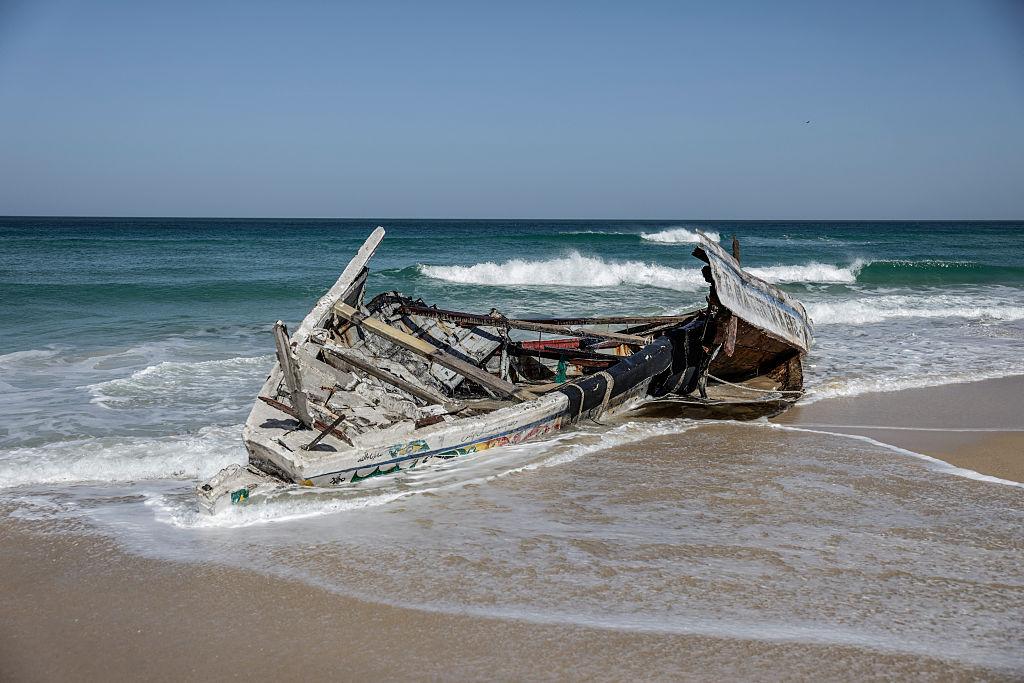
Senegal’s Interior Minister Mouhamadou Makhtar Cissé has promised tougher action against human-smuggling networks after a migrant pirogue capsized off Lompoul, killing at least 39 people. Only one survivor has been found, while the number still missing remains unknown because authorities do not know exactly how many passengers were aboard. Search teams are continuing operations along approximately 25 kilometers of coastline, and 24 bodies had been identified and returned to families by Monday.
Senegal has vowed to intensify its crackdown on human-smuggling networks after the death toll from a migrant boat disaster off the country’s northwestern coast rose to 39, with only one survivor recovered as search teams continued combing difficult coastal terrain for possible additional victims. Interior and Public Security Minister Mouhamadou Makhtar Cissé traveled to the Lompoul area on Monday on the instructions of President Bassirou Diomaye Faye, meeting grieving families, inspecting the ongoing search operation and promising stronger action against the networks that organize dangerous Atlantic crossings toward Europe. The wooden fishing vessel, known locally as a pirogue, capsized off Lompoul in the Kébémer department after departing Senegal’s northern coast with people attempting irregular migration, but authorities still do not know exactly how many passengers were aboard, making the number of people still missing impossible to determine with certainty.
The latest official update from Senegalese authorities put the provisional death toll at 39, up from earlier figures as additional bodies were recovered from the sea and coastline. Only one person has been found alive. Search teams have been working for several days across an approximately 25-kilometer stretch of coast, where difficult access and strong marine currents have complicated recovery efforts and carried bodies southward from the area where the vessel is believed to have overturned.
Of the bodies recovered by Monday, 24 had been identified and returned to their families, while several others remained unidentified. Four bodies found Monday morning were in an advanced state of decomposition and were buried after a collective funeral prayer organized by emergency personnel. Authorities said identification efforts were continuing as families from Lompoul, Potou, Tébène and surrounding communities searched for relatives believed to have been aboard the boat.
The precise passenger manifest remains unknown, a common problem in clandestine migration journeys where vessels often leave without official registration and smugglers do not provide authorities with passenger lists. That means the official toll of 39 dead and one survivor does not necessarily account for everyone who departed. Search operations are continuing on the assumption that more bodies or survivors could still be found, although hopes of locating additional survivors diminish as time passes.
Cissé visited Tébène 2, a village in the Potou area, to convey condolences from President Faye, Prime Minister Ahmadou Al Aminou Lo and the government. He met relatives of victims and was briefed by emergency services on the search and recovery operation. The Interior Ministry said the government would provide assistance and support to families affected by the tragedy.
The minister also used the visit to announce a tougher response to migrant-smuggling networks, calling on Senegal’s security forces to intensify efforts to identify, pursue and dismantle groups that organize clandestine sea journeys. Government officials have increasingly described those networks as criminal organizations that exploit the desperation of young people seeking work or better living conditions abroad.
Cissé acknowledged that many Senegalese who attempt the Atlantic crossing are motivated by real economic pressure. Young people facing unemployment, insecure incomes and limited opportunities frequently see migration as one of the few paths available to improve their lives or support their families. But the minister said those aspirations could not justify allowing smugglers to send people into extremely dangerous waters aboard overloaded and often unseaworthy vessels.
“Leaving is an option, but dying at sea must never be one,” Cissé said during the visit, according to local reporting. He called the smugglers behind such journeys criminals and “modern-day slave traders,” language reflecting the government’s increasingly aggressive rhetoric toward those who profit from irregular migration.
His comments followed a similar pledge by President Faye, who expressed grief over the disaster and said state authorities had been mobilized to search for missing people, assist survivors and support families. The president also promised continued action against networks organizing the crossings while acknowledging the need to create better opportunities for young Senegalese at home.
The government’s response reflects a difficult balance. Senegalese authorities want to suppress clandestine migration networks, but families and community leaders say enforcement alone will not stop young people from leaving if the underlying economic pressures remain unchanged. Relatives of victims interviewed after the disaster said many of those who boarded the pirogue would have remained in Senegal if they could earn enough money to live and support their families.
Ousmane Dieng, a relative of some of the victims, said young people often feel an obligation to help parents and siblings struggling financially and may see migration as the only realistic way to do so. His comments reflect a recurring argument in coastal communities where irregular migration has become deeply connected to unemployment, declining fishing incomes, inflation and the perception that opportunities are more accessible in Europe.
The Atlantic route from Senegal and neighboring countries toward Spain’s Canary Islands has become one of the world’s deadliest migration corridors. Pirogues departing from Senegal, Mauritania, The Gambia and other points along the West African coast can spend days or weeks in the Atlantic, often carrying far more passengers than the vessels were designed to hold.
The journey is especially dangerous because many boats are wooden fishing vessels rather than purpose-built passenger craft. They can lack adequate navigation equipment, emergency communications, life jackets, food and fuel reserves. Overloading can reduce stability, while rough seas, mechanical problems and sudden weather changes can become fatal.
The boat that sank off Lompoul was described by local authorities as carrying candidates for irregular migration, but investigators have not yet established the exact cause of the disaster. An official investigation has been opened, and authorities said fuel containers were among items recovered or seized during the inquiry.
The condition of the boat before departure, the number of passengers aboard, the identity of those who organized the trip and whether the vessel suffered mechanical failure or instability are among the questions investigators are expected to examine.
Reports in Senegalese newspapers have described the pirogue as heavily overloaded, but authorities have not yet issued a definitive technical finding confirming overloading as the direct cause. That distinction matters because migration disasters can result from several interacting factors, including weather, overcrowding, mechanical failure, navigation errors and fuel shortages.
The search itself has been difficult. Senegalese emergency services said teams were operating across a large and challenging coastal area, with currents dispersing bodies over considerable distances. Some sections of the coastline are difficult for vehicles and recovery teams to reach, slowing efforts to locate victims.
The disaster has also placed pressure on local morgues. Senegalese media reported concerns from regional officials about limited capacity as additional bodies were recovered. Identification becomes more complicated when remains are badly decomposed, and families may have to rely on clothing, personal belongings or forensic methods.
For affected communities, those delays prolong uncertainty. Families whose relatives left without telling authorities or who were not on any formal passenger list may not know whether a missing person was aboard the boat until a body is identified or another survivor provides information.
Only one survivor has been officially confirmed so far. Authorities have not released extensive details about that person’s condition or account of what happened, and investigators may rely heavily on the survivor’s testimony to establish how the pirogue capsized and how many people were aboard.
The tragedy comes amid continued departures from Senegal despite government efforts to reduce irregular migration. Interceptions by the navy and security services remain frequent, with authorities regularly stopping overcrowded pirogues carrying dozens or hundreds of people before they reach open Atlantic waters.
Those interceptions prevent some deaths, but the number of vessels attempting the journey shows that enforcement has not eliminated demand. Smugglers can shift departure points rapidly, launching from isolated beaches at night and using fishing communities where large wooden boats are common.
The International Organization for Migration has repeatedly warned that the Atlantic route to the Canary Islands is exceptionally dangerous. According to figures cited in coverage of the latest disaster, at least 1,214 migrants died or went missing along the West African Atlantic route in 2025, while another 168 deaths and disappearances were recorded during the first half of 2026.
Those numbers are likely incomplete because many vessels disappear without witnesses, distress calls or recovered bodies. Families may know that relatives departed but never learn where or when a boat was lost.
The Lompoul disaster is one of the deadliest Senegalese migration incidents of the year and adds to a long history of mass-casualty crossings from the country’s coast. Similar tragedies have repeatedly prompted promises of tighter controls, anti-smuggling operations and economic programs intended to discourage departures.
Yet the route remains active because the incentives remain powerful. A successful arrival in Europe can transform the finances of an entire family through remittances, while failure can produce catastrophic loss. That contrast makes migration decisions particularly difficult in communities where local incomes are uncertain.
Senegal’s government has increasingly argued that development policy must accompany enforcement. President Faye’s administration has promised investment in employment, agriculture, fisheries, vocational training and youth entrepreneurship as part of a broader attempt to make migration less economically necessary.
The Interior Ministry’s response in Lompoul also included calls for stronger cooperation with neighboring countries. Migration routes frequently cross national borders before boats reach the sea, and organizers can recruit passengers from several West African states for the same journey.
Cissé said maritime surveillance and coastal security would require closer coordination with countries in the region. Such cooperation could include intelligence-sharing, joint patrols and efforts to identify smugglers operating across borders.
Senegal already works with European governments, including Spain, on migration control. European states have provided equipment, training and financial support to West African countries in an effort to reduce irregular arrivals in the Canary Islands.
Those partnerships remain controversial. Critics argue that European migration policy focuses too heavily on preventing people from reaching Europe rather than creating legal pathways or addressing economic inequality. Governments involved say the cooperation saves lives by stopping unsafe journeys.
Cissé acknowledged the importance of legal migration opportunities during his Lompoul visit. He called for the expansion of regulated pathways that would allow Senegalese citizens to travel for work or education without relying on smugglers.
That proposal is significant because purely restrictive policies can increase the profitability of smuggling networks when legal travel becomes difficult. If demand for migration remains high, criminal groups can charge more money to people with few alternatives.
Families in Lompoul and surrounding areas have therefore urged authorities to look beyond arrests. They say the loss of 39 people should trigger a deeper debate about why young Senegalese continue to risk death at sea despite years of warnings and widely reported maritime disasters.
The economic pressure facing many young people is real. Senegal has experienced growth in several sectors, but unemployment and underemployment remain major concerns, particularly for young people outside Dakar. Coastal communities also face changes in fishing conditions and competition over marine resources.
Fishing has historically provided livelihoods for thousands of Senegalese families, and pirogues are central to that economy. The same boats used legally for fishing can be repurposed for migration journeys, making enforcement complicated in communities where maritime activity is part of everyday life.
Authorities therefore have to distinguish between ordinary fishermen and those organizing smuggling operations. Aggressive enforcement that disrupts legitimate fishing could deepen the economic conditions that encourage migration, while insufficient oversight can allow criminal networks to operate.
The Lompoul tragedy underscores that tension. The government is promising to hunt down smugglers, but families are simultaneously asking for jobs and economic opportunity.
President Faye has said both objectives must be pursued together. His government says it intends to dismantle criminal networks while improving conditions that push people toward dangerous migration.
The investigation into the latest disaster could also reveal how organized the journey was. Some crossings are arranged by sophisticated networks involving recruiters, boat owners, fuel suppliers and intermediaries, while others may be organized more informally within communities.
Understanding that structure is important because anti-smuggling strategies depend on identifying who profits from the journeys. Arresting passengers or low-level organizers may do little if the financial networks behind the crossings remain intact.
The government’s language has become increasingly severe. Cissé’s description of smugglers as “modern-day slave traders” reflects frustration with repeated disasters in which organizers may collect substantial payments while passengers carry almost all of the physical risk.
Smugglers can disappear after boats depart, leaving families and authorities to deal with the consequences if something goes wrong. Survivors may also be reluctant to identify organizers because of fear, community ties or concern about retaliation.
International migration agencies argue that prosecutions must therefore be accompanied by protection for witnesses and survivors.
The single survivor from the Lompoul disaster could become a crucial witness if physically and psychologically able to cooperate. That person may be able to tell investigators where the journey began, how many passengers were aboard, who collected money and what happened immediately before the vessel capsized.
Authorities have not yet released that information publicly, likely because search operations and the criminal investigation are still active.
The latest official death toll should therefore be treated as provisional. Senegal’s Interior Ministry itself describes the figure of 39 as a developing count, and additional bodies could still be recovered.
The number missing remains unknown because no confirmed passenger total exists. Any report claiming a precise missing figure would therefore go beyond the evidence currently available.
That uncertainty makes the disaster especially painful for families still waiting for news. Some may not know whether relatives are among the unidentified bodies, still missing at sea or were never aboard the boat at all.
The state has promised support, but the scale and form of that assistance have not yet been detailed publicly. It may include help with identification, burial arrangements, psychological support and financial assistance.
Local authorities are already working with families through the identification process. Twenty-four bodies had been returned to relatives by Monday, while identification work continued on others.
The tragedy has also renewed scrutiny of Senegal’s migration strategy. The country has experienced several major maritime disasters in recent years, each followed by commitments to strengthen surveillance and economic alternatives.
The persistence of the problem shows that neither approach has yet been sufficient.
Migration from Senegal is driven by multiple factors rather than a single cause. Employment, family expectations, social status, political frustration and the success stories of people already living abroad can all influence decisions.
Social media has also changed migration dynamics by allowing potential migrants to communicate directly with people in Europe and receive information about routes, jobs and smugglers. That can make risky journeys seem more achievable despite the well-known dangers.
Government awareness campaigns attempt to counter those narratives by showing the consequences of failed crossings. But families who see successful migrants sending money home may still conclude that the potential benefits outweigh the risks.
The 39 deaths off Lompoul are therefore part of a larger policy challenge that cannot be solved solely at the shoreline.
Senegal’s government will be judged partly on whether the promised crackdown results in prosecutions of those responsible for organizing the voyage. It will also face pressure to explain what economic and legal migration opportunities can realistically be offered to young people who might otherwise attempt similar journeys.
For President Faye, whose administration has emphasized sovereignty and economic reform, irregular migration represents both a humanitarian crisis and a test of domestic policy.
The government must protect borders and prosecute criminal networks while convincing young people that remaining in Senegal can provide a viable future.
The Lompoul disaster has brought that challenge into devastating focus.
Thirty-nine people are confirmed dead. Only one survivor has been found. Search teams are still operating along the coast, and the actual number of passengers aboard the vessel remains unknown.
Interior Minister Mouhamadou Makhtar Cissé has promised intensified action against smugglers, greater regional cooperation and continued support for bereaved families. Whether those measures prevent another tragedy will depend on how effectively Senegal combines enforcement with the economic and legal alternatives families in Lompoul say young people desperately need.
For now, the focus remains on the coastline, where rescue teams continue searching for those still unaccounted for and grieving families wait for answers about what happened to a boat that left Senegal carrying people toward Europe but never completed the journey.