Settlers Surrounded Their Homes and Opened Fire. Israel Calls It a Terror Attack. A Palestinian Woman Is Dead in Jericho.
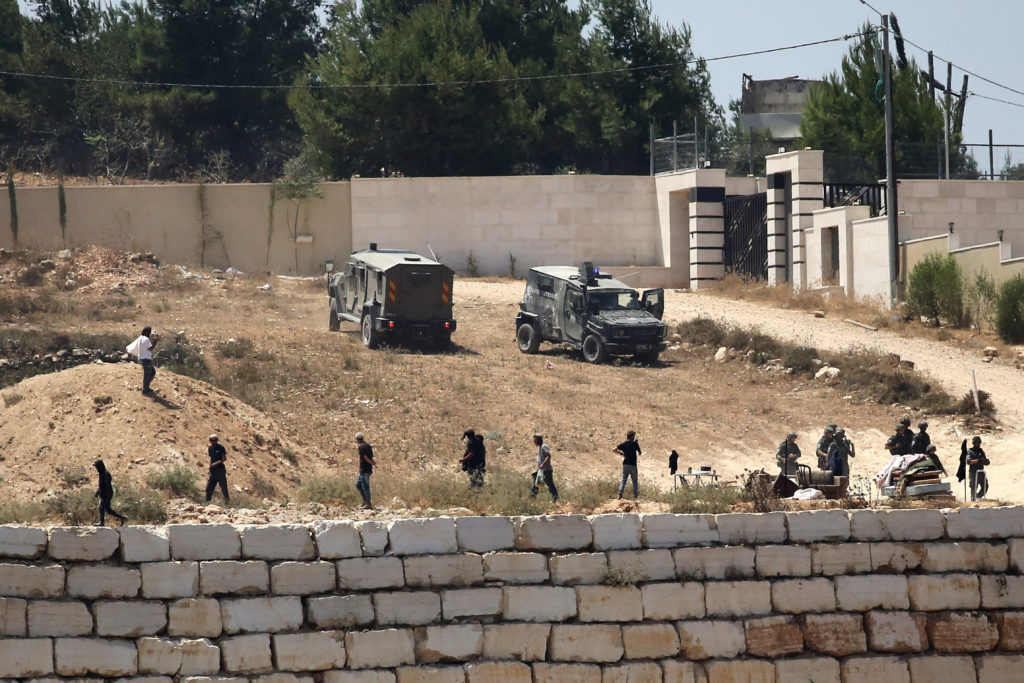
A Palestinian woman has been killed and 10 others wounded after Israeli settlers opened fire on residents in the al-Duyuk al-Tahta area of Jericho, in the occupied West Bank, according to Jericho Government Hospital. Al Jazeera's correspondent reported that settlers surrounded Palestinian homes and fired live ammunition at residents. Israeli media have presented a sharply different account, describing a suspected terror attack outside Jericho in which three Israelis were lightly hurt, reportedly while heading to a new outpost on the city's outskirts. The competing narratives have not been independently reconciled, and key details remain unclear. What is clear is that the violence struck an area that had long been one of the calmer corners of the West Bank. Days earlier, Palestinian media reported that international activists were injured in a settler attack at the nearby Ein al-Duyuk gathering. The killing comes amid record levels of settler violence, rapid outpost expansion in the Jordan Valley, a deep accountability gap in Israeli law enforcement, and shifting international pressure. Together, these forces are reshaping daily life across Palestinian communities in the occupied territory.
The gunfire came to a place that was not supposed to be a battlefield.
Al-Duyuk al-Tahta sits on the northwestern edge of Jericho, among palm groves, irrigation channels, and low-slung family homes at the foot of the hills that climb toward the Mount of Temptation. For years, it was the kind of community that rarely appeared in international headlines. Jericho itself carried a reputation as the West Bank's most tranquil city. It was a winter retreat, a tourist town, and the first place handed to Palestinian self-rule under the Oslo Accords.
On Tuesday, that reputation broke down.
A Palestinian woman was killed and 10 others were wounded after Israeli settlers opened fire on residents in al-Duyuk al-Tahta, according to Jericho Government Hospital. Al Jazeera's correspondent reported that settlers surrounded Palestinian homes and fired live ammunition at the people inside and around them. The wounded were taken to hospital in Jericho. The woman could not be saved.
Within hours, a second story was circulating. Israeli media reported that three Israelis had been lightly hurt in what was described as a suspected terror attack outside Jericho, reportedly while they were heading to a new outpost on the city's outskirts. Some Israeli outlets described the incident as involving a ramming and a shooting. Those accounts framed the violence not as a settler assault on a Palestinian neighborhood but as an attack on Israelis that ended with Palestinian casualties.
The two narratives do not fit neatly together. They may never fully align. The sequence of events, who fired first, and why live ammunition was turned on homes filled with families remain contested and unverified.
But one fact sits beyond dispute. A woman who was at home in a Palestinian neighborhood of a Palestinian city is dead. Ten more people are wounded. And the violence that has spread across the occupied West Bank has now reached one of the last places many believed it would spare.
A Night of Live Fire in al-Duyuk al-Tahta
The Palestinian account of what happened is stark.
According to Al Jazeera's correspondent, settlers arrived in the area and surrounded Palestinian homes. They then fired live ammunition at residents. Jericho Government Hospital confirmed the death of one woman and the injuries of 10 others. Official Palestinian television reported the same toll.
The details that typically emerge in the hours after such an attack, including the woman's name, the nature of each injury, and the precise movements of the gunmen, were still being assembled as the news spread. Residents of the area described fear and confusion. Families sheltered indoors. Neighbors rushed the wounded to vehicles as ambulances tried to reach the scene.
The geography of al-Duyuk al-Tahta helps explain how quickly a confrontation there can turn lethal. The area is part of a cluster of agricultural communities northwest of Jericho's center, close to the Ein al-Sultan spring and the springs of al-Duyuk that have watered the oasis for millennia. Homes are spread among farmland. Roads are narrow. There is open ground between houses and the rising desert hills. In that terrain, a group of armed people can approach homes from several directions, and residents have few places to retreat.
The Palestinian account also reflects a pattern that rights groups have documented across the West Bank for years. Settlers arrive in groups, often from a nearby outpost or hilltop. They target homes, vehicles, livestock, or farmland. In many recorded cases, Israeli soldiers are present or arrive during the attack, and Palestinian witnesses frequently allege that troops either stood by or intervened against residents rather than the attackers.
Whether that pattern held in al-Duyuk al-Tahta is not yet established. But for the families who lived through the shooting, the account is simple. Armed settlers came to their homes, and one of their neighbors did not survive.
Israel's Version: A Suspected Attack and a New Outpost
Israeli media reports describe a different chain of events.
According to those reports, three Israelis were lightly hurt in a suspected terror attack outside Jericho. Some Israeli outlets reported that the Israelis were on their way to a new outpost on the outskirts of the city when the incident occurred. Other reports described the violence as a combination of a ramming and a shooting near Jericho, in which a Palestinian woman was killed and 10 Palestinians were wounded.
That framing places the Israelis as the initial targets. It suggests that the gunfire that followed came in response to an attack. In Israeli coverage of such incidents, settlers who open fire are often described as acting in self-defense, and the word "terror" is typically reserved for Palestinian actions.
Several elements of the Israeli account remain unexplained in the initial reporting. These include who carried out the suspected attack, how the injuries to the Israelis occurred, and how an incident on a road or approach to an outpost led to live fire in a residential Palestinian area. It is also unclear how many people fired weapons, whether soldiers were involved, and how a woman inside a Palestinian community came to be killed.
The reference to a new outpost is significant in itself. Outposts are settlements built without formal Israeli government authorization, though many later receive retroactive approval and state infrastructure. They are considered illegal under international law, as are all Israeli settlements in occupied territory. The establishment of a new outpost on the edge of Jericho would represent a meaningful shift. It would place an Israeli civilian presence immediately beside a Palestinian city that has historically been insulated from the settlement friction that defines much of the West Bank.
In that light, the two accounts may be describing different moments of the same confrontation. Palestinians see armed settlers advancing on their homes from a new foothold. Israelis see civilians traveling to that foothold and coming under attack. The space between those perspectives is where the West Bank's conflict increasingly plays out.
Two Narratives, One Body
Conflicting accounts of violence in the West Bank are not new. What has changed is the speed at which they harden.
Within minutes of the first reports, the Jericho shooting had been absorbed into two entirely separate information ecosystems. In Arabic-language and international outlets, the story was of settlers besieging homes and killing a Palestinian woman. In Israeli outlets, the story led with Israeli victims of a suspected attack. Each version traveled through its own channels, was shared by its own audiences, and reinforced what those audiences already believed about the conflict.
That dynamic shapes how such incidents are investigated, if they are investigated at all. When an attack on Israelis is reported, Israeli security forces typically launch an immediate manhunt, impose closures, and conduct raids. When Palestinians are killed by settlers, the investigative record is far weaker. Rights groups have documented that the overwhelming majority of police investigations into settler violence against Palestinians end without an indictment.
The result is an imbalance not only of power but of evidence. Israeli accounts are often supported by official statements from the military and police. Palestinian accounts frequently rely on witnesses, hospital records, and local journalists, many of whom face restrictions on movement and access. International reporters working in the West Bank operate under constraints of their own.
None of this resolves what happened in al-Duyuk al-Tahta. But it explains why the truth of a single night may remain contested for weeks, months, or permanently. It also explains why the death of one woman can become, almost instantly, a symbol for both sides of a conflict that offers few neutral observers and fewer neutral facts.
Jericho: The Quiet City Pulled Into the Storm
To understand why this killing has resonated, it helps to understand Jericho.
The city lies in the Jordan Valley, some 250 meters below sea level, near the northern shore of the Dead Sea. It is often described as one of the oldest continuously inhabited cities on Earth. Its springs have sustained agriculture for thousands of years. Today, it is known for bananas, dates, and citrus, and for archaeological sites such as Tell es-Sultan and Hisham's Palace that draw visitors from across the region.
Politically, Jericho holds a singular place in Palestinian history. Under the 1994 Gaza-Jericho Agreement, it became one of the first areas transferred to Palestinian self-rule. Yasser Arafat's return to the territories was tied to that arrangement. For years, Jericho was presented as a model of what limited Palestinian autonomy could look like. It had a casino that once drew Israeli gamblers, hotels for tourists, and a calmer security environment than cities such as Nablus or Jenin.
That calm was always partial. Under the Oslo II framework of 1995, the West Bank was divided into Areas A, B, and C. Jericho's urban center falls largely in Area A, under Palestinian civil and security control. But the city is surrounded by Area C, which remains under full Israeli control and covers roughly 60 percent of the West Bank. That includes most of the Jordan Valley. Jericho is, in effect, an island of Palestinian administration encircled by Israeli-controlled land, military zones, and settlements.
In recent years, the island has felt less secure. Israeli forces have carried out raids in the Aqabat Jabr refugee camp on Jericho's southern edge, including deadly operations in 2023. Checkpoints and roadblocks around the city have tightened. Settlement and outpost activity across the Jordan Valley has accelerated. Palestinian herding and farming communities in the valley have reported growing harassment and displacement.
The killing in al-Duyuk al-Tahta marks a further step in that process. It suggests that the settler violence once concentrated in hilltop areas of the northern and southern West Bank has reached the edges of a Palestinian city that many Palestinians considered among their safest places to live.
Ein al-Duyuk: Warnings Before the Killing
The shooting did not come without warning.
Days earlier, Palestinian media reported that four international activists were injured, one of them critically, in a settler attack at the Ein al-Duyuk gathering in the Jericho area. According to those reports, settlers broke into the community and attacked the activists, who had been present in the area to provide what is often called "protective presence." This is a practice in which foreign volunteers stay with vulnerable Palestinian communities in the hope that their presence will deter attacks or at least ensure they are documented.
The full details of that earlier incident have not been independently confirmed in all respects. But its timing and location are telling. Protective presence volunteers tend to concentrate where communities have reported escalating threats. Their presence in the al-Duyuk area suggests that local residents and solidarity networks believed the community was at risk well before Tuesday's shooting.
International activists have themselves become targets in recent years. Volunteers from Europe, North America, and elsewhere have been beaten, detained, or deported while accompanying Palestinian farmers and herders. In some cases, Israeli authorities have accused activists of interfering with security operations. Activists respond that they are documenting abuses the authorities fail to stop.
Taken together, the attack on activists and the killing days later point to a sustained escalation in a single area. They raise questions that Israeli authorities will face from foreign governments, rights groups, and the families of those hurt. Was the danger recognized? Were warnings heeded? And if a new outpost was being established nearby, what steps were taken to prevent the violence that has followed outpost construction elsewhere in the West Bank?
The Outpost Engine
Settler violence in the West Bank does not occur in a vacuum. It is closely tied to the expansion of outposts.
Over the past decade, and especially since 2022, outposts have multiplied across the occupied territory. Many are small, sometimes just a few caravans, a water tank, and a flag on a hilltop. Others are farms, often called "herding outposts," where a handful of settlers graze sheep or cattle across large stretches of land. Israeli and international rights groups have documented how these herding outposts can effectively take control of thousands of dunams, pushing Palestinian shepherds and farmers off grazing land and away from water sources.
The Jordan Valley has become a central arena for this model. Its wide open land, sparse Palestinian population, and strategic importance have made it a priority for settlement advocates. Israeli political leaders across the spectrum have long argued that Israel must retain security control of the valley under any future arrangement. Some Israeli officials have openly called for its annexation.
The effect on Palestinian communities has been severe. Bedouin and herding communities across the valley and the hills above Jericho have reported repeated attacks, including assaults on residents, theft and killing of livestock, destruction of water infrastructure, and arson. Several communities have left entirely. In 2025, residents of Ras Ein al-Auja, a herding community north of Jericho, were largely displaced after a long campaign of harassment that rights groups attributed to nearby outposts. Other communities in the area have reported similar pressure.
The reference in Israeli reporting to a "new outpost" on Jericho's outskirts places the al-Duyuk shooting squarely within this pattern. New outposts often bring a surge of friction in their first weeks and months. Settlers establish their presence and extend their reach. Palestinians try to hold on to land and access. The military is deployed to protect the newcomers. When confrontation turns violent, the casualty toll falls overwhelmingly on Palestinians.
A Record Era of Settler Violence
The killing in Jericho fits within the most violent period of settler activity the West Bank has seen in decades.
The United Nations Office for the Coordination of Humanitarian Affairs (OCHA) has tracked settler-related incidents for years. Its data show a steep rise beginning in 2022 and a dramatic surge after the Hamas-led attack on Israel on October 7, 2023, and the war in Gaza that followed. Since then, OCHA has recorded thousands of settler attacks that caused Palestinian casualties, property damage, or both. Monthly figures have repeatedly reached the highest levels the agency has documented.
Several incidents became defining moments. In February 2023, hundreds of settlers rampaged through the town of Huwara near Nablus, setting homes and cars on fire after two Israeli brothers were killed by a Palestinian gunman. A senior Israeli military commander later described the event as a "pogrom." In June 2023, settlers attacked the village of Turmus Ayya, burning dozens of homes and vehicles. In the months after October 2023, entire herding communities in the hills east of Ramallah and in the South Hebron Hills were forced from their land.
Each of these events drew international condemnation. Each prompted promises of accountability. And each was followed by further violence.
The trajectory has continued into 2026. Rights groups report that attacks have become more frequent, more organized, and more brazen. Attacks that once took place at night now often occur in daylight. Groups of settlers have entered villages in large numbers, sometimes masked, sometimes armed with rifles. Agricultural seasons, especially the olive harvest each autumn, have become periods of heightened risk for Palestinian farmers.
The Jericho shooting comes during the olive harvest period, a time when OCHA and other monitors routinely record spikes in settler violence across the West Bank. That context adds to the sense, among Palestinians and international observers alike, that the violence is not random. It is systemic.
Soldiers, Settlers, and the Blurring Line
One of the most contentious questions in the West Bank is the relationship between settlers and the Israeli military.
Formally, the Israeli army is responsible for security throughout the occupied territory, including the protection of both Israeli and Palestinian civilians. In practice, Palestinian residents and rights groups describe a different reality. Soldiers are frequently deployed to protect settlers, including those in unauthorized outposts. When settlers attack, Palestinians report that troops often fail to intervene, and sometimes act against Palestinians who try to defend themselves.
The line between settler and soldier has also blurred in more direct ways. After October 2023, as the Israeli military mobilized reservists, many settlers were called up and assigned to units serving near their own communities. Regional defense squads drawn from settlement residents were expanded and armed. Rights groups documented cases in which settlers wearing military uniforms took part in attacks on Palestinian villages. The military said it would address such cases. Critics said enforcement remained weak.
Israel's national security minister, Itamar Ben-Gvir, who himself lives in a settlement near Hebron, led a sweeping expansion of civilian gun licensing after the October 7 attack. Tens of thousands of new permits were issued. Supporters described the policy as a response to a real security threat. Opponents warned that it flooded settlements and outposts with weapons and lowered the threshold for lethal violence.
These shifts matter when assessing incidents such as the one in al-Duyuk al-Tahta. If settlers were armed with rifles, as the reports of live ammunition suggest, the question of how those weapons were obtained and under what authority will be central. So will the question of whether soldiers were present, and what they did.
The Accountability Gap
For Palestinians, the most consistent feature of settler violence is not its brutality. It is its impunity.
The Israeli rights group Yesh Din has tracked police investigations into ideologically motivated crimes by Israelis against Palestinians in the West Bank for nearly two decades. Its findings have been remarkably consistent. The great majority of investigations are closed without charges. Convictions are rare. Even in cases involving serious injury or death, prosecutions often stall or end in plea deals with light sentences.
There are exceptions. In the 2015 arson attack in the village of Duma, which killed an 18-month-old boy and both of his parents, an Israeli settler was convicted of murder. The case was widely cited as proof that the system could work. But rights groups note that it took years, required extraordinary public pressure, and remains an outlier.
The structure of the occupation contributes to the gap. Palestinians in the West Bank live under Israeli military law. Settlers living in the same territory are subject to Israeli civilian law. Complaints by Palestinians against settlers are investigated by the Israeli police, which has a limited presence in many areas. Palestinian victims often face practical obstacles in filing complaints, including travel restrictions, language barriers, and fear of reprisal. Evidence can be difficult to gather, and witnesses are frequently reluctant to testify.
Israeli officials have periodically acknowledged the problem. Senior military commanders have condemned "Jewish terror" and warned that settler violence undermines security. Administrative detention, a tool more commonly used against Palestinians, has occasionally been applied to settlers. But in 2025, Israel's defense minister announced an end to administrative detention for settlers, a decision welcomed by settlement leaders and criticized by rights groups.
In the case of al-Duyuk al-Tahta, the competing narratives will shape what kind of investigation follows. If Israeli authorities frame the incident primarily as a terror attack on Israelis, the focus will likely be on Palestinian suspects. Whether the gunfire that killed a Palestinian woman and wounded 10 others will be examined with equal rigor is a question many Palestinians answer with deep skepticism.
Politics in Jerusalem: Settlement as Policy
The surge in settler violence has unfolded alongside a profound shift in Israeli government policy toward the West Bank.
Israel's current governing coalition, formed in late 2022, is the most right-wing in the country's history. Its coalition agreements explicitly declared the Jewish people's "exclusive and unquestionable right" to all parts of the Land of Israel, including the West Bank. Finance Minister Bezalel Smotrich, a settler and leader of the Religious Zionism party, was given expanded authority over civil affairs in the territory, including planning and construction.
Under his oversight, settlement approvals have surged. The government has legalized outposts retroactively and declared large areas of land as state land. It has advanced construction in highly sensitive areas, including the E1 corridor east of Jerusalem, which critics say would effectively divide the northern and southern West Bank. Smotrich has spoken openly of his goal of preventing a Palestinian state and applying Israeli sovereignty over much of the territory.
Supporters of these policies describe them as the fulfillment of historic and religious rights and as a necessary security measure after October 7. They argue that Palestinian statehood would create a new front for attacks on Israel. They also argue that Jewish presence across the West Bank is legitimate.
Critics, including many Israelis, see the policies as a deliberate strategy of de facto annexation. They argue that outpost expansion and settler violence work together. Violence pushes Palestinians off the land, and government policy then consolidates Israeli control of it. Former Israeli security officials have warned that the approach is fueling instability, straining the military, and isolating Israel internationally.
The Jordan Valley sits at the center of this debate. Israeli leaders have long described it as a security asset. Annexation of the valley has been proposed repeatedly, including in Prime Minister Benjamin Netanyahu's campaign promises in 2019. The appearance of a new outpost on the edge of Jericho, if confirmed as reported, would be consistent with a broader push to deepen Israel's hold over the valley and its approaches.
Washington's Shifting Line
The United States has long been the most influential foreign actor in the conflict. Its approach to settler violence has swung sharply in recent years.
In February 2024, the Biden administration issued an executive order allowing sanctions against individuals and entities involved in violence and destabilizing activity in the West Bank. Several settlers and settler-linked organizations were sanctioned, including outpost founders and groups accused of funding violent activity. The United Kingdom, the European Union, Canada, and others imposed similar measures. The sanctions marked a notable break from past US practice and were welcomed by rights groups as an overdue step.
On his first day back in office in January 2025, President Donald Trump revoked that executive order, lifting the US sanctions. Settlement leaders celebrated the decision. Critics warned that it sent a signal of tolerance at a moment of rising violence.
Since then, the US position has been complex. The Trump administration has strongly backed Israel on security matters and has been sharply critical of international legal moves against it. At the same time, President Trump said publicly in 2025 that he would not allow Israel to annex the West Bank. That statement was seen as a significant constraint on the most ambitious goals of Israel's settler movement.
The killing in Jericho will test how Washington responds to settler violence in practice. A muted reaction would reinforce the view among Palestinians and many Arab governments that the United States has stepped back from restraining settlement activity. A firmer response could signal that Washington still sees escalation in the West Bank as a threat to its broader regional goals, including normalization between Israel and Arab states.
The Law, the Courts, and a Changing World
International legal pressure on Israel over the West Bank has reached unprecedented levels.
In July 2024, the International Court of Justice issued an advisory opinion concluding that Israel's continued presence in the occupied Palestinian territory was unlawful. The court said Israel should end its occupation as rapidly as possible, cease new settlement activity, and evacuate settlers. It also said other states should not recognize the situation as lawful or provide assistance in maintaining it. Israel rejected the opinion, calling it fundamentally mistaken and one-sided.
In September 2024, the UN General Assembly adopted a resolution demanding that Israel end its occupation within 12 months. The deadline passed without compliance. Israel and the United States opposed the resolution.
In September 2025, a wave of Western governments recognized the State of Palestine. They included the United Kingdom, France, Canada, and Australia, among others. The moves were partly a response to the war in Gaza and partly a statement about the West Bank. Governments argued that settlement expansion and violence were eroding the possibility of a two-state solution and that recognition was needed to keep it alive. Israel condemned the recognitions as a reward for terrorism.
None of these legal or diplomatic steps has stopped settlement expansion on the ground. But they have changed the context in which incidents like the Jericho shooting are viewed. Foreign governments that have recognized Palestine now face pressure to show that recognition carries consequences. Calls for sanctions on violent settlers, restrictions on trade with settlements, and arms-related measures are likely to grow louder after a killing in a city at the heart of the original Oslo process.
The Palestinian Authority's Shrinking Shield
Jericho is governed, in theory, by the Palestinian Authority. In practice, the PA's ability to protect residents from settlers is minimal.
Under the Oslo arrangements, Palestinian security forces operate in Area A, but they are not permitted to confront Israeli settlers or soldiers. When settlers enter Palestinian areas, Palestinian police generally do not intervene. Doing so could lead to armed confrontation with the Israeli military. For residents of al-Duyuk al-Tahta, that meant the authority nominally responsible for their safety had little practical power to stop the gunfire.
That gap has deepened public frustration with the PA. Polls conducted in recent years have shown low confidence in Palestinian leadership and widespread belief that the authority has failed to protect its people or advance the cause of statehood. The PA faces a severe financial crisis, worsened by Israel's withholding of tax revenues it collects on the authority's behalf. Salaries for public employees have been cut or delayed. Institutional capacity has eroded.
PA officials routinely condemn settler attacks and call on the international community to act. They are likely to do so forcefully after the Jericho killing, which strikes at a symbol of Palestinian self-rule. But condemnation has done little to change conditions on the ground, and residents of communities like al-Duyuk know it.
The situation creates a dangerous vacuum. When neither the occupying power nor the local authority provides protection, some residents organize their own defense. Others leave. Both responses carry consequences. Self-defense can escalate into wider violence and draws harsh Israeli military responses. Displacement hands land to settlers. Rights groups warn that the vacuum serves the strategic goals of those who want Palestinians gone from large parts of the West Bank.
Life Under Pressure in the Jordan Valley
Beyond the headlines, the shooting in al-Duyuk al-Tahta is part of a slow and grinding transformation of Palestinian life in and around the Jordan Valley.
The valley is one of the most fertile regions in the West Bank. It is also one of the most restricted. Large parts of it are designated as Israeli military firing zones, nature reserves, or settlement land. Palestinian construction is heavily restricted in Area C, and building permits are rarely granted. Homes, animal shelters, water cisterns, and solar panels built without permits are frequently demolished.
Water is a defining issue. Settlements in the valley run large-scale agricultural operations, including date plantations, with access to deep wells and extensive irrigation. Nearby Palestinian communities often struggle to secure enough water for households and livestock. Many rely on tankered water at high cost. The springs around Jericho, including those at al-Duyuk and Ein al-Sultan, are among the few reliable Palestinian water sources in the area. That makes the land around them especially valuable and especially contested.
For Bedouin and herding families, the pressure has become existential. Grazing land has been closed off by outposts. Animals have been stolen or killed. Children have been threatened on their way to school. Families who once moved seasonally across the valley now find themselves confined to shrinking areas. Some have relocated to the outskirts of Jericho itself, bringing them closer to the city but not necessarily to safety.
The killing of a woman in her own neighborhood sends a message that resonates across these communities. If violence can reach the edges of Jericho, many residents believe, there may be nowhere in the valley that is fully beyond its reach.
The Information War
The Jericho shooting also highlights the battle over who gets to tell the story of the West Bank.
Al Jazeera, whose correspondent reported that settlers surrounded homes and fired live ammunition, has been banned from operating in Israel. In 2024, Israeli authorities shut down its local operations, citing security concerns, and later raided its office in Ramallah. Israel has accused the network of serving as a mouthpiece for Hamas. The network rejects that claim and says it is being targeted for its reporting.
Israeli media, for their part, operate within a political environment shaped by war, trauma, and deep public skepticism of Palestinian accounts. Coverage of settler violence in mainstream Israeli outlets has expanded in recent years, often driven by investigative reporting and leaked military assessments. But initial reports of incidents frequently rely on military and settler sources, and framing often centers on Israeli security.
International wire services occupy the middle ground, relying on official statements from both sides and on local stringers. In this case, early wire reporting cited Palestinian official television for the death toll. Israeli outlets cited their own sources for the suspected attack on Israelis.
For readers, the result is fragmentation. Depending on where they get their news, they may have encountered two fundamentally different events. That fragmentation has consequences beyond public opinion. It affects diplomatic responses, investigative priorities, and the way violence is remembered. In the West Bank, the struggle over land is mirrored by a struggle over narrative. The death of a woman in al-Duyuk al-Tahta has become another front in both.
The Cycle of Retaliation
Whatever the precise sequence of events, the Jericho shooting carries a familiar risk: retaliation.
In the West Bank, violence rarely ends where it begins. Attacks on Israelis are followed by military raids, closures, and settler reprisals. Killings of Palestinians are followed by protests, clashes, and sometimes armed attacks. Each incident feeds the next. The pattern was visible in Huwara in 2023, where a Palestinian shooting attack was followed by a settler rampage. It has repeated in different forms across the territory since.
In the hours after the Jericho incident, Israeli forces were likely to tighten movement around the area as they searched for suspects in the reported attack on Israelis. Palestinians in Jericho and surrounding communities braced for raids and checkpoints. Funeral processions for those killed in the West Bank often become flashpoints, drawing large crowds and sometimes confrontations with Israeli troops.
There is also the risk of further settler activity. Settlers sometimes respond to attacks on Israelis with "price tag" actions, a term for reprisal attacks on Palestinian property or people. If a new outpost on Jericho's outskirts is involved, its supporters may see the incident as a reason to strengthen their presence rather than retreat. That could set the stage for more confrontations in an area that until recently had seen relatively few.
The cycle is well understood by security officials on all sides. Breaking it requires accountability, restraint, and political will. In the current climate, all three are in short supply.
What Comes Next
The coming days will determine whether the Jericho killing becomes a turning point or one more entry in a lengthening record of violence.
Israeli authorities will face pressure to explain what happened. That includes questions about the suspected attack on Israelis, the gunfire that followed, the presence of weapons, the role of soldiers if any were present, and the status of the outpost reportedly being established on Jericho's outskirts. How those questions are answered, and whether they are answered at all, will shape Palestinian and international reactions.
The Palestinian Authority will seek international support. Expect calls for an independent investigation, appeals to the United Nations, and renewed demands for sanctions on violent settlers. The PA may also raise the case in international legal forums where it already pursues claims against Israel.
Foreign governments will be watching closely. Those that recognized Palestine in 2025 face growing pressure to demonstrate that recognition means more than symbolism. European governments may consider additional sanctions on settlers and settler organizations. Arab governments, particularly Jordan, which borders the Jordan Valley and has a large Palestinian population, are likely to issue strong condemnations.
Washington's response will carry particular weight. A clear statement on settler violence could reinforce the administration's stated opposition to annexation. Silence would be read as further evidence that the restraints of previous years have fallen away.
On the ground, residents of al-Duyuk al-Tahta face a more immediate question: whether they will be safe in their homes tonight. Families of the wounded will wait for news from hospital wards. The family of the woman who was killed will bury her. And neighbors will look toward the hills, wondering whether the people who came with guns will return.
The Bottom Line
The killing of a Palestinian woman in al-Duyuk al-Tahta is a story of two narratives and one undeniable loss.
Palestinian accounts describe settlers surrounding homes and firing live ammunition at residents. Israeli accounts describe a suspected attack on Israelis heading to a new outpost. Those accounts may never be fully reconciled, and the truth of the night may remain contested. But the outcome is not in dispute. One woman is dead. Ten people are wounded. A community that once believed itself relatively safe has learned otherwise.
The incident reflects broader forces reshaping the West Bank. Outposts are spreading into areas once considered off limits. Settler violence has reached record levels. Accountability remains rare. Israeli government policy openly favors expanding settlement and blocking Palestinian statehood. International pressure has grown louder without changing realities on the ground. And the Palestinian Authority remains unable to protect the people it governs.
Jericho was meant to be the beginning of something. In 1994, it stood as the first step toward Palestinian self-rule and, many hoped, toward peace. More than three decades later, gunfire in one of its neighborhoods suggests how far that promise has receded.
The question now is whether the death of one woman will prompt anyone with power to act, or whether her name will join a list that grows longer every month while the world argues over whose version of events to believe.