SEVEN KILLED, 125 INJURED IN EGYPT TRAIN COLLISION AS EL-SISI ORDERS URGENT PROBE
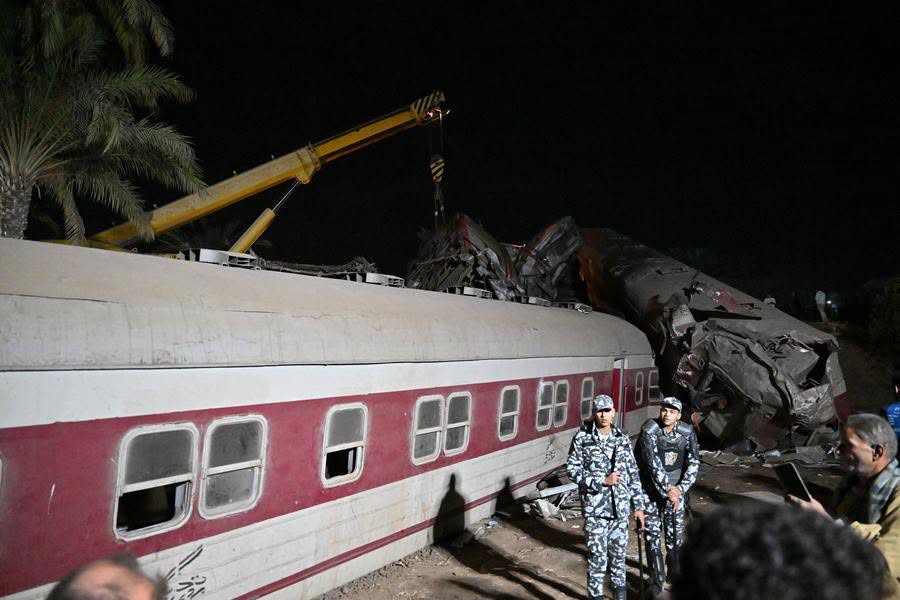
Seven people were killed and 125 others injured after a passenger train traveling from Giza to Fayoum struck the rear of a Cairo-to-Aswan train in Egypt’s El-Ayyat district on Sunday, causing several carriages to derail. President Abdel Fattah El-Sisi ordered an urgent investigation and accountability for anyone found negligent, while prosecutors appointed a specialized technical committee to examine the trains, tracks and operating procedures. Egyptian National Railways restored the Cairo–High Dam line on Monday after crews removed damaged carriages and repaired the affected track.
At least seven people have been killed and 125 others injured after two passenger trains collided in Egypt’s Giza Governorate, triggering a major emergency response, renewed anger over the country’s railway safety record and an urgent investigation ordered by President Abdel Fattah El-Sisi into whether negligence or failures in operating procedures contributed to the disaster. The collision occurred Sunday in the El-Ayyat district south of Cairo when train No. 134, a Tahya Misr service traveling from Giza to Fayoum, struck the rear of train No. 2010, which was traveling from Cairo toward Aswan. Several carriages derailed in the impact, leaving passengers trapped inside damaged coaches and sending emergency crews, ambulances, police, railway workers and local residents rushing to a scene that quickly became one of Egypt’s most serious railway accidents of the year.
The latest figures released by the Ministry of Health and Population put the death toll at seven and the number of injured at 125, significantly higher than the earliest reports that emerged immediately after the crash. Authorities said 72 ambulances participated in evacuation operations, transferring casualties to hospitals in Al-Wasta, El-Ayyat and Atfih as emergency departments across Giza and neighboring Beni Suef Governorate were placed on heightened readiness. The injuries ranged from bruises and cuts to fractures involving the limbs, pelvis and vertebrae, as well as head, facial and chest injuries. By the end of Sunday, 71 of the injured had been discharged after treatment, while dozens remained hospitalized for observation or further medical care and several were transferred to more specialized facilities.
The Egyptian National Railways said the crash happened between Kafr Ammar and Al-Raqqa stations when the Giza-to-Fayoum train struck the last carriage of the Cairo-to-Aswan service. Investigators examining the site later reported that the Cairo-to-Aswan train was stationary on the same track when the second train approached from behind and collided with it. That finding has immediately focused attention on how two passenger trains came to occupy the same section of track in circumstances that allowed a rear-end collision to occur, and whether the eventual cause lies with signaling, human error, communication failures, operating procedures, equipment malfunction or a combination of factors.
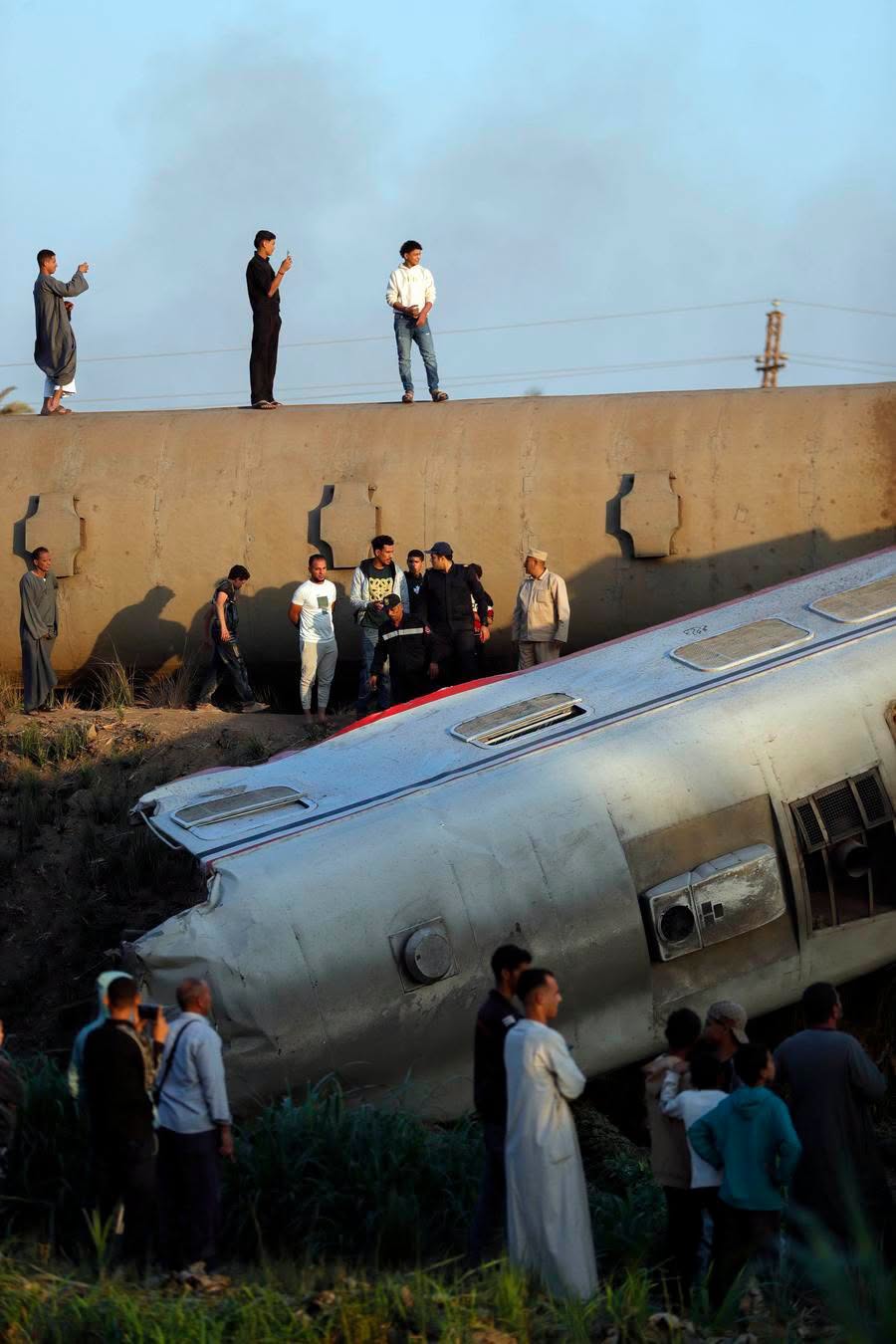
The Public Prosecution has opened a formal investigation and ordered the formation of a specialized technical committee to inspect the crash site, damaged carriages, railway infrastructure and signaling arrangements. Prosecutors have questioned injured passengers and witnesses, examined the bodies of the dead and begun reconstructing the sequence of events leading to the impact. Authorities have not yet announced a final cause, and the government has cautioned against speculation while investigators determine whether established safety procedures were followed and whether any individuals or institutions failed in their responsibilities before the collision.
President El-Sisi said he was closely following developments and ordered state agencies to provide all necessary medical care to the injured, accelerate the investigation and hold anyone found responsible for negligence fully accountable. The president also expressed condolences to the families of those killed and wished the injured a rapid recovery. His intervention placed the accident immediately at the highest political level, reflecting the sensitivity of railway safety in Egypt and the public frustration that typically follows serious rail disasters in a country where train collisions, derailments and other accidents have repeatedly raised questions about maintenance, oversight and the effectiveness of modernization programs.
Prime Minister Mostafa Madbouly also followed the government response, speaking with ministers responsible for health, transport and social solidarity to review medical treatment, assistance for affected families and efforts to restore railway operations. The Ministry of Transport deployed buses to move stranded passengers between affected stations, while Egyptian National Railways offered refunds to travelers who chose to cancel their journeys because of the disruption. Railway crews worked through the aftermath to remove damaged carriages, repair the track and reopen the Cairo–Upper Egypt corridor, and by Monday the railway authority said normal services on the Cairo–High Dam line had been restored.
The return of trains to the line does not, however, resolve the central questions surrounding the accident. Investigators must still determine why the Cairo-to-Aswan train was stationary on the track, whether the approaching Giza-to-Fayoum service was properly warned, whether signaling systems were functioning correctly and whether railway personnel responded according to established procedures. Those questions are especially important in a rear-end collision, where modern signaling and train-control systems are designed to maintain safe separation between services even when one train unexpectedly stops.
Witness accounts described scenes of confusion and panic after the impact, with damaged coaches twisted or thrown from the line and passengers attempting to help one another before emergency responders reached those trapped inside. Local residents were reported to have joined early rescue efforts, helping injured passengers leave damaged carriages and calling for ambulances as authorities mobilized cranes and specialist equipment. The scale of the response reflected the number of casualties and the difficulty of reaching passengers inside coaches that had been displaced by the collision.
Among the dead was a railway worker associated with the trains, while authorities said the driver of train No. 134 was among those injured. Prosecutors have not publicly concluded that any crew member caused the crash, and the presence of railway staff among the casualties does not establish responsibility. Determining accountability will require investigators to compare witness statements, operating logs, signaling records, communications between stations and crews, mechanical evidence from the trains and data showing exactly how each service was being controlled in the minutes before the collision.
The accident has revived public concern because Egypt’s railway network has a long record of serious accidents despite substantial government investment in modernization. The system is one of the oldest and largest railway networks in the Middle East and Africa and carries enormous numbers of passengers between Cairo, Alexandria, the Nile Delta and Upper Egypt. For millions of Egyptians, trains are not a luxury but an essential and relatively affordable means of transportation, particularly for workers, students and families traveling between the capital and provincial cities.
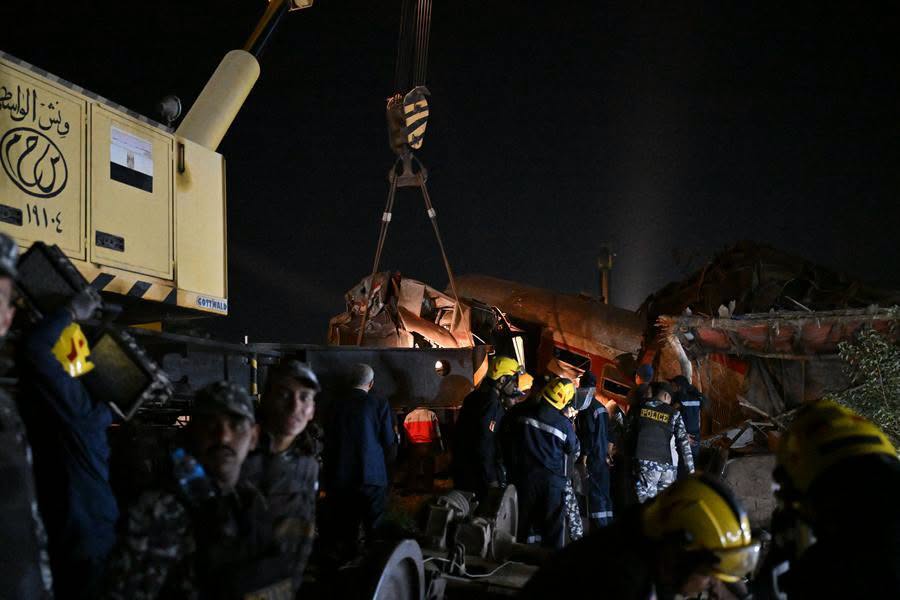
Official figures from Egypt’s Central Agency for Public Mobilization and Statistics show that the country recorded 170 railway accidents in 2025. That represented a decline of 22.7 percent from 220 accidents in 2024, but the number remains high enough to keep rail safety firmly in the public conversation. The 2025 accidents resulted in 39 deaths and 139 injuries, while separate incidents involving individuals on or near railway tracks caused hundreds of additional deaths and injuries. Although the statistical decline suggests some improvement, each major collision renews scrutiny over whether infrastructure upgrades and safety reforms are reducing risk quickly enough.
Egyptian railway officials have said the country is implementing the largest railway development program in its history, with hundreds of billions of Egyptian pounds directed toward locomotives, carriages, track renewal, signaling modernization, station improvements and operational systems. The government has frequently argued that decades of underinvestment left the network requiring massive reconstruction and that modernization must occur while the system continues carrying millions of passengers. New trains, upgraded signaling projects and track improvements have been presented as evidence that the government recognizes the scale of the problem.
The El-Ayyat crash nevertheless illustrates the political difficulty facing the authorities. Investment figures and infrastructure announcements are unlikely to reassure passengers if deadly accidents continue occurring on heavily used routes. For the public, the most important measurement of a railway modernization program is not the size of the budget but whether passengers can board trains without facing unacceptable safety risks. Each major accident therefore becomes a test of whether technical upgrades are being matched by stronger operating discipline, staff training, maintenance and accountability.
The location of Sunday’s collision is also likely to receive close scrutiny because El-Ayyat has experienced other railway incidents. In September, two freight trains collided at Al-Balyada station in the same district, injuring a driver and his assistant and derailing a locomotive and wagons. Earlier incidents elsewhere in 2026 included a derailment near Kafr El-Zayat and an incident involving a passenger train in Aswan. Those crashes were not comparable in scale to Sunday’s disaster, but their frequency contributes to the sense among many Egyptians that railway safety remains an unfinished national challenge.
El-Ayyat itself has appeared in Egypt’s railway accident history before. A derailment in the district in 2016 killed several people and injured dozens, while other accidents in Giza Governorate have periodically disrupted passenger services and raised questions about track conditions and operational controls. The recurrence of serious incidents in or around the same broader railway corridor makes the findings of the current technical investigation particularly important because authorities will need to establish whether Sunday’s crash resulted from an isolated failure or exposed weaknesses that should already have been addressed.
Egypt’s deadliest railway disaster remains the 2002 Al-Ayyat train fire, when flames swept through an overcrowded passenger train traveling south from Cairo, killing more than 300 people. That catastrophe became a defining symbol of the consequences of neglect and poor safety standards on the national railway system. The country has suffered other major collisions and derailments in the years since, and successive governments have promised reforms after each tragedy. The comparison does not mean Sunday’s crash is on the same scale, but the historical memory of repeated railway disasters helps explain why a collision killing seven people can trigger anger far beyond the immediate casualty count.
The government now faces pressure to demonstrate that the investigation will produce more than a temporary response. El-Sisi’s instruction that anyone found negligent must be held accountable creates a clear expectation that the inquiry will identify specific failures if the evidence supports them. If the problem involved individual mistakes, prosecutors may seek criminal or disciplinary action against responsible personnel. If investigators find technical or systemic deficiencies, the government could face more difficult questions about management, maintenance and whether railway modernization has sufficiently prioritized operational safety.
Compensation has also become part of the response. Egypt’s Financial Regulatory Authority directed the Railway and Metro Accident Insurance Pool to accelerate payments to victims and their families and announced an increase in compensation for death or permanent total disability from 30,000 Egyptian pounds to 50,000 pounds. While financial compensation can assist families facing funeral expenses, medical costs or lost income, it cannot replace the need for a credible explanation of why the collision occurred and what steps will be taken to prevent another one.
The speed with which the casualty count increased on Sunday also illustrates the difficulty of assessing major transport disasters in their first hours. Initial reports listed fewer injured passengers and a lower death toll, but numbers were revised repeatedly as victims reached hospitals and rescue teams completed searches. The latest official figure of seven dead and 125 injured should therefore be treated as the authoritative count unless Egyptian authorities issue another update. The rapid changes also underline why early casualty figures in major accidents should always be reported as provisional.
Medical authorities appear to have avoided a further rise in fatalities during the first day after the crash, with more than half of the injured eventually discharged. That does not diminish the seriousness of the injuries suffered by those who remain hospitalized, some of whom sustained fractures and trauma requiring continued treatment. The Health Ministry said patients were receiving scans, examinations and appropriate medical care and that officials were continuing to monitor the condition of those admitted.
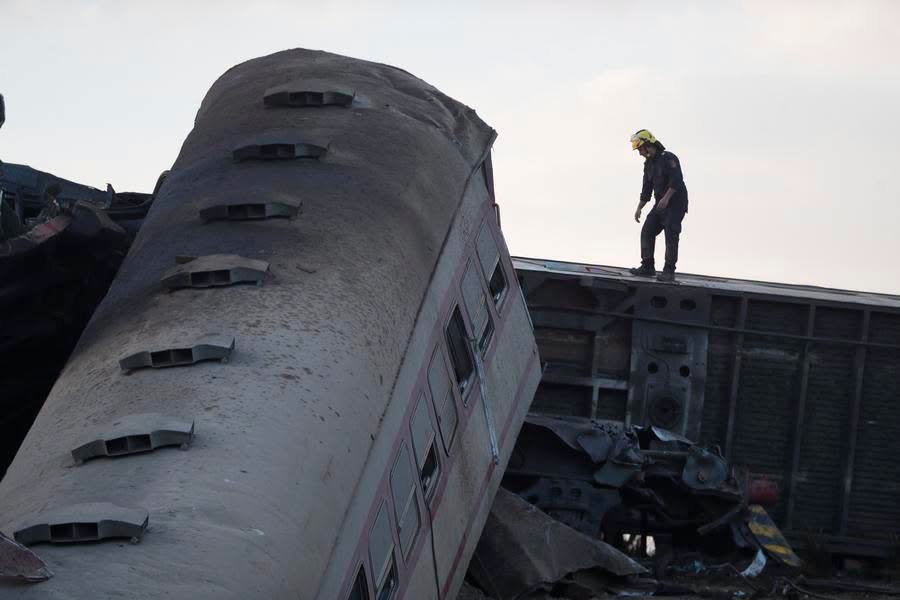
The operational disruption extended beyond the crash scene because the Cairo-to-Upper Egypt corridor is a crucial passenger route. When the line was blocked, railway authorities rerouted or delayed services while buses were deployed to transport stranded passengers around affected sections. Clearing the line required cranes and engineering crews to remove damaged coaches, inspect the tracks and complete repairs before trains could safely resume. By Monday, Egyptian National Railways said the Cairo–High Dam service had been restored, allowing the wider network to begin returning to normal.
The restoration will shift attention increasingly from emergency response to accountability. Technical investigators will need to determine whether the collision could have been prevented through existing safety systems and, if so, why those safeguards failed. They will also have to establish whether the stationary train’s position was properly communicated and whether the approaching service received sufficient warning or instructions to stop. Those findings are likely to shape both potential prosecutions and any operational reforms introduced after the crash.
Public anger over railway accidents in Egypt is often rooted in the perception that similar tragedies are followed by familiar promises but insufficient long-term change. Government officials have repeatedly defended the scale of investment being made in the system and can point to declining accident figures in 2025 as evidence of progress. Critics, however, are likely to argue that the persistence of deadly collisions demonstrates that infrastructure spending alone does not guarantee safe operations and that accountability, maintenance and staff procedures require equal attention.
That debate will continue while prosecutors and technical experts work through the evidence from El-Ayyat. At this stage, it would be premature to assign responsibility to any individual employee or agency because the official investigation has not reached a conclusion. The confirmed facts are that one passenger train struck the rear of another on the same track, several carriages derailed, seven people died and 125 were injured. What remains unresolved is the chain of operational and technical decisions that allowed the trains to reach that position.
The crash therefore presents Egyptian authorities with a test that extends beyond restoring the line and compensating victims. A credible investigation will need to explain the failure in terms understandable to the public, identify responsibility where evidence supports it and show how the railway system will be changed if weaknesses are discovered. Without that transparency, the accident risks being absorbed into a long list of railway tragedies that produced temporary outrage but left passengers uncertain about whether underlying problems were fully corrected.
For the families of the seven people killed and the passengers still recovering from injuries, the investigation will not undo the consequences of Sunday’s collision. Its importance lies instead in determining whether those deaths resulted from avoidable negligence and whether the findings can prevent another train from entering an occupied section of track under similar circumstances. As services return to normal, the technical inquiry and Public Prosecution investigation now become the most important parts of the story, with the government under pressure to demonstrate that El-Sisi’s promise of accountability will be matched by evidence, responsibility and concrete safety measures.
The broader significance of the El-Ayyat disaster will ultimately depend on those findings. Egypt has invested heavily in modernizing a railway network that is economically and socially indispensable, and official accident statistics show some improvement, but the continued occurrence of serious collisions makes passenger confidence fragile. Seven people are dead, 125 were injured and one of the country’s busiest transport systems is again facing questions about how effectively it protects the people who depend on it. The next stage will be defined not by the reopening of the tracks but by whether investigators can establish exactly what went wrong and whether the authorities respond in a way that reduces the risk of the same failure happening again.