SHATTA WALE FILLS ACCRA SPORTS STADIUM FOR SHATTAFEST26 AS MOMOFEST PARTNERSHIP TURNS BIRTHDAY CELEBRATION INTO MASSIVE MUSIC NIGHT
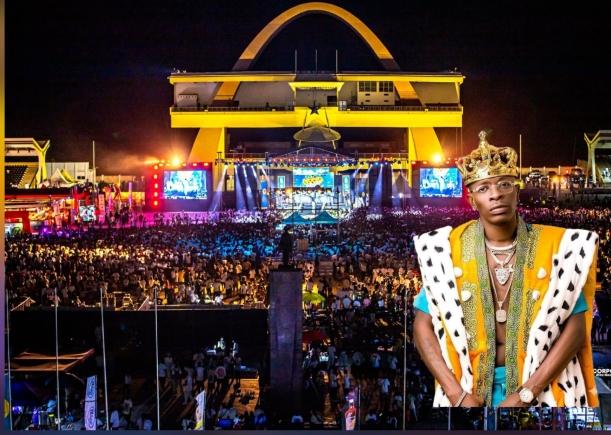
Shatta Wale headlined a massive ShattaFest26 celebration at the Accra Sports Stadium on Saturday, October 17, in partnership with MobileMoney Fintech Limited’s MoMoFest. Thousands of fans turned out for the dancehall star’s birthday concert, with reports describing the stadium as packed and YEN reporting that the event had sold out. Shatta Wale became visibly emotional while looking across the crowd during his headline set, while supporting performers including Patapaa, Captan, Chief One and other Ghanaian artistes contributed to the night. The combined ShattaFest x MoMoFest concept also incorporated digital-payment and customer-engagement activities alongside the music.
Ghanaian dancehall star Shatta Wale headlined a massive edition of ShattaFest26 at the Accra Sports Stadium on Saturday, October 17, as his annual birthday celebration joined forces with MobileMoney Fintech Limited’s MoMoFest for a major night of music, entertainment and fan engagement. Thousands of supporters filled the stadium for an event built around Shatta Wale’s music and his long-standing relationship with the Shatta Movement fan base, while performers including Patapaa, Captan, Chief One and other artistes appeared as part of the programme. Reports from the event described the stadium as packed, with Shatta Wale becoming visibly emotional when he looked across the crowd during his headline performance.
The October 17 concert was promoted jointly as ShattaFest x MoMoFest, extending a partnership between Shatta Wale and MobileMoney Fintech Limited that had already featured prominently during ShattaFest 2025. Ahead of this year’s Accra show, MyJoyOnline reported that MoMo Fest 2026 was scheduled for the Accra Sports Stadium with Shatta Wale as the main attraction, combining live entertainment with customer engagement and the promotion of digital financial services. The partnership reflects the increasing role of major commercial brands in Ghana’s concert industry, where music events are increasingly used not only for performances but also for product engagement, digital payments and youth-focused marketing.
The concert also carried special significance because October 17 is Shatta Wale’s birthday, turning the stadium event into both a commercial festival and a large-scale celebration between the artiste and his supporters. Shatta Wale, born Charles Nii Armah Mensah, has built much of his public identity around the closeness of his relationship with the Shatta Movement, and ShattaFest has increasingly become one of the platforms through which that relationship is demonstrated physically. The atmosphere at the stadium reflected that connection, with fans arriving in large numbers and many following the event’s all-white dress theme as the programme continued late into the night and into the early hours of Sunday.
One of the most widely shared moments from the concert came when Shatta Wale appeared overwhelmed by the size and reaction of the audience. Footage and reports published on Sunday showed the musician breaking down in tears while looking towards the crowd during his performance. YEN reported that the concert had sold out and described the stadium as packed with thousands of fans who had turned up to celebrate him, while videos from inside the venue showed large sections of the arena joining him during familiar songs.
The emotional moment quickly became one of the major talking points from ShattaFest26 because it contrasted with the confident and sometimes confrontational public image Shatta Wale has cultivated throughout his career. His relationship with fans has frequently formed part of his music and public statements, and the visible reaction at the stadium suggested that the scale of support carried personal significance for him. Rather than treating the night simply as another concert appearance, he appeared to view the gathering as recognition of a career that has included reinvention, controversy, commercial success and a highly organised fan movement.
Shatta Wale’s ability to attract a large crowd to one of Ghana’s most recognisable stadiums also reinforces his position as one of the country’s strongest live entertainment draws. Over the years, his concerts have repeatedly brought together large audiences across Accra and other parts of Ghana, particularly when events are organised around the Shatta Movement brand. ShattaFest26 continued that pattern at a venue normally associated with major sporting events and national occasions.
The Accra Sports Stadium gave this year’s edition a different character from the 2025 event, which was staged at Independence Square. The move provided a more structured arena environment with ticketed sections ranging from general admission through premium and VVIP categories. The official Shaxi event listing advertised ticket levels beginning at GH¢50 for general admission and rising through higher-tier packages, including premium VVIP options, illustrating the increasingly commercial scale of the festival.
Before the concert, organisers promoted the programme as more than a traditional music show. MoMoFest brought a commercial and digital-finance component to the event, with MobileMoney Fintech Limited using the festival to promote mobile transactions, financial inclusion and customer engagement. MyJoyOnline reported ahead of the event that the company wanted to use entertainment as a way to encourage adoption of digital payment services, particularly among young people, traders and entrepreneurs.
The partnership between Shatta Wale and the company developed further after their collaboration during ShattaFest 2025. Following that event, Shatta Wale and his management met officials of MobileMoney Fintech Limited, with the musician expressing interest in making the festival an annual event and potentially expanding it to other parts of Ghana. That ambition became more visible in 2026, when the ShattaFest and MoMoFest brands were used together for events including the earlier Adaklu edition before the major Accra stadium concert.
At Adaklu earlier in October, Shatta Wale performed for about four hours during a MoMoFest x ShattaFest event linked to the Asogli Te Za celebrations. That concert attracted thousands of fans and drew attention after the dancehall musician performed Stonebwoy’s “Putuu” while calling for greater unity among Ghanaian artistes and their supporters. The Accra edition therefore arrived after the combined ShattaFest and MoMoFest concept had already been tested outside the capital.
The Accra event featured performances from several artistes alongside the headline act. Ahead of the concert, Daily Guide reported that Captan, Chief One and Mona4Real were among the names advertised, alongside emerging performers including Great Money, 28Frikky, Origyinal and Vybzlord. Patapaa later emerged as one of the widely discussed performers after taking the stage and performing songs including his breakout hit “One Corner” and “Body Fi Body”, his collaboration with Shatta Wale.
AdomOnline described Patapaa’s appearance as one of the energetic moments of the night, reporting that sections of the audience responded strongly when he performed “One Corner”. The appearance demonstrated the festival’s broader approach of giving space to different strands of Ghanaian popular music rather than presenting the show solely as an extended Shatta Wale performance. It also helped maintain momentum before the main headline set.
Several public personalities were also spotted at the stadium. Reports published on Sunday said Director of the Criminal Investigation Department Lydia Yaako Donkor attended, while Black Stars goalkeeper Benjamin Asare and former Ghana international Prince Tagoe were also seen at the venue. Shatta Wale’s father and other entertainment personalities were present as the concert drew figures from music, sports and public life.
The presence of such figures added to the event’s profile and reflected the wide reach of Shatta Wale’s fan base. His audience has long extended beyond dancehall listeners alone, and his concerts often attract people from entertainment, football, business and other sectors. That cross-section of attendees is one reason major brands continue to see commercial value in partnerships built around his public appearances.
The concert was not without controversy. During his performance, Shatta Wale made comments about fraud, public corruption and his earlier encounters with the Economic and Organised Crime Office. MyJoyOnline reported that he accused authorities of selectively targeting young people involved in fraud while claiming that public officials accused of misusing state resources were not always treated with the same urgency. These were Shatta Wale’s personal claims and political commentary rather than established findings about particular ministers, and they should be understood in that context.
His remarks generated fresh debate online because he also said he knew individuals involved in fraud and would not report them. Those comments shifted part of the public conversation away from the music and towards questions about responsibility, law enforcement and the influence celebrities have over young audiences. The comments are likely to remain separate from assessments of the concert itself, but they became one of the most discussed moments to emerge from the stage.
The strongest story from the night, however, was the scale of support visible inside the stadium. Images and videos shared after the event showed spectators filling large sections of the venue while Shatta Wale performed under extensive stage lighting and large-screen production. Although no independently audited attendance figure had been published at the time of reporting, multiple outlets described the turnout as massive, while YEN characterised the concert as sold out.
That distinction is important for accurate reporting because social media frequently circulates exaggerated attendance figures after major Ghanaian concerts. There is currently no reliable basis for attaching a specific six-figure number to the Accra Sports Stadium crowd. The safest conclusion is that the event attracted a very large audience and that available reporting described it as packed or sold out, without claiming an exact attendance total that has not been independently established.
Shatta Wale has repeatedly presented large-scale fan mobilisation as one of the central strengths of his career. His supporters often describe themselves not simply as listeners but as members of a movement, and that organisational identity has helped his concerts achieve a sense of community beyond the performance itself. Fans travel, coordinate dress codes, share promotional material and amplify his messages across social platforms.
That loyalty has played an important role in Shatta Wale’s longevity. Ghana’s music industry has changed considerably since his earlier career as Bandana, yet he has remained commercially and culturally relevant by repeatedly adapting his sound, public image and relationship with audiences. His return under the Shatta Wale identity became one of the most successful career reinventions in Ghanaian popular music.
Events such as ShattaFest have gradually transformed that relationship into a physical annual celebration. Instead of relying only on conventional album launches or isolated concerts, the festival format allows Shatta Wale to combine his birthday, fan culture, live music and corporate partnerships under one recognisable brand. This gives the event potential to become more institutionalised if organisers continue staging it annually.
The partnership with MoMoFest strengthens that possibility because it brings corporate resources and a broader commercial framework. MobileMoney Fintech Limited has described MoMoFest as one of its customer-engagement initiatives, combining entertainment with digital financial experiences. For the company, Shatta Wale provides access to a large and highly engaged audience; for the artiste, the partnership can provide sponsorship, infrastructure and marketing support for a festival of increasing scale.
The relationship between entertainment and financial technology is particularly relevant in Ghana, where mobile money is deeply integrated into daily commercial life. Tickets, transport, food, merchandise and other concert-related spending increasingly involve digital transactions. Events therefore provide companies with opportunities to connect payment products directly with consumer behaviour.
ShattaFest26 also demonstrated how major Ghanaian concerts are becoming more structured commercially. The event used tiered ticketing, digital purchasing options, sponsor activation and branded customer experiences, placing it closer to the model used by large international festivals. Those developments can create greater revenue opportunities for performers and organisers, but they also raise expectations around security, production quality and crowd management.
Safety is particularly important for the ShattaFest brand because an earlier United Kingdom edition associated with Ghana Party in the Park was cancelled in August after a crowd-control incident. Shatta Wale’s management responded at the time by stressing that the safety and wellbeing of fans had to take priority over the continuation of any event.
The Accra Sports Stadium therefore carried additional importance as a controlled venue capable of accommodating a very large audience. Stadium events still require extensive planning around entry points, security, crowd movement, emergency services and transport, but the fixed infrastructure can offer organisers greater control than some open public spaces.
The stadium has also been the subject of debate over the balance between sporting and entertainment use. Ghana’s National Sports Authority has previously defended renting sports facilities for non-sporting activities because such events can generate revenue for maintenance. At the same time, football stakeholders have raised concerns about possible damage to playing surfaces, particularly when stages and heavy equipment are installed on or around pitches.
For ShattaFest26, organisers said protective measures for the pitch had been prepared ahead of the event. Daily Guide reported before the concert that pitch covers were ready as preparations continued. The success of those protections will ultimately be assessed when sporting activities resume and the condition of the playing surface becomes clear.
The concert also fits into Ghana’s expanding entertainment calendar, in which major music events increasingly compete for audiences, sponsors and tourism attention. Accra has become a significant destination for large concerts, especially during periods surrounding holidays, festivals and major cultural celebrations. A successful stadium event in October gives Shatta Wale an opportunity to position ShattaFest earlier in that annual calendar rather than relying exclusively on the crowded December entertainment season.
The festival’s birthday connection gives it a natural annual date. Shatta Wale was born on October 17, making the event easy to associate with a fixed period every year. If the partnership with MoMoFest continues, October could become an established window for the combined celebration.
There is also potential for regional expansion. Shatta Wale has previously spoken about taking the festival beyond Accra, and the Adaklu event earlier in October demonstrated how the combined brand can be adapted for other parts of Ghana. Regional concerts can extend the festival’s audience while reducing the perception that major entertainment events are concentrated almost entirely in the capital.
For emerging artistes, such expansion could create additional stages and exposure. Large headline events attract audiences who may not know supporting performers, allowing younger musicians to perform before thousands of people. This was historically one of the important functions of festivals and major concerts before social media became the dominant discovery platform, and it remains valuable today.
The event’s cultural impact also comes from Shatta Wale’s ability to blend music with a strong sense of personal narrative. His emotional reaction during the headline set became part of the story because fans understand his career as a journey involving rejection, comeback and eventual success. For supporters who followed him from his earlier years, seeing him command a packed national stadium carried symbolic significance beyond the night’s entertainment.
That does not mean the event should be exaggerated into an unsupported claim about national supremacy or exact crowd numbers. Ghana has several major artistes capable of attracting significant audiences, and attendance comparisons require reliable data. What ShattaFest26 clearly demonstrated is that Shatta Wale continues to possess substantial live-performance drawing power and a deeply committed fan community.
The stadium event also showed how his brand increasingly operates across music, transportation, digital payments and fan commerce. Tickets were sold through the Shaxi ecosystem, while MoMo provided financial-services integration and other companies appeared as sponsors. This reflects the broader evolution of celebrity brands in which musicians are no longer dependent solely on recording and performance fees.
For sponsors, such partnerships offer direct access to younger consumers and large physical audiences. For artistes, they can make ambitious events financially possible. The challenge is ensuring that the commercial elements do not overwhelm the entertainment experience or create pricing structures that exclude the very fan base on which the brand was built.
ShattaFest26 used a broad range of ticket categories, which allowed some fans to enter at comparatively lower prices while premium customers paid substantially more for exclusive access. That tiered model has become common internationally because it allows promoters to generate higher revenue without setting one expensive entry price for everyone.
The combination of accessible general admission and extremely high premium tiers also became a talking point before the event. Promotional material drew attention to expensive VVIP options, while Shatta Wale explained that ticketing reflected demands from supporters who wanted a more formally structured concert experience. The fact that significant numbers of fans still attended suggests there was substantial demand across several categories.
For Ghana’s live-music business, the commercial performance of the event may prove almost as important as the concert itself. Promoters and sponsors will study ticket sales, customer spending, security costs and engagement figures when deciding whether to repeat the format. If those numbers are strong, the ShattaFest x MoMoFest partnership could continue growing.
The public reaction on Sunday was already dominated by videos of the crowd, Shatta Wale’s emotional moment and performances from supporting artistes. Those clips helped extend the life of the concert beyond the people who attended physically, turning the stadium show into a social-media event watched by a much larger digital audience.
This secondary audience matters greatly for modern concerts. A performance seen by tens of thousands inside a venue can later generate millions of cumulative views across TikTok, Instagram, X, Facebook and YouTube if enough individual clips are shared. That reach increases the value of sponsorship and helps performers maintain momentum after the stage lights go off.
Shatta Wale has been particularly effective at using controversy and online discussion to remain culturally visible. The same concert produced emotional footage, fan celebrations, celebrity appearances and controversial comments about fraud and public officials, ensuring that several different aspects of the night remained in conversation after the event ended.
For organisers, the more sustainable legacy will be whether ShattaFest can continue as an annual festival with clear organisation, reliable partnerships and strong safety standards. One successful stadium night can create excitement, but building a festival institution requires consistency across multiple years.
The partnership with MoMoFest provides a stronger foundation than an event financed solely around one artiste. The corporate component creates opportunities for broader marketing, financial support and customer activities, while Shatta Wale supplies the cultural identity and audience loyalty necessary to make the festival distinctive.
Saturday’s event therefore represents more than another birthday concert. It is part of an effort to turn ShattaFest into a recurring entertainment property capable of operating at large scale and potentially expanding beyond Accra.
The 2026 edition delivered the most important evidence organisers needed: people turned up in large numbers, Shatta Wale remained the clear centre of attention and the combined ShattaFest x MoMoFest branding was able to fill one of Ghana’s best-known event venues with a highly engaged crowd.
For Shatta Wale himself, the image likely to define the night is not simply a performance shot but the moment he became emotional while looking across the stadium. After years of building the Shatta Movement and presenting himself as an artiste whose strongest support comes directly from ordinary fans, the October 17 turnout gave him a visible demonstration of that relationship.
ShattaFest26 ultimately brought together music, birthday celebration, commercial partnership and fan culture on one stage. The exact attendance may remain unverified, but the scale of the event is not in serious doubt. Accra Sports Stadium was transformed into a major concert venue, supporting acts performed before a large audience, and Shatta Wale closed the night as the central figure in a celebration built around the movement he has spent years creating.