SIX REMAND PRISONERS BREAK OUT OF KONONGO POLICE CELLS THROUGH WALL, FIVE STILL ON THE RUN
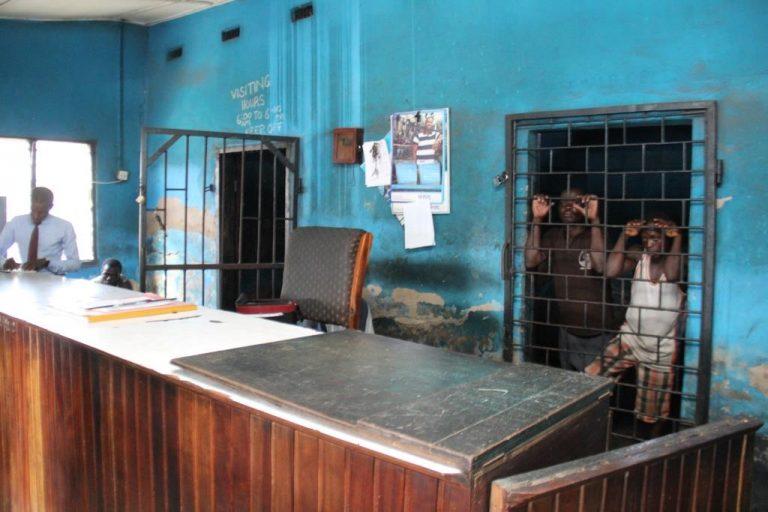
Six remand prisoners escaped from the Konongo Police cells in the Asante Akyem Central Municipality after allegedly using a hole dug toward detached washrooms at the station. Police rearrested one escapee in a suburb of Kumasi, while five remain at large. Municipal authorities say the cells will be reinforced, lighting improved, cameras installed and night staffing increased, with longer-term plans for a new police station.
Six remand prisoners have escaped from police custody at the Konongo Police Station in the Asante Akyem Central Municipality of the Ashanti Region after allegedly breaking through a section of the cell structure leading toward detached washrooms, triggering a police manhunt and renewed scrutiny of detention security at the facility. One of the escapees has since been rearrested in a suburb of Kumasi, but five remained at large as police intensified efforts to track them down.
Authorities believe the prisoners created or exploited a hole in the cell area that gave them access toward the detached washrooms before leaving the secured section of the station and fleeing. Local officials said the men were then able to jump out of the compound and disperse before police realized the full scale of the breach. The exact amount of time the prisoners spent creating the opening, how they avoided detection and whether the breach involved tools or weaknesses in the existing wall have not yet been publicly established.
The incident has immediately raised questions about the physical condition of the Konongo detention facility and the level of supervision inside and around the cells. Police cells are intended to temporarily hold suspects awaiting court appearances, transfers, further investigation or remand arrangements, and any structural weakness that allows detainees to escape poses both a security challenge for the police and a potential risk to the wider public.
Police launched a search soon after the escape was discovered, coordinating operations aimed at locating all six men. One was eventually found and rearrested in a suburb of Kumasi, demonstrating that at least one of the fugitives had managed to travel beyond Konongo before being captured. The remaining five had not been publicly reported as rearrested by the latest available update.
Authorities have not yet publicly released a complete list of the names of the escapees or the specific offenses for which each of them was being held. That information remains important because the risk assessment surrounding the fugitives depends partly on the allegations or charges attached to their remand cases. Until police issue a detailed statement, it would be premature to characterize all five remaining escapees as violent offenders or to speculate about the offenses they may face.
Asante Akyem Central Municipal Chief Executive Dr Ebenezer Ekow Aidoo confirmed the escape and said the Municipal Security Council had already begun considering immediate and longer-term security improvements. He said one of the first measures would be to strengthen and reinforce the walls surrounding the police cells so that a similar breach cannot be repeated.
The Municipal Security Council is also planning to improve lighting around the police station, particularly during night hours, and install surveillance cameras to help officers monitor movement around the detention area. Authorities have additionally discussed increasing the number of police personnel deployed at the station overnight, when security vulnerabilities may be greater and fewer officers may be available to monitor detainees continuously.
Dr Aidoo also said the municipality is looking beyond temporary repairs and considering the construction of a new police station. That proposal suggests local authorities believe the problem may extend beyond a single damaged wall and could involve broader limitations in the existing infrastructure.
The condition of police holding cells has long been an operational concern in parts of Ghana, particularly at older stations that were not designed to accommodate present-day detainee numbers or modern security requirements. Inadequate ventilation, weak walls, overcrowding, poor lighting and insufficient surveillance can all create vulnerabilities that make detention management more difficult.
The Konongo escape illustrates how quickly those weaknesses can become a public security problem. Once detainees leave police custody, officers must divert personnel and resources into search operations, intelligence gathering and surveillance while still maintaining their ordinary policing responsibilities. The wider the fugitives travel, the more coordination may be required between divisions, districts and regional commands.
The fact that one escapee was located in Kumasi also demonstrates how rapidly fugitives can move from the area where the escape occurred. Konongo is connected by major road networks to Kumasi and other communities in the Ashanti Region, meaning police must consider the possibility that the remaining five could travel well beyond the municipality.
At the same time, authorities will likely review whether any internal security failures contributed to the escape. Standard investigations following a detention breach often examine the condition of the cell, officer deployment, handover procedures between shifts, frequency of physical inspections and whether unusual activity should have been detected before the prisoners fled.
No police officer has yet been publicly accused of assisting the prisoners or deliberately allowing the escape. There is also no confirmed evidence in the current reporting of collusion from inside the station. Any investigation into officer conduct therefore needs to distinguish between possible negligence, infrastructure failure and intentional assistance.
The structure of the escape will be central to that assessment. If the prisoners were able to dig or break through a wall over an extended period, investigators are likely to ask how the noise or damage went unnoticed. If the wall was already severely weakened, attention may instead shift toward maintenance failures and whether officers or municipal authorities had previously reported concerns about the condition of the cells.
Reports from some local outlets suggested the prisoners may have used a period of communal activity such as prayers or worship to conceal their efforts, but that detail has not been consistently confirmed across the more authoritative accounts. For now, the clearest verified explanation remains that a hole was created toward the detached washroom area and that the prisoners used the opening to escape.
The incident also raises questions about the use of detached washroom facilities within police detention areas. Where detainees have to move between secured cells and separate washroom spaces, additional security controls may be necessary to prevent blind spots, tampering or unauthorized access to walls, windows or exterior areas.
Municipal authorities have said the planned security upgrades will include cameras and stronger lighting, both of which could improve monitoring around those vulnerable points. Surveillance cameras can provide real-time observation and also create a record of detainee movements, while stronger lighting reduces areas where suspicious activity can take place unnoticed.
Increasing the number of officers on duty at night could also help, but staffing alone may not solve structural weaknesses. A properly secured facility must combine adequate personnel with strong physical barriers, regular inspections, functioning locks, reliable surveillance and clear procedures for detainee movement.
The planned construction of a new police station could therefore become the most significant long-term response if funding and approvals are secured. Building a modern facility would allow authorities to incorporate stronger cell construction, safer washroom access, better camera coverage and more secure separation between detainee and public areas.
However, new infrastructure takes time, meaning the immediate concern remains the five men still at large. Police are expected to continue intelligence-led searches, including checks on known associates, relatives, transport routes and locations where the fugitives may seek temporary shelter.
The Ghana Police Service may also circulate identifying information or photographs if investigators determine that public assistance is necessary. Such appeals are commonly used when escapees remain at large, but authorities must ensure that any names and images released are accurate and that the public is advised not to confront suspects directly.
The wider community will be watching closely because a jailbreak can create understandable anxiety even when the underlying offenses are not yet publicly known. Police therefore face a communication challenge as well as an operational one. Regular updates can reduce speculation and help residents understand what authorities know, what remains uncertain and what precautions are appropriate.
The incident comes amid broader discussion over police resources and infrastructure in Ghana. While the Service has expanded personnel, equipment and specialized units in recent years, some stations continue to operate in buildings that may not meet modern security expectations. Rural and municipal commands can be especially vulnerable where facilities have aged or where new infrastructure has not kept pace with population growth and caseloads.
The Konongo station itself serves an important area within the Ashanti South police structure and handles both routine policing and serious criminal cases transferred through the division. A security failure at such a facility therefore has implications beyond the immediate escape because it can affect court processes, ongoing investigations and public confidence in law enforcement.
Remand prisoners are legally presumed innocent unless convicted by a court, but they remain under lawful custody while their cases proceed. Escaping from police custody can create additional legal consequences, and anyone who assists an escapee may also face criminal liability depending on the circumstances established by investigators.
The rearrest of one prisoner will likely help police reconstruct what happened. Investigators may question him about how the opening was created, who organized the escape, how long preparations took and where the group went after leaving the station. That information could be critical in locating the five fugitives and determining whether outside assistance was involved.
Authorities may also examine whether the detainees had access to objects capable of damaging the wall. If tools were used, investigators will want to know how they entered the cell and whether they came from maintenance areas, washroom fixtures or outside contacts.
The physical wall itself will likely become evidence. Engineers or police investigators can assess whether it had existing cracks, weak mortar, water damage or previous repairs that made it easier to penetrate. That assessment could influence whether responsibility falls primarily on detainee ingenuity, poor maintenance or inadequate supervision.
The Municipal Security Council’s decision to immediately reinforce the walls indicates that officials consider structural weakness a meaningful part of the problem. Improved lighting and cameras are also likely to be implemented more quickly than a complete rebuild, giving police some immediate additional protection while longer-term plans are developed.
The episode is also likely to prompt inspections of other nearby detention facilities. When a breach exposes a structural vulnerability at one station, police commands often review similar facilities to determine whether the same weakness exists elsewhere.
Such inspections would be particularly important if the Konongo cells were built using a design common to other police stations. If similar detached washrooms or wall configurations exist elsewhere, preventive repairs could reduce the chance of copycat escapes.
For now, there is no evidence that the escape formed part of a wider coordinated effort or that anyone outside the station planned the operation. The case remains a localized detention breach involving six remand prisoners, one of whom has been recaptured.
The most immediate security objective is locating the remaining five. Police will also need to explain how the breach occurred, whether officers followed proper procedures and whether disciplinary action is warranted. Those findings will determine whether the incident is treated primarily as an infrastructure failure, a supervision lapse or a combination of both.
Public confidence will depend heavily on the speed and transparency of that investigation. A jailbreak that results from a deteriorating wall can be addressed differently from one involving officer negligence or collusion, and authorities will need evidence before assigning responsibility.
The planned upgrades announced by the Municipal Security Council are a first response, but the effectiveness of those measures will depend on whether they are implemented quickly and maintained over time. Temporary repairs alone will not resolve broader detention-security concerns if the facility remains vulnerable in other areas.
The escape also reinforces the importance of treating police cells as critical security infrastructure rather than simply temporary holding rooms. Even short-term detention facilities must be capable of safely holding suspects without creating conditions that endanger detainees, officers or the public.
As the search enters its next phase, the police will be under pressure to rearrest the remaining fugitives before they travel farther or become more difficult to trace. Investigators will simultaneously be expected to preserve evidence at the station and establish the sequence of events that allowed six people to leave custody undetected.
The case therefore remains active on two fronts. The first is the operational manhunt for the five remand prisoners still missing, while the second is the internal and structural investigation into the failures that allowed the escape to happen.
Until the fugitives are found and the investigation is completed, the Konongo breakout will remain a significant test for local police and municipal security authorities. The immediate breach may have involved only one station wall, but the questions it has raised about supervision, infrastructure and detention security extend well beyond the six prisoners who escaped.