SOUTH AFRICAN COURT OVERTURNS PHALA PHALA REPORT IN MAJOR LEGAL VICTORY FOR PRESIDENT CYRIL RAMAPHOSA
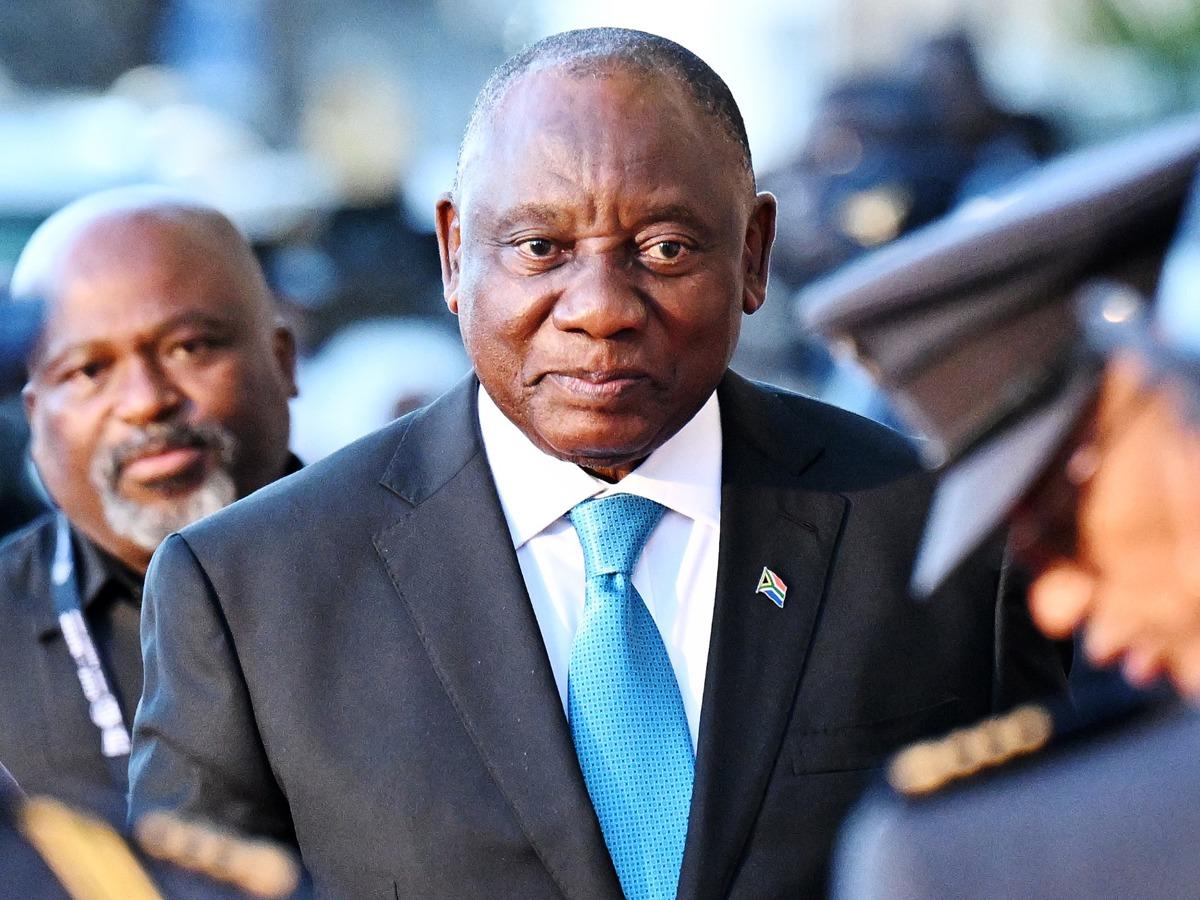
South African President Cyril Ramaphosa has secured a major legal victory after the Western Cape High Court unanimously overturned a 2022 parliamentary report that had exposed him to possible impeachment over the theft of $580,000 from his private Phala Phala game farm in Limpopo. Delivering the judgment on November 25, 2026, Judge President Nolwazi Mabindla-Boqwana concluded that the independent panel had exceeded its mandate, applied an incorrect evidential standard and committed material errors of law. The court also invalidated parliamentary measures undertaken pursuant to the report, effectively halting the existing impeachment process. Ramaphosa has consistently denied wrongdoing, maintaining that the stolen currency originated from a legitimate buffalo sale. South Africa's Parliament is now examining the judgment and its implications for the impeachment committee, while the Presidency has confirmed that Ramaphosa will study the decision.
South African President Cyril Ramaphosa has secured a significant legal victory after the Western Cape High Court overturned a controversial parliamentary report that had exposed him to possible impeachment proceedings over the theft of $580,000 in foreign currency from his private Phala Phala game farm. In a unanimous judgment delivered on Wednesday, November 25, 2026, the court declared the findings of the 2022 Section 89 Independent Panel unlawful, concluding that the panel had exceeded its mandate, applied an incorrect legal standard and committed material errors in assessing allegations against the president. The ruling also set aside parliamentary steps taken pursuant to the report, effectively halting the impeachment process that had gained renewed momentum following a Constitutional Court judgment earlier this year. Although the decision provides substantial political relief for the 74-year-old leader, it does not constitute a criminal acquittal or independently resolve every allegation arising from the burglary that has overshadowed his presidency for several years.
The judgment was delivered by Western Cape Judge President Nolwazi Mabindla-Boqwana, sitting alongside Judges Mark Sher and Ncumisa Mayosi, following Ramaphosa's application for a judicial review of the independent panel's findings. The three-member bench concluded that the panel had fundamentally misunderstood the nature of its responsibilities under the National Assembly's rules governing the possible removal of a sitting president. Rather than determining whether sufficient relevant and admissible evidence existed to justify further impeachment proceedings, the court found that the panel had applied an inappropriate standard and considered allegations extending beyond the specific matters it had been appointed to examine. Those shortcomings, according to the judgment, undermined the legality of the report and provided sufficient grounds for setting it aside in its entirety.
The controversy originated from a burglary that occurred on February 9, 2020, at Ramaphosa's privately owned Phala Phala wildlife farm near Bela-Bela in the northern province of Limpopo. The incident involved the theft of a substantial amount of United States currency that had been stored inside furniture at the property, raising questions about the origin of the money, the circumstances under which it was kept at the residence and the manner in which the theft was subsequently handled. Ramaphosa has maintained that the money came from a legitimate commercial transaction involving the sale of buffaloes from his wildlife farming business. His critics, however, questioned why such a large amount of foreign currency was stored inside a private residence and whether the relevant financial, tax and law enforcement procedures had been followed.
The burglary did not become a major national political controversy until June 2022, when former South African intelligence chief Arthur Fraser filed a criminal complaint concerning the incident. Fraser alleged that Ramaphosa had concealed the theft from the appropriate authorities and that individuals suspected of involvement in the burglary had been unlawfully pursued as part of an effort to recover the stolen money. The allegations attracted widespread attention because they raised the possibility that presidential security resources might have been used to address a matter involving the president's private commercial interests. Ramaphosa rejected allegations of wrongdoing and maintained that he had informed the head of his presidential protection service after discovering the theft, while denying that he had participated in an unlawful operation to conceal the incident.
The controversy subsequently became widely known as the Phala Phala scandal, or Farmgate, and generated considerable pressure on Ramaphosa both within Parliament and among members of his governing African National Congress. Questions surrounding the handling of the burglary proved particularly sensitive because Ramaphosa had positioned the restoration of institutional integrity and the fight against corruption as important components of his presidency. Opposition parties argued that the allegations warranted a comprehensive parliamentary investigation, while the president maintained that the claims against him were either unsupported or based on incorrect interpretations of the circumstances. The disagreement eventually developed into a constitutional dispute over the evidence required to initiate proceedings capable of removing a democratically elected president from office.
In 2022, the National Assembly established an independent panel under its Section 89 procedures to examine whether sufficient grounds existed for Parliament to pursue a formal impeachment inquiry. The panel was chaired by former Chief Justice Sandile Ngcobo, alongside retired Judge Thokozile Masipa and senior advocate Mahlape Sello. Its responsibilities were preliminary rather than judicial, meaning that it was not empowered to convict Ramaphosa of a criminal offense or independently remove him from office. Instead, its role was to assess the material presented in support of a parliamentary motion and advise the National Assembly on whether the allegations warranted further investigation under the constitutional framework governing presidential removal.
The panel's report, released in November 2022, concluded that the information presented to it indicated that Ramaphosa might have committed serious violations of the Constitution or the law, as well as possible serious misconduct. Its findings raised questions concerning the president's private business activities, the handling of the foreign currency and the circumstances surrounding efforts to investigate the burglary. Although the report stopped short of establishing definitive wrongdoing, its conclusions created a substantial political crisis by providing opposition parties with a basis for pursuing further impeachment proceedings. Ramaphosa faced considerable pressure over whether he should remain in office, while senior figures within the African National Congress debated the implications of the findings for both the presidency and the governing party.
The National Assembly subsequently voted in December 2022 against referring the report to an impeachment committee, preventing the proposed inquiry from proceeding at that stage. The African National Congress, which then held a parliamentary majority, used its voting strength to defeat the motion, while opposition parties criticized the decision and maintained that the allegations deserved fuller examination. Ramaphosa subsequently retained his position as president of the ANC at the party's national elective conference, overcoming an immediate challenge to his political leadership. Nevertheless, the controversy remained unresolved because the parliamentary decision did not independently establish that the allegations were unfounded or prevent opposition parties from challenging the legality of the process.
That parliamentary vote became the subject of a constitutional challenge brought by opposition parties seeking to establish whether the National Assembly had fulfilled its responsibility to hold the executive accountable. In May 2026, South Africa's Constitutional Court overturned the December 2022 decision and directed Parliament to refer the independent panel's report to an impeachment committee. The ruling revived the prospect of formal proceedings and placed renewed pressure on Ramaphosa, whose political circumstances had changed considerably since the original controversy emerged. Parliament subsequently began establishing the necessary institutional arrangements for the inquiry, bringing the Phala Phala allegations back to the center of South African political debate.
Ramaphosa responded by approaching the Western Cape High Court to challenge the legality of the underlying report itself. His legal representatives argued that the independent panel had misunderstood the boundaries of its authority and relied on material that did not satisfy the standards established by the National Assembly's rules. The president also maintained that the panel had failed to give appropriate consideration to information he submitted in response to the allegations. In July, the High Court temporarily prevented the parliamentary impeachment inquiry from holding public hearings while his review application remained pending, effectively suspending the next major stage of the process until the legality of the report could be determined.
Wednesday's judgment upheld the central arguments advanced in Ramaphosa's legal challenge, finding that the independent panel had incorrectly equated the existence of a preliminary case to answer with the requirement to establish sufficient evidence supporting the specific allegations before it. Under the applicable parliamentary rules, the panel was required to assess whether relevant and admissible information, if accepted as true, could demonstrate that the president had personally committed serious misconduct or a serious violation of the Constitution or the law. The court found that the panel had not properly applied that requirement and had instead reached conclusions through an assessment that extended beyond its assigned responsibilities.
The judgment also criticized the panel's reliance on information originating from Fraser's criminal complaint, particularly where his assertions were not supported by direct personal knowledge of the events under examination. The judges found that the panel had failed to distinguish adequately between substantiated information relevant to the parliamentary allegations and other claims that fell outside its mandate. Additional material submitted by the African Transformation Movement and the Economic Freedom Fighters had also contributed to an expansion of the issues examined by the panel. The court concluded that the preliminary body had treated aspects of the matter as though it possessed broader adjudicative responsibilities than those actually conferred upon it.
Another significant component of the judgment concerned the panel's assessment of Ramaphosa's own submissions. The court found that the independent body had not properly evaluated information provided by the president when determining whether the allegations met the applicable evidential threshold. That conclusion reinforced the judges' broader finding that the procedure had not complied with the framework governing a preliminary impeachment assessment. Rather than attempting to substitute its own factual conclusions for those of the panel, the High Court determined that the report could not remain legally effective because of the fundamental errors associated with the process through which its findings were reached.
The significance of the decision extends beyond the invalidation of the report itself because the High Court also set aside subsequent parliamentary measures taken on the basis of its recommendations. The impeachment committee established following the Constitutional Court's May judgment consequently faces uncertainty concerning the legal foundation of its existing mandate. Parliament confirmed that it would study the latest ruling and obtain appropriate legal guidance before determining its next steps. The development creates a complicated constitutional situation involving an earlier order from South Africa's highest court concerning Parliament's treatment of the report and a subsequent High Court judgment invalidating the report itself.
Those two judgments address distinct legal questions and should not automatically be interpreted as contradictory decisions concerning whether Ramaphosa committed misconduct. The Constitutional Court's earlier intervention concerned the legality of Parliament's decision to reject further consideration of the report, while the Western Cape High Court examined whether the independent panel had produced that report in accordance with its governing rules. The latter judgment does not amount to a lower court overturning the Constitutional Court's authority. Rather, it changes the legal status of the document upon which the parliamentary process depended, leaving Parliament and potentially other courts to determine the implications for the existing impeachment proceedings.
South Africa's Presidency responded cautiously to the judgment, issuing a statement confirming that Ramaphosa would study the decision. The statement emphasized the president's respect for judicial independence and the rule of law, avoiding any immediate declaration that every question surrounding Phala Phala had been conclusively resolved. The restrained response reflected the continuing possibility of further legal proceedings, particularly because parties opposed to the judgment may seek permission to appeal. Although the ruling removes the immediate threat associated with the invalidated report, the complete legal consequences will depend partly on how Parliament responds and whether subsequent challenges are brought before the courts.
The controversy surrounding the origin of the stolen money has remained one of the most widely discussed elements of the case. Ramaphosa has explained that the $580,000 represented proceeds from a buffalo sale to a foreign businessman and that the money had been entrusted to an employee at the farm. His account challenged suggestions that the currency represented proceeds from corruption or another unlawful financial transaction. However, the unusual circumstances under which the cash was stored generated questions about whether the transaction complied with applicable financial regulations and whether the relevant authorities had been appropriately informed. Those questions prompted separate investigations involving institutions whose mandates differed from that of the parliamentary panel.
The South African Reserve Bank previously examined the circumstances surrounding the foreign currency transaction in relation to exchange-control regulations. The Public Protector also investigated aspects of Ramaphosa's conduct, including allegations that he had violated ethical obligations associated with public office. Those institutional processes addressed specific legal and regulatory questions rather than determining the president's overall political responsibility for the controversy. Their conclusions should therefore be understood within the boundaries of their respective mandates. The existence of separate investigations demonstrates why a judgment invalidating the parliamentary report cannot automatically be extended to every issue examined by other authorities.
The Phala Phala controversy has consequently involved several overlapping forms of accountability, including criminal investigation, financial regulation, executive ethics and parliamentary oversight. Each of those processes operates under different legal standards and possesses different powers concerning the examination of evidence and the imposition of consequences. A finding that evidence is insufficient for one institutional purpose does not necessarily establish that every other inquiry must reach an identical conclusion. Similarly, allegations appearing in a parliamentary report cannot automatically be treated as findings of criminal guilt, particularly where the report was produced through a preliminary procedure rather than a full judicial trial.
Section 89 of South Africa's Constitution provides for the removal of a president on specified grounds, including a serious violation of the Constitution or the law, serious misconduct or an inability to perform the functions of office. Such removal requires a resolution supported by at least two-thirds of the members of the National Assembly. The requirement establishes a substantial constitutional threshold intended to ensure that the removal of a sitting president is not determined through an ordinary parliamentary disagreement. However, it also preserves Parliament's authority to initiate accountability proceedings where sufficient grounds exist, making the integrity of the preliminary assessment process particularly important.
Ramaphosa's political circumstances have changed considerably since the original panel released its findings in 2022. At that time, the African National Congress retained the parliamentary majority that enabled it to defeat the proposed impeachment inquiry. Following the country's May 2024 general election, however, the ANC lost its outright majority for the first time since the end of apartheid and subsequently entered a Government of National Unity involving several political parties. The new parliamentary environment has increased the importance of cooperation between parties and altered the circumstances under which the president confronts questions involving legislative oversight.
Although the absence of an ANC majority has complicated the party's ability to determine parliamentary outcomes independently, it does not mean that an impeachment motion would necessarily receive the constitutional support required to remove Ramaphosa. Different political parties possess distinct positions concerning the presidency, government accountability and their participation in the governing arrangements. The two-thirds requirement remains applicable regardless of the distribution of parliamentary seats. Wednesday's judgment has nevertheless changed the immediate legal circumstances by removing the report that had formed the basis of the revived impeachment process.
The decision also carries significance for South Africa's broader political and institutional environment because the country has experienced extensive debates concerning the relationship between executive authority, parliamentary oversight and judicial independence. During previous administrations, courts have been called upon to determine whether government institutions and political leaders complied with constitutional obligations. Such interventions have reinforced the principle that political office does not place individuals beyond legal scrutiny, while also establishing that accountability mechanisms must operate within the boundaries of their lawful authority. The Phala Phala judgment adds another important development to that continuing constitutional history.
Supporters of Ramaphosa's legal challenge have emphasized the importance of protecting individuals from consequential proceedings based on insufficiently substantiated allegations or processes that exceed their statutory authority. From that perspective, the judgment reinforces the principle that even politically sensitive investigations must comply with established procedural safeguards. Critics of the president, meanwhile, have continued to emphasize the importance of investigating the original circumstances of the burglary and ensuring that holders of public office remain accountable for their conduct. These concerns are not necessarily incompatible, as an effective accountability system must provide mechanisms for examining serious allegations while protecting the procedural rights of those subjected to investigation.
For Parliament, the immediate responsibility involves determining how to respond to the judgment without disregarding its constitutional oversight obligations. The National Assembly must consider the legal effect of the invalidated report, the implications for its existing impeachment committee and any outstanding requirements associated with the earlier Constitutional Court decision. Parliamentary spokesperson Moloto Mothapo indicated that the Speaker would examine the ruling and its consequences for the institution and the committee. That response suggests that the next stage will involve legal and procedural assessment rather than the automatic continuation of proceedings that depended upon a document now declared unlawful.
As of Thursday, November 26, 2026, the available official responses had not established a definitive timetable for any renewed parliamentary inquiry or confirmed that the latest judgment would represent the final stage of litigation surrounding the report. Political opponents may pursue further legal remedies, but the existence of that possibility should not be confused with confirmation that an appeal has already been filed or granted. Any subsequent application would be required to proceed through the appropriate judicial mechanisms. Until then, the High Court's ruling represents the principal legal development determining the current status of the disputed panel report.
For Ramaphosa, the judgment removes an immediate political challenge that had threatened to dominate his presidency during a period when the South African government is confronting substantial economic, social and administrative pressures. The ruling allows attention to shift away from the existing impeachment process, although the Phala Phala controversy may remain part of public and political discussion. His administration continues to operate within a coalition-based parliamentary environment where cooperation, executive accountability and the implementation of government policies remain important considerations. The court's decision does not alter those wider responsibilities or establish a definitive resolution of every question that has emerged since the burglary.
More than six years after foreign currency was stolen from the Phala Phala farmhouse, the controversy has developed from an initially private security incident into one of the most consequential constitutional disputes of Ramaphosa's presidency. The Western Cape High Court has now determined that the independent panel's report was legally defective, removing the foundation upon which the existing impeachment proceedings had been constructed. However, the judgment addresses the legality of that specific process rather than issuing a comprehensive factual determination concerning every allegation associated with the incident. South Africa's Parliament must now establish its next steps, while the possibility of further litigation means that the broader dispute cannot yet be regarded as permanently concluded.
The enduring significance of the Phala Phala case lies in the relationship between presidential accountability and the legal safeguards governing the exercise of parliamentary power. Wednesday's judgment reinforces the requirement that allegations capable of threatening a president's tenure must be examined through procedures that comply with constitutional and evidential standards. At the same time, those safeguards do not eliminate the responsibility of public institutions to investigate credible allegations or maintain transparency concerning the conduct of political leaders. As South Africa responds to the latest ruling, the challenge confronting its democratic institutions will be preserving both principles, ensuring that accountability remains effective without compromising the fairness and legality of the processes through which it is pursued.