SOUTH SUDAN POSTPONES HISTORIC FIRST NATIONAL ELECTION TO FEBRUARY 2027 AS SECURITY AND LOGISTICAL PRESSURES MOUNT
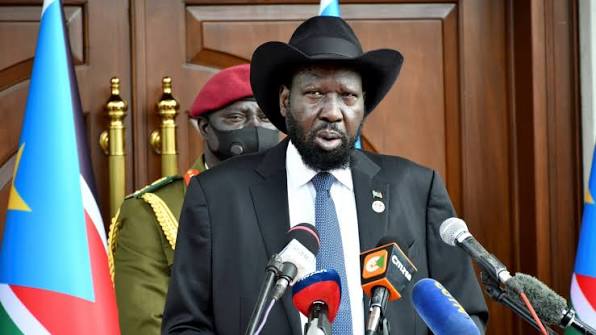
South Sudan’s National Elections Commission has postponed the country’s first national election since independence from December 22, 2026, to February 11, 2027, giving officials an additional 51 days to complete voter registration, distribute materials and prepare for polling as insecurity, political tensions and logistical weaknesses continue to threaten the process. Voter registration has nevertheless begun at 3,161 centres across the country, but the new timetable has raised legal questions because election law provided for a December vote and leaves only 11 days between polling and the February 22 end of the current transitional period, while the United Nations, African Union and civil society groups continue to warn that credible elections will require political dialogue, security and adherence to the 2018 peace framework as well as technical preparation.
JUBA, SOUTH SUDAN — South Sudan has postponed its first national election since gaining independence in 2011, moving the long-awaited vote from December 22, 2026, to February 11, 2027, as the world’s youngest country struggles with security threats, delayed electoral preparations, political tensions and unresolved questions surrounding the peace agreement that was supposed to guide it toward democratic government. The National Elections Commission announced the revised timetable as voter registration began across the country, extending the electoral calendar by 51 days while insisting that the adjustment does not represent an abandonment of the vote. The decision gives election officials additional time to distribute materials, complete registration, prepare voter lists and organize nominations, but it also pushes the country dangerously close to the February 22 end of the current transitional period and has immediately generated questions about whether the commission possesses sufficient legal authority to move the election beyond the December deadline established in South Sudan’s amended electoral framework.
The February date is now the latest milestone in an extraordinarily long and troubled transition. South Sudan gained independence from Sudan in July 2011 after decades of conflict but has never held a nationwide general election as a sovereign state. Elections initially expected within the early years of independence were repeatedly delayed as political rivalry between President Salva Kiir and his former deputy Riek Machar plunged the country into civil war in December 2013. The conflict devastated much of the country, displaced millions of people and killed an estimated 400,000 before the main parties signed the Revitalised Agreement on the Resolution of the Conflict in South Sudan in 2018. That agreement created a transitional political framework intended to reunify armed forces, write a permanent constitution, conduct a national census, strengthen institutions and ultimately hold elections that would allow citizens to choose their leaders rather than continue living under temporary arrangements.
Those benchmarks have repeatedly slipped. Elections scheduled for 2022 were postponed to 2024 after the government acknowledged that crucial provisions of the peace agreement had not been completed. In September 2024, the transitional period was extended again, pushing elections to December 2026 and extending the political transition to February 22, 2027. Officials argued that another extension was unavoidable because the country had still not completed the permanent constitution, national census and other institutional requirements. By 2026, however, political pressure to finally conduct the vote had become intense, prompting the government and legislature to amend the constitutional and legal framework so elections could proceed without completing all of those earlier prerequisites.
President Kiir in September assented to constitutional amendments removing the requirement that a permanent constitution and national census be completed before polling. Government officials said those changes were necessary to prevent unfinished transition tasks from becoming a permanent excuse for delaying elections. Critics countered that stripping away key safeguards of the 2018 agreement without sufficient political consensus risked turning the election into a substitute for the peace process rather than its culmination. The dispute exposed a fundamental disagreement over the way forward: the government increasingly argued that elections themselves could provide political legitimacy and move South Sudan beyond endless transitional arrangements, while opposition groups, civil society organizations and international partners warned that elections held without adequate security, institutions and political inclusion could deepen the crisis instead of ending it.
The National Elections Commission nevertheless announced June 22 that voting would take place on December 22, 2026. Even at that stage, the commission acknowledged serious legal inconsistencies and financial constraints. Preparations proceeded slowly, with electoral bodies attempting to identify registration centres, recruit officials, distribute materials and develop rules for a nationwide vote in a country with weak transport infrastructure, large displaced populations and ongoing armed conflict. By early November, civil society observers were warning publicly that preparations were behind schedule, particularly the distribution of voter registration materials and public education needed to inform citizens about where and how to register.
Those concerns became increasingly difficult to ignore as the December deadline approached. Voter registration was not scheduled to begin until November 14, leaving only 39 days before the December 22 polling date. The commission said it had recruited and trained 22,127 registration officials and appointed 204 constituency returning officers, while 3,161 registration centres had been designated across South Sudan’s 10 states and three administrative areas. Although materials had reached state capitals, officials acknowledged immediately before registration began that they had not yet reached every individual centre, particularly in remote areas where roads, flooding, insecurity and limited communications make distribution exceptionally difficult.
The revised timetable was therefore issued on November 14, the same day nationwide registration formally began. Under the new calendar, voting will take place on Thursday, February 11, 2027. Registration is scheduled to run from November 14 through November 28, followed by preparation and publication of the provisional voter register and a period during which citizens can inspect entries and challenge errors. Candidate nomination and campaign processes are also expected to take place over the following weeks, leaving authorities with a compressed but somewhat longer window than existed under the December timetable.
National Elections Commission officials have emphasized that the additional time is intended to make the election more workable rather than provide another indefinite extension. Commission spokesperson Josephine Achiro said the revised schedule should not be interpreted as a discussion to cancel or abandon elections. She said authorities require more time for processes including distribution of voter registration materials and civic education, both of which were still incomplete as registration commenced. Commission chair Gabriel Bol Deng Majok has also urged political actors to pursue power through ballots rather than violence, warning parties that the credibility of South Sudan’s first election depends on whether political competition can remain peaceful.
That appeal is especially important because the security environment has deteriorated substantially. Political and military tensions escalated during 2025, with renewed clashes involving government forces and armed groups in several regions. Machar, Kiir’s longtime rival and the former First Vice President in the transitional unity government, was placed under house arrest in March 2025 and later faced serious charges including treason, murder and crimes against humanity. His party has said he cannot meaningfully participate in the political process while detained and has demanded his release as part of any genuine political dialogue. The government insists the charges relate to criminal responsibility and should proceed through legal processes rather than political negotiation.
The confrontation culminated in another dramatic transformation of South Sudan’s transition in September 2026, when Kiir dissolved the transitional government and both houses of the transitional legislature before installing a caretaker administration. The dissolution was intended to clear the institutional path toward elections, but it also left the country without its previous transitional legislature at the same moment the election timetable became increasingly uncertain. With the vote now shifted into February, constitutional lawyers and civil society experts are asking what legal authority sustains a caretaker arrangement during the additional seven weeks and whether the new timetable complies with legislation that explicitly contemplated a December election.
Those questions are not merely technical. The 2018 peace deal was built around a negotiated balance intended to prevent any one political faction from monopolizing the state after years of devastating conflict. The collapse or sidelining of that political architecture without an inclusive replacement could recreate the tensions that originally drove violence. The United Nations and African Union have therefore repeatedly said elections cannot be treated as an isolated event detached from the wider peace process.
Days before the postponement, African Union envoy and former Tanzanian President Jakaya Kikwete warned the United Nations Security Council that poorly prepared or violent elections could trigger a major political and security crisis. The message reflected growing anxiety that rushing the vote might place electoral competition on top of unresolved military and political grievances. International officials have said the country needs genuine dialogue among political actors, functioning electoral institutions and enough security for candidates and voters to participate freely.
The head of the United Nations Mission in South Sudan has similarly warned that the central question is not simply whether an election can physically take place but whether the political transition remains anchored in the peace agreement before and after polling. That distinction is critical because an election held amid exclusion, intimidation or widespread insecurity may technically produce winners without producing legitimacy. The objective of South Sudan’s transition has always been broader than putting ballot boxes in polling stations; it was intended to transform a political system built around wartime agreements into one grounded in constitutional governance.
Security concerns have already touched the campaign environment directly. Two members of Kiir’s ruling Sudan People’s Liberation Movement, including a former journalist who had been nominated for a legislative seat, were killed while returning from political activities in Western Equatoria. Their deaths added to fears that candidates and party officials could become targets in areas where armed groups remain active and government control is weak. Such incidents raise difficult questions about whether political parties can campaign freely nationwide and whether citizens can attend rallies or registration centres without fear.
Election authorities have attempted to reassure the public that preparations continue. In Western Bahr el Ghazal, caretaker officials publicly registered at designated centres to encourage participation, while authorities in Yambio, Torit and other locations began enrolling voters. In Eastern Equatoria, however, officials acknowledged that registration materials had not reached all centres on the opening day and that deployments were still underway. Residents in Juba also told local media they lacked clear information about the locations of registration centres, demonstrating how basic logistical and communication problems continue even in the capital.
The scale of the registration challenge is extraordinary. South Sudan has a population estimated at roughly 15 million, but the World Bank has estimated that about 90 percent of citizens lack state-recognized identification. Election rules allow alternative identification methods, including confirmation by traditional leaders, but implementing such systems consistently across thousands of communities will be difficult. Large numbers of people have also been displaced internally or have fled to neighboring countries because of conflict, flooding and economic hardship, creating complex questions about residency, constituency boundaries and the practical right to participate.
Humanitarian conditions add another layer of difficulty. Millions of South Sudanese require humanitarian assistance, and roughly 7.5 million people have been facing acute food insecurity according to international assessments cited around the election debate. Aid agencies are simultaneously struggling with funding shortages, insecurity and disruption to operations. Asking communities facing hunger or displacement to participate in a technically demanding registration process requires substantial logistical support and civic education that has so far been uneven.
Funding has been another persistent concern. Election officials previously acknowledged financial constraints even while publicly insisting that the commission could meet its deadlines. Conducting elections across a country roughly the size of France with extremely limited road infrastructure requires aircraft, boats, vehicles, communications equipment, trained staff, printed materials and secure storage. International partners have been cautious about financing an electoral process they fear could lack political credibility, creating tension between the government’s insistence that elections proceed and donors’ demands for stronger safeguards.
The postponement therefore offers the commission additional time but does not automatically solve the underlying problems. Fifty-one extra days may help distribute materials and organize registration, but security conditions, political exclusion and incomplete peace-agreement provisions cannot be resolved through logistical scheduling alone. Whether the additional period becomes meaningful will depend on what the government, opposition and international partners actually do with it.
The legal controversy could become especially significant. South Sudan’s National Elections Act, as amended in September, provides for elections in December 2026, while the broader transitional framework sets February 22, 2027, as the end of the current political transition. The February 11 polling date is still before that deadline but leaves only 11 days between election day and the formal end of the transition, an extraordinarily narrow period in which votes would have to be counted, disputes addressed and a legitimate transfer or continuation of authority clarified.
Legal analyst Remember Miamingi has questioned whether the National Elections Commission has publicly identified a sufficient legal basis for a nationwide postponement of all elections beyond the December period specified by law. He has also raised concerns that the compressed calendar may conflict with statutory protections governing publication and inspection of voter registers, candidate nominations and other procedural deadlines. His analysis is not a court ruling, and the government or commission could advance different legal interpretations, but the questions demonstrate the risk of conducting a historic election under rules that may themselves become contested.
One particularly sensitive issue involves the voters’ register. Electoral law is intended to give citizens adequate time to verify whether they have been correctly registered and challenge errors before polling. The revised calendar schedules a short period for inspection, prompting concerns that displaced people, residents of remote communities and voters registered incorrectly may have insufficient time to secure corrections. Similar concerns apply to presidential and gubernatorial candidates who must gather endorsements from registered voters before submitting nomination papers.
These issues could become sources of post-election litigation or political rejection if parties believe the process disadvantages them. In a country where electoral institutions have never managed a national sovereign election, even ordinary administrative mistakes could quickly become politically explosive if there is insufficient trust among the competing sides.
That lack of trust remains one of the deepest challenges. Kiir has led South Sudan throughout its entire period of independence, first as the central figure in the independence movement and then as president. Machar has repeatedly served as his deputy and rival, with their political conflict defining much of the country’s post-independence history. The prospect of holding an election while Machar remains detained and on trial has led his supporters and some international observers to question whether the contest can be genuinely inclusive.
Government officials argue that the country cannot remain trapped indefinitely in transitional arrangements simply because political elites cannot agree on every unresolved issue. They contend that citizens deserve the opportunity to vote and that elections themselves can create the legitimacy needed to strengthen institutions and move beyond the politics of armed movements. For many South Sudanese, that argument carries real weight after 15 years of independence without a national election.
Civil society organizations, however, argue that legitimacy requires more than a date. The Community Empowerment for Progress Organization has repeatedly warned that preparations were running behind schedule and urged authorities to improve voter education, reach women and people with disabilities, publish clear information and create a genuinely inclusive environment. Other civic groups have called for renewed dialogue among the government, opposition and armed movements before the country proceeds to polling.
The debate therefore should not be understood as a simple division between people who support elections and those who oppose them. Many critics of the current process strongly support democratic elections but fear that badly organized voting could trigger violence or consolidate power without resolving the political crisis. The real disagreement concerns the conditions necessary for an election to produce peace rather than another conflict.
South Sudan’s history gives those fears credibility. The country’s 2013 civil war began only two years after independence following a political struggle inside the ruling SPLM that rapidly took on ethnic and military dimensions. Fighting spread across the country, with forces aligned to Kiir and Machar accused of atrocities against civilians. The 2018 agreement dramatically reduced the scale of organized warfare but never fully eliminated violence or mistrust.
Several provisions of the peace agreement remain incomplete, including aspects of security-sector reform and the creation of institutions designed to support permanent constitutional governance. Attempts to reunify former rival forces into a single national army have progressed slowly, and command structures remain politically sensitive. Insecurity in parts of Upper Nile, Jonglei, Equatoria and other regions continues to disrupt ordinary civilian life.
The conflict in neighboring Sudan has further complicated South Sudan’s situation. Since war erupted there in 2023, hundreds of thousands of refugees and South Sudanese returnees have crossed into South Sudan, placing additional pressure on already fragile services. The fighting also disrupted crucial oil-export infrastructure because landlocked South Sudan depends heavily on pipelines running through Sudan to reach international markets. Reduced oil revenues have deepened economic pressure on the government and contributed to delayed salaries and financial instability.
That economic strain matters for elections because the state requires enormous resources to conduct voting while also struggling to meet basic obligations. Civil servants and security personnel have repeatedly faced delayed wages, raising concerns about morale and institutional capacity. Inflation, currency weakness and food prices have also placed severe pressure on households.
Against that background, voter enthusiasm could coexist with profound frustration. South Sudanese have never had the opportunity to choose a president through a sovereign national election, making the February vote potentially historic. Yet many citizens will approach the process after years of war, displacement, political transition and economic hardship.
The new date also reshapes political calculations for the ruling SPLM and opposition parties. Kiir’s party has already been conducting primaries and preparing candidates, giving it an organizational advantage over rivals whose structures are weaker or whose leaders face restrictions. Other political parties have complained about uncertainty over registration, nominations and campaign rules, while critics argue that state institutions and media access may disproportionately favor the governing party.
A credible election will therefore require the commission to demonstrate independence rather than simply administrative capacity. Equal access to campaigning, media coverage, registration and security protection will be important measures of whether opposition candidates can compete meaningfully. The commission has repeatedly said it intends to create a level playing field, but its performance during the next three months will determine whether political actors believe those assurances.
The 51-day postponement may provide an opportunity to rebuild some confidence if authorities use it for meaningful consultations rather than simply technical preparation. That could include clearer engagement with political parties, civil society, displaced communities and international observers, as well as public explanation of how disputes will be resolved. Transparency around the commission’s legal authority for the new date would also help reduce future challenges.
The government will face pressure to clarify the position of the caretaker administration and transitional institutions between now and February. Because Parliament was dissolved in September in anticipation of a December vote, the additional delay means South Sudan will spend longer without the legislature that previously formed part of the transition’s oversight structure. Critics argue that this concentrates power at precisely the moment when electoral institutions need stronger checks and balances.
Kiir’s government has defended the decision to proceed toward elections and has repeatedly said the transition must eventually end. That argument is understandable after years of extensions, but the February timetable leaves little room for another delay without reopening fundamental questions about the entire transition. If the vote cannot take place on February 11, the February 22 expiry of the current framework would create an even more complicated constitutional and political crisis.
That deadline gives the new election date extraordinary significance. Unlike earlier postponements, which were accompanied by extensions measured in years, the latest delay appears designed to remain inside the current transition. Authorities are effectively attempting to complete voter registration, candidate nominations, campaigns, voting and the beginning of political succession within approximately three months.
The compressed schedule means every day now matters. Materials must reach remote registration centres. Voters must know where to register. Candidate rules must be published and understood. Security forces must protect campaigns without intimidating opponents. Political disputes must be addressed quickly enough to avoid paralysing the process.
International observation will also be important. The African Union, United Nations, regional Intergovernmental Authority on Development and other partners have spent years supporting South Sudan’s peace process and are expected to monitor preparations closely. Their challenge will be balancing support for South Sudanese ownership with warnings where the process does not meet minimum standards.
Regional states have strong interests in preventing renewed conflict because instability in South Sudan has already driven large refugee populations into Uganda, Kenya, Ethiopia and Sudan. Another major political crisis would deepen humanitarian pressure across East Africa and potentially destabilize border regions.
That is why international officials repeatedly frame the election as a peace-and-security issue rather than merely a domestic political exercise. A successful vote could represent a major milestone, allowing South Sudan to replace a long transitional arrangement with elected institutions and establish a precedent for future democratic transfers. A failed or violently disputed election could undo years of difficult diplomacy.
The humanitarian community faces a similar dilemma. Elections can strengthen accountable government in the long term, but election-related violence would place millions of already vulnerable civilians at greater risk. Aid organizations therefore need security guarantees and freedom of movement throughout the campaign period, particularly in remote areas where state protection is limited.
The postponement has at least allowed voter registration to begin without the extraordinary pressure of a five-week countdown to polling. In Yambio, Wau, Torit and other locations, citizens are already appearing at registration centres, creating one of the clearest signs yet that South Sudan may finally move from discussing elections to building an actual electorate. That development should not be understated.
For years, election announcements were repeatedly followed by extensions before fundamental preparations reached ordinary citizens. The act of registering voters is therefore symbolically important because it begins creating the administrative foundation for citizens to exercise the vote.
But registration also exposes weaknesses quickly. In some areas, equipment and materials were still being distributed after the exercise officially started. Residents complained about inadequate information. Officials acknowledged the difficulty of reaching remote communities. These are precisely the kinds of problems the February delay is intended to address.
The commission must now demonstrate that the additional time will produce measurable improvements. By the end of registration, it should be possible to assess how many people were enrolled, which regions experienced shortfalls and whether extensions are necessary in areas affected by insecurity or logistical failure. Publication of a credible voter register will then become the next major test.
Candidate nominations will present another challenge. South Sudan’s presidential election rules require substantial numbers of registered voter endorsements, making the accuracy and availability of the register directly relevant to whether candidates can qualify. If opposition parties believe nomination procedures are rushed or manipulated, disputes could emerge before campaigning even begins.
The commission’s handling of those disputes will shape public trust. An election institution conducting the first national vote in the country’s history must build credibility while learning to manage unprecedented logistical demands. Errors are almost inevitable; how transparently they are corrected will matter as much as whether they occur.
Political leaders carry an even greater responsibility. Kiir, Machar’s movement, opposition parties and armed actors will determine whether the contest is fought through speeches and ballots or violence. Gabriel Bol Deng Majok’s appeal that politicians speak to citizens’ minds and hearts rather than use bullets captures the stakes facing the country.
South Sudan’s first election cannot erase the trauma of civil war, nor can it complete every unfinished provision of the peace agreement in a single day. Its importance lies in whether it can establish a peaceful mechanism for political competition that gradually replaces the armed bargaining that has dominated the country’s history.
The February 11 date therefore offers both opportunity and danger. It provides election officials with additional preparation time, but it does not remove the structural weaknesses threatening the process. It keeps the vote inside the current transition, but only barely. It allows registration to proceed, but under a timetable legal experts are already questioning.
The government’s strongest argument is that South Sudan cannot postpone democratic choice forever. After more than 15 years of independence, citizens have never voted in a national presidential election. Every extension prolongs a transitional political order that was never intended to become permanent.
The critics’ strongest argument is equally powerful: an election held without security, political inclusion and credible rules could transform democratic aspiration into another source of conflict. South Sudan’s history shows how quickly disputes among political leaders can become deadly for ordinary citizens.
The decision facing the country is therefore not between elections and no elections. It is between an electoral process strong enough to support peace and one conducted primarily to meet a deadline.
The next three months will reveal whether the February postponement creates the breathing space authorities say they need. Success will require far more than printing ballots and opening polling stations. It will require an accessible voter register, transparent candidate nominations, freedom to campaign, protection for voters, independent electoral administration and a political commitment to accept outcomes or challenge them through lawful institutions rather than armed force.
It will also require clarity over what happens after February 11. With the transitional period due to expire only 11 days later, South Sudan cannot afford prolonged uncertainty over results, disputes or the legitimacy of post-election authority. The commission and government will need to explain how the transition from polling to elected institutions will occur and what mechanisms will govern any legal challenges.
For citizens who have waited since independence to cast a national vote, the latest delay will inevitably bring frustration. South Sudanese have heard repeated promises that elections are approaching only to see deadlines move again. Yet February 11 is now closer than any previous credible nationwide polling date has been, and voter registration has actually begun.
That creates a cautious but important distinction from earlier postponements. The election is delayed, but the electoral process itself has not stopped.
Whether that process ultimately delivers a legitimate vote will depend on how seriously authorities address the reasons that forced the delay in the first place. Security must improve enough for citizens and candidates to move freely. Registration materials must reach every viable centre. Political parties must understand and trust the rules. The legal basis for the timetable must be clarified, and remaining disputes around the peace agreement must be managed through dialogue rather than coercion.
If those conditions improve, February 11 could become one of the most important dates in South Sudan’s history, marking the first time citizens of the independent state choose national leaders through the ballot box. If they do not, the postponement may only have moved a deeper political crisis from December into February.
South Sudan has spent more than a decade attempting to move from liberation, war and negotiated transition toward ordinary constitutional politics. The newly announced election date is therefore more than another entry on a calendar. It is a deadline for whether the country can finally convert peace agreements into democratic institutions and political rivalry into electoral competition.
For President Kiir, the caretaker government and the National Elections Commission, the burden is now to demonstrate that the extra 51 days were necessary and will be used effectively. For opposition leaders, the responsibility is to participate peacefully while continuing to demand a process they consider credible. For international partners, the task is to support genuine democratic preparation without legitimizing an election that fails basic standards.
And for millions of South Sudanese who have lived through independence, civil war, displacement and years of postponed political transition, the question remains painfully simple: whether February 11, 2027, will finally be the day they are allowed to choose their national government, or merely another date in a history of promises repeatedly deferred.