SPACEX STARSHIP BOOSTER EXPLODES AFTER TOWER CATCH ABORTED DURING AMBITIOUS FLIGHT 15 TEST
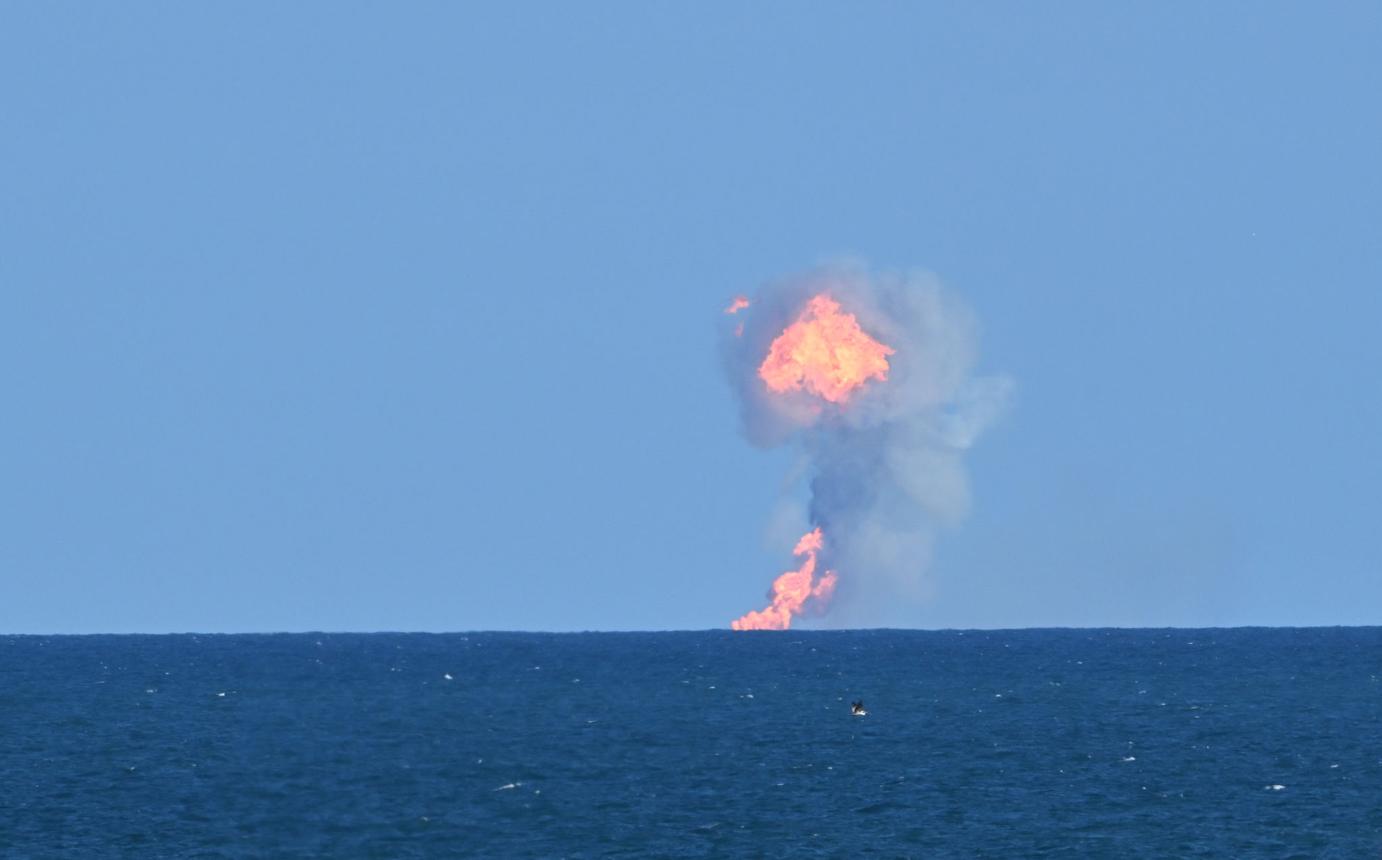
SpaceX’s Super Heavy booster exploded over the Gulf of Mexico after the company abandoned a planned tower catch during Starship Flight 15 from Starbase, Texas, on November 13. The booster was redirected away from the launch site and completed its landing sequence before exploding near the water, while SpaceX has not yet publicly disclosed exactly why the catch attempt was cancelled. Starship’s upper stage successfully reached orbit and deployed 26 next-generation Starlink satellites and remains scheduled to attempt its own return to Starbase on November 14 if engineers determine that its systems are healthy.
SpaceX’s massive Starship launch system delivered a dramatic mixture of success and failure during its 15th integrated flight test from Starbase, Texas, after the Super Heavy booster exploded over the Gulf of Mexico when a planned return to the launch tower was abandoned, even as the Starship upper stage successfully reached orbit and continued one of the company’s most ambitious missions yet. The rocket lifted off on Friday, November 13, 2026, with SpaceX attempting something it had never achieved before: recover both stages of the Starship system during the same mission, first by catching the returning Super Heavy booster with the launch tower’s giant mechanical arms and then, roughly 22 hours later, attempting the first tower catch of the orbital Starship spacecraft itself. The booster catch was called off minutes after launch, forcing the vehicle toward a contingency descent over the Gulf, where it completed its final approach before erupting in a large fireball.
Flight 15 lifted off from SpaceX’s Starbase complex in South Texas at approximately 4:47 p.m. local time, or 22:47 GMT, with all 33 Raptor 3 engines on the Super Heavy booster generating more than 18 million pounds of thrust. The early stages of the mission proceeded normally, with the rocket clearing the tower, climbing through the atmosphere and completing the hot-staging maneuver that separates the booster from the Starship spacecraft. Starship then continued toward orbit using its six Raptor engines while Super Heavy flipped around and began the series of maneuvers required to return toward the Texas coast.
SpaceX had intended to bring Super Heavy directly back to the launch site and capture it between the mechanical arms of its enormous launch tower, often referred to as the “chopsticks.” The company had previously demonstrated booster catches with earlier versions of Super Heavy, but Flight 15 represented the first planned tower recovery of the newer production configuration. The approach was considered a major test of SpaceX’s effort to make Starship rapidly reusable, because catching the booster directly at the launch tower eliminates the need for conventional landing legs or lengthy recovery operations at sea.
As Super Heavy approached the Texas coastline, however, SpaceX abandoned the catch attempt. The company redirected the booster away from Starbase and toward a designated area over the Gulf of Mexico, following the contingency plan built into the mission. SpaceX had not publicly disclosed the precise technical reason for the decision at the time of the latest reporting, and there was no immediate indication that the launch tower itself had suffered a problem. The company’s recovery rules require numerous conditions involving the rocket and ground systems to be satisfied before a booster is permitted to approach the tower, and failure to meet any of those criteria can trigger an automatic diversion.
The booster continued toward the Gulf and ignited its engines for the final landing sequence. Video from the test showed Super Heavy descending toward the water and appearing to slow significantly before the vehicle erupted in a large orange fireball close to the surface. Reuters reported that the booster briefly hovered before exploding above the water, while other accounts described the event as occurring during or immediately around the controlled splashdown sequence. The explosion created dramatic images visible from the South Texas coastline but did not prevent the upper stage from continuing the primary orbital portion of the mission.
The aborted tower catch was a disappointment for SpaceX because the company had designed Flight 15 around the possibility of recovering both Starship stages for the first time. Nevertheless, the outcome should not be confused with a total mission failure. Starship itself successfully reached low Earth orbit, representing another significant step in the evolution of a vehicle that only achieved its first true orbital mission during Flight 14 in September.
After reaching orbit, Starship began deploying 26 next-generation Starlink V3 satellites. The payload deployment is important because SpaceX increasingly intends to use Starship as a heavy-lift transportation system for the largest and most capable versions of its Starlink communications satellites. The company says the V3 spacecraft provide substantially greater communications capacity than the smaller satellites currently launched by Falcon 9 rockets, making Starship central to the future expansion of the Starlink network.
Flight 15 was designed as a long-duration mission rather than the relatively short suborbital tests that characterized the earlier stages of Starship development. SpaceX planned for the upper stage to complete approximately 14 full orbits of Earth and remain in space for more than 21 hours before beginning its return. That extended mission allows engineers to study vehicle performance over a much longer period and test systems that will eventually be required for reusable orbital operations.
The next major milestone is scheduled for Saturday, November 14, when the Starship upper stage is expected to attempt its own return toward Starbase. If SpaceX determines that the spacecraft’s propulsion, thermal protection, flight control and other critical systems remain healthy, controllers plan to command a deorbit burn that will send Starship back through Earth’s atmosphere toward South Texas.
The planned return is potentially even more important than the booster recovery attempt because SpaceX has never caught the Starship upper stage at the launch tower. Earlier Starship flights have generally ended with controlled ocean splashdowns or vehicle losses during testing, meaning a successful tower catch would represent one of the most significant breakthroughs in the program's history.
SpaceX has built several contingency points into the mission to prevent the spacecraft from attempting a dangerous return if engineers identify problems while it remains in orbit. At different stages of the flight, controllers can choose to abandon the Starbase return and direct Starship toward an ocean splashdown instead. The company has identified alternative areas in the Pacific and Gulf where the spacecraft can be safely disposed of if a tower catch is considered too risky.
That cautious approach reflects the complexity of returning a spacecraft from orbital velocity directly to a launch tower. Starship must survive temperatures of thousands of degrees during atmospheric re-entry, use its large aerodynamic flaps to control its descent and then restart its engines close to the ground before performing the final maneuver toward the catch arms. Any significant problem with the heat shield, engines or flight-control system could cause SpaceX to abandon the recovery attempt.
The booster explosion nevertheless highlights how difficult SpaceX’s reusability strategy remains. Super Heavy is taller and substantially more powerful than the Falcon 9 boosters SpaceX has routinely recovered for years, and its tower-catch system requires the returning rocket to approach with extraordinary accuracy. Unlike Falcon 9, which lands using deployable legs on concrete pads or autonomous ships, Super Heavy is designed to be captured directly by mechanical arms attached to its launch structure.
SpaceX views that approach as essential to achieving the extremely rapid turnaround times envisioned for Starship. Chief Executive Elon Musk has repeatedly said the company ultimately wants Starship to operate more like an aircraft than a conventional expendable rocket, with vehicles being caught, inspected, refueled and launched again without weeks or months of refurbishment. Such a system would significantly reduce the cost of placing large amounts of cargo into orbit if it can be made reliable.
The company has already demonstrated that tower recovery is technically possible. SpaceX achieved its first successful Super Heavy catch during Starship’s fifth flight test in October 2024, when the booster returned to Starbase and was captured between the tower arms. Additional successful catches followed, giving engineers confidence that the technique could eventually become routine.
Flight 15, however, involved a newer and more capable generation of the Super Heavy booster. The current design incorporates Raptor 3 engines and other structural and performance improvements intended to support heavier payloads and future orbital missions. Recovering the new booster configuration is therefore an important step before SpaceX can begin routinely reusing the hardware.
Earlier 2026 flights demonstrated why the development process remains challenging. During Flight 12 in May, Super Heavy was unable to ignite all planned engines during its boostback maneuver and ultimately suffered a hard splashdown in the Gulf. Starship still collected useful data during that mission, reinforcing SpaceX’s practice of treating developmental flights primarily as engineering experiments rather than conventional launch missions.
Flight 14 in September represented a major improvement. Starship reached orbit for the first time and successfully deployed 26 Starlink V3 satellites, demonstrating that the enormous rocket could begin performing practical payload missions while engineers continued working on full reusability. The Super Heavy booster on that mission was deliberately directed toward the Gulf rather than the launch tower as SpaceX tested its performance limits.
Flight 15 was intended to build directly on that progress by combining orbital payload delivery with unprecedented recovery objectives. The plan called for Super Heavy to return only minutes after launch while Starship completed its long orbital mission and returned to the same launch complex nearly a day later. If both catches had succeeded, SpaceX would have demonstrated the central architecture behind its vision of a completely reusable orbital transportation system.
The booster explosion means the first part of that double-recovery goal has already been lost. However, the second and potentially more difficult part remains possible while Starship continues orbiting Earth. Engineers will spend the hours before the planned return analyzing telemetry from the spacecraft, including the condition of its heat shield, propulsion systems and control surfaces.
Three of the Starlink satellites deployed during the mission are reportedly equipped with cameras intended to observe Starship after separation. Those images could help engineers inspect areas of the spacecraft that are difficult to monitor using onboard sensors alone, particularly its thermal protection system. Any significant damage could cause SpaceX to choose an ocean landing rather than risk bringing the vehicle close to populated facilities at Starbase.
The stakes extend far beyond SpaceX’s commercial satellite business. NASA has selected a modified version of Starship as the lunar lander intended to carry astronauts from lunar orbit to the surface under the Artemis programmed. The U.S. space agency has committed billions of dollars toward Starship development, making progress on reusability, orbital operations and in-space refueling important to America’s plans for returning humans to the Moon.
Starship is also central to Musk’s longer-term vision of transporting large numbers of people and cargo to Mars. The vehicle’s enormous internal volume and payload capacity are designed around missions requiring far more mass than existing rockets can economically deliver. Achieving that ambition, however, depends on technologies that remain under development, including orbital propellant transfer and repeated spacecraft reuse.
SpaceX has invested heavily in the programmed, expanding manufacturing facilities at Starbase and developing additional launch infrastructure in Florida. The company is also working toward a much higher launch cadence, which will require regulatory approval from the Federal Aviation Administration as well as continued improvements in vehicle reliability.
Every failure or anomaly therefore has potential regulatory consequences. The FAA can require SpaceX to conduct a formal mishap investigation when events raise public-safety concerns, and the agency has done so following previous Starship anomalies. Whether the Flight 15 booster explosion triggers additional regulatory review will depend on whether the vehicle remained within its approved safety corridor and whether any unexpected risk was created.
At the time of the latest reports, there were no indications of injuries or damage to members of the public. The booster was deliberately diverted over the Gulf after the catch was abandoned, consistent with procedures designed to keep a malfunctioning or uncertain vehicle away from the launch infrastructure and surrounding communities.
The incident also illustrates why SpaceX maintains conservative criteria for tower catches despite the dramatic appearance of the failure. Approaching the launch tower with a vehicle carrying residual propellant creates significant risk because an explosion near the structure could damage equipment required for future launches. Redirecting the booster toward the ocean sacrifices the vehicle but protects the tower and reduces potential danger.
SpaceX’s engineering philosophy has long accepted vehicle losses during development if the flights generate useful data. The company rapidly builds new hardware, tests it under increasingly demanding conditions and then incorporates lessons from failures into subsequent vehicles. This iterative approach differs from traditional aerospace programmed that often attempt to eliminate most risk before conducting flight tests.
The spectacular booster explosion therefore does not necessarily represent a major setback if engineers can determine why the catch conditions were not satisfied and correct the problem quickly. The more important question will be whether the issue involved a minor recovery criterion or a fundamental problem with the new booster’s propulsion, guidance or structural systems.
SpaceX has not yet provided a detailed technical explanation for the aborted catch. Until the company releases telemetry findings or a formal flight summary, claims about the precise cause should be treated cautiously. The visible explosion alone does not reveal why the tower approach was abandoned.
The success of the upper stage also remains an important counterpoint to the booster failure. Reaching orbit, deploying operational satellites and maintaining Starship for a long-duration mission demonstrates progress in areas that proved difficult during earlier flights. If the spacecraft also survives re-entry and reaches its planned recovery zone, Flight 15 could still become one of the most technically productive missions in the programmed.
A successful tower catch on November 14 would be historic. It would mark the first time SpaceX has returned the orbital Starship spacecraft directly to the launch site and would demonstrate a major component of the company’s fully reusable design. Even a controlled ocean splashdown after a successful re-entry would provide valuable engineering information if the tower approach is ultimately abandoned.
For now, the mission remains active. The images of Super Heavy exploding over the Gulf are the most dramatic moment so far, but they represent only one part of a test designed to last almost an entire day.
SpaceX’s Flight 15 has therefore become another example of the unusual nature of Starship development, where spectacular failures can occur alongside major technical achievements during the same mission. The booster was lost after its planned catch was abandoned, but Starship reached orbit and successfully began deploying one of the largest satellite payloads yet carried by the vehicle.
The ultimate assessment of the flight will depend heavily on what happens when the upper stage attempts to return to Earth. If Starship successfully completes its orbital mission and survives the return, SpaceX will have achieved several major milestones despite the booster loss. If the spacecraft is also captured by the tower, the mission could still produce the programmers most significant recovery breakthrough to date.
Until then, Flight 15 remains unfinished. The booster is gone, the first planned catch has failed and the cause of the diversion remains under investigation, but the Starship spacecraft continues circling Earth as SpaceX prepares for an even more difficult test: bringing an orbital-class spacecraft all the way back to Starbase and attempting to catch it between the same giant mechanical arms that were waiting for its booster only hours earlier.