STAR TREK AND X-MEN LEGEND PATRICK STEWART DIES AT 86 AFTER PRIVATE DEMENTIA BATTLE
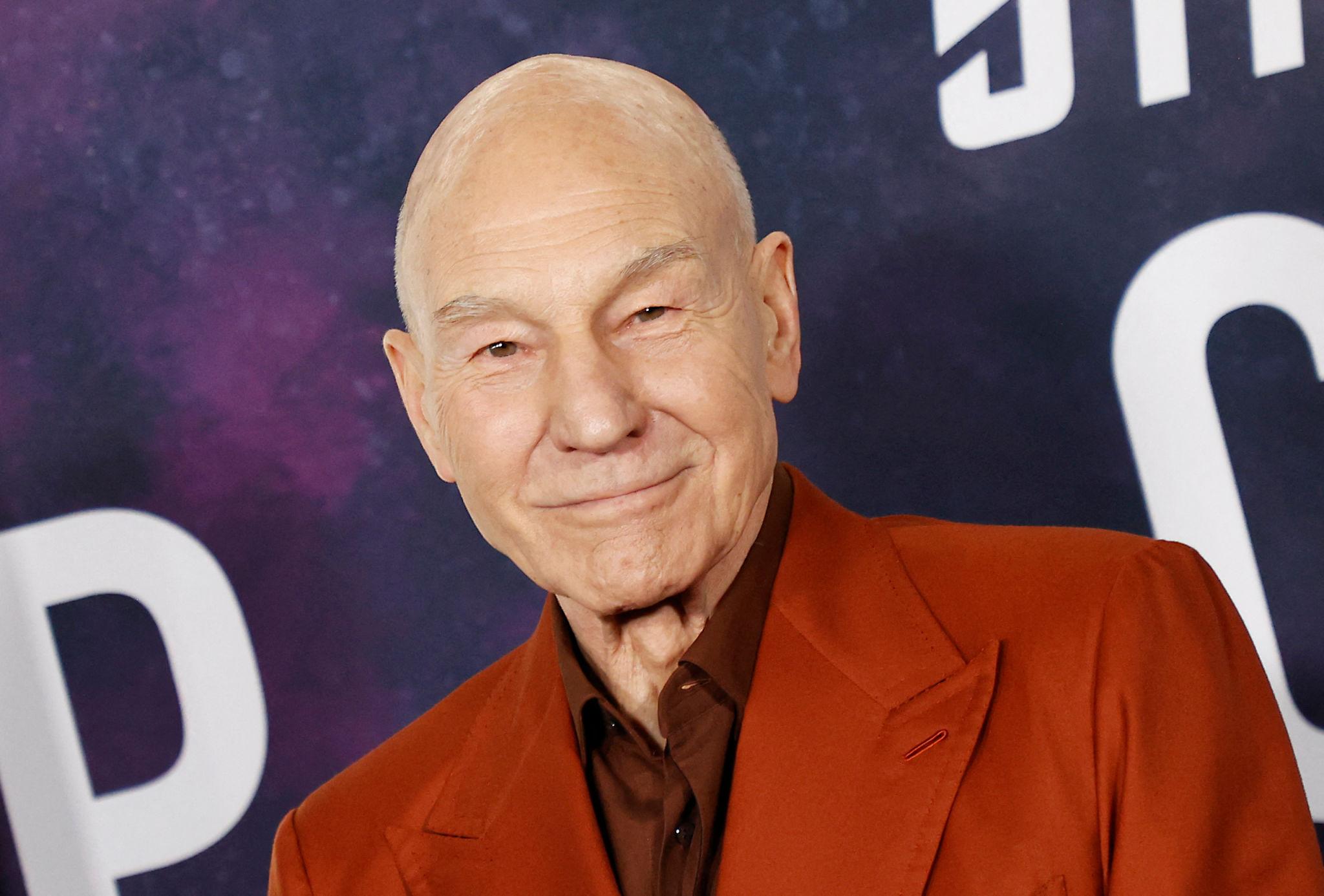
Sir Patrick Stewart, the celebrated British actor who portrayed Captain Jean-Luc Picard in Star Trek and Professor Charles Xavier in the X-Men franchise, has died at 86. His representative said Stewart died at his Los Angeles home on October 28 after a brief experience with Alzheimer’s disease and Lewy body dementia. His career spanned more than six decades across Shakespearean theatre, television and blockbuster cinema. Reuters
Sir Patrick Stewart, the acclaimed British actor whose commanding performances as Captain Jean-Luc Picard in Star Trek and Professor Charles Xavier in the X-Men franchise made him one of the most recognisable figures in modern science fiction and superhero cinema, has died at the age of 86. Stewart died on Wednesday, October 28, at his home in Los Angeles after what his family and representative described as a brief and private experience with Alzheimer’s disease and Lewy body dementia. His death brings to an end an extraordinary career spanning more than six decades across Shakespearean theatre, television, blockbuster films and voice acting, during which he successfully moved between the worlds of classical performance and global popular culture with a distinction achieved by relatively few actors.
Stewart’s longtime spokesperson, Kelly Bush Novak, confirmed his death, saying the actor spent his final period surrounded by family and friends and was cared for by his wife, singer-songwriter Sunny Ozell. His diagnoses had not previously been publicly disclosed, making Thursday’s announcement the first time many fans learned that the actor had been living with the neurological conditions. Tributes began appearing rapidly after confirmation of his death, reflecting the unusual breadth of a career that connected generations of theatre audiences, Star Trek fans, comic-book movie viewers and younger audiences who discovered him through later television and film appearances.
Although Stewart became internationally famous through Hollywood, his professional foundations were firmly rooted in the British stage. Born in Mirfield, Yorkshire, on July 13, 1940, he grew up in a working-class household and experienced a difficult childhood that he later discussed publicly with considerable candour. Stewart said acting became a refuge from instability at home, particularly from the domestic violence he witnessed involving his father and mother. He discovered Shakespeare as a young boy and developed an early fascination with performance that eventually took him from local theatre into formal dramatic training and, later, into some of Britain’s most prestigious theatrical institutions.
His career changed significantly when he joined the Royal Shakespeare Company during the 1960s. Stewart spent years performing major classical roles, developing the distinctive voice, controlled physical presence and dramatic discipline that would later become central to his screen persona. He appeared in productions of Shakespeare and other major playwrights and established himself as a respected stage actor long before international television audiences knew his name. Theatre remained central to his artistic identity throughout his life, even after the enormous commercial success of Star Trek and X-Men made it possible for him to focus exclusively on film and television.
The transformation from respected British stage actor to global television star came in 1987, when Stewart was cast as Captain Jean-Luc Picard in Star Trek: The Next Generation. He was 47 at the time and was not considered an obvious choice to lead a major American science-fiction franchise. The original Star Trek series had created a powerful cultural legacy around William Shatner’s Captain James T. Kirk, and The Next Generation faced the difficult task of building a new identity without simply repeating what had come before. Stewart’s performance became one of the principal reasons the new series succeeded.
As Picard, Stewart presented a fundamentally different type of television commander. His captain was thoughtful, disciplined and deeply committed to diplomacy, ethics and intellectual engagement. Rather than relying primarily on aggression or physical force, Picard often approached conflict through negotiation, reason and careful consideration of moral consequences. Stewart’s theatrical background allowed him to deliver lengthy philosophical dialogue with authority while still presenting Picard as emotionally complex and human, helping transform the character into one of science fiction television’s most enduring leaders.
Star Trek: The Next Generation ran for seven seasons and became a major international success, eventually producing a series of feature films involving its principal cast. Stewart continued playing Picard in Star Trek Generations, Star Trek: First Contact, Star Trek: Insurrection and Star Trek: Nemesis. First Contact in particular gave Stewart an opportunity to explore a more emotionally damaged version of the captain, showing how trauma connected to the Borg had affected a character usually defined by restraint and rational judgment.
Decades after The Next Generation ended, Stewart returned once again to the role in Star Trek: Picard. The streaming series examined the character in later life and allowed Stewart to explore aging, regret, mortality, friendship and the consequences of decisions made many years earlier. His return demonstrated how closely the actor and character had become associated while also introducing Picard to audiences who had not been alive when The Next Generation first appeared on television.
If Star Trek made Stewart a global television star, X-Men transformed him into a central figure in another major entertainment franchise. In 2000, he appeared as Professor Charles Xavier, the telepathic founder and leader of the X-Men. Fans immediately embraced the casting because Stewart closely resembled the comic-book character while also possessing the intelligence, authority and calm presence required to portray Xavier convincingly.
Professor Xavier became the second defining screen character of Stewart’s career. Like Picard, Xavier was a leader whose power came not simply from physical strength but from intellect, moral conviction and an ability to inspire loyalty. Xavier believed humans and mutants could coexist despite fear, discrimination and violence, placing him in ideological opposition to Ian McKellen’s Magneto. The philosophical conflict between the two characters became one of the central elements of the X-Men films, strengthened by the remarkable chemistry between Stewart and McKellen.
Their relationship on screen was complemented by a close friendship away from the cameras. Stewart and McKellen became widely known for their affection for each other, appearing together at public events and later sharing the stage in productions including Waiting for Godot and No Man’s Land. Their friendship became especially beloved among fans because two actors famous for playing ideological opponents in X-Men displayed such warmth and humour in real life.
Stewart returned as Xavier in several X-Men films, including X2, X-Men: The Last Stand, X-Men: Days of Future Past and Logan. His performance in Logan was particularly praised because it presented Xavier in a dramatically different condition from the dignified and powerful leader audiences had known. The film portrayed the character as elderly, physically vulnerable and suffering severe cognitive deterioration, allowing Stewart to give one of the most emotionally demanding performances of his film career.
The role has acquired additional poignancy following confirmation that Stewart himself later experienced Alzheimer’s disease and Lewy body dementia. His representative said the illnesses were part of a brief and private final period of his life, and there had been no previous public announcement that he was living with either condition. Stewart’s final film appearance is expected to come posthumously in Marvel Studios’ Avengers: Doomsday, in which he was scheduled to return as Professor Xavier alongside other veteran members of the X-Men cast.
Despite his association with two enormous franchises, Stewart consistently resisted being defined only by Star Trek and X-Men. His career encompassed an extensive range of stage performances, television projects, independent films and voice work. He performed Shakespeare throughout his career and received particular acclaim for roles including Macbeth, Claudius and Prospero, while also appearing in works by Samuel Beckett and Harold Pinter.
His one-man adaptation of A Christmas Carol became another important part of his stage career, with Stewart taking on numerous characters during the performance. The production demonstrated the breadth of his theatrical technique and served as a reminder that behind the science-fiction uniforms and superhero roles was an actor whose professional training had been shaped by some of the most demanding material in English theatre.
Stewart’s distinctive voice also became an asset in animation and comedy. He appeared in or provided voices for productions including American Dad!, Family Guy and numerous other television, film and video-game projects. His willingness to parody the serious image associated with Picard and Xavier became an increasingly popular feature of his later career, revealing a comedic personality that contrasted sharply with the gravitas of his most famous roles.
His contributions to drama were formally recognised in 2010 when Queen Elizabeth II knighted him for services to the performing arts. The honour reflected not simply his commercial success but the unusual range of his career, which connected the Royal Shakespeare Company with some of the largest entertainment franchises in the world.
Outside acting, Stewart became an outspoken campaigner against domestic violence. He frequently spoke about the abuse he witnessed during childhood and used his public profile to support organisations working with victims and survivors. He described the fear created by violence inside his family home and argued that society needed to take domestic abuse seriously rather than treating it as a private family matter.
Stewart also discussed his father’s military experiences and the psychological effects of war, reflecting on the possibility that trauma had contributed to destructive behaviour after his father returned home. His willingness to address those experiences publicly added a deeply personal dimension to his advocacy and made domestic violence prevention one of the issues most closely associated with his life outside acting.
His marriage to Sunny Ozell began in 2013, and the couple remained together until his death. Stewart had been married previously and had two children. His longtime friendship with McKellen continued to attract public attention, with the two men frequently appearing together and speaking affectionately about their relationship.
News of Stewart’s death prompted immediate tributes from actors, studios, colleagues and fans. Marvel Studios acknowledged his contribution to the X-Men franchise, while performers who had worked with him remembered not only his acting ability but also his professionalism, generosity and mentorship. Hugh Jackman, who played Wolverine alongside Stewart across several X-Men films, was among colleagues paying tribute as the entertainment industry reacted to the loss.
For Star Trek fans, Stewart’s death represents the loss of an actor who fundamentally shaped the franchise. Jean-Luc Picard became a symbol of an optimistic vision of leadership based on intelligence, diplomacy and ethical responsibility. His speeches, decisions and moral dilemmas remain some of the most discussed elements of Star Trek decades after many of the original episodes aired.
For X-Men audiences, Stewart’s Professor Xavier became similarly definitive. He portrayed a leader attempting to protect a persecuted community while refusing to abandon the possibility of coexistence, giving emotional weight to a franchise whose superhero battles frequently served as metaphors for prejudice and social exclusion.
There were striking similarities between Picard and Xavier, but Stewart gave each character a distinct identity. Both were intellectual leaders who preferred persuasion to violence, yet Picard operated through military discipline and institutional responsibility while Xavier was driven by a more personal mission to protect mutants and create a future in which they could live peacefully alongside humanity.
Stewart’s success in both roles showed how effectively he could project authority without relying on conventional action-star characteristics. He did not need to dominate a scene physically because his voice, posture and command of dialogue created authority almost immediately. That quality became one of his defining characteristics as a performer.
His path to international fame was also unusual because his biggest breakthrough came relatively late. Stewart was already approaching 50 when Star Trek: The Next Generation premiered, an age when many actors have already passed the period in which Hollywood traditionally expects major stardom to begin. Instead, the second half of his life became the period in which he achieved worldwide recognition.
By the time he first portrayed Professor Xavier in 2000, Stewart was nearly 60, yet the role opened another major phase of his career and introduced him to millions of younger viewers. He continued working into his eighties, demonstrating the longevity of a career built initially on classical theatre rather than celebrity.
The announcement that he had experienced both Alzheimer’s disease and Lewy body dementia adds a private final chapter to a life that became increasingly public after Star Trek. Both are progressive neurological conditions capable of affecting memory, cognition, behaviour and movement, although individuals can experience them differently. Stewart and his family chose not to publicly disclose his diagnoses while he was alive, allowing him to spend his final period away from intense public scrutiny.
His death at 86 closes a career that travelled an extraordinary distance from working-class Yorkshire to the stages of the Royal Shakespeare Company, the command deck of the USS Enterprise and the fictional halls of Xavier’s school for mutants. His performances reached audiences who may never have watched Shakespeare as well as theatre lovers who may never have considered themselves fans of science fiction or superhero films.
That ability to cross cultural boundaries helps explain the scale of the reaction to his death. Stewart belonged simultaneously to British theatrical tradition and global entertainment culture. He could perform Macbeth before a demanding theatre audience and then appear in a multimillion-dollar science-fiction production without treating either form as less serious than the other.
His body of work will continue through recordings, television episodes and films watched by generations who were not alive during the height of his career. Captain Jean-Luc Picard remains one of Star Trek’s most recognisable characters, while Professor Charles Xavier remains inseparable from the first generation of X-Men films that helped establish the modern superhero era.
Yet Stewart’s legacy extends beyond those franchises. His theatre career, advocacy against domestic violence, mentorship of younger performers and willingness to discuss difficult personal experiences contributed to a public life that was considerably broader than his two most famous characters.
Sir Patrick Stewart died at his Los Angeles home on October 28, 2026, surrounded by those closest to him. He leaves behind more than six decades of performances and two characters that permanently changed the way millions of people understood him, but the career behind Captain Picard and Professor Xavier was considerably richer than either role alone. From Shakespearean stages to some of the largest franchises in entertainment history, Stewart built a body of work defined by intelligence, discipline, humour and an unmistakable presence that made him one of the most distinctive British actors of his generation.