
SUDANESE POUR INTO CHAD AT 20 TIMES NORMAL RATE AS UN WARNS AID IS RUNNING OUT
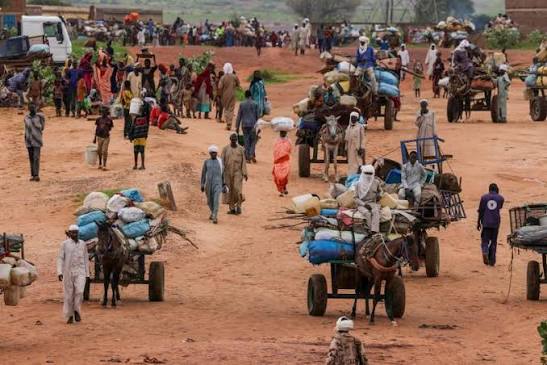
More than 400 Sudanese refugees are crossing into Chad every day, around 20 times the rate recorded in recent months, as fighting, drone attacks and worsening humanitarian conditions drive civilians from Sudan. UNHCR says it has received only 18% of the $1.6 billion needed to respond to the crisis this year.
The number of Sudanese fleeing into neighboring Chad has surged roughly twentyfold as renewed fighting, aerial bombardments and worsening humanitarian conditions force hundreds of civilians across the border every day, the United Nations refugee agency has warned.
More than 400 people a day crossed into eastern Chad over the past week, approximately 20 times the number recorded in recent months, according to the United Nations High Commissioner for Refugees.
The sudden acceleration is placing additional pressure on an already overstretched humanitarian operation struggling with severe funding shortages.
UNHCR says it has received only 18% of the $1.6 billion it requires this year to respond to the Sudan refugee crisis.
The funding gap means humanitarian agencies have fewer resources to provide food, shelter and transportation for people arriving after fleeing one of the world's most severe humanitarian emergencies.
Mamadou Dian Balde, UN Regional Refugee Coordinator for the Sudan Situation, said refugees arriving in Chad were escaping multiple forms of violence.
“They flee the conflict, they flee the aerial bombardments, they flee the drone attacks,” he told reporters in Geneva via video link from Nairobi.
The latest arrivals are fleeing Sudan's Darfur, Kordofan and Blue Nile regions, where fighting between the Sudanese Armed Forces and the paramilitary Rapid Support Forces has continued.
The war between the two forces began in April 2023 following a breakdown in relations between army chief General Abdel Fattah al-Burhan and RSF commander Mohamed Hamdan Dagalo, widely known as Hemedti.
More than three years later, the conflict has devastated large parts of Sudan.
UN estimates indicate that as many as 14 million people have been displaced during the war.
Agricultural production has been severely disrupted, infrastructure damaged and large sections of the country's economy devastated.
Drought and other difficult environmental conditions are adding to the pressure forcing people from their homes.
Chad has become one of the most important destinations for Sudanese escaping the conflict.
Nearly one million Sudanese refugees have crossed into the country since fighting began in April 2023.
UNHCR data recorded more than 938,000 Sudanese refugees in Chad by late July, with the overwhelming majority concentrated in eastern regions close to the Sudanese border.
More than 55,000 additional refugees have arrived so far this year.
The latest surge means humanitarian agencies are now confronting a rapidly growing population at precisely the moment their financial resources are becoming increasingly constrained.
UNHCR says only 18% of its $1.6 billion funding requirement for the year has been received.
The consequences are already affecting the assistance available to refugees.
“It means less food. It means less capacity for people to be relocated to safer areas. It means less capacity to shelter themselves,” Dian Balde said.
The shortage of funding is particularly concerning because many refugees arrive in Chad after travelling through conflict zones with few possessions and limited access to food, healthcare or money.
Humanitarian agencies must provide emergency shelter, clean water, sanitation, healthcare and protection before refugees can be transferred from border areas to more established settlements.
With arrivals increasing dramatically, those resources are being stretched further.
The crisis also extends beyond Chad and Sudan.
UNHCR warned that prolonged shortages of food, shelter and protection could encourage some refugees to continue moving in search of safety.
The agency said its analysis showed that some Sudanese refugees eventually attempt journeys toward Europe after repeatedly failing to secure stable living conditions elsewhere.
That means the consequences of insufficient humanitarian assistance in Chad could eventually extend far beyond the immediate border region.
The Sudan conflict has already produced one of the largest displacement emergencies in the world.
Millions have been displaced internally while others have crossed into Chad, Egypt, South Sudan and neighboring countries.
Eastern Chad has absorbed an especially large share.
UNHCR data show that most Sudanese refugees entering Chad have settled or been registered in Ouaddaï, Wadi Fira, Sila and Ennedi Est.
Many of those regions were already facing development and humanitarian challenges before the latest refugee crisis.
The sudden twentyfold increase in daily arrivals now threatens to place even greater pressure on host communities and humanitarian services.
International aid organizations are simultaneously confronting a broader funding crisis.
UNHCR and other humanitarian agencies have faced substantial reductions in foreign assistance from major donor countries over the past year.
That has forced agencies to reduce programme even as humanitarian needs continue to grow in Sudan and elsewhere.
The result is an increasingly dangerous imbalance.
More people are arriving.
The conflict driving them from their homes continues.
But the resources available to receive them are shrinking.
For Sudanese families reaching Chad, crossing the border may provide temporary escape from fighting and bombardment.
It does not guarantee food, shelter or long-term security.
And with more than 400 people now arriving every day, the United Nations is warning that without significantly greater international support, the humanitarian system receiving them may simply not have enough resources to keep pace.