

SUPREME COURT ALLOWS TRUMP ADMINISTRATION TO RESUME THIRD COUNTRY DEPORTATIONS
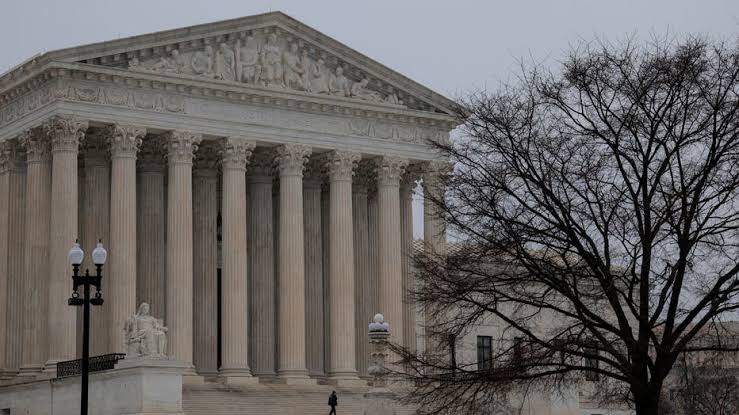
The U.S. Supreme Court has temporarily allowed President Donald Trump's administration to resume deporting migrants to countries other than their own without first providing the opportunity required by a lower court to demonstrate the dangers they could face there. The decision puts a lower court restriction on hold while the Supreme Court prepares to hear arguments over the policy in December.
The U.S. Supreme Court has allowed President Donald Trump's administration to resume deporting migrants to countries other than their own without first providing the opportunity required by a lower court for them to demonstrate that they could face persecution, torture or other serious harm in those destinations.
The decision represents a significant development in the administration's immigration enforcement campaign and restores, for now, a tool that federal authorities have used to accelerate removals.
The Supreme Court granted an emergency request from the Justice Department to put on hold a ruling by U.S. District Judge Brian Murphy in Boston that found the Department of Homeland Security's third country deportation policy unlawful.
The Supreme Court's decision is temporary.
The justices have agreed to hear arguments in the case in December, meaning the broader legal dispute over the policy has not yet been finally resolved.
WHAT THE SUPREME COURT DECIDED
The dispute concerns the government's ability to deport migrants to countries other than their countries of origin.
Under the lower court order, migrants facing removal to a third country were required to receive notice and a meaningful opportunity to raise concerns that they could face persecution, torture or other serious dangers there.
The Trump administration challenged those restrictions, arguing that they interfered with the government's authority to carry out deportations.
On Tuesday, the Supreme Court granted the administration's request to suspend the lower court's restrictions while the case proceeds.
That means third country deportations can resume under the administration's policy while the justices consider the underlying legal questions.
The court's three liberal justices, Sonia Sotomayor, Elena Kagan and Ketanji Brown Jackson, would have denied the administration's request.
THOUSANDS ALREADY DEPORTED UNDER POLICY
The policy has already been used extensively.
According to a tally by human rights groups cited by Reuters, more than 25,000 migrants have been deported to 29 countries under the policy since it was implemented last year.
The majority were sent to Mexico.
Other third country removals have involved destinations including El Salvador, Libya and South Sudan.
The administration has defended the practice as part of its wider effort to accelerate removals of migrants who have final deportation orders but cannot easily be returned to their countries of origin.
HUMAN RIGHTS GROUPS RAISE CONCERNS
The policy has faced strong opposition from immigration advocates and human rights organizations.
Plaintiffs challenging the government told the courts that migrants could be exposed to persecution, torture, detention or other serious harm if removed to countries where they have no meaningful ties.
They have also alleged that some people sent to third countries were subsequently transferred back to their countries of origin despite previously receiving U.S. protection from being returned there.
More than a dozen United Nations human rights experts have also urged the United States to halt third country deportation policies that they say could place vulnerable migrants at increased risk of abuse.
The Trump administration disputes the legal arguments made by opponents of the policy and maintains that federal immigration law gives the government authority to carry out third country removals.
FINAL LEGAL BATTLE STILL AHEAD
The Supreme Court's intervention does not end the case.
The justices are scheduled to hear arguments in December on significant questions surrounding the government's deportation authority, the rights available to migrants facing third country removal and the ability of federal courts to restrict the policy.
The case could ultimately produce a major Supreme Court ruling defining how much procedural protection migrants must receive before the United States sends them to countries other than their own.
Until then, Tuesday's order allows the Trump administration to resume the practice while the legal battle continues.