SUPREME COURT HALTS PROMOTION OF 40 POLICE CHIEF INSPECTORS AS IGP APPEAL DEEPENS YEARS LONG DISPUTE
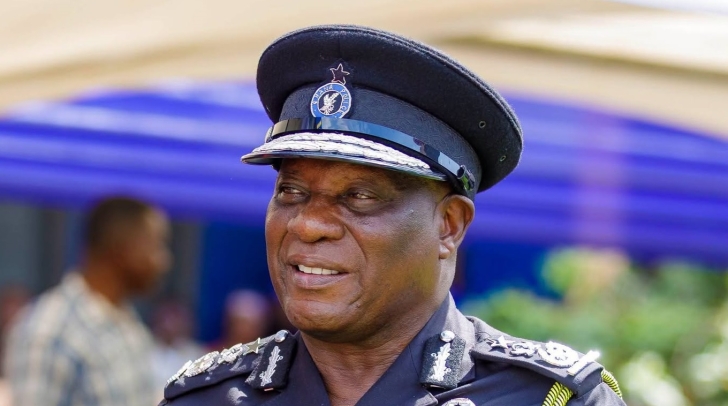
The Supreme Court has stayed a Court of Appeal judgment ordering the promotion of 40 Ghana Police Service Chief Inspectors to Assistant Superintendent of Police while the IGP challenges the ruling. The dispute dates to a 2021 special promotion arrangement from which the officers say they were unfairly excluded. The Supreme Court said implementing the promotions now could create greater administrative disruption if the IGP eventually wins, while the officers can have their promotions backdated if the appeal fails.
Ghana’s Supreme Court has temporarily halted the promotion of 40 police Chief Inspectors to the rank of Assistant Superintendent of Police, suspending a Court of Appeal judgment that had ordered the Ghana Police Service to elevate the officers after they were excluded from a special promotion arrangement. The stay, granted on October 14 by a five-member panel presided over by Justice Gabriel Scott Pwamang, means the officers will remain at their current ranks while the Inspector-General of Police’s appeal is determined, extending a legal battle that has run through the High Court, Court of Appeal and now the country’s highest court.
The dispute centers on Chief Inspector Christopher Okpattah and 39 other officers who challenged their exclusion from a special promotion exercise linked to a 2021 amnesty granted by the Police Management Board. Under that arrangement, officers enlisted between December 2008 and 2020 who had obtained first degrees while serving were considered for advancement, including entry into higher ranks. The 40 officers argued that they satisfied the relevant conditions but were left out while some colleagues, including officers they said were junior to them, benefited from the program.
Their complaint eventually reached the High Court in Kumasi, where they sought orders compelling the Police Service and the Inspector-General of Police to promote them. The High Court dismissed the action, leaving the officers without the relief they sought. They then appealed, and the Court of Appeal overturned that decision earlier this year, directing the relevant police authorities to correct what it found to be the error that had led to the officers’ exclusion.
The Court of Appeal’s ruling required the Police Council, the Inspector-General of Police and the Police Appointment and Promotion Advisory Board to take steps to promote the officers and grant them the associated benefits. According to earlier court reporting, the appellate court’s decision also gave the authorities a period within which the promotions were expected to be implemented. The officers subsequently complained that the Police Service was still requiring them to sit a competitive examination for entry into the Police Academy, a condition their lawyers argued contradicted the substance of the appellate judgment.
That disagreement intensified the dispute. In February, the officers petitioned the Deputy Attorney-General after a Police Service signal reportedly listed them among Chief Inspectors expected to sit a competitive promotional examination. Their lawyers maintained that requiring them to take the examination effectively reintroduced the same disadvantage the Court of Appeal had ordered the authorities to correct. The Police Service, however, continued to defend its promotion framework, including the broader principle that advancement into senior ranks should follow established procedures.
The latest Supreme Court decision does not determine whether the 40 officers are ultimately entitled to promotion. Instead, it pauses the implementation of the Court of Appeal judgment while the substantive appeal is considered. That distinction is important because the Supreme Court has not yet reversed the appellate court’s ruling. It has simply decided that the promotions should not be carried out before the legal challenge to that ruling is concluded.
At the hearing, Senior State Attorney Akapawari Atindam relied on the affidavit filed in support of the application for a stay of execution. The Supreme Court considered the competing inconvenience that could arise depending on whether the promotion order was implemented immediately or suspended. The court concluded that carrying out the promotions before the appeal was decided could create greater administrative difficulty if the IGP later succeeded in overturning the Court of Appeal judgment.
The court also considered the position of the affected officers, including the argument that some were approaching retirement and could lose the practical benefit of promotion if the appeal took too long. Counsel for the Police, Henry Ohene Kumi, acknowledged that concern, but the court ultimately decided that the officers would suffer less prejudice from a temporary delay than the Police Service could face if it were required to implement the promotions and later reverse or restructure them.
The Supreme Court said that if the IGP’s appeal ultimately fails, the officers’ promotions can be backdated to the date of the Court of Appeal judgment. That reasoning became central to the decision to grant the stay because it provided a mechanism for restoring the officers’ financial and professional entitlements if they eventually win the case.
The judges therefore granted the application and suspended execution of the Court of Appeal judgment pending the final determination of the IGP’s appeal. The immediate effect is that the 40 Chief Inspectors will not be promoted to Assistant Superintendent of Police for now, even though they currently have an appellate court judgment in their favor.
The legal dispute has become particularly significant because it touches on a sensitive and longstanding issue within the Ghana Police Service: how promotion opportunities are administered and whether officers in similar circumstances are treated consistently. The 40 officers have argued that they were unfairly excluded from a program that benefited colleagues with comparable qualifications and service histories. Their case therefore goes beyond an individual promotion dispute and raises questions about administrative fairness, equal treatment and the extent of managerial discretion within the Service.
The Police Service has separately emphasized that promotions should be merit based and conducted under established regulations. Earlier this year, IGP Christian Tetteh Yohuno told Chief Inspectors preparing for competitive promotion examinations that candidates would have to meet the required pass mark and that the process would be based on performance. That position reflects the Service’s broader insistence that advancement should follow formal criteria rather than political or personal influence.
The Police Service Regulations, 2012, Constitutional Instrument 76, provide several routes through which promotions can occur, including examination, seniority and length of service, subject to satisfactory performance and good conduct, as well as special recommendation for exceptional acts or outstanding performance. The legal controversy involving the 40 officers turns on how the earlier amnesty and special promotion exercise interacted with those ordinary rules and whether the affected Chief Inspectors were wrongly denied the same treatment offered to others.
Promotion disputes have remained an important internal management issue for the Police Service. In the first six weeks of 2026 alone, more than 12,800 police officers were promoted as the current administration worked through a backlog that in some cases stretched back several years. Those promotions ranged from Lance Corporal to Chief Inspector and included administrative promotions, special recommendations and cases where officers had previously complained of long delays or unfair treatment.
The current administration has also made a series of senior promotions. In October, 22 Assistant Commissioners of Police were elevated to Deputy Commissioner of Police following recommendations by the Police Council and presidential approval. The Service said those officers had generally served at the ACP rank for at least four years and were promoted in recognition of their work, dedication and contributions to policing.
Against that backdrop, the case of the 40 Chief Inspectors stands out because their promotion claim is being determined through litigation rather than ordinary internal processes. The officers have already succeeded once before the Court of Appeal after losing at the High Court, but the IGP’s decision to challenge that ruling has now moved the final determination to the Supreme Court.
The case also presents a broader legal question over how courts should intervene in administrative decisions involving security institutions. While courts have authority to review decisions alleged to be unlawful, unfair or discriminatory, police authorities also retain institutional responsibilities over rank structures, training, examinations, postings and command. The Supreme Court’s eventual judgment is therefore likely to be closely watched for guidance on how those competing principles should be balanced.
For the officers, the practical stakes are considerable. Promotion from Chief Inspector to Assistant Superintendent of Police represents movement from the senior inspectorate ranks into the commissioned officer structure, with implications for salary, authority, pension calculations, career progression and retirement benefits. For officers nearing retirement, delay can significantly reduce the period during which they would actually serve at the higher rank.
That concern was raised before the Supreme Court when counsel pointed out that some of the respondents could retire before the appeal is determined. The court nonetheless concluded that backdating any eventual promotion would offer an adequate remedy if the officers ultimately prevail. Whether that fully compensates officers who may lose opportunities associated with actually serving in the higher rank remains part of the practical tension surrounding the case.
For the Police Service, immediate implementation could create a different set of problems. If the 40 officers were promoted now and the Supreme Court later ruled that the Court of Appeal was wrong, the Service could be confronted with difficult questions over rank reversal, pay, seniority, command assignments and the status of decisions taken by officers while serving at the higher rank. The Supreme Court’s stay effectively preserves the current administrative position until those legal issues are settled.
The ruling therefore represents a temporary victory for the IGP and the Attorney-General, but it should not be interpreted as a final defeat for the officers. A stay of execution is an interim order. The Supreme Court has not yet determined the merits of the appeal or ruled that the Court of Appeal was wrong to order the promotions.
The substantive appeal will now determine whether the appellate court properly interpreted the officers’ rights under the special promotion arrangement and whether the Police Service was legally obliged to promote them without requiring the competitive examination ordinarily associated with entry into the Police Academy. That decision could have implications beyond the 40 officers if other personnel claim to have been similarly affected by past promotion exercises.
For now, the Supreme Court has chosen to preserve the status quo rather than allow promotions that could later have to be undone. The 40 Chief Inspectors remain in their current ranks, while the IGP’s appeal proceeds and the Court of Appeal’s promotion order remains suspended.
The next decisive development will come when the Supreme Court hears and determines the substantive appeal. If the IGP succeeds, the Court of Appeal order compelling the promotions could be overturned. If the appeal fails, the officers would remain entitled to the promotions ordered by the appellate court, with the Supreme Court indicating that their elevation could be backdated so they receive the benefits associated with the delayed advancement. Until that ruling is delivered, one of the Ghana Police Service’s most closely watched internal promotion disputes remains unresolved.