SWEDEN’S FORMER NATIONAL SECURITY ADVISER FOUND GUILTY OF MISHANDLING CLASSIFIED INFORMATION AFTER LEAVING SECRET DOCUMENTS AT HOTEL
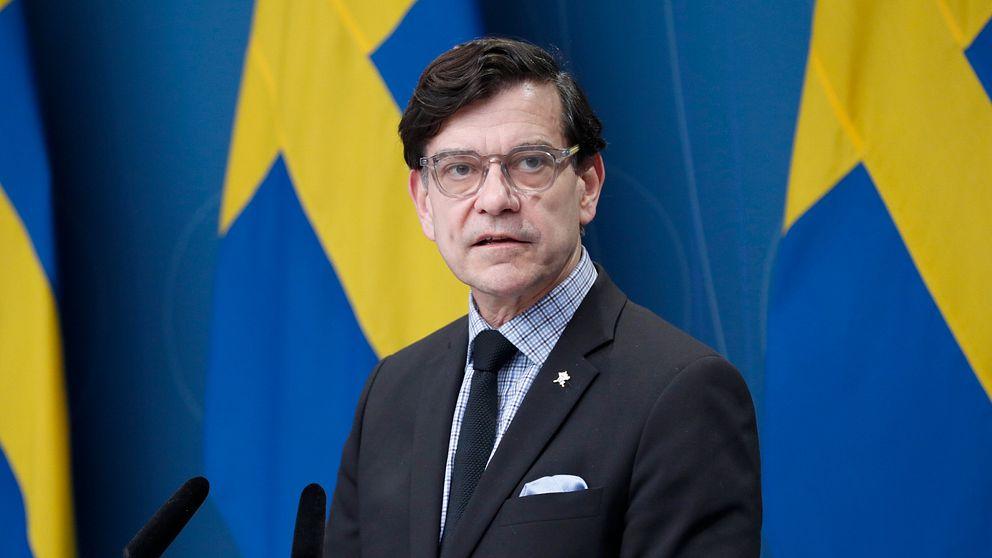
Sweden’s Svea Court of Appeal has convicted former national security adviser Henrik Landerholm of gross negligence in his handling of classified government information, overturning an earlier acquittal. The case concerned secret documents that Landerholm left behind in a safe-deposit box at a hotel or conference facility in 2023. A lower court had found him negligent but ruled that the conduct was not sufficiently serious for criminal conviction. The appeals court reached the opposite conclusion and fined him 52,000 Swedish kronor, approximately $5,247. Landerholm has denied criminal wrongdoing and stepped down from his government position in January 2025.
A Swedish appeals court has found former national security adviser Henrik Landerholm guilty of mishandling classified information, overturning an earlier acquittal in a case that has drawn intense scrutiny because of his former position at the centre of Sweden’s national security establishment. The Svea Court of Appeal in Stockholm ruled on Monday, October 19, that Landerholm had acted with gross negligence when sensitive government documents were left behind at a hotel in 2023. The court imposed a fine of 52,000 Swedish kronor, equivalent to approximately $5,247 at current exchange rates, after concluding that the circumstances went beyond the level of ordinary carelessness accepted by the lower court.
The case centred on classified documents Landerholm had stored in a safe-deposit box while attending an event at a hotel or conference facility in 2023. When he left the location, the documents remained behind rather than being returned to secure government custody. The papers were subsequently discovered, triggering questions about how highly sensitive material could have been left outside secure government premises by the official responsible for advising Sweden’s political leadership on national security.
The Svea Court of Appeal reached a different conclusion from Attunda District Court, which had previously acquitted Landerholm. The lower court accepted that he had been negligent but found prosecutors had not proved the degree of gross negligence required for criminal liability under the relevant secrecy law. The appeals court disagreed, concluding that his failure to ensure the safe-deposit box had been properly emptied amounted to sufficiently serious carelessness to justify conviction.
In explaining its decision, the appeals court said the only reasonable explanation for the documents being left behind was that Landerholm had been particularly careless when clearing the secure box in which he had stored them. The judges concluded that the information contained in the papers had effectively been exposed through gross negligence, even though prosecutors did not accuse Landerholm of deliberately attempting to provide secret information to an unauthorised person.
That distinction is important to understanding the case. Landerholm was not convicted of espionage, intentionally leaking documents or working on behalf of a foreign power. The offence concerned the negligent handling of secret government information and whether his conduct was sufficiently serious to cross the line from an administrative or professional failure into a criminal offence.
The appeals court decided that it was. That finding is particularly significant because Landerholm was not an ordinary government employee. He served as Sweden’s first national security adviser, a position created to strengthen coordination of security policy at the highest levels of government. Someone holding that office would be expected to work routinely with highly sensitive material concerning national defense, foreign affairs, intelligence and the country’s wider security environment.
Landerholm has maintained his innocence throughout the proceedings. He pleaded not guilty and argued against the prosecution’s characterisation of his conduct as grossly negligent. His lawyer was not immediately available to Reuters for comment after Monday’s ruling, while Landerholm himself had not immediately responded to a request for comment when the decision was published.
The legal controversy contributed to Landerholm stepping down from his position in January 2025 after the investigation became public. His resignation ended a relatively short but politically important period as national security adviser and intensified questions about the judgment involved in appointing him to such a sensitive position.
Landerholm was also a longtime friend of then-Prime Minister Ulf Kristersson, which gave the case a political dimension beyond the courtroom. Critics questioned whether personal connections had played too significant a role in his appointment, while the government defended the institutional arrangements surrounding the national security adviser’s office. The controversy became particularly uncomfortable for Kristersson because it involved a trusted adviser responsible for precisely the kind of security discipline that the incident appeared to undermine.
The case unfolded during a period of heightened security anxiety across northern Europe. Russia’s full-scale invasion of Ukraine in 2022 transformed the strategic environment around the Baltic Sea and contributed directly to Sweden abandoning more than two centuries of military non-alignment. Sweden formally joined NATO in March 2024, placing greater emphasis on intelligence protection, military readiness and the secure handling of classified material shared between allies.
That context helps explain why the case attracted attention far beyond the relatively modest size of the eventual fine. Mishandling classified information by a senior security official would be serious under any circumstances, but it carried additional sensitivity as Sweden was integrating more deeply into NATO security structures and adjusting to what government officials repeatedly described as a more dangerous regional environment.
Classified documents can contain material ranging from operational assessments and diplomatic communications to intelligence reporting and planning assumptions. Swedish authorities have not publicly disclosed all of the contents of the documents involved in Landerholm’s case, which is unsurprising given that the information itself was protected. The legal issue therefore focused more heavily on how the material was handled and exposed than on publicly revealing what the papers contained.
Swedish reporting has indicated that at least some of the documents concerned sensitive government discussions and meetings. Because the information was classified, media organisations and courts have necessarily been limited in how much detail they can publish. That secrecy also means the public must rely heavily on the courts’ assessment of the potential seriousness of the exposure.
The appeals court’s ruling suggests that the judges believed the circumstances created a level of risk that a person in Landerholm’s position should have understood and prevented. Secure handling procedures exist precisely because even accidental exposure can allow unauthorised individuals to see information that could damage state interests if disclosed more widely.
The court did not need to establish that a foreign intelligence service actually obtained the documents in order to find him guilty of negligent handling. The offence concerns the failure to protect the information adequately, rather than requiring prosecutors to prove that the lapse ultimately resulted in espionage or measurable harm.
This principle is central to classified-information systems in many countries. Security procedures are designed around preventing opportunities for unauthorised access before damage occurs. Officials who handle sensitive documents are therefore expected to maintain custody, use approved storage systems and verify that material has been removed or secured before leaving a location.
Landerholm’s failure to clear the safe-deposit box became the decisive fact in the appellate court’s reasoning. Where the district court viewed the incident as negligence that did not reach the criminal threshold, the Svea Court of Appeal considered the degree of carelessness too serious given the nature of the documents and the responsibilities attached to his office.
The reversal demonstrates the role appeals courts play in reviewing both legal interpretation and assessments of criminal responsibility. An acquittal at first instance does not necessarily end a case if prosecutors believe the lower court applied the legal threshold incorrectly or reached a conclusion that should be reconsidered.
Swedish prosecutors appealed after the initial acquittal, arguing that the conduct should qualify as criminally negligent handling of secret information. Monday’s ruling vindicated that position, although the relatively limited financial penalty indicates that the case remained fundamentally about negligence rather than deliberate disclosure.
The fine of 52,000 kronor is approximately $5,247 using the exchange rate cited by Reuters on October 19. The financial penalty itself is unlikely to be the most consequential part of the judgment for Landerholm. The more significant outcome is the formal criminal conviction attached to the mishandling of classified information while he occupied one of Sweden’s most sensitive government posts.
The ruling could still carry legal consequences if Landerholm attempts to pursue the matter further. Sweden’s Supreme Court generally hears cases only when they raise issues important for legal precedent or when there are exceptional reasons for review. Reuters had not reported an immediate announcement from Landerholm or his lawyer confirming that a further appeal would be filed.
Until such a move is made and accepted for review, the Svea Court of Appeal judgment stands as the operative decision. The court’s ruling therefore replaces the earlier acquittal and establishes criminal responsibility unless overturned by a higher court.
The case has also renewed attention on the creation of Sweden’s national security adviser position. Landerholm was the first person to hold the office after Kristersson’s government established it as part of efforts to strengthen strategic coordination inside the Prime Minister’s Office. The intention was to create a senior official capable of bringing together information from security, foreign policy, defense and intelligence institutions.
Such positions are common in several Western governments, although their precise powers differ. In the United States, for example, the national security adviser serves as one of the president’s principal coordinators of foreign and security policy. Sweden’s model was newer and developed at a time when the government was placing greater emphasis on national resilience, NATO cooperation and protection against foreign influence operations.
Landerholm had significant public-sector experience before taking the role. He had served as a member of parliament, worked in government institutions and held senior positions connected to security and defense. That background made the classified-document incident especially striking because critics argued he should have been highly familiar with security procedures.
The controversy was not the first time questions had been raised about his handling of sensitive material and official equipment. Swedish media previously reported other incidents involving government property and security practices, contributing to growing political pressure before his eventual resignation. Those earlier controversies formed part of the public debate around his judgment but were separate from the specific criminal charge decided by the appeals court on October 19.
The judicial ruling therefore needs to be distinguished from the broader political criticism surrounding Landerholm. The appeals court convicted him for the specific handling of documents left behind in 2023. It did not issue a general judgment on every controversy associated with his period in office.
The timing also places the ruling within a changing Swedish political environment. Reuters reported that Kristersson had submitted his resignation after his right-wing government lost its parliamentary majority in Sweden’s September 2026 general election. He remained in charge of a caretaker administration while negotiations continued over the formation of a new government.
That means the Landerholm verdict arrives when the government already faces a political transition. Although the court case concerns conduct from several years earlier, it remains connected in public discussion to Kristersson because of their friendship and because Landerholm was appointed under his administration.
The legal judgment should nevertheless be understood independently from party politics. The appeals court’s task was to determine whether Landerholm’s handling of classified information met the legal threshold for conviction, not to evaluate Kristersson’s government or Sweden’s broader political direction.
The court’s conclusion was that the threshold had been met. Its reasoning focused on the fact that classified material was left in a safe-deposit box and that the circumstances demonstrated a degree of negligence serious enough to expose the protected information unlawfully.
For Swedish security institutions, the decision may reinforce the message that seniority does not reduce responsibility for information security. Officials with greater access to secret material carry correspondingly greater obligations to protect it, particularly when documents leave secure government buildings for official travel or meetings.
The practical lessons extend to basic procedures that can appear mundane but are critical in intelligence and national security work. Documents must be logged, transported securely, stored in authorised locations and physically checked before an official departs. A single overlooked file can become a security incident regardless of whether the mistake was intentional.
The ruling also highlights the difference between intention and responsibility. Landerholm did not need to intend to reveal the information for his conduct to become criminal. The appeals court determined that the level of carelessness itself was sufficient because of what was at stake.
That principle may have broader relevance for other Swedish officials who work with protected material. Security laws would lose much of their preventive effect if punishment applied only after officials intentionally passed secrets to unauthorised recipients. Gross negligence provisions create accountability for serious failures that expose information even when malicious intent is absent.
At the same time, the difference between ordinary and gross negligence remains legally important. The district court believed Landerholm had been careless but had not crossed that higher threshold. The appeals court’s disagreement shows that determining when a mistake becomes criminal can depend heavily on context, responsibility and the sensitivity of the material involved.
In Landerholm’s case, his role appears to have weighed heavily in the assessment. A national security adviser cannot reasonably be held to the same expectations as someone with little experience handling classified documents. His professional responsibilities made the failure to secure the material more difficult for the court to treat as an ordinary mistake.
The case therefore provides an unusual example of a senior national-security official facing criminal punishment not for deliberately revealing secrets but for failing to protect them properly. That makes it relevant to wider debates about institutional security culture and how governments hold senior officials accountable when internal safeguards fail.
Sweden’s NATO membership adds another layer of importance. Alliance members routinely exchange sensitive information, and partners depend on one another to maintain reliable security standards. A country’s credibility within intelligence and defense networks depends partly on demonstrating that classified material is handled carefully and that violations are taken seriously.
There is no indication that NATO itself was directly involved in Landerholm’s case or that the documents contained alliance information. The broader relevance comes from the security environment in which the case was judged, not from a specific finding that NATO secrets were exposed.
That distinction matters because it would be misleading to portray the verdict as evidence that NATO material was compromised unless Swedish authorities explicitly confirm that. What can be said is that the conviction concerns the handling of sensitive Swedish government information by a senior official in a country whose national-security responsibilities have expanded considerably since joining the alliance.
The Baltic region remains a major focus of European defense planning because of Russia’s war against Ukraine and tensions involving NATO’s eastern members. Sweden’s geographic position, military capabilities and control of strategically important territory such as Gotland have made the country increasingly important to regional defense planning.
Against that background, government failures involving secret information inevitably attract greater scrutiny. The political and institutional concern is not simply embarrassment but the possibility that weak security practices could undermine intelligence protection or confidence among allies.
The appeals court ruling may therefore help close one chapter of the Landerholm controversy while simultaneously reinforcing the importance of information discipline inside the Swedish government. His criminal responsibility has now been established at appellate level, but debate over the institutional failures that allowed the incident to happen may continue.
Questions could include whether document-handling rules were sufficiently clear, whether senior officials received adequate oversight and whether the national security adviser’s office had appropriate systems for managing classified material when staff travelled outside government premises.
Those questions are distinct from Landerholm’s personal guilt. A functioning security system must examine both individual misconduct and organisational weaknesses because preventing future incidents often requires more than punishing one person after the fact.
The Swedish government has already spent several years adapting its security institutions to a more demanding environment. Russia’s invasion of Ukraine, cyberattacks, terrorism concerns, organised crime and foreign influence operations have all contributed to a broader national discussion about resilience and preparedness.
The Landerholm case became particularly symbolic because the official responsible for helping coordinate that security response was himself accused of failing one of the most basic requirements of classified-information protection. Monday’s judgment confirms that the appeals court considered that failure criminally serious.
For Landerholm personally, the verdict represents a dramatic reversal from the earlier acquittal. The district court’s decision had allowed him to argue that although he made a mistake, prosecutors had not proved a criminal offence. The appeals judgment removes that distinction by explicitly finding gross negligence.
The sentence remains financial rather than custodial. There is no indication from Reuters’ latest report that the court imposed imprisonment or another restriction beyond the 52,000-kronor fine. That penalty reflects the legal character of the offence while still recording a formal conviction.
Whether Landerholm chooses to challenge the judgment in Sweden’s Supreme Court will now be closely watched. His defence may attempt to argue that the appeals court set the negligence threshold too low or interpreted the circumstances incorrectly, but any further review would require the Supreme Court to accept the case.
At the time of Reuters’ October 19 report, no such appeal had been announced. Landerholm had not responded publicly to the ruling, and his lawyer was not immediately available to comment.
For now, the legal position is clear. Sweden’s former national security adviser has been found guilty by the Svea Court of Appeal of mishandling classified information through gross negligence after secret documents were left behind at a hotel facility in 2023.
The case does not involve allegations that Landerholm intentionally passed secrets to another country, and there is no public evidence that the documents were used by a hostile intelligence service. The offence rests on his failure to protect them to the standard required of someone occupying one of the country’s most sensitive offices.
That distinction makes the story less dramatic than an espionage case but no less important for understanding national-security accountability. The entire purpose of classified-document rules is to prevent accidental exposure before it becomes a larger intelligence breach.
By overturning the acquittal, the appeals court has now determined that Landerholm’s failure went beyond an understandable mistake. In the court’s view, leaving the sensitive documents behind represented gross carelessness serious enough to warrant criminal conviction.
For Sweden, the ruling sends a clear institutional message at a time when national-security standards are under heightened scrutiny. Handling secret information is not only a matter of professional discipline, and senior officials can face criminal consequences when their negligence creates an unacceptable risk of disclosure.