THE NSA AUDITS BONO'S STADIUMS, STAFF AND REVENUE: WILL THIS TOUR CHANGE ANYTHING, OR IS IT ONE MORE INSPECTION IN A SPORTS SYSTEM BUILT ON BROKEN PROMISES?
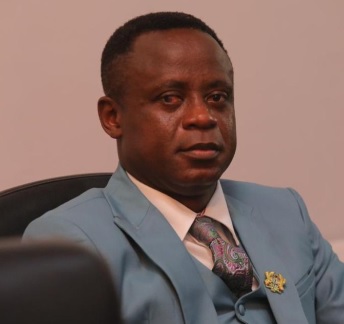
The Director-General of Ghana's National Sports Authority (NSA) is wrapping up a three-day working tour of the Bono Region today. The tour covered Sunyani, Berekum and Wenchi, and its stated purpose was to audit revenue, review staff welfare and inspect sports facilities. The specific findings have not been made public. It is not yet clear which facilities were inspected in detail, what revenue gaps or staff complaints were raised, or what commitments, if any, were made. The tour still matters. For decades, Ghana's regional sports infrastructure has suffered from poor maintenance, weak funding and unclear accounting for the money facilities earn. Staff who run the country's stadiums and parks have long complained about understaffing and poor conditions. The Bono Region has repeatedly asked for a modern multipurpose stadium, and traditional authorities in Sunyani have previously set aside land for one. The region still lacks it. Visits by top officials are not new, and some earlier assurances were never fulfilled. The real test of this audit will be whether it produces published findings, measurable fixes and real investment, or whether it joins a long list of inspections that changed very little.
Few things in Ghanaian public life are as familiar as the official working visit. A convoy arrives. Local officials line up in welcome. Pitches are walked, stands are examined and dressing rooms are opened for cameras. Promises are made, photographs are taken and the convoy moves on. Months later, residents often find the facility much as it was before. For the people of the Bono Region, that pattern is well known when it comes to sport.
This week, the National Sports Authority brought another such visit to the region, with a sharper stated purpose. The NSA Director-General is wrapping up a three-day working tour of Sunyani, Berekum and Wenchi today. The tour's focus goes beyond a ceremonial inspection. Its stated aims were to audit revenue, review staff welfare and assess the state of sports facilities in the region. Those are the right questions to ask. They also happen to be the questions that Ghana's sports administration has struggled to answer for years.
What came out of the tour has not yet been made public. There has been no published account of which facilities the Director-General inspected in detail, what revenue figures were reviewed, what complaints staff raised or what decisions followed. Any claim about specific findings would be speculation until the NSA releases more information. What can be examined with confidence is the system the tour was meant to assess. That system is one of the clearest examples of how Ghana's love for sport has rarely been matched by the money, management and accountability needed to support it.
The National Sports Authority is the state agency responsible for developing and managing sport in Ghana. It was established under the Sports Act of 2016, which replaced the old National Sports Council. Its mandate is broad. It is meant to promote sport across the country, support national teams and federations, encourage mass participation and, critically, manage the public sports facilities owned by the state. That includes the large stadiums that host international football as well as the regional and district facilities where local clubs train, schools hold competitions and young athletes take their first steps.
On paper, the NSA sits at the center of Ghanaian sport. In practice, it has often struggled to fulfill that role. The agency depends heavily on government allocations, and those allocations have rarely matched its responsibilities. Much of the national sports budget has historically gone toward the Black Stars and other national teams, particularly in years of major tournaments. Facility maintenance, grassroots development and regional sports infrastructure have competed for what remains. When money is tight, maintenance is usually the first thing to be delayed. Delayed maintenance becomes neglect. Neglect becomes decay.
The consequences have been visible at the very top of Ghanaian football. In recent years, the state of the country's major stadiums has repeatedly become a national embarrassment. The pitch at Kumasi's Baba Yara Sports Stadium, once one of the most famous venues in West African football, drew widespread criticism and was closed for rehabilitation after its condition deteriorated badly. The Accra Sports Stadium has gone through repeated cycles of renovation and complaint. At times, questions over whether Ghana had venues fit to meet continental standards caused deep concern among fans and football administrators. For a nation that has won four Africa Cup of Nations titles and appeared at multiple World Cups, the sight of national teams worrying about where to play home matches was a stark warning.
The facilities built for the 2008 Africa Cup of Nations tell a similar story. Ghana built new stadiums in Tamale and Sekondi-Takoradi, and renovated others, for that tournament. The stadiums were celebrated as symbols of national ambition. In the years that followed, many fell into disrepair. Seats broke, pitches deteriorated, electrical systems failed and maintenance budgets proved inadequate. The pattern was not unique to those venues. The Cape Coast Sports Stadium, opened in 2016, faced its own maintenance challenges. The facilities built and upgraded for the African Games, hosted in Accra in 2024, have raised fresh questions about whether Ghana can maintain what it builds.
The common thread is not a lack of construction. It is a lack of care after construction. Ghana has repeatedly shown that it can raise money to build a stadium for a major event. It has shown much less ability to fund the groundsmen, electricians, plumbers, security staff, equipment and routine repairs that keep a stadium functioning year after year. That gap between building and maintaining is where much of the country's sports infrastructure crisis lives.
If that crisis is visible at the national stadiums, it is even sharper in the regions. Regional and district facilities often receive the least attention and the smallest budgets. Many are old. Some were built decades ago and have not been meaningfully upgraded since. Others are little more than open fields with basic stands. In many towns, the main "sports facility" is a dusty park shared by footballers, athletes, schoolchildren, churches, political rallies and funerals. Pitches are uneven. Changing rooms lack running water. Floodlights are absent or broken. Toilets are inadequate or unusable. Fencing is incomplete, making it difficult to control access or collect gate fees.
The Bono Region reflects many of these challenges. The region was created in 2019, when the former Brong-Ahafo Region was split into Bono, Bono East and Ahafo. Sunyani, the regional capital, has long been one of the more important cities in Ghana's middle belt. It is known as a clean, orderly city and a hub for administration, education and commerce. It also has a proud sporting culture. Berekum, to the northwest, is one of the region's best-known football towns. Wenchi, to the northeast, is a historic town with its own sporting traditions and a population of young people eager to play.
Football has given the region some of its proudest moments. Berekum Chelsea won the Ghana Premier League title in the 2010-11 season, a remarkable achievement for a club from outside the traditional power bases of Accra and Kumasi. The club went on to represent Ghana in continental competition. Berekum Arsenal has also been part of the region's top-flight history. In Sunyani, Bofoakwa Tano, one of the city's oldest clubs, returned to the Premier League in 2023 after a long absence, igniting excitement among local fans.
That return also exposed the state of the region's facilities. When Bofoakwa Tano earned promotion, its home ground, the Sunyani Coronation Park, had to be assessed to determine whether it met the Ghana Football Association's club licensing standards for Premier League football. In June 2023, the then NSA Director-General, Professor Peter Twumasi, made a working visit to Sunyani to inspect the Coronation Park and devise measures to ready it for top-flight play. His inspection team checked the pitch, VIP stands, regular stands, tunnel, scoreboard and dressing rooms. He pledged that the NSA and other stakeholders would do everything in their power to ensure Bofoakwa Tano could play its first Premier League home match at the park.
During that same visit, the then Bono Regional Minister, Justina Owusu-Banahene, made a pointed appeal. She told the NSA that the Bono Region had produced a large number of national athletes but lacked proper training facilities. She called for a modern multipurpose stadium to help the region develop more talent for Ghana. She also revealed that traditional leaders had already made a 50-acre parcel of land available for a stadium project. "If the government decides to start building the stadium today, we're ever ready," she said. The NSA leadership at the time assured her that the government had plans to build a stadium in the region.
More than three years later, under a different government and a different NSA leadership, the Bono Region is still waiting. There has been no public record of construction of a regional multipurpose stadium on that land. That history is important context for this week's tour. It does not mean the current leadership is responsible for the failures of the past. It does mean that people in Sunyani, Berekum and Wenchi have heard assurances before. They are entitled to ask what will be different this time.
That question gets sharper when the tour's three focus areas are examined one by one, starting with revenue.
Public sports facilities in Ghana do generate income. Stadiums and parks earn money from gate receipts at football matches, rental fees for events, concerts, religious crusades, political gatherings, corporate programs and other uses. Some facilities rent out space for advertising, shops or offices. The NSA is expected to collect and manage this revenue, which can help fund maintenance and operations. In theory, a well-managed facility can cover a meaningful share of its own running costs.
In practice, revenue management in Ghanaian sport has long been plagued by leakages and weak accountability. Football gate proceeds are a recurring source of controversy. Clubs often complain that attendance figures and gate receipts do not reflect the real number of fans who enter stadiums. Fans sometimes pay at the gate without receiving tickets. Others enter through gaps in fencing or with the help of insiders. Cash handling creates opportunities for money to disappear before it is recorded. The Ghana Football Association has moved toward electronic ticketing in recent seasons to address some of these problems, but implementation across all venues has been uneven.
The same weaknesses affect facility rentals. When events are booked, the terms, fees and payments are not always transparent. Questions have repeatedly been raised over how much money facilities earn, where that money goes and whether it is used to maintain the venues that generate it. Ghana's Auditor-General has, over the years, flagged financial management weaknesses across many public agencies, including concerns about revenue collection, documentation and internal controls. Without regular, published accounts showing how much each facility earns and spends, the public has little way of knowing whether sports revenue is being managed well.
That is why the revenue audit component of the Director-General's tour matters. An audit, if it is thorough, can reveal whether revenue collection systems are working, whether money is being properly recorded and whether funds are reaching the right accounts. It can identify gaps between expected and actual earnings. It can uncover weaknesses in cash handling, ticketing and rental agreements. It can also highlight facilities that are underused and could earn more with better management.
But an audit is only as valuable as what follows it. Many reviews in Ghanaian public administration produce findings that are never published and recommendations that are never implemented. If the NSA's Bono tour identified revenue problems, the public deserves to know what they were and how they will be fixed. If it found that the region's facilities are managing revenue well, that too deserves recognition. Transparency is the only way an audit builds trust. Without it, the exercise risks being seen as internal housekeeping with little public benefit.
It is also worth being clear about what regional facilities can realistically earn. Even with perfect revenue collection, a facility like the Sunyani Coronation Park is unlikely to generate enough to fund major upgrades on its own. Ghana Premier League attendances are often modest, and ticket prices are kept low so that ordinary fans can afford them. Rental income is limited by the condition of the facility. A poorly maintained venue attracts fewer events and lower fees, which leaves less money for maintenance, which leads to further decline. Breaking that cycle usually requires an initial injection of investment, not only better accounting.
The second focus of the tour, staff welfare, touches on a problem that is often invisible to fans but central to how facilities function. Behind every stadium and sports park are workers who make it usable. Groundsmen cut and water the grass, mark the lines and repair the pitch. Cleaners maintain stands, toilets and dressing rooms. Security staff guard equipment and control access. Electricians, plumbers and technicians keep lights, water and scoreboards working. Administrative staff manage bookings, records and revenue. Coaches and sports development officers organize programs for young people and communities.
These workers are the backbone of Ghana's sports infrastructure, and many of them have long worked under difficult conditions. Concerns about understaffing at the NSA have been raised publicly by people within the sports administration itself, with some describing the authority as severely short of the personnel it needs to run its facilities properly. Staff at regional and district levels have at various times complained about delayed salaries or allowances, the use of casual or contract workers without job security, lack of protective equipment, inadequate tools and poor working environments. Groundsmen are sometimes expected to maintain large pitches without proper mowers, irrigation systems or fertilizer. Security staff may be too few to protect a large facility.
These conditions have direct consequences. A demoralized and underequipped workforce cannot maintain a facility to high standards. Pitches deteriorate when groundsmen lack equipment. Revenue leaks when gate staff are poorly paid and poorly supervised. Theft of equipment increases when security is thin. When staff feel ignored, the best workers leave, and institutional knowledge disappears with them. Staff welfare is therefore not a side issue in sports administration. It is closely tied to both facility quality and revenue protection.
The Director-General's decision to review staff welfare during the tour is a recognition of that link. What specific concerns were raised by staff in Sunyani, Berekum and Wenchi has not been disclosed. It would not be surprising if the issues mirrored those reported elsewhere, from staffing gaps to equipment shortages and pay concerns, but that cannot be confirmed without the NSA's own account. If staff welfare problems were identified, the NSA will face the challenge of solving them within a constrained budget. Some fixes, such as clearer job descriptions, better supervision and regular engagement with staff, cost little. Others, including recruitment, salary adjustments and equipment purchases, require money that the authority may not control.
That leads to the third focus of the tour, and the one most visible to the public: the condition of sports facilities. The details of what was found in each town have not been made public. But the broader questions are clear. Are the pitches playable year-round, or do they become dust bowls in the dry season and mud fields in the rains? Do the stands meet basic safety standards? Are there working toilets, changing rooms and medical rooms? Is there adequate lighting for evening events? Is the fencing secure enough to control access and protect revenue? Can the facilities host competitive football that meets the Ghana Football Association's licensing requirements? Can they support athletics, basketball, volleyball, handball and other sports, or are they effectively football-only venues?
These questions matter far beyond professional football. Public sports facilities serve as training grounds for school athletes, community clubs and young people with dreams of representing Ghana. Many of the country's sports stars began their careers on modest local pitches. When regional facilities are poor, the talent pipeline narrows. Young athletes in Sunyani, Berekum or Wenchi who lack proper tracks, courts and fields face a disadvantage compared with peers in better-resourced cities. Some move away to train. Others give up.
The impact of the dry season adds another dimension this time of year. The Bono Region sits in Ghana's transition zone, where the harmattan brings dry, dusty conditions from late November into the early months of the year. Pitches without irrigation can quickly turn hard and bare, raising the risk of injuries and making quality play difficult. Maintaining a grass pitch through the dry season requires water, equipment and labor, all of which cost money. Facility inspections at this point in the calendar may give a clear picture of how well facilities are prepared for that challenge.
There is also the question of multipurpose use. Many Ghanaian sports facilities are heavily used for non-sporting events. Churches hold crusades. Political parties hold rallies. Promoters stage concerts. Communities host funerals and festivals. These events can bring in revenue and serve the public. They can also damage pitches, stands and equipment, especially when organizers are not required to repair damage or when fees are too low to cover the cost of restoration. Balancing commercial use with the protection of sporting surfaces is one of the trickiest parts of facility management. An audit that examines how facilities are rented, on what terms and with what safeguards could help strike a better balance.
Why does this tour matter, beyond the immediate issues in three Bono towns? There are several reasons.
The first is accountability. Public sports facilities belong to the people of Ghana. They are built and maintained with public money, and they generate public revenue. Citizens have a right to know how those facilities are managed. Regional audits are one way to bring accountability closer to the communities that use the facilities. When a Director-General travels to a region and personally examines revenue, staff conditions and infrastructure, it signals that regional facilities are not an afterthought. Whether that signal is followed by action is another matter, but the signal itself has value.
The second reason is equity. Ghana's sports investment has historically concentrated in Accra and Kumasi, with a few other cities benefiting from major events. Regions without that history have often been left behind. The Bono Region's long-standing request for a modern stadium reflects a broader frustration felt in many parts of the country. Young people in regional capitals and district towns have the same aspirations as those in the big cities. A fair national sports policy would spread investment more widely, so that talent is not wasted because of geography.
The third reason is economic. Sport is increasingly recognized as an economic sector, not only a recreational activity. Well-run sports facilities can support local economies by attracting matches, tournaments, events and visitors. They create jobs for staff, vendors, transport operators and small businesses. They provide space for fitness and health programs that can reduce long-term health costs. Regions with strong sports infrastructure can host national competitions, school championships and regional tournaments, bringing spending into local communities. Poorly maintained facilities forfeit those opportunities.
The fourth reason is national performance. Ghana's sporting fortunes depend on a steady supply of talent from across the country. The Black Stars' painful failure to qualify for the 2025 Africa Cup of Nations, their first absence from the tournament in two decades, prompted widespread soul-searching about the state of Ghanaian football. Their qualification for the 2026 World Cup restored some pride, but it did not erase the questions about the system beneath the national team. Many experts have argued that Ghana's long-term competitiveness depends on investment in grassroots development, coaching and facilities, not only on the national teams. Regional facilities are where that development happens.
The fifth reason is credibility. Ghana's sports administration has faced repeated criticism over financial management, from controversies surrounding national team expenditures to questions about the costs of hosting major events. Every audit, inspection and reform effort is an opportunity to rebuild trust. Every inspection that produces no visible results erodes it further. The NSA's credibility depends on showing that its reviews lead to concrete outcomes.
It is fair, then, to be skeptical. Ghana has seen countless working visits, inspection tours and assessment exercises in sports and other sectors. Many produced recommendations that were never implemented. Some were followed by announcements of projects that never began. The Bono Region's own experience with its stadium request is a reminder that assurances from senior officials do not always translate into construction. Residents and stakeholders who greet this week's tour with caution are not being cynical. They are drawing on experience.
At the same time, it would be unfair to dismiss the tour before its outcomes are known. A Director-General who chooses to spend three days in one region, focusing on revenue, staff welfare and facilities, is engaging with the practical realities of sports administration. That is more meaningful than a brief courtesy call. If the tour produces a clear report, specific actions and a timeline for improvements, it could serve as a model for similar audits in other regions. The test lies in what comes next.
Several measures would show whether the tour was more than a routine visit. The NSA could publish a summary of its findings, including the condition of each facility inspected, any revenue gaps identified and the main staff welfare concerns raised. It could announce specific steps, with timelines, to address urgent problems such as pitch maintenance, security, sanitation and equipment. It could commit to regular, public financial reporting for regional facilities, showing how much each earns and how that money is spent. It could set out a clear position on the long-requested Bono regional stadium, explaining whether it is planned, funded or shelved. And it could engage local stakeholders, including traditional authorities, clubs, schools and athletes, in an ongoing partnership rather than a one-time meeting.
Funding remains the biggest obstacle. The NSA cannot solve Ghana's sports infrastructure problems on its own. It depends on allocations from the government, which faces tight fiscal conditions as the country continues to recover from its recent economic crisis and works within the constraints of an International Monetary Fund-backed program. Proposals for a dedicated sports fund, financed through sources such as a share of betting revenue, corporate contributions or special levies, have been discussed in Ghana for years. Supporters argue that such a fund could provide stable, predictable money for facility maintenance and grassroots development, rather than leaving sport to compete for scarce budget allocations each year. Critics warn that new funds can become vehicles for mismanagement if they lack strong oversight. Any serious solution to the facility crisis will need to address the funding question directly.
The private sector also has a role. Corporate sponsorship of facilities, naming rights, partnerships with clubs and community investment programs can bring in resources that the state cannot provide alone. Some countries have used public-private partnerships to build and manage stadiums, with private operators handling maintenance and commercial activities under contracts with public authorities. Such arrangements can work well when terms are transparent and public interests are protected. They can also go badly when contracts favor private operators at public expense. Ghana would need clear rules and strong oversight to make such partnerships succeed.
Local governments, too, can contribute. Municipal and district assemblies have an interest in strong local sports facilities, which support youth development, public health and community life. Some assemblies have invested in local parks and pitches. Closer cooperation between the NSA, regional coordinating councils and district assemblies could help pool resources and responsibilities. Traditional authorities, who in Sunyani have already shown willingness by setting aside land, can help secure community support and protect facilities from encroachment.
Clubs and the Ghana Football Association have their own responsibilities. Clubs that use public facilities benefit directly from their condition and could contribute to maintenance through fair rental agreements. The GFA's licensing standards create pressure for facility improvements, but that pressure must be matched by realistic timelines and support. The move toward digital ticketing should be extended to all venues to reduce revenue leakages and provide accurate attendance data.
For athletes and young people in the Bono Region, the stakes are personal. A young sprinter in Wenchi needs a proper track. A teenage footballer in Berekum needs a safe, level pitch. A basketball player in Sunyani needs a court with a working hoop and a smooth surface. Coaches need equipment and space to run programs. Schools need venues for inter-school competitions. None of these needs is exotic. They are the basic building blocks of a sports system. Their absence limits what young people can achieve, regardless of their talent and determination.
The region's claim to be a hub of sporting talent deserves a fair test. If it has indeed produced many national athletes despite poor facilities, it is reasonable to ask how many more it could produce with proper support. The same question applies to regions across Ghana. Talent is distributed widely. Opportunity is not.
As the Director-General's tour comes to an end, the most important work begins. The data gathered, the conversations held with staff and the facilities inspected must now feed into decisions. Some fixes may be quick and low-cost. Others will require planning, funding and political will over months or years. The people of Sunyani, Berekum and Wenchi will judge the tour not by the speeches made or the photographs taken, but by what they see on their pitches, in their stands and in the lives of the workers who keep their facilities running.
Ghana's sports administration has a chance to show that it has learned from the past. The country's history is full of stadiums built with fanfare and left to decay, revenue that disappeared without explanation and staff who worked without the support they needed. That history does not have to define the future. Regional audits, if followed by transparency and action, could be a step toward a more accountable and effective system.
The question hanging over this week's tour is simple. Will it be remembered as the moment the NSA began to fix the Bono Region's sports infrastructure, or as another visit that came, inspected and left? The answer will not come today. It will come in the months ahead, in budgets, reports, repairs and, perhaps, in the long-promised stadium on the land Sunyani's traditional leaders set aside years ago.
Until then, the region will keep doing what it has always done: producing athletes, filling modest stands and hoping that the next promise is the one that is kept.