THE VIDEO HE WAS TOLD TO DELETE: JIMMY ODUKOYA KEPT HIS FATHER'S SUCCESSION TAPE NAMING ANOTHER MAN. NOW IT MAY COST HIM THE FOUNTAIN OF LIFE PULPIT
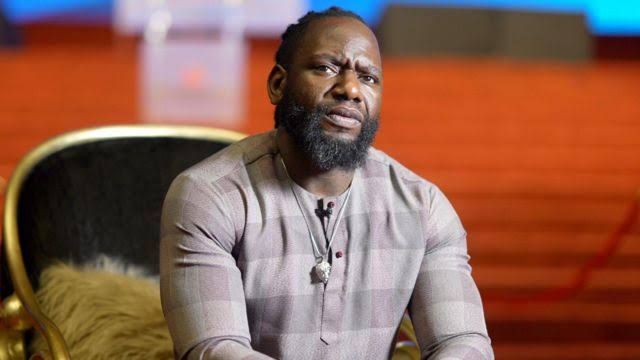
Jimmy Odukoya, the embattled Senior Pastor of Fountain of Life Church in Lagos, has explained why he kept a 2021 video in which his late father, Pastor Taiwo Odukoya, named Pastor Kunle Areogun as his preferred successor, even though he was allegedly told to delete the recording after his father recovered from surgery. Jimmy spoke to about 300 church workers on Wednesday. A faction of the church's Board of Trustees has withdrawn its recognition of him as Senior Pastor. He said the video was recorded in 2021, when his father was preparing for surgery in the United States and feared he might not survive. The disclosure has reignited the fight over the church's leadership. It has also raised hard questions about what the founder truly wanted, whether a private recording made in a moment of fear should decide the future of a major ministry, and who has the authority to lead Fountain of Life now that its founder is gone.
For more than two years, the question hanging over Fountain of Life Church has been simple to ask and painful to answer. Who did Pastor Taiwo Odukoya truly want to lead the church after him? This week, that question took a dramatic turn. Jimmy Odukoya, the man currently occupying the pulpit, has openly addressed a video in which his late father named someone else.
The recording dates back to 2021. In it, the founder of the Ilupeju-based ministry reportedly named Pastor Kunle Areogun as his preferred successor. Jimmy has now explained to church workers why he kept that video, despite allegedly being instructed to delete it after his father recovered from surgery. The fact that the video exists at all is explosive. The fact that the sitting Senior Pastor held on to it is even more so. And it all comes as a faction of the church's Board of Trustees has withdrawn its recognition of him as Senior Pastor.
Jimmy made his remarks on Wednesday while addressing about 300 workers of the church, according to Church Times, whose correspondent was reportedly present. It was not a Sunday sermon or a polished press statement. It was a meeting with the people who keep the church running every week. These are the ushers, choir members, children's teachers, technical crew and department heads whose loyalty and morale matter enormously in a season of division.
According to the account of the meeting, Jimmy said the video was recorded in 2021 while his father was preparing to undergo surgery in the United States. Pastor Taiwo Odukoya, he explained, feared he might not survive the procedure. In that moment of uncertainty, the founder recorded his wishes about who should lead the church if he did not come back.
He did come back. Pastor Taiwo Odukoya survived the surgery and returned to lead Fountain of Life for roughly two more years. He died in August 2023. Jimmy was later installed as Senior Pastor, stepping into the office his father had held for three decades.
That sequence of events sits at the heart of the dispute. If the founder recorded the video only because he feared death, did his wishes change once he recovered? Was the instruction to delete the recording a sign that he no longer stood by its contents? Or does the video remain the clearest record of what he believed was best for the church? Each side of the crisis is likely to read the same facts very differently.
To understand why this matters so much, you have to understand what Fountain of Life means to many Nigerians. Pastor Taiwo Odukoya and his first wife, Pastor Bimbo Odukoya, founded the church in Lagos in the early 1990s. It grew into one of the city's most respected ministries. It was known for its practical teaching, polished worship and strong focus on marriage and family. Bimbo Odukoya became a household name through her television program, "Single and Married." Her death in the Sosoliso Airlines crash in Port Harcourt in December 2005 shocked the nation. Pastor Taiwo carried the church through that grief and continued to lead it until his own death.
Over those years, the church built a reputation for dignity and stability. It was rarely the subject of the kind of scandal that has rocked other large Nigerian ministries. That reputation is precisely why the current crisis has drawn so much attention. A church that once modeled calm leadership is now publicly divided over who has the right to lead it.
Pastor Kunle Areogun is not a stranger to the congregation. He has been a long-serving figure in the church, part of its pastoral leadership for years. His name being attached to the founder's wishes gives the dispute a sharper edge. This is no longer just a question of whether Jimmy is the right person for the job. It is now a question of whether the founder himself had chosen someone else.
For Jimmy's critics, the video appears to confirm what some suspected from the start. They believe the transition after Pastor Taiwo's death did not fully reflect the founder's intentions. To them, a recording in which the founder names a successor carries real moral weight, whatever the circumstances in which it was made. They may also ask why the video was not made widely known when the leadership question was first decided. If Jimmy had the recording all along, they will want to know who else knew about it, and when.
For Jimmy's supporters, the story looks very different. They are likely to point to the context. A man facing major surgery abroad, afraid he might not survive, records his thoughts in a moment of fear. He then survives, returns home and reportedly asks for the recording to be deleted. To them, that request is significant. It suggests the founder did not want the video to stand as his final word. They may argue that a leader who lived and led for two more years had ample time to formally name a successor if he still held that view. Many will ask why a recording the founder allegedly wanted gone should now decide the future of his church.
Then there is the question Jimmy's decision raises on its own. Why keep it? If he was told to delete a video that named another man as his father's successor, keeping it could look risky. It could become evidence against his own position. Some observers may read his decision as a sign of honesty, an unwillingness to destroy a piece of his father's legacy even when it did not favor him. Others may see it differently and ask whether the video's existence was kept quiet for too long. By choosing to address it directly before hundreds of workers, Jimmy appears to be trying to control the story before others tell it for him.
That choice reflects how serious the crisis has become. A faction of the Board of Trustees withdrawing recognition of a sitting Senior Pastor is a major step in any church. In many Nigerian ministries, the Board of Trustees holds legal authority over the church as a registered organization. Trustees often oversee property, assets and key governance decisions. When some of them publicly reject the person in the pulpit, it creates a split between spiritual leadership and legal authority. That kind of split can be very hard to repair.
It also raises practical questions that members are surely asking. Who signs off on church decisions now? Who controls finances and property? Which instructions should staff and workers follow if different leaders give different directions? A divided board does not just create headlines. It creates confusion inside the daily life of the church.
The word "faction" matters here too. It suggests the board itself is not united. Some trustees appear to have withdrawn their support for Jimmy, while others may still stand with him. That means the church is facing not only a leadership challenge but a governance one. Without a clear and widely accepted process for resolving disputes, each side can claim legitimacy. In situations like this, disagreements in Nigerian churches have sometimes ended up in court, with judges asked to decide matters that began as spiritual and family questions.
The video adds a powerful new piece to that puzzle. In a dispute over legitimacy, the founder's voice carries enormous weight. Whoever can credibly claim to represent what Pastor Taiwo Odukoya wanted holds a strong moral advantage with members. That is why the context of the recording is so important. Was it a final instruction, a contingency plan or a passing thought shaped by fear? The answer may never be fully settled, because the only person who could say for certain is no longer alive.
The crisis also echoes a wider pattern in Nigerian Christianity. Many of the country's biggest churches were founded by charismatic leaders who built ministries from nothing. These founders often served as spiritual father, chief executive and final authority all at once. Few put clear, written succession plans in place. When they die, the gap they leave behind can trigger fierce competition between family members, long-serving associates and boards of trustees.
At the center of that tension is a recurring debate. Should leadership pass to a founder's child, who often grew up inside the ministry and carries the family name? Or should it go to a long-serving pastor who may have worked alongside the founder for years, with deep relationships across the congregation? Both paths have supporters. Both have produced success stories and painful failures in different churches. The Fountain of Life crisis brings that debate into sharp focus, because the founder's son now leads the church while a recording points to a trusted associate.
Jimmy's own journey adds another layer. Before taking the pulpit, he was widely known as an actor in Nollywood. Some members welcomed his appointment as a fresh, modern voice who could reach younger worshippers. Others questioned from the start whether he was the right fit to lead such a significant ministry. His personal life, including the end of his marriage to Kemi Banjoko, also drew public attention, especially in a church long known for teaching on marriage and family. In recent weeks, the dispute has widened further, with reports of calls for his elder sister, Tolu, to take over. The emergence of the 2021 video now adds a third name to the conversation and makes the picture even more complicated.
For the congregation, all of this is deeply unsettling. Members who have worshipped at Fountain of Life for decades now face a church whose leadership is contested in public. Some will feel loyal to Jimmy as the founder's son and their current pastor. Some will feel drawn to the founder's recorded words. Many will simply want peace. Church workers, the very people Jimmy addressed on Wednesday, are caught in the middle. They serve under the current leadership but may also feel the pull of the trustees who have rejected it.
The 300 workers in that room represent more than an audience. They are the backbone of the church's weekly life. By speaking to them directly, Jimmy appears to be trying to keep the ministry running and hold its core together. Whether his explanation reassured them or raised fresh doubts may shape how the crisis unfolds in the weeks ahead.
There is also the question of what Pastor Kunle Areogun will do. Being named in a founder's recording can place any leader in a delicate position. If he speaks, he risks being seen as a rival to the founder's son. If he stays silent, others may speak for him. Until he publicly addresses the matter, any claims about his intentions remain guesswork. Being named as a preferred successor is not the same as seeking the role.
What happens next will depend on several key players. The Board of Trustees must find a way to resolve its own internal divisions. Jimmy must decide how far he is willing to go to defend his position. Pastor Areogun must decide whether to step into the spotlight or stay out of it. And the wider Odukoya family must consider how to protect both the church and their relationships with one another.
Many observers believe the best path forward would involve neutral mediation. Respected senior clergy, trusted elders or independent figures could help the parties reach a settlement that members accept. Transparent communication would also help. Members deserve to know how leadership decisions are being made, what the church's governing documents say about succession and how the dispute will be settled. Silence and secrecy, by contrast, tend to feed rumors and deepen mistrust.
There is a painful irony in all of this. Pastor Taiwo Odukoya spent decades teaching on family, unity and healing. His late wife helped a generation of Nigerians talk honestly about relationships. Now the church they built is divided over a family question, with the founder's own words at the center of the fight. A video made in a moment of fear, before a surgery he went on to survive, has become one of the most important pieces of evidence in the battle over his legacy.
The truth about what Pastor Taiwo Odukoya ultimately wanted may never be fully known. What is clear is that the leadership crisis at Fountain of Life has entered a new and more dangerous phase. A pastor without the full backing of his trustees, a recording naming another man and a congregation searching for answers is a difficult combination for any church. How its leaders respond will decide whether Fountain of Life finds a path to healing, or becomes another cautionary tale about what happens when a founder leaves without a clear plan for who comes next.