TIMOTHY BUSFIELD CHILD SEX ABUSE INDICTMENT THROWN OUT AS NEW MEXICO JUDGE BLASTS GRAND JURY PROCESS AND CITES PROSECUTORIAL MISCONDUCT
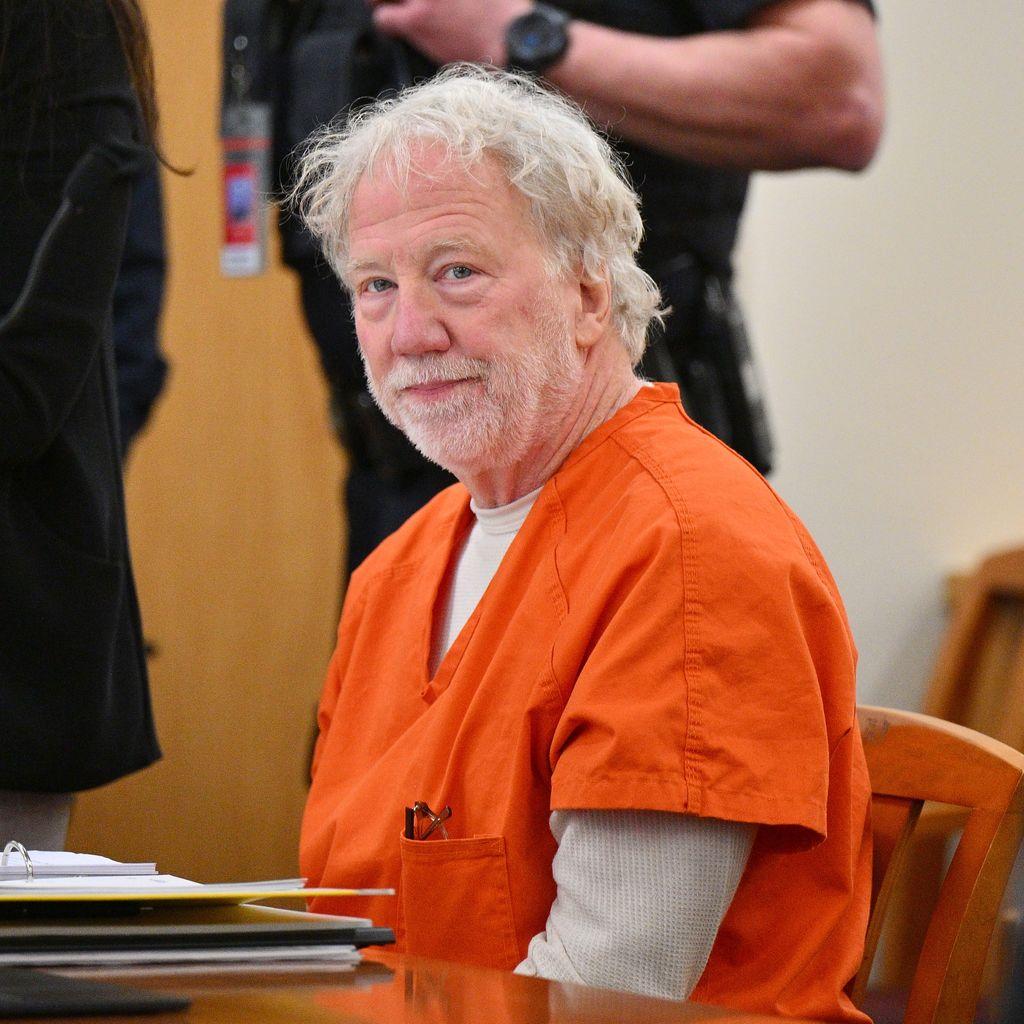
A New Mexico judge has dismissed the grand jury indictment against actor and director Timothy Busfield after finding prosecutorial misconduct and procedural errors serious enough to undermine the integrity of the grand jury process. Busfield had faced four counts of criminal sexual contact with a minor involving allegations concerning two child actors from The Cleaning Lady. Judge Joseph Montano found that prosecutors improperly instructed jurors about how additional witnesses could be called and effectively prevented requested witnesses from appearing. Busfield has consistently denied the allegations. The dismissal does not determine whether the allegations are true or false, and prosecutors remain legally free to seek a new indictment.
A New Mexico judge has dismissed the criminal indictment against veteran Hollywood actor and director Timothy Busfield after finding that prosecutors failed to act fairly and impartially during the grand jury process, delivering a major legal victory for the 69 year old performer while leaving open the possibility that the state could still bring the allegations back before another grand jury. State District Judge Joseph Montano granted Busfield’s motion to quash the indictment on Friday, October 16, ruling that errors in the way prosecutors handled requests for additional witnesses undermined the integrity of the proceedings that produced four counts of criminal sexual contact with a minor. The ruling does not amount to a finding that the allegations were false, nor does it acquit Busfield after a trial on the merits. Instead, the judge concluded that the process used to secure the indictment was legally defective enough that the charges could not continue in their present form.
Busfield, widely known for roles in The West Wing, Thirtysomething and Field of Dreams, had been indicted in February on four counts of criminal sexual contact with a minor over allegations involving two child actors who are brothers and who worked with him on the Fox television series The Cleaning Lady. Busfield served as a director and producer on the show and also appeared on screen. The allegations concerned events said to have taken place while the boys were young children working on the production in New Mexico. Busfield has consistently denied any sexual misconduct and pleaded not guilty after the charges were filed. His lawyers argued for months that the indictment was produced through a fundamentally unfair grand jury process in which prosecutors prevented jurors from hearing potentially important witnesses and gave incomplete or incorrect legal instructions about how those witnesses could be called.
Judge Montano agreed with significant parts of that argument. In his written order, he said the prosecuting attorney failed to act in a fair and impartial manner and improperly instructed grand jurors about the procedures required to call additional witnesses. According to the ruling, jurors had repeatedly expressed an interest in hearing from people beyond the detective and Busfield himself, but prosecutors told them that eight members of the grand jury would need to agree before a witness could be summoned. The judge found that this procedure was not supported by New Mexico law and that the instructions effectively allowed prosecutors to prevent the grand jury from hearing testimony it had requested.
The order is unusually significant because grand juries are intended to function as independent bodies rather than simply as extensions of prosecutors. Their role is to determine whether there is probable cause to believe a crime occurred and whether a defendant should be formally charged and required to stand trial. Prosecutors present evidence and provide legal guidance, but they are also expected to act fairly and not manipulate the process in a way that prevents jurors from considering information relevant to their decision. Montano concluded that the conduct in Busfield’s case crossed that line and violated statutes designed to protect the structural integrity of New Mexico’s grand jury system.
The judge’s order shows that only two witnesses appeared before the grand jury when Busfield was indicted: Detective Marvin Brown and Busfield himself. During his testimony, Busfield told jurors that an independent investigation had been conducted by Warner Bros., that he had taken a polygraph examination and that other people who were present around the relevant period were available to testify. Members of the grand jury then sought to hear from additional witnesses, but the process for obtaining that testimony became the central issue that ultimately led Montano to dismiss the indictment.
According to the ruling, prosecutors told grand jurors that witnesses would have to be subpoenaed and that 36 hours notice was required, but failed to adequately explain that a judge could potentially shorten that period or that witnesses willing to appear voluntarily might not need to be compelled through a subpoena at all. Busfield’s legal team argued that several witnesses were available and prepared to testify, and that the prosecution’s handling of the requests effectively prevented the grand jury from hearing evidence that might have influenced whether an indictment was returned.
Montano described the failures as serious enough to trigger a presumption of prejudice. In practical terms, that meant the court did not require Busfield to prove exactly how each error changed individual jurors’ votes. The judge found that the structural problems themselves compromised the fairness of the proceeding to such a degree that the indictment could not stand. His decision granted the defence motion to quash all four counts.
The ruling represents a significant setback for the Bernalillo County District Attorney’s Office but does not permanently prevent prosecutors from pursuing the case. Montano expressly stated that the state remains free to initiate new criminal proceedings against Busfield. Prosecutors could therefore seek another grand jury indictment after correcting the procedural problems identified by the judge, or they could decide after reviewing the evidence not to proceed further. The District Attorney’s Office said after the ruling that it was evaluating its options and had not yet made a final decision about whether to pursue another indictment.
That distinction is essential because the dismissal concerns the legality and fairness of the grand jury proceedings, not a judicial determination of whether the underlying allegations are true or false. No jury has heard the evidence at trial, no verdict has been returned and Montano’s order does not make a factual finding that Busfield did or did not engage in the alleged conduct. It determines that the indictment produced by the February grand jury cannot be relied upon because of the way the proceeding was handled.
The charges stemmed from allegations involving twin boys who worked as actors on The Cleaning Lady while Busfield was involved with the series. Court records and earlier reporting said one of the boys alleged inappropriate touching while he was seven years old and again when he was eight. The allegations became the basis for a police investigation and eventually for criminal charges. Busfield denied the conduct and suggested during a police interview that the boys’ mother may have been motivated by anger after the children were not brought back for a later season of the television programme. That was Busfield’s defence position and has not been established by the court as fact.
The defence has also argued that early interviews with the children did not support all of the later allegations and that the children may have been influenced or coached. Prosecutors rejected that characterisation and previously argued there was sufficient evidence to justify the charges. The judge’s October 16 order did not decide that dispute. Instead, the court focused on whether the grand jury received a fair opportunity to hear relevant testimony before deciding whether probable cause existed.
That procedural focus is one reason the ruling could have substantial consequences if prosecutors choose to try again. A new grand jury presentation would likely need to be significantly more careful about instructions, witness requests and potentially exculpatory information. Prosecutors would have to avoid the conduct Montano criticised and give jurors a process that allows them to exercise their independent role under New Mexico law.
For Busfield, the dismissal ends the immediate prosecution that had been moving toward a jury trial scheduled for May 2027. That trial date is now effectively displaced unless prosecutors obtain another indictment. The actor had already spent months facing serious criminal allegations, court appearances, restrictions and extensive national media attention. He was previously arrested and later released from custody while the case proceeded, with his lawyers arguing that he did not pose a danger to the community.
Busfield’s attorney said following Friday’s decision that he was relieved and grateful. His defence team has maintained from the beginning that the allegations are false and that the state’s investigation was flawed. The dismissal gives those lawyers a powerful procedural victory, but they have also indicated they are prepared to respond if prosecutors seek a new indictment.
The case has attracted wide attention because of Busfield’s long television and film career. He won an Emmy for Thirtysomething and later became familiar to another generation of viewers through his role as journalist Danny Concannon on The West Wing. He also appeared in Field of Dreams and has worked extensively as a television director and producer. His career has included directing episodes of major network dramas, making the allegations particularly prominent within the entertainment industry.
The case has also drawn attention because Busfield is married to actress Melissa Gilbert, known for Little House on the Prairie. Gilbert publicly supported her husband during the criminal proceedings and appeared at earlier court hearings. Following the dismissal, she posted a literary quotation on social media that was widely interpreted by entertainment outlets as a reaction to the ruling. Her public support, however, has no bearing on the legal merits of the case.
The grand jury issue at the centre of Montano’s ruling reflects an important part of the American criminal justice system that is often misunderstood. A grand jury does not determine guilt or innocence. It decides whether prosecutors have presented enough evidence to establish probable cause and move a felony case toward trial. The evidentiary standard is therefore significantly lower than the beyond a reasonable doubt standard required for conviction.
Because prosecutors generally control the presentation of evidence in a grand jury proceeding, courts impose duties intended to preserve at least some degree of fairness and independence. The defence is not usually permitted to conduct the proceeding in the same way it would during a trial, making accurate legal guidance and fair handling by the prosecution especially important. If jurors themselves ask to hear additional evidence, improperly preventing them from doing so can become a serious problem because it interferes directly with their independent decision making.
Montano concluded that this is what occurred in Busfield’s case. His order stated that the prosecution’s handling of witness requests did not merely amount to a technical mistake but undermined the structure of the proceeding itself. That conclusion explains why the court chose the significant remedy of dismissing the entire indictment rather than treating the errors as harmless.
The possibility of a new prosecution means the case could still continue. If the District Attorney’s Office believes the evidence remains sufficient, it can present the matter to another grand jury under corrected procedures. A new panel would then decide independently whether probable cause exists for fresh charges. Any new indictment could again be challenged by the defence, although prosecutors would likely structure the presentation carefully to avoid repeating the problems identified by Montano.
Prosecutors also have the option of reviewing the evidence and deciding not to refile. Their statement that they are evaluating their options indicates that no final decision had been reached at the time of reporting. That process may involve reviewing witness availability, the strength of the evidence, the court’s criticisms and whether another grand jury presentation would be likely to produce a sustainable indictment.
For the families connected to the allegations, the dismissal may be especially difficult because the matter remains unresolved on the underlying facts. The court has not found that the alleged incidents did not happen. At the same time, Busfield continues to deny wrongdoing and is entitled to the presumption of innocence. Those two realities must remain separate as the legal process develops.
This distinction is particularly important in criminal cases involving alleged sexual misconduct against children because public reaction can move far faster than the courts. An indictment can lead many people to assume guilt even though it is only an accusation based on probable cause. A dismissal can produce the opposite assumption even when the court has ruled solely on procedure. In Busfield’s case, neither conclusion is legally justified at this stage.
What the court has definitively found is that the prosecution did not handle the original grand jury process properly. Montano’s findings about witness instructions and prosecutorial fairness are judicial determinations contained in a formal court order. Whether Busfield committed the conduct alleged by the state remains an unresolved factual question unless and until the matter is adjudicated through a legally valid criminal proceeding.
The ruling may also lead to broader scrutiny of the District Attorney’s Office because findings of prosecutorial misconduct are serious. Prosecutors are not simply advocates expected to win cases. They are public officials with a legal duty to pursue justice and protect the fairness of criminal proceedings. When a judge concludes that prosecutors failed to act impartially before a grand jury, it raises questions about internal procedures, supervision and training.
It remains unclear whether the office will conduct an internal review or whether any individual prosecutor will face professional consequences. The District Attorney’s immediate public response focused on evaluating how to proceed with Busfield’s case rather than addressing possible disciplinary action.
The defence will likely emphasise Montano’s findings if the state returns to court. Busfield’s lawyers have already described the earlier process as one in which the state treated the grand jury as an extension of the prosecution rather than an independent body. The judge’s ruling gives substantial legal support to their criticism of how the indictment was obtained.
Prosecutors, however, may argue that defects in the original presentation can be corrected and that the underlying allegations deserve to be evaluated through a properly conducted process. New Mexico law allows them to pursue that option because the indictment was quashed rather than resolved by an acquittal after trial.
That difference also means constitutional protections against double jeopardy do not prevent another prosecution at this stage. Jeopardy had not attached through a completed jury trial, and the judge specifically left the door open for the state to begin new proceedings.
A future case would therefore begin with a new charging process rather than simply reviving the dismissed indictment. Prosecutors would need another legally valid basis for moving the case forward, and Busfield’s attorneys would again have the opportunity to challenge the state’s evidence and procedures.
Until prosecutors decide what to do, the criminal case is effectively halted. Busfield is no longer facing the four charges contained in the February indictment, and the scheduled trial based on those charges cannot proceed as planned.
The public narrative surrounding the case, however, is unlikely to disappear immediately. The allegations are serious, the defendant is a well known actor and the judge’s criticism of prosecutors adds another major dimension to a case that was already receiving national attention.
For Busfield’s supporters, the dismissal is likely to be seen as confirmation of the defence’s longstanding argument that the prosecution was mishandled. For those who believe the allegations should still be fully tested, the fact that prosecutors can seek another indictment will be equally important.
The legal reality sits between those positions. Busfield has obtained a major procedural victory. Prosecutors committed errors serious enough for a judge to throw out the indictment. He currently faces no valid indictment arising from the dismissed charges.
But the underlying allegations have not been adjudicated.
The District Attorney’s Office can still decide to start again.
That means the October 16 ruling may ultimately represent the end of the case, or it may become the beginning of a second attempt to prosecute it. The next decision now belongs to New Mexico prosecutors, who must determine whether the evidence justifies returning to a grand jury after a judge concluded that their first effort failed the fairness requirements of the state’s criminal justice system.