TINUBU EXTENDS TENURES OF IMMIGRATION AND CORRECTIONAL SERVICE CHIEFS BY 18 MONTHS AS PRESIDENCY CITES SUCCESSION GAPS AND NEED FOR CONTINUITY
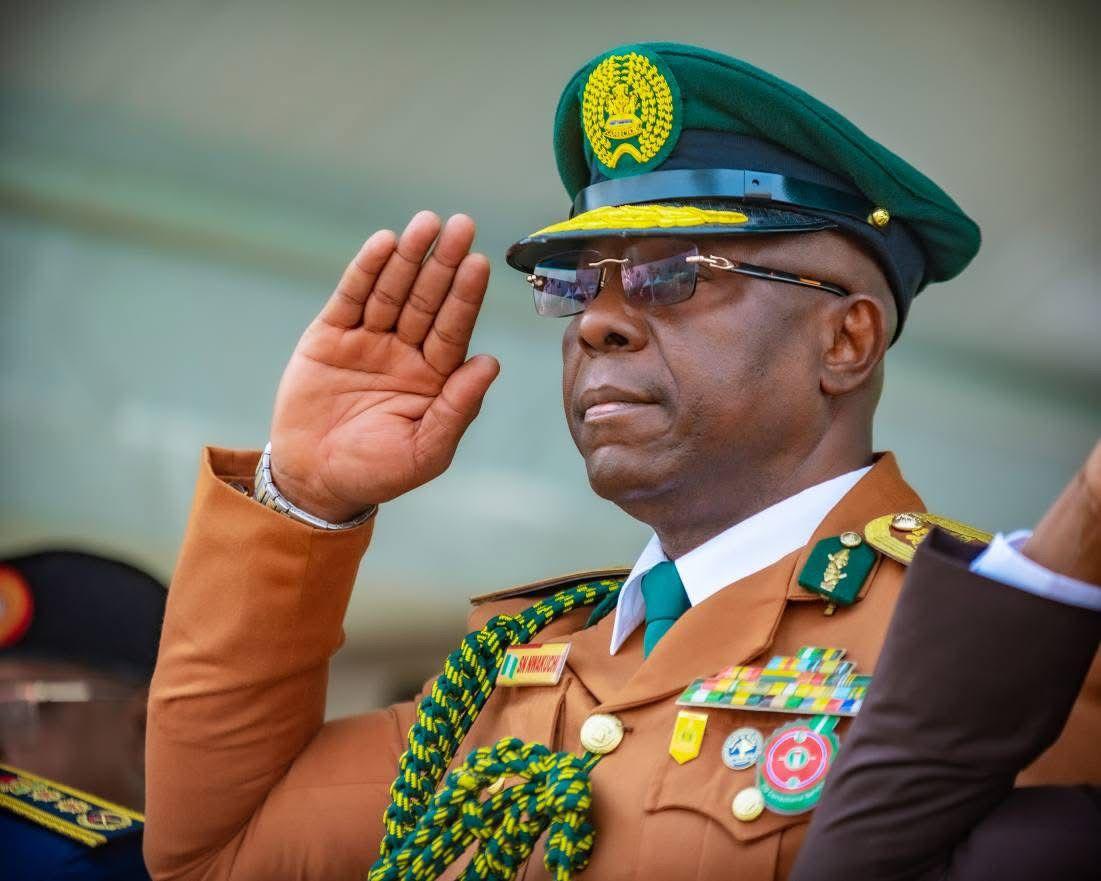
President Bola Tinubu has approved 18-month tenure extensions for Nigerian Correctional Service Controller-General Sylvester Ndidi Nwakuche and Nigeria Immigration Service Comptroller-General Kemi Nanna Nandap. Nwakuche will now remain in office until May 26, 2028, while Nandap’s tenure will run until June 30, 2028. The Presidency says the decision followed a recommendation from Interior Minister Olubunmi Tunji-Ojo and is intended to address succession gaps while giving the relevant boards sufficient time to prepare and appoint successors.
President Bola Ahmed Tinubu has approved 18-month extensions for the heads of two of Nigeria’s key internal security agencies, allowing Controller-General of the Nigerian Correctional Service Sylvester Ndidi Nwakuche to remain in office until May 26, 2028, and Comptroller-General of the Nigeria Immigration Service Kemi Nanna Nandap to continue until June 30, 2028. The Presidency announced the decision on Monday, October 19, saying the extensions were granted following a recommendation from the Minister of Interior, Olubunmi Tunji-Ojo, and were intended to address succession gaps within both services while giving their governing boards additional time to prepare and appoint suitable successors.
The decision means both service chiefs will remain in office well beyond the periods in which succession planning would otherwise have become an immediate operational issue. According to the Presidency, the extensions are not simply intended to keep the current leadership in place indefinitely but to create enough time for both institutions to manage transitions properly while continuing reforms already underway. President Tinubu also commended Nwakuche and Nandap for reforms recorded under their leadership and directed them to use the additional period to consolidate those gains rather than allowing the extended tenures to become administrative holding periods.
Nwakuche was nominated by President Tinubu as Controller-General of the Nigerian Correctional Service in December 2024 and was subsequently confirmed by the Senate in March 2025. His leadership has placed him at the head of a correctional system facing long-standing problems involving prison congestion, inadequate infrastructure, security breaches, overcrowding, rehabilitation challenges and the large number of inmates awaiting trial. By extending his tenure to May 26, 2028, the Presidency is effectively giving his administration more time to continue reforms in a service whose problems often require sustained implementation rather than short-term interventions.
Kemi Nandap was nominated as Comptroller-General of the Nigeria Immigration Service on February 21, 2024, and the Senate confirmed her appointment on March 1 of the same year. Since assuming office, she has led an agency responsible for border management, passports, migration control, human trafficking prevention and the movement of people through Nigeria’s increasingly complex land, sea and air entry points. Her new tenure end date of June 30, 2028, gives the Immigration Service additional time to continue ongoing reforms involving passport services, border surveillance, migration management and the digitalisation of immigration processes.
The Presidency’s reference to succession gaps is one of the most important elements of the announcement because it indicates that the extensions were partly driven by concerns about what would happen if the two service chiefs left office before their respective boards had completed a structured succession process. In security institutions, leadership transitions can affect appointments, promotions, procurement, operational planning and morale, particularly when senior officers are uncertain about who will take command next. The government’s position is therefore that an 18-month transition window will provide enough time for a more orderly process rather than allowing vacancies or rushed appointments to disrupt operations.
Interior Minister Olubunmi Tunji-Ojo played a central role in the decision, with the Presidency saying the extensions followed his recommendation. The Ministry of Interior supervises both the Nigerian Correctional Service and the Nigeria Immigration Service, meaning the minister is directly responsible for coordinating the broader policy direction within which the two agencies operate. His recommendation suggests the extensions were viewed as part of an institutional management decision rather than simply a personal preference by the President for the two officials.
The Nigerian Correctional Service has been under sustained pressure to modernise its operations, reduce overcrowding and improve the treatment and rehabilitation of inmates. Many custodial centres continue to hold large numbers of people awaiting trial, a problem that cannot be solved by the Correctional Service alone because it also involves police investigations, prosecutors, courts and state-level justice systems. However, the service remains responsible for managing those detainees once they enter custody, making infrastructure, security and rehabilitation reforms central to its performance.
Security around correctional facilities has also remained a major concern following several high-profile attacks and jailbreaks in recent years. Those incidents exposed weaknesses in perimeter protection and emergency preparedness and prompted calls for stronger coordination between correctional authorities and other security agencies. Continuity under Nwakuche may therefore allow ongoing security upgrades and rehabilitation initiatives to continue without being interrupted by an immediate leadership transition.
The Correctional Service’s mandate has increasingly moved beyond simply holding prisoners. Nigeria’s correctional law emphasises rehabilitation, reintegration and alternatives to traditional incarceration, including non-custodial measures in appropriate cases. Implementing such reforms requires changes in training, infrastructure, documentation and cooperation with courts and other justice institutions, meaning institutional continuity can be valuable if leadership is using the additional time to complete defined projects.
The Nigeria Immigration Service faces a different but equally demanding set of responsibilities. As Africa’s most populous country, Nigeria manages extensive land borders with Benin, Niger, Chad and Cameroon, alongside major international airports and seaports. Border management therefore affects national security, trade, migration, human trafficking and efforts to prevent the movement of criminal networks across national boundaries.
Nandap’s tenure has included efforts to improve passport processing and reduce the frustration Nigerians have historically experienced when applying for travel documents. The Immigration Service has introduced and expanded digital systems in an attempt to reduce delays and limit opportunities for unofficial payments, while the Interior Ministry has frequently said passport services should become more transparent and predictable. Extending Nandap’s tenure gives the agency additional time to consolidate those systems and address continuing complaints where they exist.
The NIS has also been dealing with migrant smuggling and trafficking networks that target vulnerable Nigerians with promises of employment, education or better opportunities abroad. Earlier in 2026, the service warned that fraudulent migration schemes were continuing to expose young Nigerians to forced labour, trafficking and exploitation. That area of work requires cooperation with foreign governments, law-enforcement agencies and international organisations, making leadership continuity potentially useful where cross-border programmes are already underway.
Passport intervention programmes abroad have also become part of the Immigration Service’s workload. In September, the NIS extended a special passport exercise in the United Kingdom after processing more than 1,400 Nigerians, reflecting the scale of demand from the Nigerian diaspora. Such programmes highlight how the Immigration Service’s responsibilities extend beyond border enforcement and involve providing basic citizenship documentation to millions of Nigerians living overseas.
The decision to extend the two tenures fits into a broader pattern under the Tinubu administration in which the Presidency has sometimes prolonged the service of senior institutional heads where it says continuity is necessary. In June 2026, Tinubu granted a six-month extension to Customs Comptroller-General Adewale Adeniyi, citing the need to consolidate the National Single Window project and ensure an orderly succession process. That earlier decision similarly emphasised continuity, completion of reforms and succession planning rather than leaving a leadership change to occur abruptly.
The latest announcement therefore suggests that the administration increasingly views succession planning as an active part of institutional reform, particularly in large security and enforcement agencies. Leaving the appointment of successors until the final weeks of a service chief’s tenure can create uncertainty and intensify internal competition, while a structured transition allows boards to identify eligible officers and complete required administrative processes.
At the same time, tenure extensions can attract questions about whether they slow the promotion prospects of senior officers waiting within the system. Security and paramilitary agencies are built around rank structures in which leadership turnover often creates opportunities for officers immediately below the top position. Extending a serving chief can therefore affect career expectations and may require careful management to prevent dissatisfaction within the senior command structure.
The Presidency’s statement appears intended to address some of those concerns by linking the extensions directly to succession planning rather than portraying them as open-ended renewals. The government says the additional 18 months will give the boards sufficient time to appoint successors, creating an expectation that the period should end with a planned transition rather than another last-minute leadership gap.
Tinubu’s commendation of the two officials also indicates that performance played a role in the decision. The Presidency said both chiefs had recorded reforms under their leadership and asked them to consolidate those gains. It did not provide a detailed list of achievements in the extension statement, but the message suggests the administration believes replacing them immediately could disrupt programmes already underway.
For Nwakuche, consolidation will likely be judged by progress in correctional security, inmate management, rehabilitation and administrative reform. For Nandap, attention will remain on border security, passport delivery, migration management and digitalisation. The additional period gives both officials more time, but it also creates a clearer basis on which their performance can eventually be assessed because the Presidency has publicly linked the extensions to completing reforms.
The legal frameworks governing the two offices are not identical. The Nigerian Correctional Service Act provides for the appointment of a Controller-General and subjects the process to relevant service and retirement rules, while the Immigration Act gives the President authority to appoint the Comptroller-General on the recommendation of the appropriate board and subject to Senate confirmation. TheCable notes that the immigration law does not establish the same fixed tenure arrangement for the Comptroller-General that exists in some other agencies, making the administrative context of the two extensions somewhat different.
The most important immediate effect, however, is straightforward. Neither service will face a near-term leadership vacancy, and both chiefs now have formal approval to remain in office through the first half of 2028. That provides operational certainty for the agencies while the Interior Ministry and their boards work through longer-term succession arrangements.
The extensions also come at a politically important time for the Tinubu administration as Nigeria approaches the 2027 general election period. Immigration and correctional institutions have responsibilities that remain sensitive during politically charged periods, including border monitoring, custody of inmates and coordination with other security agencies. There is no evidence in the Presidency’s statement that the extensions were granted for electoral purposes, and the official explanation remains succession management and continuity of reforms.
That distinction matters because major appointments and tenure decisions involving security institutions can easily become politically interpreted, especially as elections approach. The available official evidence supports the narrower explanation that the Interior Minister recommended additional time because both services faced succession gaps and their boards needed more time to prepare replacements.
Tinubu has recently been making a series of senior administrative decisions across government institutions, including tenure renewals at state media organisations and extensions in the Customs Service. Taken together, those decisions suggest the administration is placing a premium on continuity in organisations where it believes leadership changes could interrupt major reforms.
Whether the strategy produces better institutional performance will depend on what the extended officials achieve during the additional period. Continuity is valuable only if agencies use it to complete reforms, strengthen internal systems and prepare credible successors. If extensions simply postpone leadership changes without resolving the succession problem, the same uncertainty could reappear when the new deadlines approach.
The Interior Ministry will therefore carry significant responsibility over the next 18 months. The Presidency specifically said the extensions would allow the relevant boards enough time to appoint successors, meaning the Ministry and boards will be expected to identify, assess and prepare future leadership well before May and June 2028.
That process may include reviewing the seniority, experience and performance of officers within both services and ensuring any required confirmation or administrative procedures are completed without delay. A transparent succession process would help reassure senior officers that promotions and leadership transitions remain predictable even when current chiefs receive extensions.
For Nwakuche and Nandap, the decision provides both additional authority and additional scrutiny. They now have more time to complete programmes they have already begun, but expectations will also increase because the government has publicly justified their continued stay on the basis of reform and continuity.
The Correctional Service will continue to be judged on whether custodial centres become safer, less congested and more focused on rehabilitation. Persistent overcrowding, poor infrastructure and the high proportion of inmates awaiting trial remain structural challenges that cannot be solved entirely by the Controller-General, but the service’s response to those problems will form part of any assessment of the extended tenure.
The Immigration Service will similarly face continued scrutiny over passport processing, border surveillance and illegal migration. Nigerians at home and abroad increasingly expect passport applications to be completed through digital systems without the delays and informal payments that have damaged confidence in the service in previous years. Security agencies will also expect the NIS to strengthen intelligence and monitoring across porous border areas.
The extensions therefore create a defined period in which the two services can pursue continuity without uncertainty over who is in charge. From an institutional perspective, that can improve planning because budgets, procurement decisions, recruitment and reform programmes can be implemented with knowledge that current leadership will remain in office through mid-2028.
The approach also gives President Tinubu and Interior Minister Tunji-Ojo time to decide what qualities they want in the next generation of leadership. Rather than waiting until vacancies suddenly emerge, the government can use the transition period to prepare succession in a way that minimises internal disruption.
There is nevertheless a broader debate in public administration about how often tenure extensions should be used. Some analysts argue that predictable retirement and appointment rules strengthen institutions because leadership change occurs according to established expectations, while others believe exceptional extensions can be justified when important reforms are unfinished or when no immediate successor has been prepared.
The Presidency has clearly adopted the second position in this case, stating that succession gaps made the extensions necessary. The credibility of that explanation will ultimately depend on whether successors are actually prepared during the additional 18 months and whether both services emerge stronger when the transition eventually occurs.
For now, the decision provides certainty at the top of two institutions with major responsibilities for Nigeria’s internal security and administration. Sylvester Ndidi Nwakuche will remain Controller-General of the Nigerian Correctional Service until May 26, 2028, while Kemi Nanna Nandap will continue as Comptroller-General of the Nigeria Immigration Service until June 30, 2028. Both officials have been instructed to consolidate reforms already undertaken, while the Interior Ministry and the services’ boards have been given additional time to close the succession gaps that prompted the extensions in the first place.
The coming 18 months will therefore serve as both a continuation and a transition period. Nwakuche and Nandap have received presidential backing to remain at the helm of their agencies, but the government has simultaneously made clear that their successors must be prepared. The ultimate measure of the decision will be whether Nigeria’s Correctional and Immigration Services use that period to strengthen operations and achieve an orderly leadership handover rather than simply postponing a succession challenge that will eventually have to be resolved.