TINUBU GOVERNMENT PAYS ₦1.23 TRILLION POWER DEBT AS 300 CONTAINERS SIT AT PORTS FOR UP TO 20 YEARS
The Federal Government says ₦1.23 trillion has been paid toward legacy obligations in Nigeria’s electricity sector, against approximately ₦3.3 trillion in verified outstanding liabilities. President Bola Tinubu has also ordered the clearance of more than 300 containers of electricity equipment stranded at Nigerian ports, some reportedly for up to 20 years. The government is simultaneously pursuing new super-grid and transmission projects intended to increase electricity transmission capacity from about 5,000MW to approximately 19,000MW within two years.
The Federal Government says it has paid ₦1.23 trillion toward longstanding debts owed within Nigeria’s electricity generation sector as President Bola Ahmed Tinubu moves to address financial and infrastructure problems that have constrained power supply for years, while also ordering the release of more than 300 containers filled with electricity equipment that have remained stranded at Nigerian ports, some for as long as two decades.
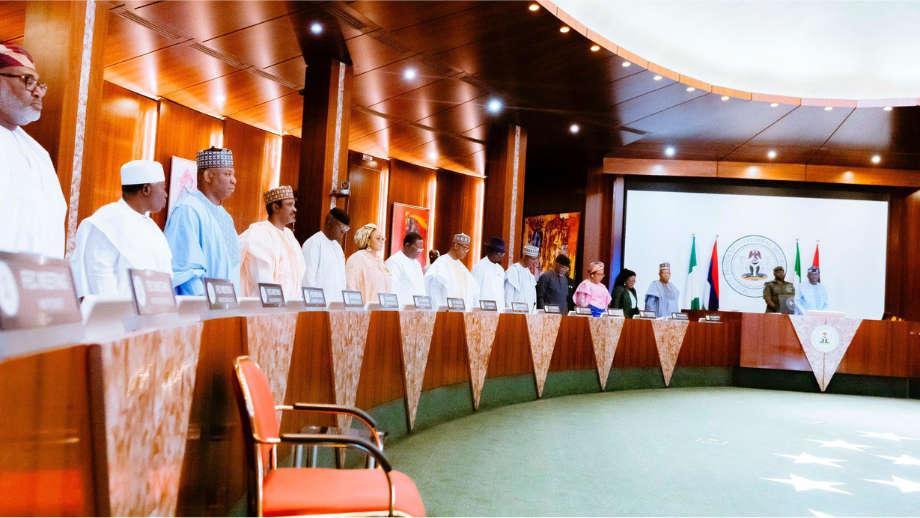
Minister of Power Joseph Olasunkanmi Tegbe disclosed the developments in Abuja following Wednesday’s Federal Executive Council meeting presided over by Tinubu at the Presidential Villa. Tegbe said the government was simultaneously addressing liquidity problems affecting power generation, attempting to recover abandoned electricity equipment and preparing major transmission projects intended to increase Nigeria’s ability to move electricity across the national grid from approximately 5,000 megawatts today to around 19,000 megawatts.
The government had earlier established approximately ₦3.3 trillion as the verified final settlement value of legacy debts accumulated across the power sector between February 2015 and March 2025. Those liabilities have been one of the most persistent financial problems facing Nigeria’s electricity industry because generation companies depend heavily on payments from the electricity market to purchase gas, maintain plants, service loans and continue producing power.
Tegbe said the payment of ₦1.23 trillion was part of an effort to restore liquidity to the electricity value chain and reduce financial pressure on generation companies and their gas suppliers. Nigeria produces a substantial portion of its electricity from gas-fired power stations, meaning unpaid bills can quickly create problems beyond the generating companies themselves if gas producers become unwilling or unable to continue supplying fuel without receiving payment.
The minister said the accumulated debts had become a direct constraint on feedstock gas supply and electricity generation. By reducing those arrears, the government hopes to improve the financial position of operators and create conditions in which power stations can operate more consistently without being repeatedly disrupted by unpaid obligations elsewhere in the electricity market.
Tinubu’s administration formally approved the ₦3.3 trillion power-sector debt settlement framework earlier in 2026 after a review of liabilities that had accumulated for roughly a decade. The government described the programme as an attempt to resolve legacy obligations that had undermined confidence among electricity generators, gas suppliers, lenders and investors.
The latest announcement indicates that a substantial portion of that programme is now being implemented, although more than half of the total verified liabilities would remain outstanding if the ₦1.23 trillion figure is measured against the government’s ₦3.3 trillion final settlement value. Further payments will therefore be required before the historical debt problem can be considered fully resolved.
The financial announcement was accompanied by an unusual disclosure concerning hundreds of containers of electricity equipment that have been left at ports across Nigeria. Tegbe said more than 300 containers containing power-sector equipment were currently stranded, with some having remained there for periods ranging from about 14 years to as long as 20 years.
Tinubu has directed the Ministry of Power to work with the Nigerian Ports Authority and the Nigeria Customs Service to resolve outstanding documentation, charges and other obstacles preventing the equipment from being released. The government intends to clear the containers and then conduct technical inspections to determine which items remain usable after spending years in storage conditions at the ports.
The age of some of the equipment creates a significant uncertainty. Electrical transformers, transmission components, cables and other specialized materials can deteriorate during prolonged storage, particularly where equipment is exposed to humidity, salt air or inadequate preservation. Some items may also have become technologically outdated during the long period they remained uncleared.
Tegbe said engineers and other technical specialists would inspect the equipment once the containers are released. Items still considered serviceable could be deployed into electricity projects across the country, while components determined to be obsolete or damaged beyond economical use would have to be disposed of or otherwise handled appropriately.
The minister described the situation surrounding the abandoned containers as unacceptable, particularly because Nigeria has simultaneously struggled with shortages of transmission equipment and aging electricity infrastructure. The government has not yet disclosed the total value of the equipment inside the containers or how much will be required to settle accumulated port and customs charges.
Tinubu also instructed the agencies involved to reconcile charges between government institutions where possible rather than allow inter-agency debts and administrative disputes to keep nationally important equipment trapped at the ports. The clearance exercise will therefore involve coordination between the Power Ministry, Customs, the Nigerian Ports Authority and potentially other agencies connected to the original importation of the equipment.
The stranded containers form part of a broader electricity infrastructure problem the administration says it is attempting to address. Nigeria has installed generation capacity substantially above the amount of electricity that can routinely be transmitted through the national grid, creating a structural mismatch between the amount power stations are theoretically capable of producing and the amount the transmission network can safely transport.
Tegbe said Nigeria’s current transmission wheeling capacity stands at approximately 5,000 megawatts. The government is targeting a major increase to about 19,000 megawatts within two years through new transmission lines, transformers, super-grid projects and upgrades to existing infrastructure.
The proposed expansion would be one of the most ambitious transmission programmes undertaken in Nigeria’s electricity sector. The government says increasing transmission capacity is essential because adding generation alone cannot significantly improve electricity supply if the network remains unable to move additional power from generating plants to distribution companies and consumers.
Tinubu has approved the commencement of procurement for proposed East and West Super Grids intended to strengthen electricity movement across different regions of the country. The projects are expected to create stronger connections between major generation and demand centers while reducing the vulnerability of the existing national grid to individual faults and transmission bottlenecks.
Tegbe said the planned network would include major corridors extending from Sokoto through parts of northern and central Nigeria toward southern demand centers. The objective is to build a more resilient transmission backbone capable of carrying substantially more power and supporting future increases in electricity generation.
Three additional transmission projects were also approved by the Federal Executive Council. One involves new underground and overhead transmission infrastructure connected to the Katampe Transmission Substation in Abuja, an important facility serving the North-Central electricity corridor.
Another project involves the design, manufacture and supply of three large 300MVA power transformers for a major transmission facility serving Lagos and surrounding areas. Such transformers are specialized pieces of equipment that often require months of manufacturing before installation because they are built to specific technical specifications rather than purchased as ordinary off-the-shelf products.
A further project will upgrade an existing transmission line along the Lagos-Shagamu industrial corridor from a single-circuit configuration to a double-circuit facility. The government says the upgrade is necessary because electricity demand has increased significantly along one of Nigeria’s most important industrial and commercial zones.
The administration has also begun a nationwide technical audit intended to identify weak, aging and underperforming electricity infrastructure. Tegbe said the exercise was already several weeks underway and was dividing the country into major energy zones so engineers could determine where replacement and rehabilitation were most urgently required.
The review includes the Lagos industrial corridor, the Abuja-Kaduna-Kano axis and major southeastern and southern transmission routes. Findings from the audit are expected to guide future investment decisions rather than relying solely on emergency repairs after major equipment failures.
One of the government’s additional projects is the construction of a new National Control Centre in Osogbo. Tegbe said the existing facility was built approximately 64 years ago and required replacement with a modern center capable of advanced real-time monitoring and management of the electricity grid.
The National Control Centre plays a critical role in coordinating generation and transmission because electricity production must be continuously balanced with demand. Failures in coordination can contribute to frequency instability and, in severe circumstances, national grid collapses.
Nigeria has experienced repeated grid disturbances and nationwide electricity outages over the years, making improvement of control systems an important part of the government’s broader reform plan. A more modern center would provide operators with improved monitoring technology and better information about conditions across the network.
The administration is also working to bring completed but underutilized transmission infrastructure into operation in several states, including facilities in Kano, Katsina, Bauchi and Gombe. Government officials have repeatedly complained that Nigeria has electricity assets that have been completed physically but cannot deliver their intended benefit because complementary lines, substations or other components remain unfinished.
The stranded containers are another example of that broader problem. Equipment purchased for electricity projects can remain unused for years because of procurement disputes, customs charges, abandoned contracts or inadequate coordination between agencies, even while the country experiences severe shortages in the same categories of infrastructure.
The government’s plan to lift transmission capacity toward 19,000MW is therefore not simply a matter of constructing new power lines. It requires rehabilitating old assets, releasing equipment already purchased, installing transformers, improving control systems and creating stronger operational coordination between the institutions responsible for running the grid.
Tegbe said the government is also reviewing the relationship between the Transmission Company of Nigeria and the Nigerian Independent System Operator following reforms designed to separate the management of physical transmission infrastructure from independent operation of the electricity system. Officials believe clearer responsibilities could improve decision-making and reduce operational delays.
Greater private-sector participation is also being considered. Nigeria privatized much of its electricity generation and distribution industry in 2013, while transmission remained largely under federal government control. More than a decade later, financial weaknesses, inadequate metering, poor collections, gas constraints, transmission limitations and large government subsidies continue to affect the sector.
Nigeria’s electricity market has struggled with what officials describe as a liquidity crisis because distribution companies frequently do not collect enough revenue from consumers to pay the full cost of electricity supplied to them. The resulting shortfall moves backward through the value chain, leaving generation companies unpaid and gas producers exposed to significant receivables.
Government tariff subsidies have attempted to bridge part of that gap, but accumulated obligations have repeatedly reached hundreds of billions or trillions of naira. The ₦3.3 trillion legacy-debt settlement is intended partly to clean up the historical liabilities so the sector can operate on a more sustainable financial basis.
Whether the payment programme produces a visible improvement in electricity supply will depend on more than clearing old debts. Nigeria will still need sufficient gas availability, reliable generating plants, stronger transmission infrastructure and distribution companies capable of delivering power to consumers and collecting payment.
That explains why the administration is presenting the debt settlement alongside its transmission expansion programme rather than treating them as separate policies. Paying generators without strengthening the grid could leave additional power stranded at generating plants, while building transmission lines without addressing the financial weakness of generators could leave the network without sufficient reliable electricity to carry.
Renewable and decentralized electricity projects are also forming part of the government’s wider approach. Tegbe said solar mini-grids have been installed or are being developed at federal universities and teaching hospitals, providing institutions with electricity that does not depend entirely on the national grid.
Such interventions are intended to reduce pressure on the grid while providing critical institutions with more reliable supply. Universities and hospitals can face serious operational problems during outages because laboratories, medical equipment, information systems and other essential services require continuous electricity.
The government’s latest announcements amount to one of the broader packages of measures presented since Tinubu began pushing for accelerated power-sector reform. They combine debt repayment, transmission construction, recovery of abandoned equipment, grid modernization and alternative energy projects.
The scale of the targets will nevertheless invite scrutiny. Increasing transmission capacity from about 5,000MW to approximately 19,000MW within two years would require extremely rapid procurement and construction across a sector where large infrastructure projects have historically faced delays involving financing, land acquisition, procurement disputes and contractor performance.
Similarly, clearing 300 containers does not automatically mean that all the equipment inside can immediately be installed. Some items may require refurbishment, others may no longer meet current technical specifications, and certain components could prove unusable after years at the ports.
The government has acknowledged that technical inspection must come first. The immediate objective is to end the situation in which potentially valuable power equipment remains inaccessible because of unresolved charges and administrative problems.
For generation companies, attention will center on the remaining debt. If the ₦1.23 trillion payment is measured against the government’s ₦3.3 trillion verified settlement, a substantial balance remains to be resolved. Continued payments will be necessary if the administration is to achieve its stated objective of restoring confidence and improving gas supply to generating plants.
For electricity consumers, the ultimate measure will be whether the reforms translate into longer hours of supply and fewer disruptions. Financial settlements and new transmission projects can strengthen the system, but their significance will depend on whether electricity actually reaches homes, businesses and industries more reliably.
The Federal Government is now attempting to address several longstanding weaknesses simultaneously rather than treating generation, transmission and financial problems in isolation. Tinubu’s order to release equipment left at the ports for as long as 20 years also highlights how deeply administrative failures can undermine infrastructure investment even after money has already been spent on equipment.
The coming months will show how quickly the containers can be cleared, how much of the equipment remains usable and whether procurement for the East and West Super Grids progresses on the timetable announced by the government. Officials will also face pressure to provide clearer updates on the remaining GenCo debt and the sources of financing required to sustain payments.
For now, the administration says ₦1.23 trillion has been committed toward resolving legacy electricity-sector obligations, more than 300 containers of power equipment are being targeted for clearance and a transmission network currently capable of moving roughly 5,000MW is being prepared for expansion toward 19,000MW. Delivering those objectives would represent a major restructuring of Nigeria’s electricity infrastructure, but the results will ultimately be judged by whether the long-promised improvements become visible in the daily power supply received by Nigerians.