TINUBU RULES OUT ANY RETURN TO FUEL SUBSIDY AS HE COMPARES REVERSAL CALLS TO ASKING MOSES TO RETURN TO EGYPT
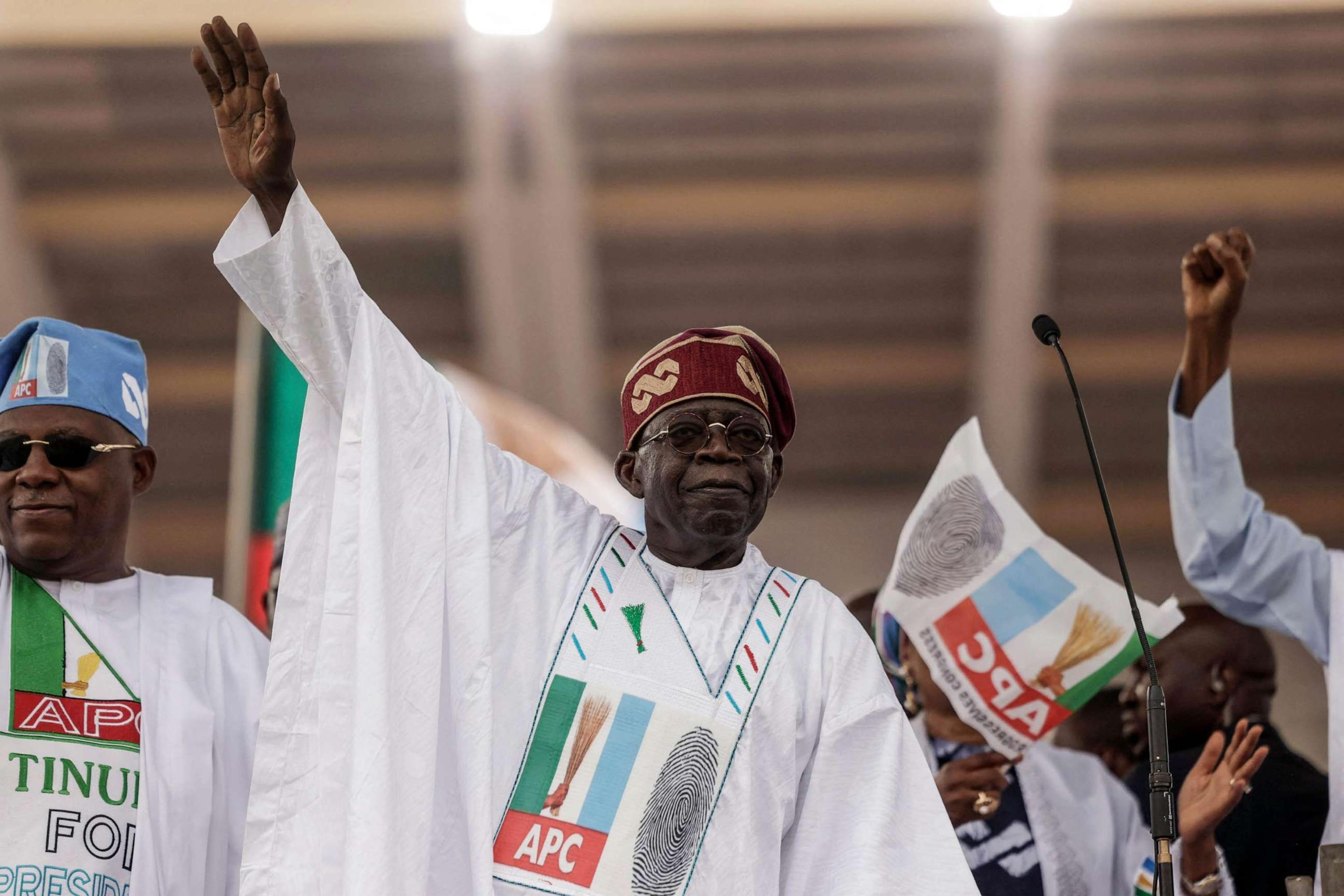
President Bola Tinubu has again ruled out any return to Nigeria’s former petrol subsidy system, saying the policy he abolished on his first day in office will not be reversed. Speaking at a City Boy Movement gathering, Tinubu said Nigeria had been heading toward bankruptcy under the old arrangement and compared calls to restore the subsidy to asking Moses to return to Egypt after leaving it. The President maintains that subsidy removal, foreign-exchange reform and other economic changes have placed Nigeria on a more sustainable growth path, while his government is promoting CNG transport, targeted relief and other alternatives to reduce the impact of higher fuel prices.
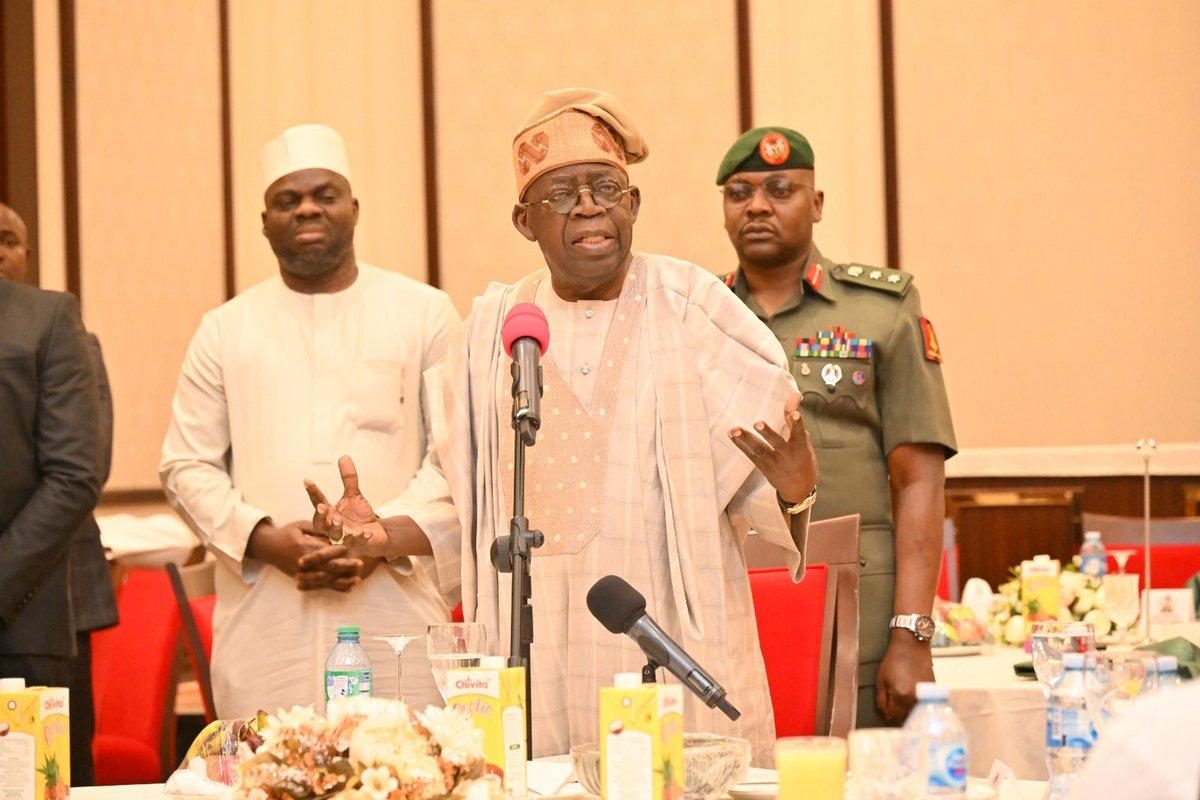
President Bola Ahmed Tinubu has again ruled out any return to Nigeria’s former petrol subsidy regime, insisting that the policy he removed on his first day in office remains irreversible despite renewed political pressure over the cost of fuel and the wider cost of living. Speaking on Monday, October 19, during a gathering of supporters under the City Boy Movement at the State House, Tinubu argued that Nigeria could no longer afford the fiscal burden created by fuel subsidies and said reversing the reform would amount to abandoning the economic direction his administration has pursued since 2023. Using a biblical and Quranic analogy, the President compared calls for subsidy restoration to asking Moses, or Musa, to return to Egypt after leaving it, saying Nigeria should not go back to a system he believes had pushed the country toward financial crisis.
Tinubu said the decision to remove the subsidy was taken immediately after he assumed office because government finances had become too weak to sustain the payments. He argued that Nigeria was approaching bankruptcy and that there was no realistic fiscal space to continue spending trillions of naira subsidising petrol while infrastructure, healthcare, education and other public services required substantial investment. His latest remarks repeat a position he has maintained throughout his presidency, which is that the subsidy system created distortions, encouraged waste and diverted public resources away from development priorities.
The President acknowledged that political opponents have continued promising to restore fuel subsidies or introduce policies that would reduce petrol prices more aggressively, but he rejected those proposals as a return to an economic model his administration deliberately abandoned. Tinubu said he was aware of opposition arguments favouring subsidy restoration, yet insisted that the country should continue along the current reform path rather than reverse direction because of political pressure. His comparison with the Israelites leaving Egypt was intended to reinforce the idea that difficult reforms should not be abandoned simply because the transition has imposed hardship on citizens.
The fuel subsidy was formally removed in May 2023 when Tinubu declared during his inauguration that the arrangement was over. The announcement immediately transformed Nigeria’s fuel market because petrol prices rose sharply once government stopped covering the difference between international and domestic costs. Before the reform, pump prices were below ₦200 per litre in many parts of the country, but current prices have moved far higher, with major stations recently selling petrol at around ₦1,350 to ₦1,405 per litre. That increase has affected transport, food distribution, manufacturing and household spending because petrol remains deeply integrated into the Nigerian economy.
Tinubu’s government has repeatedly argued that the old subsidy arrangement was financially unsustainable. In his third-anniversary statement in May 2026, the President said Nigeria had been spending as much as ₦18.4 billion every day on petrol subsidies at the height of the system and more than ₦4 trillion in 2022 alone. He argued that continuing at that scale would have prevented government from investing enough in roads, hospitals, schools, housing and other critical infrastructure while increasing pressure on public debt and government revenue.
The administration’s central argument is that removing the subsidy created fiscal space that can be redirected toward development and allowed Nigeria to begin correcting long-standing distortions in government finances. Tinubu has repeatedly linked the petrol reform with the decision to unify the foreign exchange market and restructure taxes, describing them collectively as necessary measures to stabilise the economy. The Presidency says those reforms were painful but unavoidable because the alternative would have been continued fiscal deterioration and potentially deeper economic instability.
Opposition figures and many ordinary Nigerians have challenged that argument because the social cost of the reform has been severe. Higher fuel prices contributed directly to increased transportation costs and indirectly to higher food and consumer prices as businesses passed additional energy and logistics expenses on to customers. Households that depend on petrol generators for electricity have also faced higher costs, while transport workers and small businesses have struggled to absorb repeated price increases. This has made fuel subsidy policy one of the most politically sensitive issues in Nigeria and a major point of disagreement ahead of the 2027 election cycle.
Tinubu has acknowledged those hardships but continues to argue that reversing the reform would create even greater economic problems. In his October 1 Independence Day address, he warned Nigerians against what he described as calls to return to addictive subsidies and said the government’s reforms were designed to confront existing weaknesses rather than create them. He maintained that the initial economic pain should be understood as part of a wider adjustment process intended to place Nigeria on a more sustainable path.
The government has attempted to soften the impact by expanding compressed natural gas programmes, electric transport initiatives and targeted interventions designed to reduce transportation costs. In September, Tinubu announced further measures under the National Affordable CNG Transit Programme and argued that the solution to high petrol prices should be cheaper alternative transport rather than a return to the previous subsidy structure. The Presidency said some states had already begun operating CNG and electric buses at fares significantly below conventional transport prices, while additional conversions and refuelling infrastructure were being developed.
That approach reflects the administration’s broader strategy of replacing universal fuel subsidies with targeted relief. Under the old system, government effectively subsidised every litre of petrol consumed regardless of the income of the buyer, which Tinubu’s economic team argues meant wealthier households and commercial users also benefited significantly. The current policy is intended to direct more assistance toward transport, vulnerable households and specific sectors rather than returning to a nationwide petrol price subsidy.
Critics remain unconvinced because targeted programmes have not always reached enough people quickly enough to offset the increase in living costs. For many Nigerians, the most visible consequence of subsidy removal remains the price displayed at petrol stations and the resulting transport fares, while the fiscal benefits described by government can feel more distant or difficult to measure in everyday life. This gap between macroeconomic indicators and household experience has become one of the main political challenges facing the administration.
Tinubu nevertheless says the economy is beginning to show evidence that the reforms are working. In his Independence Day address, he pointed to economic growth above four per cent, stronger non-oil exports, improved foreign reserves and greater stability in the foreign exchange market. The Presidency has also cited lower public debt relative to GDP and stronger state-level revenue as signs that Nigeria’s fiscal position is improving after the initial adjustment period.
Those improvements do not automatically resolve the public debate over petrol prices because citizens are more likely to judge economic policy through wages, food prices, transport costs and employment opportunities than through reserve figures or fiscal ratios. Tinubu’s administration therefore faces the difficult task of demonstrating that macroeconomic stabilisation can eventually produce visible improvements in living standards rather than remaining an achievement measured only through national statistics.
The President has increasingly framed this as the next phase of his economic programme. In May, he said the emergency phase of stabilisation had begun giving way to a focus on shared prosperity, job creation and lower household costs. He acknowledged that the reforms had imposed sacrifices but argued that government now had to ensure those sacrifices translated into better outcomes for ordinary Nigerians.
Fuel policy sits at the centre of that transition because petroleum prices affect nearly every part of the economy. Nigeria remains heavily dependent on road transport, while many businesses still rely on generators because of unreliable public electricity. Even sectors that do not directly use large quantities of petrol can experience higher costs when suppliers, workers and distributors pay more for transportation.
The subsidy therefore had an unusually broad social and economic effect, which is one reason its removal produced such strong public reaction. Supporters of the reform argue that the previous system hid the true cost of petrol while creating enormous government liabilities, whereas critics say the timing and implementation exposed households to sharp price increases before adequate transport and social protections were in place.
Nigeria’s domestic refining situation has also shaped the debate. The expansion of the Dangote refinery and changes in petroleum-product supply have altered expectations about local fuel production, but domestic refining does not necessarily guarantee cheap petrol because prices remain influenced by crude oil costs, exchange rates, taxes and market conditions. The government’s position is that Nigeria should allow those market forces to operate rather than return to direct subsidy payments whenever pump prices increase.
Global energy prices have added additional pressure in 2026, with international crude prices rising amid geopolitical uncertainty. Tinubu’s administration has argued that returning to subsidy during periods of high global prices would once again expose the federal budget to enormous and unpredictable expenditure. In September, the President described the former subsidy system as ruinous precisely because it left Nigeria vulnerable to movements in international oil markets.
That exposure was one of the biggest problems under the old regime because government payments increased automatically when global petrol prices rose or the naira weakened. A weak currency meant imported petroleum products became more expensive in naira terms, while subsidy payments had to cover the difference between those costs and the regulated domestic price.
Nigeria’s former dependence on imported petrol made the situation especially difficult. Despite being one of Africa’s largest crude oil producers, the country spent years importing much of the refined petrol it consumed because domestic refineries were either underperforming or shut down. The combination of imports, a weak currency and regulated pump prices created a subsidy bill that successive governments struggled to control.
Tinubu’s administration argues that eliminating the subsidy has removed that automatic fiscal liability and given investors a clearer basis for participating in refining and fuel distribution. Supporters also contend that market pricing reduces opportunities for smuggling subsidised petrol across Nigeria’s borders because there is less price difference between domestic and neighbouring markets.
Smuggling was repeatedly cited under previous governments as a major source of subsidy losses. Because Nigerian petrol was artificially cheaper than fuel sold in some neighbouring countries, traffickers had a strong incentive to move subsidised products across borders and sell them at higher prices. Government officials argued that Nigerian taxpayers were effectively subsidising consumption outside the country as a result.
The current administration says market pricing has reduced that distortion, although petroleum-sector transparency remains an important public concern. Nigerians still want clearer information about production volumes, refinery operations, import requirements and how taxes or other charges contribute to the final pump price.
The political argument over subsidy is becoming more intense because the country is moving closer to another general election. Opposition parties have increasingly focused on the cost of living and have presented alternative economic proposals, including different approaches to fuel pricing. Tinubu’s latest remarks show that his administration intends to defend subsidy removal rather than soften its position as campaigning intensifies.
At Monday’s event, Tinubu directly referenced political opponents who have promised a return to subsidy and made clear that he sees the issue as a fundamental difference in economic direction. He also urged supporters to explain his administration’s achievements to voters and mobilise young Nigerians ahead of future elections, placing the fuel-subsidy debate squarely inside the growing political competition surrounding 2027.
The fact that the remarks were delivered to a political support movement is relevant because the speech combined economic policy with campaign mobilisation. The City Boy Movement and allied groups have been promoting Tinubu’s record and encouraging support for his administration, while the President used the gathering to defend policies likely to become central issues in the coming election.
This does not change the substance of the subsidy position, which the government has expressed repeatedly through official statements outside political events. The Presidency has said on several occasions that the subsidy will not return and has instead promoted CNG, electric vehicles, targeted cash transfers and other measures as alternatives to universal petrol support.
Finance officials have reinforced the same message. Current government economic managers have warned that any announcement suggesting a return to fuel subsidies could quickly damage investor confidence, increase pressure on the naira and raise borrowing costs. Their argument is that markets now assume Nigeria will maintain its reform programme and that reversing course abruptly could undermine the credibility built since 2023.
The administration therefore treats policy consistency as an economic asset. Investors making long-term decisions need confidence that pricing systems, exchange-rate rules and tax policies will not be reversed suddenly for political reasons. Tinubu’s refusal to reconsider petrol subsidy is partly intended to send that signal of continuity even when domestic pressure rises.
That stance carries political risks because citizens may respond negatively if they believe government is ignoring genuine hardship. The administration must therefore continue demonstrating how savings from subsidy removal are being used and whether public services, infrastructure and social programmes are improving as promised.
Transparency will be central to that argument. Nigerians are more likely to accept difficult reforms if they can see clearly where the money previously spent on subsidies is now going and whether states and federal agencies are using additional revenue effectively. Without that visibility, the government risks allowing the reform to become associated only with higher prices rather than with the development benefits it says are being created.
The World Bank has recently pointed to stronger state-level revenue and improving public-debt indicators as evidence that Nigeria’s fiscal position has become more resilient, and Tinubu has cited those findings in defending the reform agenda. The Presidency says increased revenue should allow governments at all levels to invest more in healthcare, education, infrastructure and job creation.
The key challenge is converting that fiscal improvement into household relief. Rising government revenue does not automatically reduce the price of transport or food, especially when global energy prices remain high. States and federal agencies therefore need to use the additional fiscal space in ways that can lower costs or raise incomes if the political support for reforms is to be sustained.
CNG remains one of the government’s preferred solutions because Nigeria has large natural gas reserves. The administration believes converting buses, taxis and commercial vehicles from petrol to compressed natural gas can reduce transport costs and decrease exposure to international petrol prices. The success of that strategy will depend on how quickly conversion centres, filling infrastructure and affordable vehicles become available across the country.
Electric transport is another component, but Nigeria’s electricity and charging infrastructure creates additional challenges. Large-scale adoption requires reliable power supplies, financing for vehicles and charging networks that extend beyond major cities. As a result, CNG is likely to remain the more immediate alternative for commercial transport.
Targeted cash transfers are also being expanded. The Presidency says more than 10 million households have already benefited from federal programmes intended to cushion the effect of reforms, although the adequacy and targeting of those payments remain subjects of public debate.
For businesses, the absence of subsidy creates both challenges and opportunities. High fuel prices increase operating costs, but more predictable market pricing can encourage investment in refining, transportation and alternative energy if companies believe government will not suddenly return to a regulated system that distorts commercial returns.
The private Dangote refinery has become one of the most important developments in that new market structure because it gives Nigeria additional domestic refining capacity and potentially reduces dependence on imported petroleum products. However, local refining does not eliminate the need for transparent pricing and competitive distribution, particularly when crude oil and foreign exchange remain major cost factors.
The government also has to ensure that deregulation does not simply replace one problem with another. A market without effective competition can still produce high prices or allow dominant companies to influence supply. Regulators therefore remain responsible for monitoring competition, quality standards and consumer protection even after direct subsidy payments have ended.
Tinubu’s Moses analogy is likely to become one of the most memorable political lines in the latest subsidy debate because it presents the reform as a journey that cannot simply be reversed when the route becomes difficult. The symbolism is clear: the President sees the old subsidy system as something Nigeria deliberately escaped and views a return as economically backward rather than compassionate.
Opponents are likely to challenge that framing by arguing that citizens are not demanding a return to waste or corruption but relief from prices that have become unaffordable for many households. That distinction will shape the political debate because both sides can agree that the old system had problems while disagreeing sharply over whether current market pricing is the only alternative.
The most important policy question is therefore not simply whether the subsidy should return in its previous form. Nigeria could theoretically consider targeted transport support, temporary price relief, tax changes or other mechanisms without recreating the full nationwide subsidy regime. The government has already used temporary interventions of this kind, including recent petrol discounts through NNPC Retail, while insisting that those measures do not represent a restoration of the old subsidy.
This shows that the administration’s rejection of subsidy does not mean it will never intervene in fuel-related costs. The distinction it is making is between temporary or targeted relief and a permanent system in which the federal government continuously pays the difference between market costs and a regulated national petrol price.
That difference is likely to become increasingly important if global oil prices remain elevated. The government may face pressure to provide relief while simultaneously trying to preserve the credibility of its no-subsidy position. Temporary discounts, CNG transport support and social programmes could therefore become more prominent tools.
For Tinubu, the political challenge is convincing Nigerians that staying the course will eventually produce better outcomes than reversing direction. He has repeatedly asked citizens to judge the reform over a longer period rather than only by its immediate pain and has argued that Nigeria is now moving from stabilisation toward growth.
The economic evidence is mixed in ways that allow both government and critics to make strong arguments. Growth and public revenue have improved in some areas, but the cost of living remains a serious burden for households. Inflation has eased from previous peaks, yet prices are still much higher than they were before the reform period began.
This means the next stage of the debate will focus less on whether subsidy removal improved government finances and more on whether those improvements are producing tangible benefits for ordinary Nigerians. If wages, transport costs, employment and public services improve, the administration will have stronger evidence for its position. If households continue feeling poorer despite better macroeconomic indicators, opposition calls for a different policy direction will remain politically powerful.
Tinubu’s latest statement leaves no ambiguity about where he stands. He believes returning to fuel subsidy would revive a system that threatened Nigeria’s finances and undermine the credibility of the reforms pursued since 2023. His administration intends instead to continue with market pricing while expanding alternatives designed to make transport and energy more affordable.
The issue will remain one of the defining economic questions of the Tinubu presidency because few policies have affected Nigerian households as directly as the removal of petrol subsidy. It reshaped transport costs, government finances, fuel markets and the political conversation around economic reform almost immediately after he took office.
The President’s October 19 remarks therefore represent more than another defence of a decision made three years ago. They signal that his administration intends to carry the policy unchanged into the next phase of Nigeria’s economic and political cycle, despite continued criticism and the likelihood that fuel prices will remain a major campaign issue.
Tinubu’s position is now unmistakable. He removed the subsidy when he entered office because he believed Nigeria could no longer afford it, he continues to argue that the decision helped prevent fiscal collapse, and he has rejected calls to reverse course even as households continue confronting the consequences of higher energy costs. By comparing any return to the old system with asking Moses to return to Egypt, the President has framed the subsidy debate as a choice between continuing a difficult reform journey and returning to an economic model he considers financially unsustainable.