TINUBU SAYS HIS GOVERNMENT NEVER BULLIES JUDGES, BUT NIGERIA'S RECORD OF RAIDS, DEFIED ORDERS AND EMERGENCY RULE TELLS A MORE COMPLICATED STORY
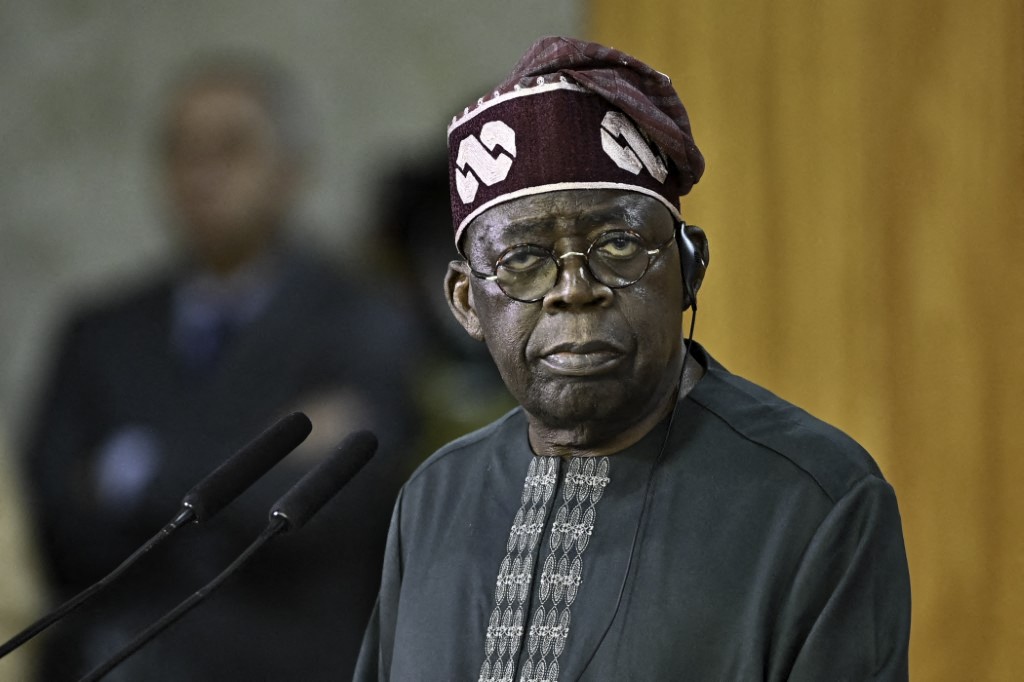
President Bola Tinubu has declared that his administration respects court judgments, including rulings it dislikes, and does not denigrate, attack or intimidate the judiciary. Speaking at the Wole Olanipekun & Co. Justice Summit, the President described judicial independence as a personal commitment. He told the audience, "I can assure you in this room that I have kept and I promise to keep it." He warned that "a government that bullies its judges only weakens its own foundation," and tied the courts directly to economic growth: "Every timely judgment is an advertisement for the Nigerian economy." The words are strong and, on paper, exactly what investors, lawyers and democracy advocates want to hear. They also arrive against a long and troubled history between Nigeria's executive and its courts. That history includes military decrees that shut judges out, the Obasanjo-era refusal to obey a Supreme Court ruling on Lagos local government funds, the 2016 night raids on judges' homes, and the suspension of a sitting Chief Justice weeks before the 2019 election. Tinubu's own tenure has a mixed record. It includes a landmark win for local government autonomy and higher pay for judges, but also the re-arrest of former CBN Governor Godwin Emefiele after a court granted him bail and the 2025 state of emergency in Rivers State, which critics called an assault on constitutional order. The pledge matters. Whether it holds will be judged by conduct, not speeches.
There are few sentences a Nigerian president can say that carry more weight in a room full of lawyers than a promise to obey the courts. President Bola Tinubu chose to say several of them at once.
Speaking at the Wole Olanipekun & Co. Justice Summit, the President told judges, senior advocates and legal practitioners that his administration respects judicial decisions, including those that go against it. "Our administration respects court judgments, even the ones we do not enjoy reading," he said. "We do not denigrate, attack, or intimidate the judiciary."
He then went further, framing respect for the courts as a matter of self-preservation for any government. "A government that bullies its judges only weakens its own foundation," he said. Tinubu described his support for the justice system as personal, telling the audience: "This is a personal commitment. I can assure you in this room that I have kept and I promise to keep it."
The President also linked the courts to the economy. He described the judiciary and the legal profession as indispensable partners in Nigeria's push for growth and urged them to help strengthen the country's image as a place where businesses and investors can operate with confidence. "Every timely judgment is an advertisement for the Nigerian economy," he said.
As political rhetoric, it was polished and well judged for its audience. As a statement of principle, few would disagree with it. The harder question is whether it matches the record. In Nigeria, the relationship between the executive and the judiciary has rarely been defined by speeches. It has been defined by what governments do when a judgment arrives that they do not like. Those moments have often told a very different story from the one presidents tell at summits and legal-year ceremonies.
Tinubu's declaration deserves to be taken seriously for that very reason. A president who publicly commits to respecting the courts sets a standard against which he can be measured. The value of the pledge lies in that measurement.
The setting itself is worth noting. Wole Olanipekun, the senior advocate whose firm hosted the summit, is one of Nigeria's most prominent lawyers. He led Tinubu's legal team at the Presidential Election Petition Court after the disputed 2023 election, when Atiku Abubakar of the Peoples Democratic Party and Peter Obi of the Labour Party challenged the President's victory. The tribunal upheld Tinubu's win in September 2023, and the Supreme Court affirmed it in October 2023. Nothing about the summit was improper. Senior lawyers host events, and presidents attend them. But the backdrop is a reminder of how closely Nigeria's political fortunes are tied to its courts, and how deeply the judiciary has become an arena where power is won, defended and lost.
That reality is central to understanding why Tinubu's words matter. In Nigeria, courts do not only settle contract disputes and criminal trials. They decide who governs. Election tribunals and appellate courts have overturned governorship results, ordered reruns and installed winners. They decide disputes between the federal government and the states, between governors and lawmakers, and between rival factions of political parties. Since the return to civilian rule in 1999, the judiciary has become one of the most powerful institutions in the country and one of the most politically exposed. Every major political actor has an interest in how judges rule. That creates constant pressure, open and hidden, on the people who sit on the bench.
Nigeria's judiciary has endured direct assaults on its authority before. Under military rule, the most damaging weapon against the courts was the ouster clause. Military regimes ruled by decree and routinely inserted provisions stating that no court could question actions taken under those decrees. Judges could hear a case and still be barred from granting any meaningful relief. Detention decrees allowed the government to hold critics without trial, and courts that ordered their release were often ignored. Human rights lawyers such as the late Gani Fawehinmi spent years in and out of detention while pressing cases that judges were powerless to enforce. The message was clear. The law existed, but it bent to the will of whoever held the guns.
The 1999 Constitution was meant to end that era. It placed judicial power firmly in the courts and set out a structure for judicial appointments and discipline through the National Judicial Council. Yet civilian governments soon found their own ways to test the limits of judicial authority.
One of the most striking examples involved Tinubu himself. As governor of Lagos State, he created new local council development areas, a move the federal government under President Olusegun Obasanjo rejected. Obasanjo responded by withholding the statutory allocations due to Lagos local governments. Lagos went to the Supreme Court, and in December 2004 the court ruled that the President had no power to withhold the funds. The Obasanjo administration still did not release them. The money was paid only after Obasanjo left office. For years, the Lagos case was cited as a textbook example of executive disobedience of the country's highest court.
That history gives Tinubu's declaration an unusual dimension. Few Nigerian presidents have experienced, as directly as he did, what it means to win in court and still be denied the fruits of that victory. When he says that a government that bullies its judges weakens its own foundation, he speaks as someone who once stood on the other side of that equation.
The administration of President Muhammadu Buhari produced some of the most troubling episodes in the modern history of executive-judicial relations. In October 2016, operatives of the Department of State Services carried out night raids on the homes of several judges, including two serving justices of the Supreme Court, in what the agency described as an anti-corruption operation. Armed officers entered judges' residences in the early hours, and several judges were arrested. The government defended the raids as part of its war against graft. Lawyers, the Nigerian Bar Association and many judges condemned them as an attempt to intimidate the bench. Several of the judges later had charges against them dismissed or were acquitted. The image of security agents breaking into the homes of senior judges at night, however, did lasting damage to perceptions of judicial independence.
In January 2019, weeks before a presidential election in which Buhari was a candidate, the President suspended Chief Justice Walter Onnoghen. The move rested on an ex parte order from the Code of Conduct Tribunal over allegations that Onnoghen had failed to properly declare his assets. Critics argued that the Constitution required the involvement of the National Judicial Council and the Senate before a Chief Justice could be removed. They also noted that the Chief Justice heads the institution that would hear any challenge to the election's outcome. Onnoghen was later convicted by the tribunal and resigned. Supporters of the government said the law had simply been applied to a powerful official. Opponents saw a sitting president sidelining the country's most senior judge at the most politically sensitive moment possible. Whatever view one takes of the asset declaration allegations, the timing and method left a deep mark.
The Buhari years also saw repeated disobedience of court orders granting bail or release. Former National Security Adviser Sambo Dasuki remained in detention for years despite multiple court orders granting him bail. Ibrahim El-Zakzaky, leader of the Islamic Movement in Nigeria, remained in custody after a Federal High Court ordered his release in December 2016. In December 2019, DSS operatives re-arrested activist Omoyele Sowore inside a courtroom in Abuja, a day after he had been released on a court's orders. The scene caused outrage in the legal community and beyond. The government argued in some of these cases that national security concerns justified its actions. Critics countered that a government that obeys only the judgments it agrees with does not respect the courts at all.
Even in the final months of Buhari's tenure, the tension resurfaced. During the cash crisis caused by the naira redesign policy in early 2023, the Supreme Court ruled that old naira notes should remain legal tender until the end of that year. For days afterward, there was no clear compliance from the federal government or the Central Bank of Nigeria. The confusion deepened the hardship facing ordinary Nigerians. Compliance eventually came, but only after a wave of criticism.
Other administrations faced their own controversies. Under President Goodluck Jonathan, the 2011 suspension of Court of Appeal President Ayo Salami, following a bitter dispute within the judiciary's leadership, was widely seen as politically charged. Pressure on the courts in Nigeria has not always come through dramatic raids or defied judgments. It has also come through appointments, transfers, funding and disciplinary processes.
That last point matters because one of the most enduring weaknesses of the Nigerian judiciary is financial. For years, judicial officers complained of poor pay, inadequate facilities and dependence on the executive for funds. At the state level, governors have long controlled the purse strings of state judiciaries, despite constitutional provisions intended to guarantee their financial independence. Courts that must lobby governors for money to pay staff, buy equipment or maintain buildings can hardly be described as fully independent. In 2020, Buhari issued an executive order aimed at enforcing financial autonomy for state legislatures and judiciaries, but the Supreme Court later struck it down as unconstitutional. The problem remains unresolved in many states.
Against that backdrop, Tinubu's record on the judiciary deserves a fair hearing, because it contains real points in his favor.
In 2024, the President signed legislation approving a substantial increase in the salaries and allowances of judicial officers, from the Chief Justice of Nigeria to judges of the lower courts. Pay for judges had stagnated for well over a decade while inflation eroded its value. Legal practitioners had long warned that poorly paid judges are more vulnerable to corruption and that low pay discourages the best lawyers from joining the bench. The increase was welcomed by the Nigerian Bar Association and judicial leaders as overdue. It is the kind of structural reform that strengthens independence more than any speech.
Tinubu's government also drove one of the most significant constitutional cases in recent years. The federal government, through Attorney General Lateef Fagbemi, sued the 36 state governments over their control of local government funds. In July 2024, the Supreme Court ruled that local government allocations must be paid directly to democratically elected councils, not routed through state governments. The judgment was hailed as a major step toward real local government autonomy. Implementation has been slow and contested, as states have resisted giving up control. But the administration chose the courts to resolve a deep political conflict rather than acting unilaterally. That is a meaningful distinction from the Obasanjo era.
The administration has also, at times, stepped back after public backlash over the use of state power against citizens. In November 2024, after a group of minors arrested during the #EndBadGovernance protests appeared in court looking malnourished, sparking national outrage, Tinubu ordered their release and the charges were dropped. The episode reflected poorly on the security and prosecutorial agencies involved. The intervention from the presidency, however, showed some responsiveness to public pressure.
The record also contains episodes that sit uneasily with the President's words.
Shortly after Tinubu took office in 2023, former Central Bank Governor Godwin Emefiele was suspended and detained by the DSS. A court later granted him bail on criminal charges. Instead of walking free, Emefiele was re-arrested by DSS operatives at the Ikoyi Correctional Centre in Lagos, in a scene that brought back memories of the Sowore courtroom arrest. The incident drew sharp criticism from lawyers and civil society groups, who argued that it showed the security services continuing old habits under a new government. Emefiele was eventually arraigned on further charges and remained in the court system. His case is ongoing, and nothing about it implies guilt or innocence. But the circumstances of his re-arrest raised precisely the question Tinubu's speech claims to answer: what happens when a court ruling is inconvenient?
The most serious test came in Rivers State. A long-running political battle between Governor Siminalayi Fubara and lawmakers loyal to his predecessor, Nyesom Wike, who serves as Tinubu's Minister of the Federal Capital Territory, produced a tangle of litigation over the state's budget, its House of Assembly and its local government funds. In early 2025, the Supreme Court delivered a ruling that went against Fubara on key issues, including the validity of the Assembly led by the pro-Wike faction and the funding of the state. Weeks later, in March 2025, Tinubu declared a state of emergency in Rivers State. He suspended the governor, his deputy and members of the House of Assembly for six months and appointed a retired naval chief as sole administrator.
The President said the step was necessary to restore order, citing political paralysis and attacks on oil infrastructure. He presented it as an effort to give effect to the Supreme Court's findings in a situation where the state government had broken down. Critics, including many senior lawyers, the Nigerian Bar Association and opposition figures, argued that the Constitution does not give the President power to remove an elected governor and legislature, even under emergency rule. They warned that the move set a dangerous precedent that could be used against other states. The emergency ended after six months, and Fubara returned to office. The debate over its legality has not faded.
The Rivers episode is complicated precisely because it does not fit neatly into a story of a president defying the courts. The administration framed its actions as consistent with a Supreme Court ruling. Its critics saw a political crisis being resolved through executive force rather than the constitutional process. That ambiguity is at the heart of executive-judiciary relations in Nigeria. Governments rarely announce that they are ignoring a judge. They more often claim to be acting within the law, interpreting judgments selectively or relying on national security powers that courts struggle to review.
There is also the long-running case of Nnamdi Kanu, leader of the proscribed Indigenous People of Biafra. In October 2022, under Buhari, the Court of Appeal discharged Kanu and criticized his extraordinary rendition from Kenya. The federal government did not release him and appealed. In December 2023, under Tinubu, the Supreme Court overturned the discharge and ordered his trial to continue. That trial ended in November 2025 with a Federal High Court convicting Kanu on terrorism charges and sentencing him to life imprisonment, a verdict his supporters have rejected. In legal terms, the government used the appeals process rather than ignoring the courts outright. To many in the South-East, however, the case remains a symbol of what they see as selective respect for judicial decisions. The government, in their view, obeys courts when they rule its way and works around them when they do not.
It is also impossible to discuss the judiciary in Nigeria without addressing public trust in the courts themselves. Respect for the judiciary is not only about how the executive behaves. It also depends on whether citizens believe judges are independent, competent and honest. That trust has been battered in recent years. Conflicting ex parte orders from courts of coordinate jurisdiction, often issued in politically charged disputes, have become a recurring embarrassment. The 2024 tussle over the Kano emirate produced competing orders that left the public unsure which ruling to follow. Election petitions routinely spark accusations of bias, and losing parties frequently claim the courts were compromised. Allegations of corruption within the judiciary have persisted for decades. Some have been investigated by the National Judicial Council, while many others remain unresolved.
This creates a difficult paradox. A government can claim to respect the courts while benefiting from a judiciary that is widely seen as vulnerable to political influence. In that environment, the absence of open attacks on judges does not prove independence. Pressure can be exercised quietly, through appointments, promotions, postings, funding and informal contacts. Tinubu's statement that his government does not intimidate the judiciary is therefore a claim that is very difficult to verify from the outside. Open intimidation leaves evidence. Subtle influence often does not.
None of this means the President's statement is insincere. It means it can only be judged over time and through specific actions. A government that truly respects judicial independence would comply with court orders promptly, including orders for the release of detainees. It would ensure that security agencies do not re-arrest people freed by the courts. It would strengthen the financial autonomy of state judiciaries rather than leave them dependent on governors. It would protect the integrity of judicial appointments and avoid any appearance of political favoritism. It would also accept unfavorable judgments in high-profile political cases without seeking to circumvent them.
Tinubu's line that his administration respects "even the ones we do not enjoy reading" sets exactly that standard. It acknowledges that respect for the courts is meaningful only when judgments go against the government. Every administration obeys rulings it likes.
The economic dimension of Tinubu's speech may be the most significant part of it, and it deserves close attention. When the President said that "every timely judgment is an advertisement for the Nigerian economy," he touched on one of the most widely recognized weaknesses in the country's business environment.
Investors weigh many factors before committing money to a country. These include political stability, currency risk, infrastructure, security and tax policy. One factor that often receives less public attention is contract enforcement. Investors need to know that if a dispute arises, they can go to court and get a fair decision within a reasonable time. If the courts are slow, unpredictable or perceived as open to influence, the risk of doing business rises sharply. Companies then demand higher returns to compensate, insist on foreign arbitration or simply choose to invest elsewhere.
Nigeria's courts have long struggled on this front. Commercial cases can take years to resolve at first instance and many more on appeal. Cases that reach the Supreme Court can drag on for a decade or longer. Lawyers often cite adjournments, case backlogs, frequent judge transfers, limited use of technology and procedural delays as major problems. When the World Bank still published its Doing Business rankings, Nigeria regularly scored poorly on contract enforcement. Even after reforms such as specialized commercial divisions in some states and the expansion of alternative dispute resolution, delays remain a defining feature of the system.
The cost of that weakness was laid bare in the case of Process and Industrial Developments Ltd, better known as P&ID. A failed gas processing contract led to an arbitration award against Nigeria that, with interest, grew to more than $11 billion. For years, it threatened to become one of the largest financial blows in the country's history. In October 2023, a court in London set aside the award, finding that it had been obtained through fraud, including bribery and the improper use of Nigeria's confidential legal documents. The ruling was a major victory for Nigeria. The case also showed how vulnerable the country can be when contracts are poorly managed and disputes are resolved outside its own legal system. It is notable that the decisive judgment came from a foreign court, not a Nigerian one.
That is part of a broader pattern. Many major investors in Nigeria, especially in oil and gas, infrastructure and finance, write contracts that send disputes to arbitration in London, Paris or elsewhere. They do so partly because they lack confidence in the speed and predictability of Nigerian courts. Nigeria has taken steps to change this. The Arbitration and Mediation Act of 2023 modernized the country's arbitration framework. Lagos has positioned itself as a regional hub for dispute resolution. Yet building trust in local courts takes far longer than passing a law.
Tinubu's economic agenda raises the stakes. Since taking office, his government has pursued sweeping reforms. It removed the petrol subsidy, unified the exchange rate, overhauled the tax system and sought to attract foreign and domestic investment. These measures have imposed heavy costs on ordinary Nigerians, and the government has repeatedly argued that the payoff will come through increased investment, growth and jobs. That promise depends partly on the credibility of Nigeria's institutions. An investor deciding whether to build a factory, sign a long-term supply deal or buy government bonds wants to know that the rules will be applied consistently and that disputes will be settled fairly.
In that sense, the President's linking of the judiciary to economic growth is not just rhetoric. Rule of law is an economic asset. Countries where courts are independent and efficient tend to attract more long-term investment, because investors feel protected against arbitrary action by the government or business partners. Countries where governments are seen as ignoring court orders send a warning to investors. If the state does not respect the courts when it disagrees with them, an investor may reasonably wonder whether the state will respect a contract, a license or a tax agreement when it becomes inconvenient.
That is why disobedience of court orders has economic consequences well beyond the individual cases involved. When a court grants bail and a security agency re-arrests the person at the prison gate, that image travels. It is noted by diplomats, rating agencies, foreign investors and human rights organizations. It shapes how Nigeria's institutions are judged. Every such episode undercuts the President's argument that the judiciary can serve as an advertisement for the economy.
There is another dimension to "timely judgment" that deserves attention. Delay is not only a problem for investors. It is a daily burden for ordinary Nigerians. A large share of the people held in Nigerian correctional facilities are awaiting trial rather than serving sentences. Many have spent years in detention without a verdict. Some have been held longer than the maximum sentence for the offense they are accused of committing. Families wait years for inheritance cases, land disputes and labor claims to be resolved. Small businesses can be ruined by contract disputes that drag on endlessly. For these Nigerians, timely justice is not an advertisement. It is the difference between freedom and confinement, between survival and collapse.
If the administration is serious about timely justice, the solutions are well known. They include appointing more judges and supporting staff, investing in court technology such as electronic filing and virtual hearings, reducing frequent adjournments, strengthening case management and making better use of alternative dispute resolution. Reform of the Administration of Criminal Justice Act framework and its full implementation across the states would help. So would improved funding for legal aid. Many of these measures require cooperation between the federal government, state governments, the National Judicial Council and the legal profession. They are less dramatic than a speech, but they would do more to prove the President's point.
The question of democratic governance runs through all of this. A democracy depends on a balance of power between the executive, the legislature and the judiciary. The judiciary is the weakest of the three in a practical sense. It has no army, no police force of its own and no control over public money. Its power rests almost entirely on the willingness of others, especially the executive, to obey its decisions. When a government complies with an unfavorable ruling, it reinforces the authority of the courts. When it ignores or circumvents such rulings, it erodes that authority, sometimes permanently.
That is why Tinubu's phrase about a government weakening its own foundation is apt. A government that undermines the courts may win a short-term political battle. In the long run, it damages the institution that gives legitimacy to its own power. The same courts that a government defies today may be needed tomorrow to uphold its election victory, defend its policies or resolve a crisis. Nigerian political history is full of leaders who discovered too late that the institutions they weakened while in power offered them little protection once they were out of it.
The President's words also carry weight for the 2027 general elections, which are already shaping political calculations across the country. The judiciary will almost certainly play a decisive role in resolving disputes from those polls, as it has in every election cycle since 1999. Political parties, candidates and voters will look closely at whether the courts are independent and whether the executive respects their decisions. A credible, independent judiciary is essential to the peaceful resolution of electoral disputes. Without it, losing candidates and their supporters may lose faith in legal remedies, and political tension can spill into the streets.
This is where Tinubu's promise faces its most important test. As an incumbent likely to seek re-election, the President has a direct interest in the outcome of election litigation. Any perception that the executive is influencing the courts would undermine trust not only in the judiciary but in the entire electoral process. Opposition figures have already accused the governing All Progressives Congress of using state institutions to weaken rivals, citing defections, anti-corruption investigations and party crises. The government rejects those claims. Whatever their merit, they show how sensitive the relationship between power and the courts will become as the elections approach.
Tinubu's personal history adds another layer. Before he became President, he spent years in opposition politics, first as a pro-democracy activist during the military era and later as a governor in conflict with a federal government controlled by a rival party. He has frequently cited his past as a fighter for democracy. Supporters argue that this history makes his commitment to the rule of law credible. Critics argue that the true test of democratic values comes when one holds power, not when one is fighting for it. Both arguments have some force. The President's own record as governor, including his reliance on the courts to defend Lagos against federal overreach, shows that he understands the value of an independent judiciary. Whether that understanding consistently shapes the conduct of his government is a separate question.
There is also the matter of who speaks for the government. Presidents set the tone, but much of the conduct that tests respect for the courts comes from agencies and officials. These include security services, anti-corruption bodies, the police, ministers and the Attorney General's office. A president can sincerely promise to respect the courts, while a security agency on the ground acts as though court orders are optional. If Tinubu's pledge is to carry real weight, it must translate into clear instructions to every arm of government, backed by consequences for officials who disobey court orders. Without that, the pledge risks becoming another well-crafted statement that changes little in practice.
The legal profession has its own role to play. Lawyers who file frivolous suits, seek questionable ex parte orders or engage in forum shopping contribute to the delays and conflicting rulings that weaken public trust in the courts. Senior advocates and law firms with close ties to political power carry particular responsibility. The Nigerian Bar Association has often spoken out against executive disobedience of court orders. It has been less consistent in policing misconduct within its own ranks. Judges, too, must protect their independence by refusing to bend to pressure, ruling consistently and delivering judgments promptly. The National Judicial Council must enforce discipline fairly and transparently. Judicial independence is not something the executive can simply grant. It must also be defended from within.
For citizens, the President's statement offers something useful: a public commitment that can be cited when the government falls short. Civil society organizations, journalists, lawyers and opposition politicians can hold the administration to its own words. When a court orders the release of a detainee and that order is not obeyed, critics can ask whether the President's commitment still stands. When a judgment goes against the government in a politically sensitive case, the public can watch whether it is honored. That is how public promises become meaningful in a democracy. They create standards that leaders can be measured against.
There is reason for cautious optimism. The tone of executive-judiciary relations under Tinubu has, by most accounts, been less openly confrontational than during the Buhari years. There have been no night raids on Supreme Court justices' homes. No Chief Justice has been suspended on the eve of an election. The salary increase for judges and the pursuit of local government autonomy through the courts point toward a government that sees value in working with the judiciary rather than against it. These are not small achievements in the Nigerian context.
Yet the record also shows clear limits. The Emefiele re-arrest, the Rivers emergency and persistent concerns about the conduct of security agencies show that old habits have not disappeared. The gap between official rhetoric and institutional behavior remains real. Nigeria's history suggests that the true test of any government's respect for the courts comes in moments of political pressure, when obeying a judgment carries a real cost. Those moments will come again, likely with greater intensity as the 2027 elections draw near.
The President's message to the justice summit was, in essence, a promise and a challenge. He promised that his government would not bully judges and would respect even unwelcome rulings. He challenged the judiciary to deliver timely justice that would strengthen Nigeria's economic credibility. Both parts of that message matter. A judiciary that is independent but painfully slow fails citizens and investors alike. A judiciary that is efficient but compromised fails democracy itself. Nigeria needs courts that are both independent and effective, and an executive that respects them without exception.
Whether Tinubu's words become a turning point or simply another entry in the long list of presidential promises will depend on what happens after the applause fades. The next court order that inconveniences the government will say more about the administration's commitment than any speech. So will the next case in which a detainee is granted bail, the next politically charged ruling from the Supreme Court and the next election dispute.
The President said he has kept his commitment and promised to keep it. Nigerians, investors and the legal community will now be watching to see whether the record bears that out. In a country where governments have too often treated the courts as obstacles rather than partners, a president who publicly binds himself to judicial independence has set a high bar. The real measure of his words will be whether his government clears it when it matters most.