
TINUBU SAYS MORE NIGERIANS SHOULD SEE LOWER TRANSPORT FARES FROM OCTOBER 1
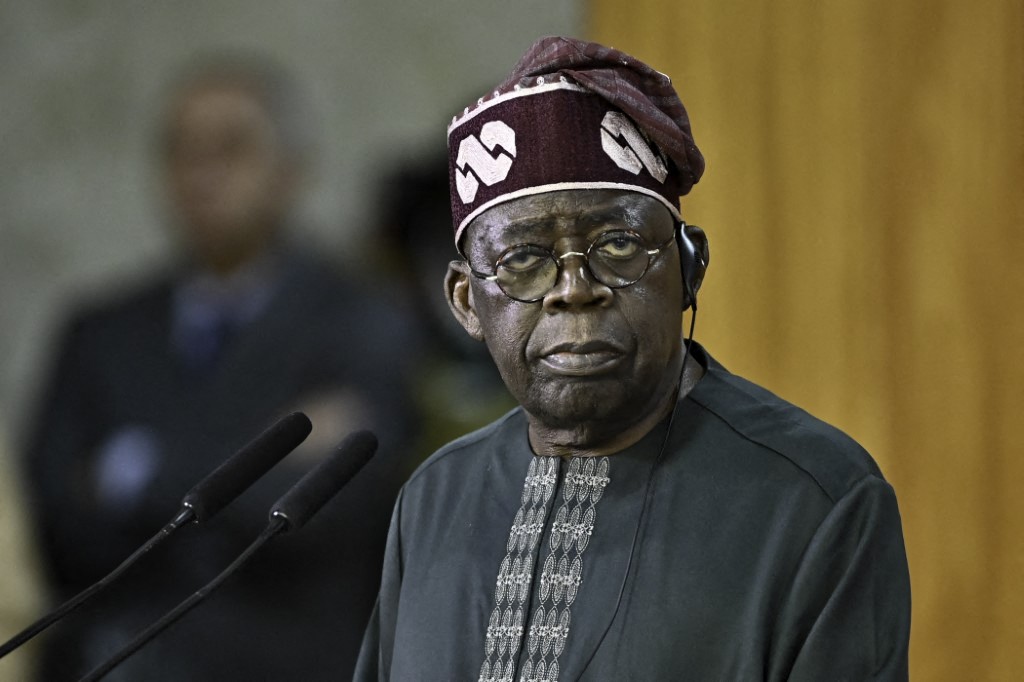
President Bola Tinubu says more Nigerians should begin experiencing measurable reductions in transportation costs from October 1 as states expand CNG and electric transport services. The President has directed governors to work with transport unions and commercial operators to ensure savings from cheaper energy translate into lower fares.
President Bola Tinubu says more Nigerians should begin experiencing measurable reductions in transportation costs from October 1 as federal and state governments expand the use of compressed natural gas and electric vehicles across the country's public transport system.
Tinubu has urged state governments to work with transport unions and commercial operators to ensure that savings from cheaper alternative energy translate directly into lower fares for commuters.
The President gave the directive on Saturday in an update on the National Affordable CNG Transit Programme, an initiative being coordinated with the 36 state governments.
He said the October 1 objective followed his August 27 meeting with governors, where an agreement was reached to accelerate the deployment of cheaper alternative energy transportation across Nigeria.
STATES ASKED TO REDUCE TRANSPORT COSTS
Tinubu said states must maintain momentum towards the October 1 target by supporting vehicle conversions, deploying additional fleets and facilitating the infrastructure required to expand CNG transportation.
He also urged governors to engage directly with transport unions and commercial operators.
The President said the most important objective was ensuring that lower energy costs eventually reach commuters through reduced transport fares.
An implementation committee has been established under the Nigeria Governors' Forum and is chaired by Kwara State Governor AbdulRahman AbdulRazaq.
The committee is working with the Presidential Initiative on CNG and Electric Vehicles, state governments and other stakeholders to identify priority transport corridors and determine where interventions are required.
BORNO FARES AS LOW AS N50
Tinubu cited several states where government supported CNG and electric transportation is already operating at fares below those charged by conventional commercial operators.
In Borno State, he said CNG and electric public transport services charge between N50 and N100 on routes where commercial transport operators charge between N300 and N600.
The President presented the Borno example as evidence of the potential savings available when cheaper energy is combined with public transport intervention.
KADUNA BUSES CARRY 3.2 MILLION PASSENGERS
Tinubu said 100 CNG powered buses deployed in Kaduna State have provided free transportation on major routes.
According to figures cited by the President, approximately 3.2 million passengers used the buses during their first year of operation.
He said commuters saved more than N3.5 billion in transportation expenses during the period.
LAGOS IBADAN FARE FELL DURING INITIAL DEPLOYMENT
In Oyo State, Tinubu said CNG buses deployed to Pacesetter Transport reduced fares on the Lagos Ibadan route during their initial deployment.
According to the President, the fare fell from approximately N8,000 to N3,200.
He also cited Adamawa State, where alternative energy transport services have reportedly reduced fares by as much as 50 percent.
A journey previously costing N8,000 was reduced to approximately N4,000, according to figures presented by the President.
ENUGU NSUKKA FARE DROPS
Tinubu said 100 CNG buses operating in Enugu State have also reduced transportation costs.
The President said the Enugu Nsukka fare fell from approximately N2,500 to N1,500.
In Plateau State, government supported buses reportedly carry approximately 13,000 commuters every day.
Passengers pay N200 on services where conventional commercial fares can exceed N500, according to the President.
ABUJA ROUTES RECORD 40 PERCENT REDUCTIONS
Tinubu also highlighted a partnership with the National Union of Road Transport Workers involving CNG converted commercial vehicles operating on several routes in Abuja.
He said passengers on participating routes receive fare reductions of approximately 40 percent.
The Area 1 to Gwagwalada fare was cited as falling from N1,500 to N900.
The fare to Nyanya fell from N700 to N420, while the Wuse fare declined from N400 to N240.
On the Suleja Abuja route, passengers reportedly pay approximately N550 compared with around N800 previously.
Tinubu also said Abia State has deployed 40 electric buses with fares subsidised by 50 percent.
MORE THAN 120,000 VEHICLES CONVERTED
The President said Nigeria has spent the past three years developing the infrastructure needed to establish a nationwide CNG transportation system.
More than 120,000 vehicles have now been converted to compressed natural gas.
Nigeria also has more than 400 certified vehicle conversion centres and over 90 CNG refuelling stations.
The government says those numbers are continuing to increase as private investment and government programmes expand the alternative energy transportation market.
Tinubu also highlighted developments in Edo, Kano, Delta, Kwara, Lagos and Akwa Ibom.
Edo has 50 CNG buses in active service, while more than 1,000 commercial vehicles have been converted in Kano.
Akwa Ibom has received 50 CNG buses ahead of commercial operations.
GOVERNMENT REJECTS RETURN TO PETROL SUBSIDY
Tinubu said expanding CNG and electric transportation was particularly important as disruptions to global energy supplies put renewed pressure on petrol and diesel prices.
The President rejected suggestions that Nigeria should respond by returning to the previous petrol subsidy system.
He argued that Nigeria's large natural gas resources provide an alternative that could reduce the country's exposure to international oil price movements.
The government removed the petrol subsidy shortly after Tinubu assumed office in 2023, a decision that contributed to sharp increases in fuel and transportation costs.
The administration has promoted CNG as one of the alternatives intended to reduce those pressures.
OCTOBER 1 TARGET WILL DEPEND ON IMPLEMENTATION
The President's announcement establishes October 1 as a target for expanding measurable transportation savings rather than a uniform nationwide fare reduction taking effect automatically on that date.
Actual reductions will depend on factors including the availability of CNG vehicles, refuelling infrastructure, participation by commercial operators and decisions by individual state governments.
There are also continuing challenges.
Some commercial routes have yet to record significant fare reductions despite the expansion of CNG vehicles, while operators have raised concerns about access to refuelling infrastructure and waiting times at available stations.
The government's immediate challenge will therefore be translating lower fuel costs into widespread fare reductions across Nigeria's much larger commercial transportation market.
Tinubu said the Federal Government would continue supporting states, transport operators, manufacturers and private investors to expand CNG infrastructure and vehicle conversion capacity.
With October 1 approaching, attention will now turn to individual states and transport operators to determine how widely the government's target translates into lower fares for commuters.