
TRUMP ADMINISTRATION FREEZES GREEN-CARD FILINGS FOR MICROSOFT, ADOBE AND MAJOR IT FIRMS IN H-1B CRACKDOWN
The Trump administration has frozen new and pending PERM permanent labor certification applications involving Microsoft, Adobe, Cognizant, Infosys, Tata Consultancy Services, Wipro, HCL Technologies and Capgemini, accusing the companies of abusing skilled-worker immigration programs and disadvantaging U.S. workers. Vice President JD Vance singled out Microsoft, saying it laid off thousands of workers while continuing to benefit from H-1B visas and green-card sponsorship. Microsoft disputes the implication, saying about 80% of its recent H-1B filings involved existing employees and that H-1B workers receive comparable pay. Nine universities are also facing separate J-1 visa investigations. The administration’s claims of systematic replacement and wage suppression remain allegations subject to further enforcement and legal scrutiny.
The Trump administration has frozen permanent labor certification applications involving Microsoft, Adobe and six major information-technology outsourcing companies as part of a widening crackdown on alleged abuse of the H-1B and employment-based immigration systems, accusing some large corporations of laying off American workers while continuing to seek foreign employees through programs that the administration says are supposed to supplement rather than replace the domestic workforce.
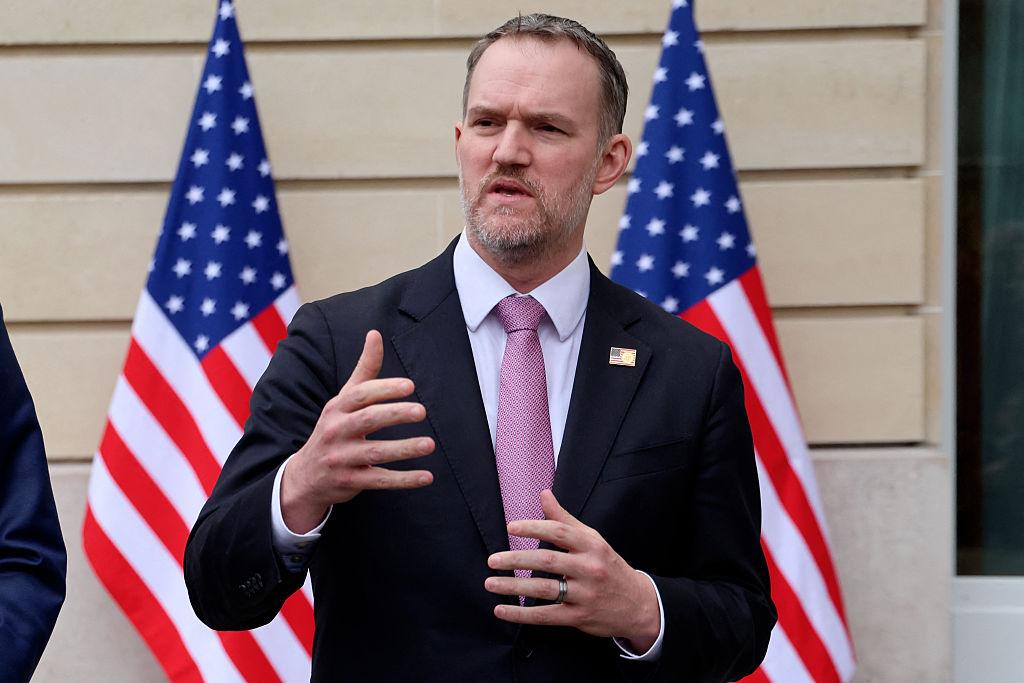
Vice President JD Vance announced the action Thursday during a White House Fraud Task Force news conference in Washington, describing the measures as an effort to stop companies from using skilled-worker immigration programs to reduce labor costs and displace U.S. employees. Labor Secretary Keith Sonderling said the Department of Labor would stop accepting new permanent labor certification applications and halt pending applications involving Microsoft, Adobe, Cognizant, Infosys, Tata Consultancy Services, Wipro, HCL Technologies and Capgemini.
The action is one of the administration’s broadest moves yet against skilled-worker immigration and goes beyond the temporary H-1B visa itself. The immediate suspension concerns the Permanent Labor Certification process, commonly known as PERM, which many employers use as the first major step toward sponsoring foreign workers for employment-based green cards. Under PERM, employers generally must demonstrate to the Department of Labor that there are not sufficient qualified U.S. workers available for the job and that employing the foreign worker will not adversely affect the wages and working conditions of similarly employed American workers.
Administration officials argue that some corporations have manipulated that system by designing recruitment processes that produce few American applicants, laying off U.S. employees while maintaining large foreign-worker pipelines and paying visa-dependent workers less than comparable American employees. The affected companies have not been found guilty by a court of systematically replacing American employees with cheaper foreign labor, and several of the claims announced Thursday remain allegations being pursued through administrative enforcement rather than final judicial findings.
Microsoft received the strongest criticism from Vance. He accused the company of laying off approximately 6,000 American workers while benefiting from about 6,300 H-1B visa approvals and nearly 3,000 green cards, describing Microsoft as the most serious example of the problem identified by the administration. Reuters reported that Microsoft is currently the largest filer of PERM applications according to Labor Department data.
Microsoft disputed the suggestion that its foreign-worker hiring amounts to a straightforward replacement of laid-off Americans. The company said roughly 80 percent of the H-1B applications it filed in the most recent fiscal year involved extensions or changes of status for existing employees rather than hiring new workers from abroad. Microsoft also said it pays H-1B employees the same as other employees performing comparable work.
That distinction is important because the number of approved H-1B petitions does not necessarily equal the number of new foreign workers hired in a particular year. H-1B filings can include extensions for employees already in the United States, changes in employment status and transfers between employers. Comparing total approvals directly with layoffs can therefore produce a misleading picture unless the categories of workers, positions, locations and timing are examined individually.
Nevertheless, the Trump administration has made layoffs by H-1B sponsoring companies a central focus of its immigration policy. A September executive action directed the Departments of State, Labor and Homeland Security to consider whether an employer had recently laid off, or planned to lay off, similarly situated U.S. workers when reviewing H-1B-related applications. The administration said companies should not be able to eliminate domestic positions and then use temporary foreign-worker programs for substantially similar work.
The White House has repeatedly argued that abuse of the program suppresses wages for highly skilled American workers, particularly in technology. Its September order cited estimates suggesting that H-1B workers can earn between approximately $9,000 and $20,000 less than comparable U.S.-born employees in some H-1B-dependent industries, although wage comparisons are disputed and vary considerably depending on occupation, experience, geography and methodology.
Federal law already requires employers sponsoring H-1B workers to meet wage requirements intended to prevent foreign employees from being used simply as cheaper substitutes for U.S. labor. Employers generally must pay at least the required wage for the occupation and location, and H-1B-dependent companies face additional restrictions involving displacement of American workers.
Critics of the system have argued for years that loopholes remain. Outsourcing companies can place H-1B employees at client companies, while wage classifications and labor-market testing can sometimes produce salary levels below those commanded by experienced domestic workers. Former U.S. employees in several high-profile cases have also alleged that they were required to train foreign replacements before losing their jobs, helping turn H-1B policy into one of the most contentious issues in the American technology labor market.
Supporters of the visa program reject the idea that H-1B workers are broadly responsible for U.S. technology layoffs. They argue that companies rely on the visas because the United States does not produce enough workers in some specialized fields and that foreign engineers, scientists and software developers have contributed substantially to American innovation, company formation and economic growth.
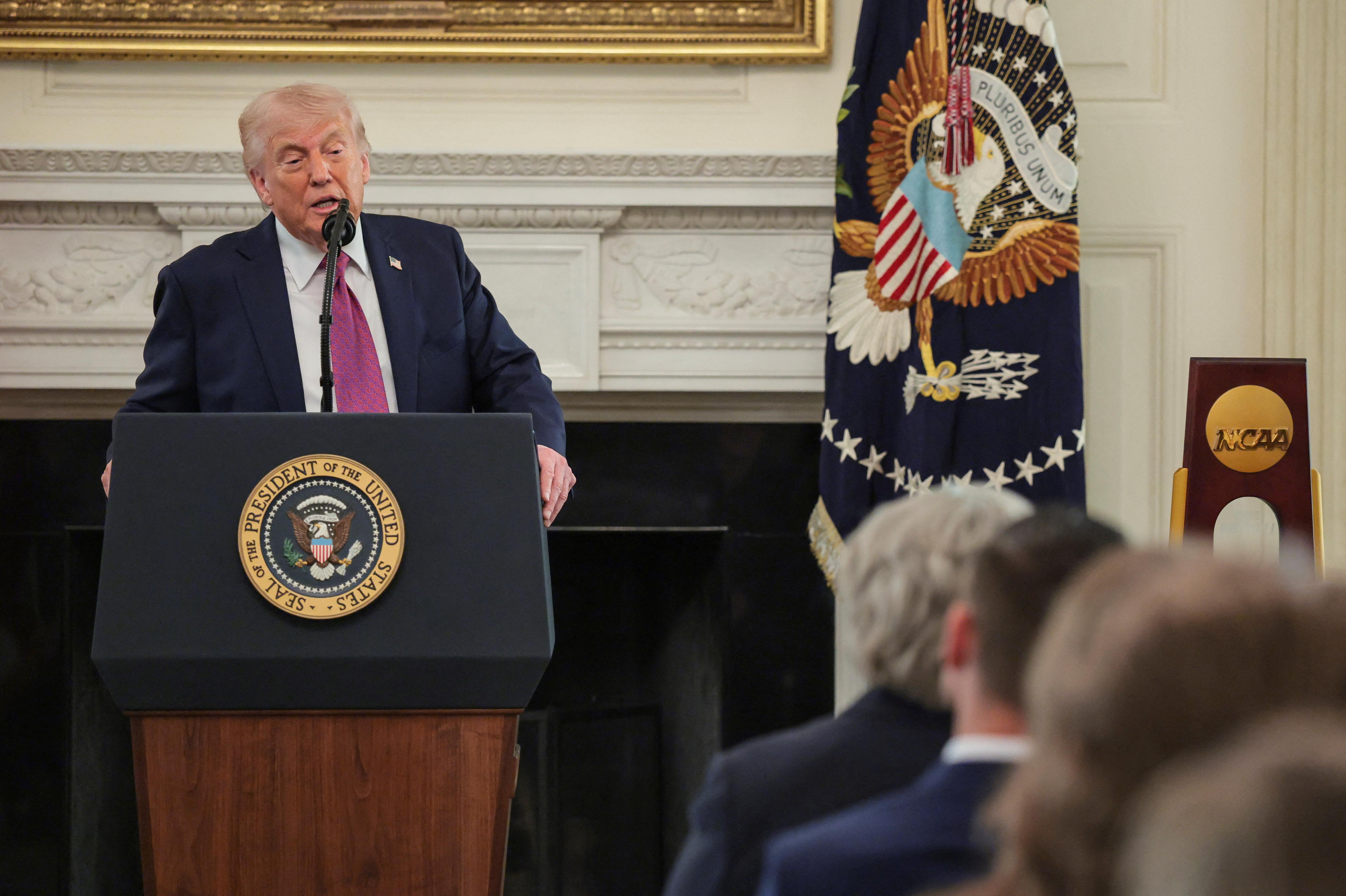
The tension between those two views was particularly visible Thursday. Hours after the administration announced action against Microsoft, President Donald Trump was scheduled to honor Microsoft CEO Satya Nadella with the National Medal of Technology and Innovation alongside several prominent technology leaders. The juxtaposition underscored the administration’s effort to distinguish between support for major American technology companies and opposition to employment practices it believes disadvantage domestic workers.
The suspension announced Thursday also covers some of the largest Indian information-technology outsourcing firms operating in the United States. Cognizant, Infosys, Tata Consultancy Services, Wipro and HCL Technologies are among companies that have historically made extensive use of skilled-worker visas to staff technology projects for American clients. France-based Capgemini was also included.
Sonderling said the affected companies had collectively sought nearly three million foreign workers through relevant labor processes since 2009 and had received more than 230,000 H-1B approvals and over 100,000 permanent labor certifications. Those figures span many years and multiple immigration categories and do not by themselves establish that the applications were fraudulent.
The Department of Labor said it would stop processing new and pending PERM applications involving the named companies while the enforcement action continues. Vance said the suspensions could remain in place for as long as the administration considers necessary and indicated that officials want the companies to change their recruitment and hiring practices before normal processing resumes.
The administration specifically alleges that some employers have posted job advertisements that are technically compliant but ineffective at attracting American applicants and then used the low response to justify sponsoring a foreign worker. PERM requires recruitment steps intended to test the U.S. labor market before permanent residency sponsorship can proceed.
A legitimate PERM process does not require an employer to hire an unqualified American merely because one applies. It requires the employer to show that no qualified, willing and available U.S. worker was found for the position under the applicable recruitment process. Fraud can arise when employers misrepresent job requirements, tailor qualifications around a preferred foreign employee or fail to conduct recruitment honestly.
The crackdown is part of a much broader reworking of the H-1B system during Trump’s second term. In September 2025, the administration imposed a $100,000 fee on certain new H-1B petitions involving workers hired from outside the United States. That policy was extended in September 2026 for another year.
The administration says those measures have sharply reduced applications from major outsourcing companies and shifted the program toward higher-paid and more specialized workers. The White House said H-1B registrations from the largest IT outsourcing firms had fallen by more than 90 percent since the earlier restrictions took effect.
Federal enforcement has also expanded under what the Labor Department calls Project Firewall, an initiative targeting alleged wage violations, displacement of American workers and fraudulent H-1B practices. Reuters reported Thursday that approximately 200 cases have been opened through that effort and millions of dollars in penalties have been assessed.
The Labor Department’s Office of Inspector General separately launched a major investigation in July into alleged fraud and human trafficking involving H-1B visas and the PERM system. The inspector general said investigators had uncovered schemes involving fraudulent applications, wage kickbacks and coercive arrangements affecting foreign workers as well as allegations that employers undercut U.S. employees.
That element complicates the political debate because foreign workers can themselves be victims of abusive employment practices. H-1B employees are legally tied to sponsoring employers for their work authorization, although they can transfer to qualifying new employers under certain conditions. Critics say that dependence can weaken workers’ bargaining power and make some reluctant to report exploitation.
Vance has used unusually strong language to describe that relationship, arguing that some companies treat visa-dependent employees as a cheaper workforce with fewer options than American employees. Immigration advocates counter that making it harder for such workers to obtain permanent residency can increase their dependence on employers rather than reduce it.
The PERM suspension announced Thursday is especially relevant to that argument because a green card generally gives workers far greater freedom to change employers without jeopardizing their immigration status. Critics of the administration’s approach therefore say blocking permanent residency applications could leave foreign workers more dependent on the companies the government accuses of exploiting them.
Administration officials argue that the immediate priority is stopping employers from using the process improperly and ensuring that U.S. workers receive genuine consideration before permanent foreign hiring is approved.
The crackdown extends beyond private companies. Vance and Labor Department Inspector General Anthony D’Esposito also announced investigations into nine major universities over alleged misuse of J-1 exchange-visitor visas. The institutions named include Harvard University, Yale University, Stanford University, Brown University, the Massachusetts Institute of Technology, California Institute of Technology, the University of California, Davis, Arizona State University and the University of Pittsburgh.
D’Esposito said subpoenas had already been issued and that investigators would examine possible visa abuse, financial relationships and foreign influence affecting federally funded research. The investigations are allegations at this stage and do not establish that the universities committed fraud.
The J-1 program is separate from H-1B. It allows students, researchers, professors, physicians and other exchange visitors to temporarily enter the United States through approved programs. Universities rely heavily on international researchers and graduate students, particularly in science, engineering and medical research.
Higher-education organizations have warned that aggressive restrictions on foreign students and researchers could damage American universities and the wider economy. International students contribute tens of billions of dollars annually through tuition, housing and other spending, while foreign-born researchers make up a substantial portion of the workforce in advanced scientific fields.
Technology companies have made similar arguments about H-1B workers. They say the United States competes internationally for highly specialized engineering and scientific talent and risks pushing skilled workers toward Canada, Europe and Asia if immigration pathways become too difficult or unpredictable.
India’s technology industry group Nasscom responded to Thursday’s action by saying Indian IT firms have substantially reduced their reliance on H-1B visas in the United States and that relatively few workers at those firms use PERM to seek permanent residence. Several affected companies did not immediately issue detailed responses, while Tata Consultancy Services declined to comment to Reuters.
The economic effect on the largest firms may initially be limited because the suspension does not shut down all their U.S. operations or immediately cancel every existing H-1B worker’s visa. It specifically targets labor certification and immigration processing associated with the companies while the administration pursues its enforcement strategy.
The longer-term effect could be more significant if the restrictions remain in place. Companies could face difficulties retaining foreign employees who expect employer-sponsored permanent residence, while some highly skilled workers could move to competitors that remain able to sponsor green cards.
The policy could also alter recruitment patterns across the technology industry. Employers may hire more U.S. workers, shift additional work overseas, increase automation or establish larger operations in countries where skilled foreign employees can work without U.S. immigration restrictions. Which outcome dominates will determine whether the crackdown produces the wage and employment benefits the administration predicts.
The broader labor-market evidence is complex. The U.S. technology sector has experienced large layoffs since the pandemic hiring boom, but those cuts have occurred alongside rapid growth in artificial intelligence, cloud computing and data centers. Companies have often reduced employment in some divisions while hiring aggressively in others, making it difficult to attribute layoffs broadly to foreign-worker programs alone.
Microsoft, for example, announced thousands of job cuts during 2026 as it reorganized parts of its business while continuing enormous investment in artificial intelligence infrastructure. The company says foreign workers account for a relatively small share of its U.S. workforce and maintains that its H-1B employees receive comparable compensation.
The Trump administration takes a different view, arguing that the pattern of simultaneous layoffs and visa sponsorship is enough to warrant stronger scrutiny even where individual workers are not direct one-for-one replacements. Its September executive order instructs immigration agencies to consider recent or planned layoffs of similarly situated American workers during the visa review process.
That approach represents a significant change in how Washington evaluates skilled immigration. For decades, policy debates largely centered on whether the annual H-1B cap was too high or too low and whether the United States was attracting sufficient global talent. The administration is increasingly focusing instead on employers’ overall labor practices and whether visa sponsorship occurs alongside domestic job reductions.
Thursday’s action also reinforces the growing role of the White House Fraud Task Force under Vance. The task force initially focused heavily on alleged fraud involving federal benefit programs but has expanded into immigration and labor enforcement, reflecting the administration’s argument that visa abuse can involve false certifications and fraudulent representations to government agencies.
The political language surrounding the effort is likely to remain contentious. The White House has described some H-1B labor as cheaper foreign labor that replaces Americans, while business and immigration groups argue that such descriptions risk treating legitimate skilled immigrants as the problem rather than focusing narrowly on employers that violate existing law.
The distinction is important because lawful H-1B employment is not itself fraud. The visa program was created by Congress and continues to authorize U.S. companies to employ qualified foreign professionals in specialty occupations. Fraud occurs when employers or applicants misrepresent facts, evade wage requirements, manipulate recruitment or otherwise violate the rules governing the program.
The same distinction applies to Thursday’s corporate suspensions. Microsoft, Adobe, Infosys, Cognizant, Tata Consultancy Services, Wipro, HCL Technologies and Capgemini have been targeted by an administrative enforcement action, but Thursday’s announcement does not constitute a criminal conviction of the companies. The government is alleging serious abuse and using its authority over labor certification to halt processing while demanding changes.
The next important questions will concern what evidence the administration releases for each company, how long the suspensions remain in force and whether the affected firms challenge the action through administrative proceedings or federal courts. The universities under investigation will face their own process as investigators review J-1 practices and federally funded research relationships.
For American technology workers, the administration is presenting the crackdown as a direct intervention in a labor market where many have watched companies announce layoffs while continuing to recruit internationally. Whether the measures ultimately increase hiring of U.S. workers will depend on how companies respond and whether positions remain in the United States rather than moving abroad.
For foreign professionals already working legally in the country, the measures create a different uncertainty. Employees sponsored by one of the affected companies may face delays in permanent residency even if they personally complied with every immigration requirement.
Thursday’s announcement therefore represents both a major immigration enforcement action and a test of the administration’s central argument that skilled-worker programs have been systematically used to disadvantage Americans. The government has produced figures showing extensive visa use by companies that also conducted layoffs, but the affected employers dispute the implication that the two categories represent direct replacement and argue that many visa filings concern existing employees rather than new hires.
The immediate facts are clearer than the broader political argument: the Labor Department has frozen new and pending permanent labor certification applications involving eight major technology and outsourcing companies, Microsoft is the most prominent target, and nine universities are facing separate J-1 investigations. Those actions substantially expand the administration’s campaign against alleged skilled-visa abuse and could reshape one of the most important channels through which foreign engineers, researchers and technology workers build permanent careers in the United States.
What remains to be established is how much of the conduct identified by the White House constitutes legally provable fraud, how much reflects lawful but controversial corporate hiring practices and whether restricting foreign-worker programs will produce the higher wages and greater employment opportunities for Americans that the administration says it intends to deliver. Those questions will now move from political arguments about H-1B visas into enforcement proceedings involving some of the most powerful technology companies and research institutions in the United States.