TRUMP ADMINISTRATION REAFFIRMS U.S. POLICY RECOGNIZING TWO BIOLOGICAL SEXES
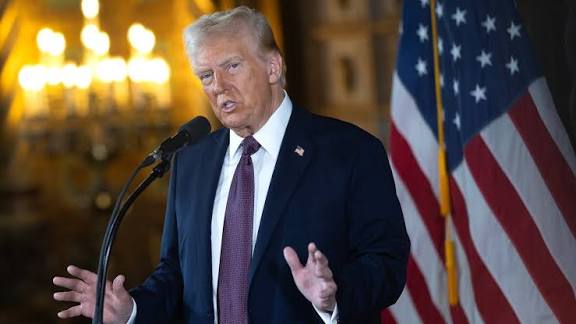
The White House has reaffirmed the Trump administration’s policy of recognizing two biological sexes, male and female, in federal government operations. The policy was introduced through an executive order signed on January 20, 2025, and has led to changes in passport rules, immigration procedures and other federal policies. It remains the subject of legal challenges from transgender, nonbinary and intersex Americans.
The White House has reaffirmed the Trump administration’s position that the United States government recognizes only two biological sexes, male and female, highlighting the policy as a fulfilled presidential commitment in a new review of President Donald Trump’s second-term actions.
The statement, published on the White House website as part of a November 2026 assessment of the administration’s record, revisits Trump’s January 20, 2025, announcement that the federal government would formally recognize two sexes. The administration describes the decision as part of its effort to restore what it calls biological truth in federal policy and reverse government practices that recognized gender identity as a basis for certain official classifications.
The latest White House publication uses the phrase “only two genders” when recalling Trump’s original announcement, but the executive order underpinning the policy is more specific. Executive Order 14168, titled Defending Women From Gender Ideology Extremism and Restoring Biological Truth to the Federal Government, states that it is the policy of the United States to recognize two sexes, male and female. It also expressly defines sex as an individual's biological classification and says the term is not synonymous with, and does not include, gender identity.
That distinction is central to understanding the administration’s position. The policy is not simply a change in terminology: it directs federal agencies to apply the administration’s definitions of male and female when interpreting and administering federal laws, regulations, official records and government programs. It also instructs agencies to use the term “sex,” rather than “gender,” in applicable federal policies and documents when making sex-based distinctions.
Trump signed the executive order on his first day back in office, presenting it as a reversal of policies adopted under the previous administration. The order argued that federal institutions had increasingly replaced biological classifications with a system based on an individual’s internal or self-identified gender identity. It said the federal government should instead base its official policies on the distinction between male and female.
Under the order, federal agencies were instructed to review existing rules, guidance, forms and official communications to ensure they reflected the new definitions. The directive also called for changes to government-issued identification documents, including passports, visas and Global Entry cards, so that they would record the holder’s sex according to the administration’s definition.
The policy has since been implemented across several areas of federal administration. The U.S. Department of State, for example, now says it issues passports with either an M or F sex marker corresponding to the holder’s biological sex at birth. The department no longer issues passports with an X marker, which had been available to applicants who did not identify exclusively as male or female. Its published guidance also states that applicants seeking a marker different from the one recorded at birth may experience delays while their applications are reviewed.
The passport changes represent one of the most visible consequences of the executive order because they affect how Americans are identified in documents used for international travel and official identification. Before the Trump administration reversed the policy, the State Department had allowed eligible applicants to select an X marker and had permitted certain individuals to change the sex designation on their passports without necessarily providing medical documentation.
The administration’s position was also incorporated into immigration procedures. In April 2025, U.S. Citizenship and Immigration Services announced that it was updating its policy manual to recognize only two biological sexes, male and female, when reviewing immigration benefit requests and issuing agency documents. The agency said the change was consistent with the January executive order and restored its previous approach to collecting sex information.
Under the USCIS guidance, an applicant’s sex is generally determined by the information on the birth certificate issued at or nearest to the time of birth. Where the document does not provide a male or female classification, the agency may rely on secondary evidence. The agency also clarified that a person would not automatically be denied an immigration benefit solely because the individual had failed to indicate a sex on an application, although the discrepancy could result in delays or further requests for information.
The Department of Health and Human Services also issued guidance in February 2025 explaining how federal agencies should apply the administration’s definitions. The document described male and female classifications through reproductive biology and instructed agencies to use those definitions when carrying out relevant federal responsibilities. The guidance formed part of the administration’s broader effort to align federal policy with the executive order.
The White House’s latest review presents these changes as evidence that Trump has delivered on a campaign and governing commitment. The administration has linked the policy to its wider positions on women’s sports, access to sex-separated facilities, federal funding and the treatment of transgender people in government programs. It argues that maintaining male and female classifications is necessary to protect sex-based rights and preserve distinctions in areas where federal law provides separate protections or opportunities for men and women.
However, the policy has generated substantial opposition from transgender, nonbinary and intersex Americans, as well as civil rights organizations. Critics argue that the administration’s approach restricts the ability of individuals to have government identification reflect their gender identity, exposes some people to privacy and safety risks, and raises constitutional questions about equal protection and the right to travel.
Several legal challenges followed the executive order, particularly over the State Department’s passport policy. In Orr v. Trump, transgender and nonbinary Americans challenged the requirement that passports reflect biological sex at birth. The plaintiffs argued that the policy could force individuals to carry identification inconsistent with their gender identity and potentially expose them to unwanted disclosure or discrimination when travelling and presenting official documents.
The dispute reached the U.S. Supreme Court in November 2025, when the justices granted the Trump administration’s request to suspend a lower-court injunction that had temporarily blocked enforcement of the passport policy. The Supreme Court’s decision allowed the government to continue requiring passports to display the holder’s sex at birth while the legal proceedings continued. The ruling addressed the request to suspend the injunction at that stage of the case; it was not a final judgment resolving every constitutional challenge to the administration’s wider policy.
In June 2026, the U.S. Court of Appeals for the First Circuit dismissed the government’s appeal in the passport litigation as moot and vacated the preliminary injunction orders after both sides sought that outcome. The underlying dispute did not simply disappear, however, and legal challenges to the administration’s identification policies have continued.
Another case, Jansen v. Trump, illustrates the continuing dispute over how federal agencies classify sex on official documents. In August 2026, a federal district court in Washington, D.C., rejected a renewed request for a preliminary injunction brought by an intersex transgender woman challenging the government’s passport and Global Entry policies. The court’s decision meant the challenged rules remained enforceable against the plaintiff while the case proceeded, but it did not amount to a final resolution of all the legal questions raised in the litigation.
The administration’s position has also raised broader questions about the relationship between biological sex, gender identity and the way government institutions record personal information. Supporters of the policy argue that sex-based classifications are necessary for the consistent administration of laws and the protection of women’s rights. Opponents counter that a rigid federal classification system fails to account adequately for the circumstances of transgender and intersex people and can create practical difficulties when official documents do not correspond with how individuals live and are recognized in society.
It is important to distinguish the administration’s official policy from a claim that every aspect of the scientific, medical or social debate over sex and gender has been settled by the executive order. The order establishes how the Trump administration wants the executive branch to interpret and apply federal law and policy; it does not, by itself, eliminate the existence of people with variations in sex characteristics or resolve every question concerning gender identity. Its definitions are binding directions for the executive branch to the extent they are lawfully implemented, but they remain subject to constitutional and statutory limits and judicial review.
The White House’s November 2026 review is therefore both a reaffirmation of the administration’s position and a political presentation of the policy as a completed commitment. The practical effects are already visible in federal identification documents and immigration procedures, while the wider consequences continue to be tested through litigation and disputes over how federal agencies should treat people whose identities or biological circumstances do not fit the government’s two-category framework.
For now, the federal government continues to operate under the Trump administration’s policy of recognizing male and female as the two biological sexes for official federal purposes. The next developments are likely to depend on the outcome of ongoing legal challenges and how individual agencies apply the executive order in specific circumstances, particularly where questions of privacy, identification, equal protection and access to government services arise.