TRUMP CALLS OBAMA A ‘LOUSY PRESIDENT’ AFTER CHEESECAKE FACTORY JOKE ABOUT WHITE HOUSE DECOR
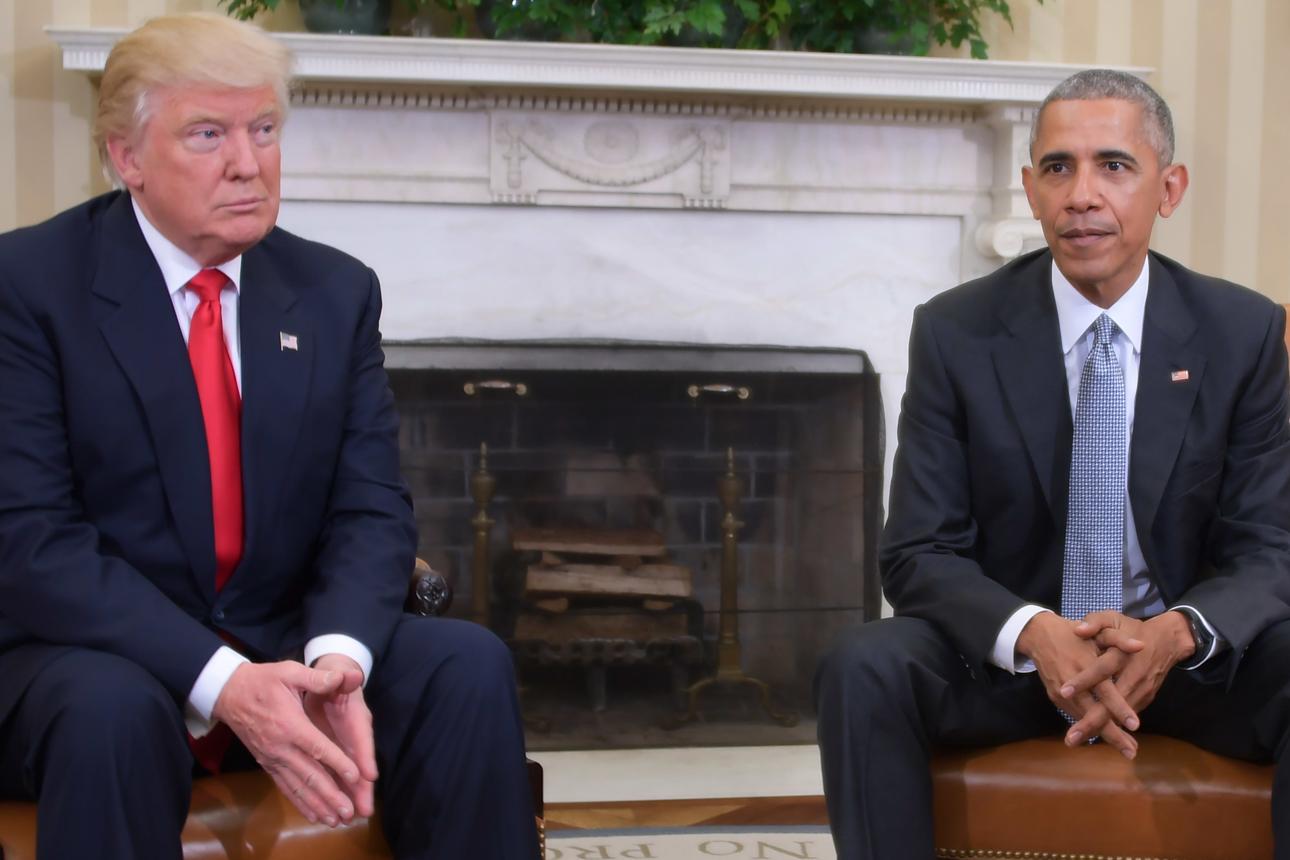
Donald Trump has responded to Barack Obama after the former president mocked Trump’s White House renovations by joking that the building looked like a Cheesecake Factory opened by Saddam Hussein. Trump defended the restoration work, saying the White House needed repairs and should be properly maintained as a national symbol, before saying Obama’s comment showed why he had been a “lousy president.” The exchange unfolded as both men campaigned ahead of the November 3 midterm elections and quickly became a broader political dispute over Trump’s renovation priorities. The Independent
United States President Donald Trump has responded sharply to former President Barack Obama after Obama mocked the appearance of the renovated White House by comparing it to a Cheesecake Factory decorated by former Iraqi leader Saddam Hussein. The exchange, which unfolded in the final days before the November 3 midterm elections, began when Obama used the joke during a Democratic campaign rally in Ohio and quickly escalated into a wider argument over Trump’s renovations, his priorities in office and the condition of the presidential residence.
Obama made the remarks while campaigning in Ohio on Saturday, October 24, as he criticised Trump’s extensive construction and decorative changes at the White House. He joked that Trump appeared so focused on renovations that he should be working for a home-improvement television network, before pointing to the ballroom project, changes to the Rose Garden, a helicopter landing area and the increased use of gold ornamentation. Obama then joked that the White House looked as though Saddam Hussein had opened a Cheesecake Factory, drawing laughter from the crowd.
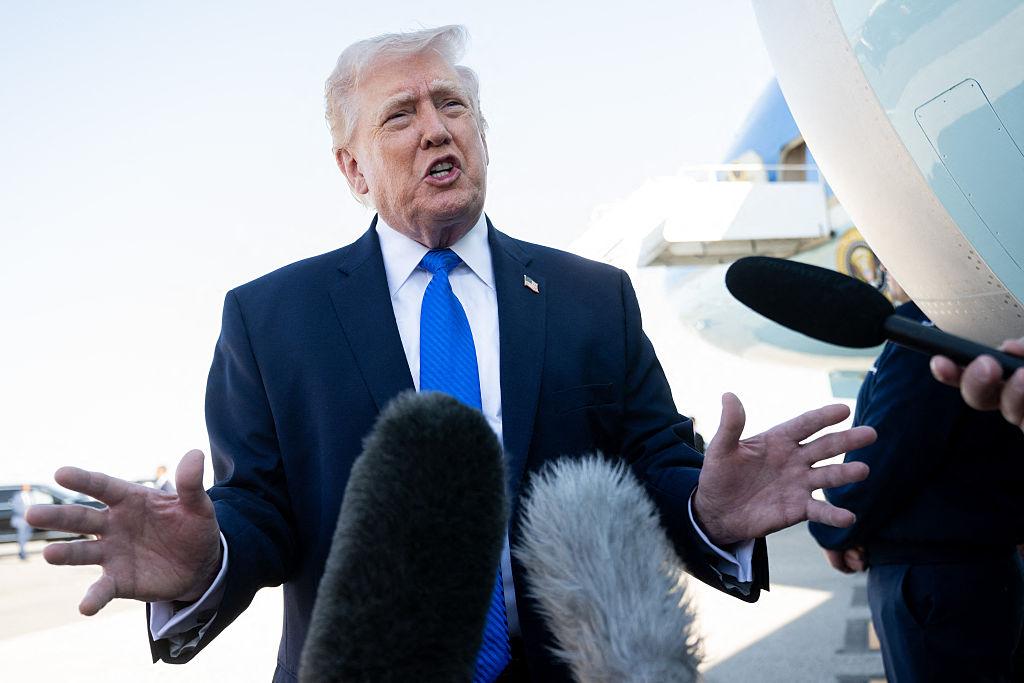
Trump was asked about the remark two days later while speaking to reporters at Joint Base Andrews before travelling to a campaign rally in Mississippi. He rejected Obama’s criticism and argued that the White House had been in poor physical condition before his latest renovation work, claiming that decorative elements were missing or damaged, exterior plaster was cracked and sections of the building required restoration. He said the work had been carried out by highly skilled artisans and maintained that preserving the White House was an important responsibility because of its symbolic status as the official residence of the U.S. president.
Trump then turned his response into a broader personal attack on his predecessor. He said Obama did not understand the importance of maintaining the White House and questioned his judgment as president, ultimately saying that comparing the building to a Cheesecake Factory demonstrated why Obama had been, in his words, a “lousy president.” Trump also questioned Obama’s intelligence during the exchange, although those comments were part of a political attack rather than any factual assessment of Obama’s abilities.
The confrontation continued later Monday during Trump’s rally in Corinth, Mississippi, where he again defended the White House renovations and spent several minutes discussing the issue. Trump argued that renovation work was necessary because the building had suffered from deteriorating plaster, damaged columns, missing decorative pieces and other maintenance problems. He told supporters that carrying out the work did not distract significantly from his presidential responsibilities and described renovation and construction as something he found personally relaxing.
Trump also defended the Cheesecake Factory itself, describing it as a successful American company and using Obama’s joke to argue that his predecessor was being dismissive of a popular restaurant chain. That interpretation was quickly adopted by several Trump allies, who accused Obama of elitism and suggested the comparison insulted ordinary Americans who patronise the chain. Supporters of Obama, however, argued that his comment was aimed at Trump’s taste in White House decoration rather than at Cheesecake Factory customers.
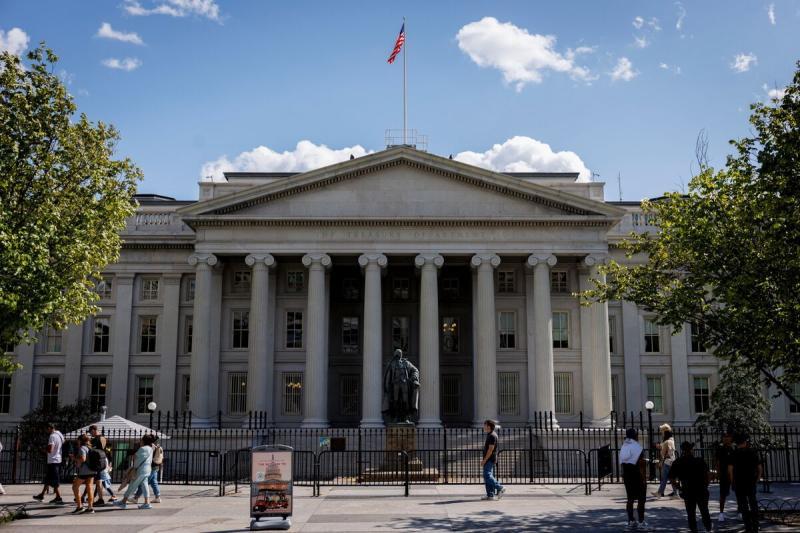
The restaurant chain became an unexpected political symbol as the dispute spread across social media and campaign messaging. Treasury Secretary Scott Bessent publicly visited a Cheesecake Factory in Washington and praised the restaurant while criticising Obama’s remarks. White House communications staff also used the controversy in online messaging, portraying Trump’s renovation work as an effort to preserve and improve the nation’s most recognisable government residence.
Obama’s original comments were part of a broader campaign argument that Trump was devoting excessive attention to construction projects and visual changes at the White House while Americans were more concerned about the economy and cost-of-living issues. At the Ohio rally, Obama criticised the size of the planned ballroom, the transformation of the Rose Garden and the extensive use of gold inside the executive mansion, using humour to argue that Trump’s priorities were misplaced.
The former president’s remarks came as he stepped up his involvement in Democratic campaigning ahead of the November 3 midterms. Obama has been appearing at rallies for Democratic candidates in several states and has used those events to criticise Trump’s second-term policies, governing style and focus. The White House renovation dispute therefore became part of a larger campaign battle rather than an isolated disagreement over interior design.
Trump, meanwhile, has defended the renovations as necessary preservation rather than cosmetic indulgence. He has said that the White House required significant repair work and that some decorative elements had deteriorated over time. During his response to Obama, Trump described work involving exterior plaster, decorative window features and other architectural elements, arguing that previous administrations had failed to give those problems sufficient attention.
The wider renovation programme has included a new ballroom project, changes to the Rose Garden and increased use of gold-coloured decorative elements in the Oval Office and other areas. Critics have questioned both the scale of the projects and the amount of presidential attention devoted to them, while supporters say Trump is improving and modernising an important national building.
The ballroom project has attracted particular scrutiny because of its size and symbolic significance. Trump has promoted it as an improvement that will allow the White House to host larger official events and state functions, while critics have portrayed it as an extravagant addition. Obama used the ballroom as one of the central examples in his Ohio joke, arguing that the project reflected what he sees as Trump’s preoccupation with construction and aesthetics.
The Rose Garden has also become part of the political argument. Trump’s administration has made substantial changes to the area surrounding the White House, including paving and landscaping alterations that supporters describe as practical improvements. Critics have argued that those changes alter the historic character of the presidential complex and reflect Trump’s personal design preferences more than preservation needs.
Trump has consistently rejected that interpretation. He argues that maintaining and improving the White House is part of the presidency and that neglected infrastructure should be repaired regardless of political criticism. During his response to Obama, he repeatedly emphasised the symbolic importance of the building and said it should be kept clean, structurally sound and visually impressive.
The disagreement also reflects the contrasting political styles of the two former rivals. Obama frequently uses humour and sarcasm in campaign speeches, while Trump often responds directly and personally to criticism. The Cheesecake Factory exchange followed that familiar pattern, with a joke from Obama producing a lengthy rebuttal from Trump that quickly expanded into attacks on Obama’s presidency and judgment.
The mention of Saddam Hussein added another layer to the joke. The former Iraqi leader became internationally known for lavish palaces filled with elaborate decoration, gold accents and grandiose architectural features. Obama’s comparison was therefore intended to mock what he viewed as an overly ornate White House aesthetic rather than make a substantive comparison between Trump and Hussein’s rule.
Trump did not engage directly with that historical reference, focusing instead on the Cheesecake Factory comparison and the condition of the White House. His response emphasised maintenance, craftsmanship and the importance of presenting the building as a national symbol, while rejecting the suggestion that the renovations were excessive.
The political reaction has extended beyond the two men. Conservative commentators accused Obama of ridiculing a restaurant enjoyed by middle-class families and framed his joke as evidence of cultural elitism. Other commentators argued that this interpretation deliberately ignored the obvious target of the joke, which was Trump’s preference for gold-heavy decoration rather than the restaurant’s customers.
The Cheesecake Factory itself became an unusual beneficiary of the publicity because the dispute placed the chain at the centre of national political discussion. The company is known for large menus, elaborate interiors and decorative motifs that often include columns, patterned ceilings and gold-coloured finishes, which explains why Obama used it as a shorthand comparison for an ornate visual style.
The timing of the dispute is politically important because both Trump and Obama are campaigning aggressively ahead of the midterm elections. Control of Congress is at stake, and both parties are using prominent political figures to motivate voters and frame the final days of the campaign. The White House renovation argument therefore became another vehicle for broader criticism of Trump’s presidency and Obama’s political legacy.
Trump’s allies have sought to turn Obama’s joke back against Democrats by arguing that it reflects cultural distance from ordinary voters. Obama’s supporters have responded that the controversy distracts from the substance of his original criticism, which was that Trump was devoting attention to renovations while economic concerns remained central to many voters.
Recent polling cited by The Washington Post suggests that the issue may have some political relevance. A Washington Post-ABC News-Ipsos poll found that 59 percent of respondents believed Trump was spending too much time on White House renovation projects, while 27 percent said the amount of attention was appropriate and 11 percent believed he should spend more time on them. The poll does not establish that the renovations will materially affect voting behaviour, but it indicates that the issue is visible beyond political commentary.
Trump has rejected the suggestion that the projects consume significant amounts of presidential time. At his Mississippi rally, he said he spends only a few minutes a day considering renovation matters and argued that the work fits naturally with his background in real estate and construction. He said he can make decisions quickly because he understands building and design.
The president has also repeatedly portrayed himself as a builder and has made physical renovation a recurring theme in both government and political messaging. The White House has embraced that image, describing Trump as a leader focused on restoring and beautifying national institutions. Critics see the same emphasis as evidence that appearance and personal branding receive too much attention within the administration.
Obama’s joke drew attention precisely because it compressed that broader criticism into a memorable visual comparison. By invoking the Cheesecake Factory and Saddam Hussein in the same sentence, he created an image that circulated widely online and became the subject of television coverage, political commentary and White House responses.
Trump’s decision to respond at length ensured the story continued into the following news cycle. Instead of dismissing the joke, he defended the renovations in detail, criticised Obama personally and returned to the issue during his campaign rally later that day. That response transformed a single campaign joke into a broader political confrontation.
The White House has since reinforced Trump’s position, arguing that the renovation programme is intended to preserve the presidential complex for future administrations. Officials have said restoration work is necessary because the building is both a functioning government facility and a historic national landmark. They reject claims that the projects are merely personal decoration.
Critics continue to question the scale and aesthetic direction of some of the changes. They argue that major alterations to nationally significant spaces should receive careful historical, architectural and public scrutiny. Supporters counter that presidents have frequently modified the White House and that maintenance and modernisation are unavoidable in a building that has been repeatedly expanded and renovated over more than two centuries.
The dispute does not involve any formal legal or governmental action, and there is no suggestion that Obama’s comment has policy consequences. It is fundamentally a political and cultural argument playing out during an election campaign, but the prominence of both men and the symbolic importance of the White House have given it disproportionate attention.
Obama served as president from 2009 to 2017 and remains one of the Democratic Party’s most prominent campaign figures. Trump succeeded him in January 2017, lost the presidency in 2020 and later returned to office, making their political rivalry unusually enduring. Their public exchanges continue to attract attention because each represents a very different political coalition and governing style.
Trump’s description of Obama as a “lousy president” is consistent with years of criticism directed at his predecessor. He has frequently attacked Obama’s domestic and foreign policy record and has repeatedly used personal language when discussing him. Obama, in turn, has increasingly criticised Trump during major campaign periods, usually combining policy arguments with humour and ridicule.
The latest exchange therefore fits into a much longer political relationship rather than representing a sudden personal dispute. What makes it distinctive is the seemingly trivial subject at its centre: interior decoration and a restaurant chain. The political importance comes not from Cheesecake Factory itself but from the competing messages both men are trying to communicate about leadership and priorities.
Obama’s argument is that Trump is overly focused on image, construction and personal style at a time when voters face more urgent economic concerns. Trump’s counterargument is that caring for the White House demonstrates competence and respect for national institutions and that Obama failed to appreciate the importance of maintaining the building properly.
Neither interpretation can be established purely from the appearance of the White House. They are campaign arguments designed to reinforce broader political narratives. Obama uses the renovations as a symbol of what he considers misplaced priorities, while Trump uses them as evidence of stewardship and attention to detail.
The dispute is likely to continue through the final days of the campaign because both sides have already incorporated it into political messaging. Democrats are using the joke to highlight criticism of Trump’s priorities, while Republicans are portraying the response to Cheesecake Factory as another example of what they describe as Democratic cultural elitism.
For voters, the more substantive questions remain economic conditions, healthcare, immigration, foreign policy, public safety and control of Congress. The White House decor argument is unlikely to replace those issues, but its viral nature demonstrates how humour and symbolism can dominate campaign attention even when the underlying subject is relatively minor.
The episode also demonstrates how quickly campaign remarks can expand through the modern media environment. A joke delivered at a weekend rally generated responses from the sitting president, Cabinet officials, White House communications staff, commentators and national media within roughly 48 hours. The original remark became a wider debate about class, aesthetics, presidential priorities and political identity.
For now, the verified sequence is clear. Obama mocked Trump’s White House renovations at an Ohio campaign rally on October 24, joking that the building looked like a Cheesecake Factory opened by Saddam Hussein. Trump responded on October 26 at Joint Base Andrews by defending the renovation work, questioning Obama’s judgment and saying the remark showed why Obama had been a “lousy president,” before repeating and expanding his defence later that night in Mississippi.
The exchange has no direct policy consequence, but it has become another visible front in the increasingly intense campaign ahead of the November 3 midterm elections. What began as a joke about gold decoration has become a political argument over presidential priorities, cultural identity and the legacy of two men who continue to dominate American political debate years after their first confrontation.