TRUMP DOUBLES DOWN ON WAR WITH IRAN, SAYS HE WOULD DO IT ALL AGAIN AND DISMISSES PEACE TALKS WITH TEHRAN AS A WASTE OF TIME EVEN AS THE POLITICAL BILL COMES DUE
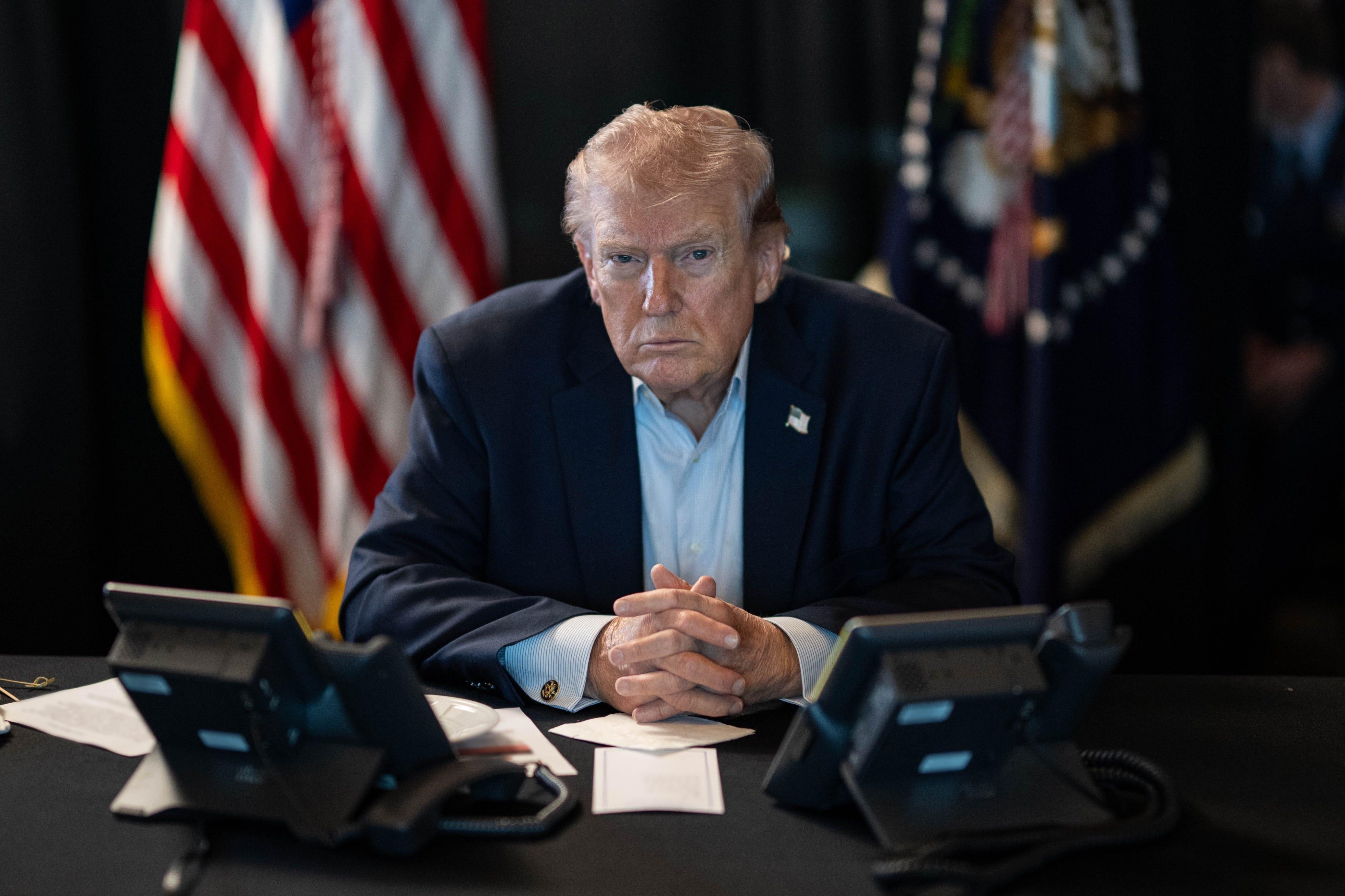
US President Donald Trump has said he would make the same decision to wage war on Iran again. He acknowledged that the conflict has carried political costs at home but insisted he does not regret it. He also dismissed negotiations with Tehran as a waste of time. According to reports, Trump's dismissal was aimed at the Iran ceasefire memorandum associated with Vice President JD Vance. Trump said the process at least helped the United States understand Iran better and come to the conclusion that Tehran could not be trusted. The remarks come in the wake of Republican setbacks in this month's midterm elections, according to reports, which many analysts have linked in part to public unease over the war. The comments matter well beyond Washington. They suggest the administration sees little value in further diplomacy with Iran at a time when concerns about Tehran's nuclear program remain unresolved. They raise fresh doubts about the durability of any ceasefire. They also send a message to allies, rivals and energy markets that the United States is prepared to use force again. Supporters of the president say his stance shows strength and clarity toward a government that has threatened Americans and its neighbors for decades. Critics warn that writing off diplomacy leaves military action as the only tool on the table and raises the risk of a wider and longer war. How Iran responds, and whether any channel for talks survives, could shape the security of the Middle East and the stability of the global economy for years to come.
Most presidents who lead their country into war eventually soften their language about it. They speak of hard choices, of lessons learned and of the burden of command. President Donald Trump has taken a very different path. In fresh remarks this week, the president said he would make the same decision to wage war on Iran again. He did so while openly accepting that the conflict has cost him politically. In the same breath, he described negotiations with Tehran as a waste of time. The message was blunt and unmistakable. In Trump's view, the war was right, the talks were pointless and he has no regrets.
The remarks, reported by several international outlets including Al Jazeera, landed at a sensitive moment. According to reports, Trump's dismissal of diplomacy was directed at the ceasefire memorandum on Iran associated with Vice President JD Vance, one of the most prominent diplomatic efforts the administration had pursued to bring the fighting to a halt. Trump said the process was a waste of time. He added, according to the reports, that it had at least allowed the United States to understand Iran better and to realize that Tehran could not be trusted.
That framing is revealing. Trump did not argue that the talks failed because of a single broken promise or a specific sticking point. He suggested that the very act of negotiating had confirmed his long held belief that Iran's leaders are not reliable partners. For a president who has built much of his political identity on his skill as a dealmaker, it was a striking admission that he sees no deal worth making with Tehran, at least for now.
The political backdrop makes the comments even more notable. Reports have tied Trump's remarks to the aftermath of the midterm elections held earlier this month, in which Republicans suffered losses. Many analysts and opposition figures have pointed to the war with Iran as one factor in that outcome, alongside cost of living worries and other domestic concerns. Trump appeared to acknowledge that the conflict carried a price at the ballot box. Yet rather than signal a change of course, he chose to defend the decision outright. For his supporters, that is proof of conviction. For his critics, it is proof that public opinion will not shape his approach to war and peace.
To understand why Trump speaks about Iran with such certainty, it helps to look at the long and bitter history between the two countries. Relations between Washington and Tehran collapsed after the 1979 Islamic Revolution and the seizure of the US Embassy in Tehran, when 52 Americans were held hostage for 444 days. In the decades that followed, the two governments clashed over terrorism, regional influence, the fate of Israel and, above all, Iran's nuclear ambitions.
In 2015, the administration of President Barack Obama joined Britain, France, Germany, Russia, China and the European Union in signing the Joint Comprehensive Plan of Action with Iran. The agreement limited Iran's uranium enrichment and placed its nuclear sites under strict international inspection in exchange for sanctions relief. Trump denounced the deal as one of the worst ever made. In 2018, during his first term, he withdrew the United States from it and launched a campaign of maximum pressure built on sweeping economic sanctions. In January 2020, he ordered the drone strike in Baghdad that killed Qassem Soleimani, the powerful commander of Iran's Quds Force, bringing the two countries close to open conflict.
Iran responded to the collapse of the nuclear deal by steadily expanding its program. The International Atomic Energy Agency, the United Nations nuclear watchdog, reported that Iran had begun enriching uranium to 60 percent purity, a level far beyond what civilian power plants require and a short technical step from weapons grade material. Iran also reduced the access granted to international inspectors. Tehran has always insisted that its program is peaceful and that it does not seek a nuclear weapon. Western governments and Israel have long rejected that claim as unconvincing.
The confrontation escalated sharply in his second term. In June 2025, after Israel launched a wave of strikes on Iran, the United States carried out its own strikes on key Iranian nuclear facilities, including Fordow, Natanz and Isfahan. Trump described those strikes at the time as a major success. Later that year, Britain, France and Germany triggered the return of United Nations sanctions on Iran, saying Tehran had failed to meet its nuclear commitments. The conflict that followed in the period Trump now says he would repeat sits on top of that long chain of mistrust, threats and force.
Seen in that light, Trump's latest comments are less a surprise than a culmination. He has argued for years that Iran responds only to pressure and that diplomacy with Tehran rewards bad behavior. His description of the ceasefire talks as a waste of time fits that worldview. What is new is the timing, coming after an actual war and a costly election, and the target, an effort linked to his own vice president.
That last point has drawn attention in Washington. Publicly writing off a diplomatic process associated with Vance raises questions about the internal debate within the administration over how to handle Iran. Some observers see it as a sign of division between those who favor a negotiated off ramp and those who favor sustained military and economic pressure. Others argue it may simply reflect the president's personal style, which often involves dismissing efforts that fail to deliver quick and visible results. The White House has not laid out a detailed public strategy for what comes after the talks, which leaves allies and adversaries alike reading between the lines.
For Iran, the remarks are likely to confirm what hardliners in Tehran have argued for years. Iranian officials have repeatedly accused the United States of bad faith, pointing to Washington's withdrawal from the 2015 agreement despite Iran's compliance at the time, as reported by international inspectors. They have argued that no American promise can be trusted when a new president, or even the same president, can tear it up. Trump's statement that Tehran cannot be trusted mirrors the very charge Iranian leaders make against Washington. When both sides publicly declare the other untrustworthy, the space for diplomacy shrinks to almost nothing.
That is the core concern for many diplomats and security experts. If negotiations are a waste of time, what tools remain? Sanctions have been in place in one form or another for decades and have not stopped Iran's nuclear progress. Military strikes can damage facilities and delay a program, but most analysts agree they cannot erase the knowledge and expertise Iran has built over the years. Some experts warn that repeated attacks could even push Tehran toward the conclusion that only a nuclear weapon can guarantee its survival. Iranian officials have at times threatened to withdraw from the Nuclear Non Proliferation Treaty, the global agreement that bars most countries from developing nuclear weapons. Such a move would remove one of the last remaining frameworks for international oversight.
Supporters of the president see it very differently. They argue that years of talks gave Iran time and money to expand its nuclear program, fund armed groups across the region and threaten US forces and allies. In their view, military pressure has achieved what diplomacy could not, setting back Iran's capabilities and showing that red lines will be enforced. They also contend that a leader who refuses to apologize for a hard decision sends a powerful message of deterrence. If Tehran believes the United States will strike again, the argument goes, it may think twice before advancing its program or attacking American interests.
The Middle East will feel the consequences of this stance first. Israel, which views a nuclear armed Iran as an existential threat, is likely to welcome Trump's firm position. Gulf states such as Saudi Arabia, the United Arab Emirates and Qatar face a more complicated picture. They share deep concerns about Iran's ambitions, but they also host US forces, sit within range of Iranian missiles and drones and depend on calm waters to export their oil and gas. In recent years, several Gulf governments have pursued their own diplomatic openings with Tehran precisely to reduce the risk of being caught in the crossfire. A Washington that rules out talks could leave them more exposed.
Iran's network of allied armed groups adds another layer of risk. From Hezbollah in Lebanon to militias in Iraq and Syria and the Houthis in Yemen, Tehran has built influence that stretches across the region. The Houthis have already shown their ability to disrupt shipping in the Red Sea and the Gulf of Aden. Any renewed confrontation between the United States and Iran could ripple through these fronts, raising the danger of attacks on US bases, commercial vessels and allied countries.
The Strait of Hormuz sits at the center of global concerns. About a fifth of the world's oil passes through this narrow waterway between Iran and Oman. Iran has threatened in the past to close or disrupt it in response to military pressure. Even the hint of such a move can send oil prices sharply higher. Energy markets watch every word from Washington and Tehran, and a president who says he would go to war again is a signal traders cannot ignore. Higher energy prices would hit consumers far from the Middle East, adding to inflation in countries already struggling with the cost of living.
The remarks also carry weight for the wider balance of global power. Russia and China have both deepened their ties with Iran in recent years, through trade, energy deals and, according to Western governments, military cooperation. Both countries are likely to present Trump's comments as evidence that the United States prefers force to diplomacy. That message may find a receptive audience in parts of the developing world that are wary of American military action. European allies, many of whom invested years in the 2015 deal, may also struggle to align with a policy that appears to close the door on talks entirely, even as they share Washington's concerns about Iran's nuclear progress.
At home, the debate over war powers is likely to intensify. The US Constitution gives Congress the power to declare war, while the president serves as commander in chief. Presidents of both parties have stretched their authority to launch military operations without formal approval from lawmakers. With the political landscape shifting after the midterms, members of Congress who opposed the war may push harder for votes to limit further military action against Iran without explicit authorization. Trump's statement that he would make the same decision again will give those efforts new urgency, as critics argue that the country needs clear limits before any second round begins.
There is also the human dimension that political speeches often leave out. Every war carries costs in lives, in injuries and in the strain placed on military families. Iranian civilians, already battered by years of sanctions, inflation and political repression, bear a heavy burden when conflict breaks out. People across the region live with the fear that one miscalculation could spark a far wider war. For them, the question is not whether a leader regrets a decision but whether the next decision will bring peace or more destruction.
What happens next depends on several factors that remain unclear. Iran's leadership must decide how to respond, whether with defiance, quiet restraint or a search for new mediators. Countries such as Oman and Qatar have quietly carried messages between Washington and Tehran in the past, and their role could become important again. The administration will need to explain how it plans to prevent Iran from moving closer to a weapon if talks are truly off the table. Congress will weigh how far to challenge the president. And global markets will keep a close eye on every move in the Gulf.
For now, Trump has made his position plain. He stands by the war. He accepts the political cost. He considers diplomacy with Tehran a waste of time and says the effort merely proved that Iran cannot be trusted. Whether that clarity brings security or deeper danger is the question that will define the next chapter of one of the world's most volatile rivalries. History shows that wars between determined adversaries rarely end on a single decision. They end when both sides find a reason to stop. Right now, neither Washington nor Tehran appears to be looking for one.