TRUMP RULES OUT IMMEDIATE IRAN STRIKE AS ISRAEL VOTES WITH NATIONAL SECURITY DOMINATING CAMPAIGN
President Donald Trump said Sunday there would be no immediate U.S. strike on Iran, while the White House has separately said Washington will not attack before the November 3 U.S. midterm elections. The pause does not rule out future military action, and Trump has continued to warn that strikes remain possible if diplomacy fails. The issue is also dominating Israel’s October 27 parliamentary election, where Prime Minister Benjamin Netanyahu is using Trump’s endorsement and the threat from Iran as central campaign themes. Opposition candidates, meanwhile, are focusing heavily on accountability for the October 7, 2023 security failure and Netanyahu’s handling of subsequent wars.
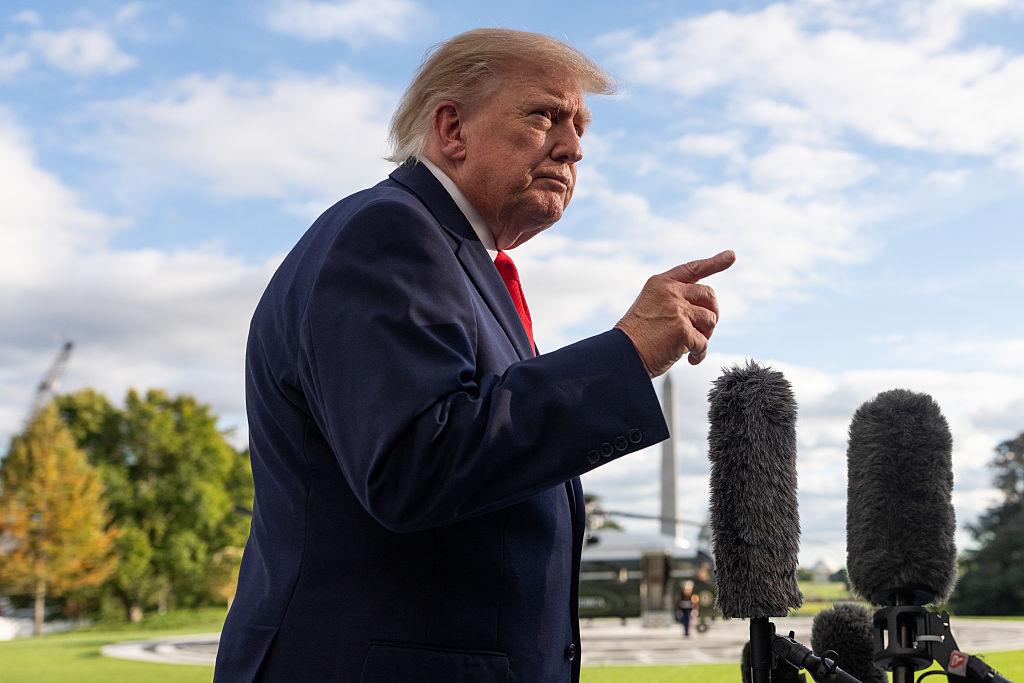
U.S. President Donald Trump has ruled out an immediate military strike on Iran even as tensions surrounding Tehran remain one of the dominant issues in Israel’s final day of campaigning before its October 27 parliamentary election. Speaking to reporters on Sunday, Trump said there would be no American strike against Iran that day, a statement that temporarily reduced fears of an imminent new U.S. attack but did not remove the broader possibility of future military action. The comments came only days after Trump suggested the United States could launch another operation against Iran and as Israeli Prime Minister Benjamin Netanyahu intensified his campaign argument that his government remains best placed to confront regional threats, including Iran, Hezbollah and other armed groups aligned with Tehran.
Trump’s Sunday remarks need to be understood carefully because they were narrowly framed around the immediate timing of a possible strike rather than a permanent renunciation of military action. Associated Press reported that he told reporters there would be no U.S. strike against Iran that day, while Reuters has separately documented a series of statements throughout October in which Trump continued to leave open the possibility of future military operations if negotiations with Tehran failed or if Washington concluded that Iran was rebuilding strategic military or nuclear capabilities. Earlier this month, Trump had said the United States would not attack Iran before the November 3 U.S. midterm elections, citing what he described as productive negotiations between Washington and Tehran.
The apparent pause therefore reflects a tactical decision rather than a settled end to the confrontation. Trump has repeatedly shifted between threatening further military action and presenting diplomacy as the preferred route, and the White House has continued to keep military options available. That pattern has created uncertainty across the Middle East because regional governments, energy markets and military planners are trying to determine whether current negotiations represent a genuine path toward de-escalation or merely a temporary pause before another round of U.S. and Israeli strikes.
The uncertainty is especially important because the United States and Israel have already fought directly against Iran during the current conflict. Reuters reported in September that Washington launched new airstrikes against Iranian targets after earlier exchanges of fire, while Iran retaliated against U.S. and allied interests in the region. The confrontation has disrupted energy markets, increased pressure on shipping routes and raised fears that a broader war could draw in Gulf states, Yemen’s Houthi movement, Hezbollah-linked forces and other regional actors.
Iranian officials have continued to say they remain open to a diplomatic solution, although negotiations have repeatedly stalled over sanctions, nuclear restrictions, regional security guarantees and the future of Iranian military capabilities. Reuters reported in late September that Tehran was still waiting for mediators to clarify Washington’s position on a proposed settlement, while Iranian Foreign Minister Abbas Araqchi said Iran would respond once it received a definitive message through intermediaries.
The diplomatic track has continued despite the threat of renewed fighting. On Monday, high-level delegations from Saudi Arabia, Pakistan and Turkey were in Tehran for talks aimed at preventing another escalation. The meetings reflected growing concern among regional powers that renewed U.S. or Israeli attacks on Iran could trigger wider retaliation against Gulf states, shipping lanes and energy infrastructure. Turkey has publicly warned that another military campaign against Iran would expand the conflict and worsen instability across the Middle East.
Those warnings carry additional weight because the region is already dealing with escalating Houthi attacks on Saudi Arabia, renewed Saudi-led military operations in Yemen and heightened pressure on critical energy and aviation infrastructure. Egypt’s parliament on Monday authorised President Abdel Fattah al-Sisi to take necessary measures in support of Saudi Arabia following increased Houthi attacks, although Egyptian officials said any intervention would be defensive and coordinated with Riyadh.
Against that backdrop, Israel’s October 27 parliamentary election has become deeply intertwined with questions of national security and the future of relations with Iran. The vote is Israel’s first national election since the Hamas-led October 7, 2023 attack, which triggered wars in Gaza and Lebanon and eventually expanded into direct confrontation with Iran. For many Israeli voters, the election has become a referendum not only on Prime Minister Benjamin Netanyahu’s political leadership but on his handling of the country’s security failures, regional wars and relationship with Washington.
Netanyahu has spent much of the campaign presenting himself as Israel’s most experienced security leader and arguing that his government is uniquely capable of confronting Iran and other regional threats. Reuters reported in September that his campaign was relying heavily on a familiar political strategy in which Netanyahu portrays himself as the figure best equipped to protect Israel in an increasingly hostile regional environment. That argument has become more difficult because critics continue to hold him responsible for the failures surrounding the October 7 attack and the security breakdown that preceded it.
The Iran issue has nevertheless given Netanyahu an opportunity to shift the campaign back toward the terrain on which he has historically been strongest. On the eve of the vote, Reuters reported that he prominently highlighted Trump’s endorsement and suggested that Israel and the United States could resume military operations against Iran if he remains in power. Trump urged Israelis to support Netanyahu and argued that Israel needed to complete what he described as unfinished work from the earlier campaign against Iran.
Netanyahu, in turn, used that endorsement to argue that his close relationship with Trump strengthens Israel’s ability to confront Iran. He said the United States remained prepared to eliminate what he described as the Iranian threat and claimed that he had instructed Israel’s Mossad intelligence agency and military to continue operations aimed at weakening the Iranian regime. Those remarks were campaign statements by Netanyahu and should not be treated as independent confirmation of specific U.S. military plans.
The White House’s more cautious public position illustrates the difference between political campaign rhetoric and confirmed military policy. Reuters reported Monday that the United States continued to say it would not attack Iran before the November 3 midterm elections, even as Netanyahu suggested that future operations remained possible. That does not eliminate the possibility of military action later, but it means there is currently no publicly confirmed American timetable for a new strike.
Trump himself has contributed to the uncertainty by repeatedly making statements that leave multiple options open. On October 23, he told supporters in Florida that the United States could conduct another military operation against Iran and referred to the possibility of repeating an earlier campaign. He offered few operational details, leaving analysts to assess whether the statement represented a genuine military warning, a negotiating tactic or campaign rhetoric intended to reinforce his national-security credentials.
A week earlier, Trump had also suggested that the United States might need to strike a site linked to Iran’s nuclear programme, while insisting he would not use nuclear weapons. Those comments reinforced the impression that military planning remains active even during periods when Washington says diplomacy is continuing.
The contradiction between threatening future strikes and ruling out immediate action is not necessarily unusual in crisis diplomacy. Governments often maintain military pressure while negotiating, hoping that the threat of force will strengthen their bargaining position. The danger is that repeated threats can also increase the risk of miscalculation if the other side assumes an attack is imminent and decides to act first.
Iranian officials have repeatedly warned that renewed U.S. or Israeli attacks would trigger retaliation across the region. Tehran has previously launched missiles and drones against U.S. bases and allied countries in response to American strikes, and Iranian military officials have warned that energy facilities and regional military installations could become targets if fighting resumes.
That threat has made Gulf states increasingly active in diplomacy. Saudi Arabia, Qatar, the United Arab Emirates and Turkey have all attempted to prevent the U.S.-Iran confrontation from expanding because they would face immediate economic and security consequences from another major conflict. Energy exports, shipping through the Strait of Hormuz and civilian aviation could all be affected if Iran and the United States resume large-scale military operations.
Trump has previously acknowledged that Gulf leaders influenced his decision to postpone strikes. Associated Press reported earlier in the conflict that he said Qatar, Saudi Arabia and the United Arab Emirates had urged him to hold back from ordering another attack, reflecting the extent to which Washington must consider the interests of allies that could become direct targets of Iranian retaliation.
The relationship between Trump and Netanyahu has also become more complicated than the public endorsements might suggest. Reuters reported in September that Netanyahu’s visit to New York was unusually brief and reflected strains in U.S.-Israeli relations despite the two leaders’ longstanding political ties. Disagreements over the timing of military operations, diplomacy with Iran and the conduct of the war in Gaza have periodically created friction between Washington and Jerusalem.
Those tensions have not prevented Trump from intervening directly in Israel’s election campaign. His endorsement gives Netanyahu a powerful argument among voters who believe close relations with Washington are essential to Israel’s security, but it also raises questions about foreign involvement in domestic electoral politics. Israeli voters must ultimately decide whether Netanyahu’s relationship with Trump strengthens his case for another term or whether the election should focus more heavily on domestic accountability for the October 7 security failure.
The election is expected to be highly fragmented. Israel uses a proportional representation system, meaning no major party is expected to win an outright parliamentary majority on its own. Coalition negotiations after the vote could therefore become as important as the election result itself, with smaller parties potentially determining who can form the next government.
Reuters polling coverage has suggested that Netanyahu’s bloc could lose its parliamentary majority, although opposition parties also face challenges in assembling a stable coalition. The result therefore may not produce an immediate or decisive transfer of power even if Likud loses support.
Centrist challenger Gadi Eisenkot has emerged as one of Netanyahu’s most significant rivals, particularly among former Likud supporters dissatisfied with the government’s handling of security and governance. Reuters reported that disenchanted Likud voters in traditional strongholds such as Dimona have become important targets for Eisenkot’s campaign, although long-standing loyalty to Netanyahu and the Likud remains strong among many voters.
Eisenkot has challenged Netanyahu’s security narrative by arguing that the prime minister is using fear to distract from the government’s failures. On Monday, Reuters reported that he accused Netanyahu of fearmongering over Iran after the prime minister highlighted nuclear threats and Trump’s endorsement in the final campaign push.
Netanyahu’s allies have countered that the prime minister’s experience navigating wars in Gaza, Lebanon and Iran demonstrates why voters should keep him in office. They argue that Israel remains surrounded by serious threats and that continuity in leadership is essential during a period of regional instability.
The debate over Iran therefore serves several political functions at once. It is a genuine national-security issue because Israel and Iran have exchanged direct attacks and continue to threaten one another. It is also a campaign issue because Netanyahu’s political identity has long been built around confronting Iran and warning that Tehran poses an existential threat to Israel.
For Trump, Iran is similarly both a foreign-policy challenge and a domestic political issue. The conflict has contributed to higher energy prices at a time when Republicans are campaigning ahead of the U.S. midterms, creating pressure on the White House to avoid another escalation that could push fuel prices even higher. Reuters reported earlier this month that Trump’s decision to delay new attacks before the November elections was partly connected to those domestic political considerations.
A new war with Iran could affect American voters through gasoline prices, military casualties and fears of a broader Middle East conflict. Trump’s decision to rule out an immediate Sunday strike therefore had implications extending well beyond foreign policy.
The timing of Israel’s election adds another layer because Netanyahu has political incentives to keep national-security threats at the centre of public discussion. Historically, Israeli elections held during periods of heightened conflict often place security experience at the centre of campaign messaging.
That dynamic is visible in the current race. Netanyahu’s campaign has repeatedly highlighted threats from Iran, Hezbollah and militant groups, while opposition candidates have attempted to redirect the debate toward government responsibility for the October 7 failures, economic pressures and institutional trust.
The election is the first national vote in which Israelis can formally judge Netanyahu’s leadership since the 2023 attack. Many families affected by October 7 have entered politics or joined campaign organisations, arguing that the country needs new leadership and institutional reform. Reuters has reported that relatives of victims and hostages are among those seeking political influence after years of anger over the government’s handling of the crisis.
Netanyahu’s supporters respond that Israel has since inflicted major damage on Hamas, Hezbollah and Iranian military capabilities and that removing him during an unstable period could weaken Israel’s deterrence. These competing narratives have turned national security into both Netanyahu’s strongest campaign argument and one of his greatest political vulnerabilities.
The Iran conflict is particularly complicated because Israel’s strategic goals do not always align perfectly with Washington’s. Netanyahu has historically favoured a harder approach toward Iran’s nuclear and missile programmes, while U.S. administrations have alternated between sanctions, diplomacy and military pressure.
Trump has at times shared Netanyahu’s willingness to use force, but he has also shown greater interest in temporary deals when he believes they can reduce U.S. military exposure or stabilise energy markets. That difference creates uncertainty over how closely the two governments would coordinate if Netanyahu wins another term.
Monday’s diplomatic activity in Tehran underscores the pressure to prevent another conflict. Saudi Arabia, Pakistan and Turkey all have strong reasons to avoid renewed strikes because they could face direct retaliation or economic disruption. Qatar has also been involved in mediation efforts between Washington and Tehran.
European governments have similarly urged restraint. France, Germany and Britain have signalled that they remain open to negotiations aimed at preventing Iran from acquiring nuclear weapons while avoiding another cycle of military escalation.
The military option remains available, however, because Washington and Israel have not concluded that diplomacy has permanently solved the underlying security dispute. Trump’s repeated references to future strikes and Netanyahu’s campaign rhetoric make clear that both governments want Iran to believe renewed military action is possible.
For Iran, that creates an incentive to accelerate defensive preparations while also pursuing talks that could reduce the likelihood of attack. The result is a tense environment in which negotiation and military planning occur simultaneously.
That uncertainty is likely to continue beyond Israel’s election. Even if Trump does not order a strike before November 3, Washington will still face decisions over sanctions, nuclear restrictions, missile programmes and regional security after the U.S. midterms.
Israel’s next government will also have to decide how aggressively to pursue operations against Iran once the domestic campaign is over.
If Netanyahu remains prime minister, his campaign statements suggest he will continue arguing for sustained pressure on Tehran. If a new coalition takes power, the tone and timing of Israeli policy could change, although opposition leaders have also said Iran remains a serious security concern.
The election therefore may influence how Israel approaches the conflict but is unlikely to eliminate the underlying strategic rivalry.
The same is true of Trump’s Sunday statement. Saying there would be no strike that day reduced the immediate risk of escalation, but it did not amount to a ceasefire agreement or a permanent abandonment of military options.
That distinction is essential to accurate reporting because headlines suggesting Trump has ruled out all future strikes would go beyond what he actually said.
The latest verified position is narrower. Trump ruled out an immediate Sunday attack, and the White House has said the United States will not strike Iran before the November 3 midterms. At the same time, Trump continues to warn that military action remains possible if negotiations fail, while Netanyahu is using the possibility of renewed confrontation with Iran as a major element of his final election campaign.
For Israel, voters will go to the polls on October 27 with those questions unresolved. They are choosing not only between political parties but between competing arguments about who can best manage the country’s security after years of war.
For the United States, the immediate priority appears to be avoiding another escalation before its own midterm vote while keeping enough military pressure on Iran to influence negotiations.
For Iran and neighbouring states, the danger is that campaign politics in both Israel and the United States could eventually collide with military calculations and produce a renewed round of fighting.
The next several days will therefore be closely watched. Israel’s election result will shape the political balance in Jerusalem, while U.S.-Iran diplomacy will determine whether Trump continues delaying military action or returns to the threat of force after November 3.
For now, there is no confirmed immediate U.S. strike order. There is, however, no broader peace settlement either, and the Iran conflict remains one of the most consequential security issues hanging over both Israel’s election and the wider Middle East.