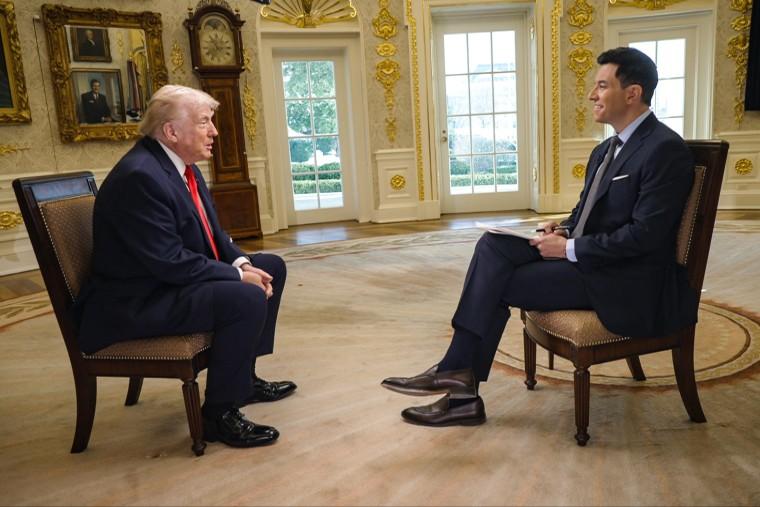
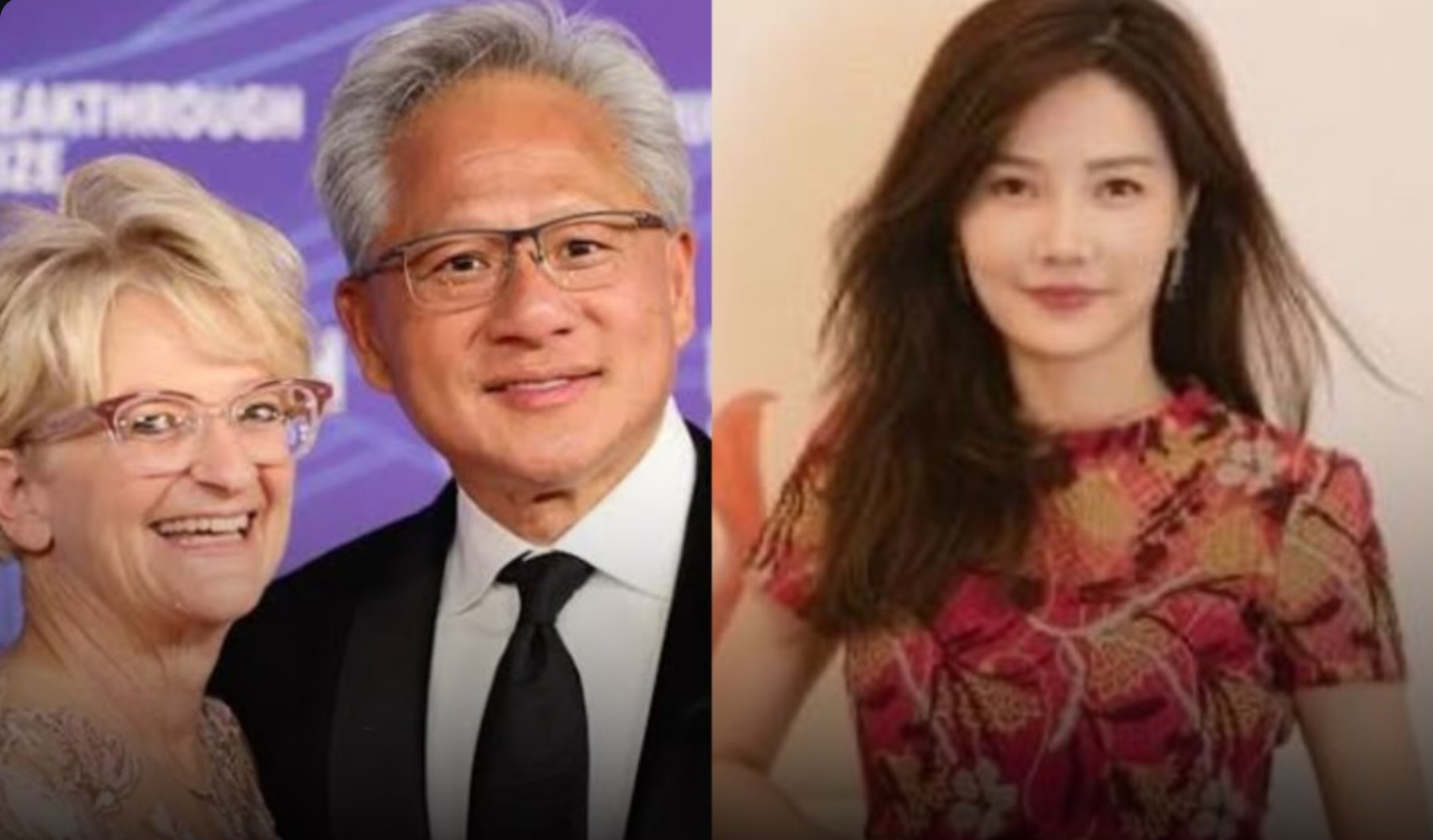
TRUMP SAYS FBI IS ‘LOOKING INTO’ NVIDIA CEO JENSEN HUANG AFTER AFFAIR WITH SUSPECTED CHINESE SPY
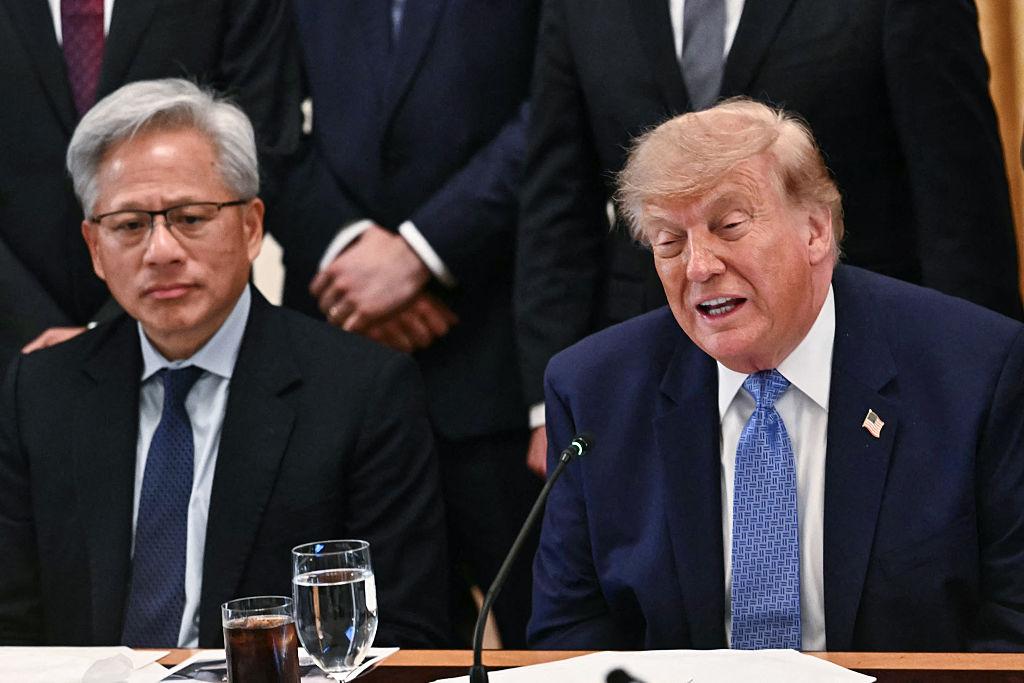
President Donald Trump says the FBI is “looking into” Nvidia CEO Jensen Huang after Huang admitted to an extramarital affair with a woman U.S. intelligence officials reportedly believe was linked to Chinese intelligence. Trump said Huang was “suffering greatly” but predicted he would be “in good shape.” Nvidia has opened an independent investigation and says it currently has no evidence that company secrets or national-security information were compromised. China has denied allegations that the woman was acting as a spy, and Huang has not been accused publicly of knowingly assisting Chinese intelligence. AP News
President Donald Trump has said the FBI is “looking into” Nvidia chief executive Jensen Huang following revelations that the technology billionaire had an extramarital affair with a woman U.S. intelligence officials reportedly believe was connected to Chinese intelligence, thrusting the head of the world’s most influential artificial-intelligence chip company into a national-security controversy at the center of increasingly tense U.S.-China competition. Speaking to reporters at the White House on Monday, Trump said Huang was “suffering greatly” over the scandal but predicted that the Nvidia founder would ultimately be “in good shape,” while stopping short of accusing him of knowingly participating in espionage or compromising American secrets.
Trump’s comments represent the clearest public confirmation so far that federal authorities are examining circumstances surrounding Huang’s relationship with the woman, who has been identified in U.S. media reports as Alice Huang, a Chinese business executive with ties to a company involved in the advanced semiconductor trade. The president said the FBI was looking into Huang, although he did not provide details about the scope, legal basis or status of any inquiry and did not say that the Nvidia CEO was personally suspected of committing a crime.
The distinction is significant because the available evidence does not establish that Huang knowingly had a relationship with a spy or deliberately provided sensitive information to a foreign intelligence service. Huang has admitted that he was unfaithful to his wife and has apologized publicly, while Nvidia’s board has opened an independent investigation into whether he may have been targeted as part of a foreign intelligence operation. The company has said it currently has no reason to believe that national-security information, proprietary technology or company secrets were compromised.
Huang addressed employees in a message over the weekend in which he acknowledged the affair and apologized to his wife, family, Nvidia colleagues, board members and shareholders. He said he accepted responsibility for damaging the trust placed in him and committed himself to cooperating fully with the company’s investigation. He also emphasized his loyalty to the United States and said he remained committed to protecting both Nvidia and American national security.
The controversy intensified after The New York Times reported that U.S. intelligence officials had warned senior members of the Trump administration that Huang could have been targeted by Chinese intelligence through his relationship with the woman. According to multiple subsequent reports, officials believed the relationship potentially created an opportunity for intelligence gathering at a time when Nvidia occupied an extraordinary position in the global race for advanced computing power.
Nvidia’s graphics-processing units have become indispensable to the development of artificial intelligence, making the company strategically important far beyond the technology industry. Its most advanced chips are used to train and operate powerful AI systems and are subject to U.S. export restrictions designed in part to prevent China from obtaining computing capabilities that Washington believes could strengthen Beijing’s military, surveillance and intelligence capabilities.
That strategic importance means any allegation involving foreign intelligence access to Huang immediately becomes more serious than an ordinary corporate scandal. As Nvidia’s founder, chief executive and one of the most influential voices in global technology policy, Huang participates regularly in discussions with U.S. officials about export controls, AI infrastructure and semiconductor supply chains. He has also traveled internationally with Trump and appeared alongside the president at major technology and investment events.
The woman identified in reports, Alice Huang, has been described as an executive associated with Megaspeed International, a Singapore-linked company whose business has involved Nvidia products. U.S. authorities have previously scrutinized companies suspected of helping move advanced American chips into China through third countries in ways that could circumvent export restrictions. Public reporting has raised questions about whether Megaspeed played such a role, although those allegations remain contested and have not been proved in court.
China has strongly rejected the broader espionage allegation. Beijing’s Foreign Ministry described reports that Chinese intelligence deliberately used a woman to entrap or manipulate Huang as unsubstantiated and politically motivated. Chinese officials have accused U.S. media and policymakers of using espionage claims to damage China’s reputation and intensify restrictions on Chinese access to advanced technology.
The competing claims leave several critical questions unresolved. It remains unclear whether Alice Huang was formally working for Chinese intelligence, whether she had been recruited as an asset, whether she knowingly sought sensitive information from Jensen Huang or whether she had access to material relevant to Nvidia’s export-control discussions. No public evidence has yet demonstrated that Huang gave her confidential company information or classified U.S. government material.
Trump’s remarks reflected that uncertainty. While confirming that the FBI was examining the matter, he continued to speak positively about Huang and indicated that he did not believe the Nvidia executive’s career was necessarily in jeopardy. The president has repeatedly praised Huang for Nvidia’s investment in the United States and the company’s role in maintaining American leadership in artificial intelligence.
The relationship between Trump and Huang has become increasingly important during the president’s second term. Huang has emerged as one of Washington’s most influential corporate voices on AI policy and semiconductor exports, frequently arguing that American technology companies should retain access to major global markets, including China, while complying with national-security restrictions.
Huang has warned that overly broad export controls could ultimately weaken American technological leadership by encouraging Chinese companies to develop domestic alternatives to U.S. chips. His position has occasionally placed him at odds with officials who favor tighter restrictions, but it has also gained support from policymakers concerned that American companies could lose long-term market share if they are excluded entirely from China.
Trump himself has shifted U.S. policy on advanced chip exports several times, balancing national-security concerns against arguments that Nvidia and other American firms should be allowed to compete internationally. Huang’s ability to speak directly with senior administration officials has therefore given him unusual influence over one of the most consequential technology-policy debates in Washington.
That relationship is one reason the espionage allegations have attracted immediate attention on Capitol Hill. Members of Congress from both parties have called for investigations or briefings on what U.S. agencies knew about the relationship, when officials became aware of it and whether Huang’s access to sensitive policy discussions created any counterintelligence risk.
Some lawmakers have also questioned whether Nvidia’s lobbying on China-related chip restrictions may have been affected by the relationship, although no evidence has established such a connection. The mere possibility has nevertheless intensified scrutiny because Nvidia has repeatedly pushed for policies that would permit it to sell certain advanced processors to Chinese customers.
A number of Republican committee leaders have reportedly asked Huang to participate in a congressional briefing regarding the relationship and Nvidia’s national-security controls. Democratic Senator Chris Coons has also called for an examination of the matter, reflecting bipartisan concern over the potential implications of foreign intelligence activity involving a chief executive with extraordinary access to U.S. technology policy.
Nvidia’s board responded by announcing an independent investigation supported by outside legal counsel. The company said the inquiry would examine the circumstances surrounding the relationship and determine whether any corporate or national-security information had been compromised. At the same time, Nvidia said Huang would continue serving as chief executive and expressed confidence in his leadership.
That decision is important because Huang is not simply a hired executive. He co-founded Nvidia in 1993 and has led the company through its transformation from a graphics-chip manufacturer into the dominant supplier of processors used in generative artificial intelligence. His identity is deeply intertwined with Nvidia’s culture, investor confidence and long-term strategy.
The scandal therefore presents the company with an unusually difficult governance problem. The board must investigate its founder and chief executive while minimizing disruption at a moment when Nvidia sits at the center of the global AI boom. Any evidence suggesting that sensitive information was compromised would create potentially enormous legal, regulatory and national-security consequences.
Markets have already reacted nervously. Nvidia shares fell sharply following reports of the affair and suspected espionage concerns, reflecting investor anxiety that the controversy could damage Huang’s standing with the U.S. government or lead to tighter scrutiny of the company’s China business.
The financial reaction also illustrates how much of Nvidia’s valuation is tied to Huang personally. Investors have long regarded him as one of the central architects of the company’s success, and his public appearances routinely influence expectations about new products, AI demand and global expansion.
The company’s strategic importance makes the FBI’s involvement especially sensitive. Federal counterintelligence investigations frequently examine whether foreign governments are attempting to cultivate relationships with executives, scientists, government officials or others who have access to valuable technology or policy information. Such inquiries do not necessarily mean the person being examined is suspected of wrongdoing.
In some cases, the individual may be considered a target of foreign intelligence rather than a participant. That distinction could be central to Huang’s case. The available reporting suggests U.S. officials are examining whether Chinese intelligence sought to exploit his personal relationship rather than accusing Huang of intentionally cooperating with Beijing.
Trump’s language on Monday appeared consistent with that interpretation. He expressed sympathy for Huang rather than anger, saying the Nvidia chief was suffering but predicting he would ultimately be fine. Asked whether he intended to raise the issue with Chinese President Xi Jinping during an upcoming meeting, Trump indicated that he did not expect the matter to dominate their discussions.
The president has previously described Huang as an honorable person and praised his contribution to the American technology sector. Even as details of the relationship emerged, Trump said he had not seen evidence that Huang knowingly did anything wrong.
That supportive posture could become politically complicated if the FBI or Nvidia’s internal investigation uncovers evidence that sensitive information was exposed. Conversely, if investigators conclude that Huang was unknowingly targeted and that no secrets were compromised, the controversy may shift toward broader questions about China’s alleged intelligence methods rather than Huang’s personal conduct.
The scandal has also revived long-standing concerns about so-called “honey trap” operations, in which intelligence services use romantic or sexual relationships to gain access to people holding valuable information. Governments around the world have documented such tactics, although applying that label to Huang’s case would be premature without evidence establishing the woman’s intentions or intelligence role.
U.S. intelligence agencies have for years warned American technology companies that Chinese intelligence services seek access to advanced research, semiconductor designs, military technology and confidential policy information. The rapid rise of artificial intelligence has intensified those concerns because the most advanced AI chips have become strategic assets comparable in importance to other sensitive technologies.
Nvidia occupies a particularly critical position because its processors power many of the world’s leading AI systems. The company’s technology is used by major cloud providers, research institutions, governments and defense-related organizations, making information about future chip designs and export strategies potentially valuable to foreign governments.
That does not mean Huang personally possesses classified U.S. information. Corporate executives participating in government policy discussions may receive sensitive or confidential material without necessarily gaining access to classified intelligence. Investigators will likely examine what information Huang had access to, what he may have discussed privately and whether the woman involved ever sought details relating to Nvidia’s technology or U.S. policy.
Another area of scrutiny will be the timeline. Reports indicate that some U.S. officials were aware of intelligence concerns involving the relationship before the controversy became public. That raises questions about when the White House was informed, what steps were taken to protect sensitive discussions and whether Huang continued participating in high-level policy meetings after officials became aware of the potential counterintelligence risk.
The Washington Post reported earlier this month that Trump had been asked about Huang’s situation before the affair was publicly acknowledged and described it as “very complex.” The president said at the time that he hoped Huang would be cleared but acknowledged that officials needed to determine what had happened.
The scandal subsequently escalated after Huang admitted the affair and Nvidia’s board formally announced its investigation. Axios reported that Huang apologized to employees and said he had been unfaithful to his wife, while Nvidia said an independent committee would examine whether the relationship involved a foreign intelligence effort.
AP reported Monday that Trump then confirmed the FBI was examining the matter, while emphasizing that Huang claimed he did not know the woman was a spy and expressing confidence that the Nvidia chief would ultimately be cleared.
China, meanwhile, has dismissed allegations that the woman was part of an intelligence operation. Beijing’s denial creates a familiar diplomatic divide in which U.S. officials cite intelligence assessments that cannot always be made public while China rejects those claims as politically motivated smears.
For Huang, the personal consequences are already significant regardless of what investigators conclude. His admission of infidelity has damaged a carefully cultivated public image built around engineering expertise, relentless work and leadership rather than celebrity scandal.
Huang’s message to employees acknowledged that damage directly. He apologized to his wife and children and said there was no excuse for his conduct. He also apologized to Nvidia employees, shareholders and directors, acknowledging that his personal actions had created a distraction for a company with global responsibilities.
What he did not admit was knowingly dealing with Chinese intelligence. That distinction must remain central to reporting. Huang has acknowledged the affair; he has not admitted espionage, knowingly assisting a foreign agent or transferring sensitive information.
Nvidia has similarly said there is currently no evidence that its technology, secrets or national-security information were compromised. The board’s investigation is intended to establish whether that preliminary assessment remains correct.
The FBI has not publicly announced criminal charges against Huang or the woman, and Trump’s statement that the bureau is “looking into” the matter should not be treated as confirmation of a criminal investigation against Huang personally. Counterintelligence inquiries can examine circumstances, communications and foreign contacts without concluding that an American individual committed an offense.
That legal distinction is particularly important because the reputational consequences of being linked publicly to espionage can be severe even before investigators determine what happened. Huang remains Nvidia’s CEO, has not been charged with a crime and continues to receive the company board’s public support.
The woman identified in news reports is likewise accused rather than convicted. U.S. intelligence reportedly believes she had connections to Chinese intelligence, while China denies that characterization. No publicly announced criminal conviction has established that she was acting as a spy.
The coming days are likely to focus on three parallel inquiries: Nvidia’s independent board investigation, any FBI or U.S. counterintelligence examination and congressional efforts to obtain more information about Huang’s contacts and the government’s handling of the security concerns.
Those investigations could determine whether the episode remains primarily a damaging personal scandal or develops into a broader corporate and national-security crisis.
For Trump, the matter is particularly sensitive because Huang has become a visible partner in the administration’s economic and technology agenda. The president has repeatedly celebrated Nvidia’s U.S. investments and presented the company as evidence that America can remain dominant in artificial intelligence.
Any suggestion that Chinese intelligence gained access to Huang would therefore raise questions not only about Nvidia’s internal security but about how the administration manages access to powerful corporate executives involved in national-security policymaking.
At the same time, Trump’s response suggests the White House is not yet treating Huang as someone who deliberately betrayed U.S. interests. His remarks on Monday were sympathetic and cautious, combining confirmation of FBI involvement with a prediction that Huang would emerge from the controversy in good shape.
The ultimate direction of the story will depend on evidence rather than the extraordinary allegations surrounding it. Investigators will need to determine who the woman was working for, what she sought from Huang, what information may have been exchanged and whether any company or government secrets were exposed.
Until those questions are answered, the confirmed facts are narrower than the most sensational versions circulating online. Huang has admitted an affair. U.S. intelligence reportedly believes the woman involved may have been connected to Chinese intelligence. Nvidia is conducting an independent investigation. Trump says the FBI is looking into the matter. China denies the espionage allegations, and no evidence has yet been publicly released showing that Huang knowingly assisted Chinese intelligence or compromised U.S. national security.
For Nvidia, however, even that uncertainty is significant. The company is no ordinary corporation and Huang is no ordinary chief executive. Nvidia sits at the center of the technological competition increasingly defining relations between Washington and Beijing, meaning a personal relationship involving its CEO can quickly become a matter of government security.
Trump’s statement has now moved the controversy from corporate governance into the federal-investigative arena. Whether it ends as a deeply embarrassing personal scandal or becomes evidence of a successful foreign intelligence operation will depend on what the FBI, Nvidia’s board and congressional investigators establish in the weeks ahead.